A couple of things: PitchSlam and bookends
Posted: May 1, 2014 Filed under: On the Lucid Dreaming duology | Tags: aussie-owned, bookends, Lucid Dreaming, pitches Leave a commentJust a quick note to let you know of two other places you can find me, or at least my various thought bubbles.
Today over at Aussie Owned and Read, I’m looking at bookends. You know, the things you use to stop your books from falling over if you don’t already have so many that there’s nowhere for them to go? Those.
Also, in the past few days I was a Pitch Slam finalist. I got some awesome feedback on my pitch and first 250 words during the “audition” rounds and was then chosen to be part of Team Stray Tats. I have a stray tat (or a tat of a cat that may be stray — haha, I rhymed), so that seemed appropriate. You can see my pitch here.
I got one request too. *plays air guitar* Thanks to Lucas for having enough faith in me to put me on the team. 🙂

If my manuscript were a song…
Posted: April 21, 2014 Filed under: On the Lucid Dreaming duology | Tags: Lucid Dreaming, music, pitches 1 CommentYesterday I entered Lucid Dreaming in Pitch Slam. The theme is one of those musical talent shows, like Australian/American/Armenian Idol. You audition (send your pitch) and if Simon Cowell doesn’t hate you, you move on to the next round. The agents, if they make requests, do so as record executives.
I know, right? How cute is that? 🙂
Anyway, as well as providing details like genre and word count, I had to name a song that sums up my manuscript.
For Lucid Dreaming, that was easy. (For Isla, I’d have a lot more trouble.) It’s Enter Sandman by Metallica. But it has to be an orchestral version, because violins. VIOLINS!
Ahem. What song would you choose for your manuscript/s or WIP/s?
Writing loglines
Posted: March 31, 2014 Filed under: On writing | Tags: loglines, Lucid Dreaming, NestPitch, pitches 2 CommentsIn just over 24 hours, NestPitch submissions open. Submitting writers will provide details about their manuscript includuding their logline and the first 300 words, which will then go through slush readers (or slush bilbies) for shortlisting before being chosen by the nest bloggers.
Finally, the chosen pitches will be posted to hopefully get scadloads of agent requests. We’ve got ten agents participating from nine agencies. It’s exciting stuff.
 I’m one of the slush bilbies for NestPitch. (I like to imagine a shy marsupial drinking an iced treat through a straw. Who’s with me? Anyone? Anyone?)
I’ve blogged before about how hard shortlisting for these sorts of contests is. But I know from experience that as hard as it is to judge them, it’s just as hard to muster the courage to enter in the first place. I’ve been there. Believe me.
So if, like me at this point before a submission window opens, you’re in a last-minute agony of indecision about whether you’re ready to go, here are my tips for writing an awesome logline.
What’s a logline?
It’s the answer you give when someone says, “So, what’s your book about?”
In 35 words or less. Easy, no?
No.
Tips for writing a logline
There are three things you need your logline to do:
- describe the main character (you don’t need to name them)
- describe the antagonist (or main challenge)
- describe the stakes
What you don’t want to do is describe the ending. You want to hook the reader, make them want to offer you representation/a contract/money/booze.
If you’re struggling, one thing I’ve found really handy when writing loglines and query letters is to use the when/then structure. When X, then Y.
For example, here’s my logline for Lucid Dreaming, the new adult urban fantasy I’m currently querying:
When half-Oneiroi dream therapist Melaina banishes a nightmare spirit from a client, she unleashes the wrath of an enemy who targets her job, her best friend, her family and her life.
I’ve had a few different versions of this, where I’ve toyed with how to describe the Oneiroi (dream spirits) — because, unlike vampires and werewolves, they aren’t a particularly well-known supernatural beastie. In this version I’ve tried to make sure the dream context is clear from the rest of the pitch.
You’ll note I didn’t reveal who the antagonist is, because one of the story’s elements is the mystery of who is actually behind the attacks. If that weren’t the case, I’d add it in there: jealous ex-boyfriend or demon-spawn shopkeeper or cheerleading cyborg. You get the idea.
I saw an awesome quote about loglines that I’m going to claim as though it were my own:
Don’t tell the story, sell the story.
Good luck, folks. See you in the slush pile!

My penmonkey evaluation
Posted: March 6, 2014 Filed under: On writing | Tags: Chuck Wendig, editing, Isla's Inheritance, Lucid Dreaming, writing Leave a commentA couple of days ago on his blog, author and blogger extraordinaire Chuck Wendig posted what he called a penmonkey evaluation—a chance for writers to self-evaluate. I thought it was an interesting exercise so decided I’d do it here. If you decide to evaluate yourself too, please post your blog link in the comments. I’d love to see how others fare.
 What’s your greatest strength/skill in terms of writing/storytelling?
Definitely my editing skills. I still have the same problems with being able to impartially view my own work as everyone else, but I think I produce a fairly clean initial draft.
At least grammatically—I make no guarantees as to content!
What’s your greatest weakness in writing/storytelling? What gives you the most trouble?
Transition scenes can die in a fire. I try to avoid them if I can, because I struggle with them so much.
How many books or other projects have you actually finished? What did you do with them?
Three.
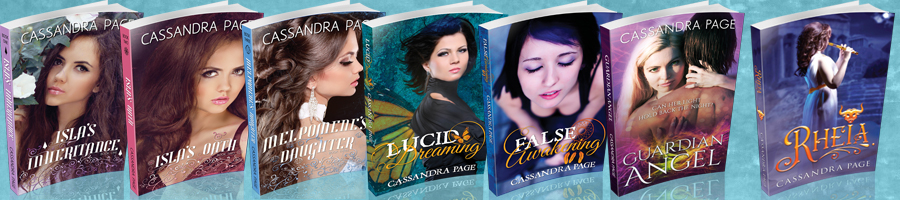
Isla’s Inheritance – scheduled for release with Turquoise Morning Press in around October 2014
Isla’s Oath – scheduled for release with Turquoise Morning Press in around January 2015
Lucid Dreaming – currently on the agent query world tour
Best writing advice you’ve ever been given? (i.e. really helped you)
After considering all the wonderful advice I’ve received (minimise adverb use, avoid dialogue tags, etc), I couldn’t come up with just one thing I’d rate about the others.
Then I realised it was this, which I got from Mister Wendig himself.
“Just write.”Writing your first novel is daunting. It’s a bit like mountain climbing solo, or at least what I imagine mountain climbing solo might be like. You have all these tools, and maybe some people to yell at you or inspire you, but you have to do the hard yards yourself. Each step can be torturous. There’s a risk of avalanches, and of being eaten by wolves.
But the feeling when you get to the top is ah-MAY-zing, and the next mountain you climb is just that little bit easier.
Even if you only manage to write 200 words in a session and it’s like squeezing blood from granite, that’s still another step forward.
Worst writing advice you’ve ever been given? (i.e. didn’t help at all, may have hurt)
“The beginning is critical. If you don’t hook your reader, or that agent or editor, you’re screwed.”This is not inherently bad advice. It’s actually very true. But where it tangled me up was when I was starting that mountain climb on my first book. I knew how critical the beginning was, and I felt from the start that mine had issues. I got so hung up on getting the beginning right that it took me a very long time—embarrassingly long—to move on with writing, you know, the rest of the book.
The reason this is bad advice is because I fixated on it at the wrong time: during drafting rather than editing. When you’re drafting, just draft.
One piece of advice you’d give other writers?
You can edit badly written words. You can’t edit a blank page.
Just write.
In other news, on Tuesday I was over at Marcy Peska’s blog, doing an interview about writing dialogue. Yes, I was talking about writing about talking.
The Dream Journal – One Writer’s Inspiration
Posted: January 8, 2014 Filed under: On writing | Tags: dreams, guest post, inspiration, Lucid Dreaming 1 CommentToday’s guest post is by Mary Crockett, co-author of Dream Boy, which is due for release in mid-2014.
When Cassandra invited me to do a guest post, I used the title of her manuscript, Lucid Dreaming, as a springboard. I’ve always been obsessed with dreams—not surprising for someone whose upcoming co-authored novel is named Dream Boy, right?

But it’s not just me who’s obsessed. Fascination with dreams is as old as dreams themselves. Ancient Egyptians looked to dreams for portents of the future, while Australian Aborigines saw dreams as the secret to understanding the past. There’s Aristotle’s On Dreams, Freud’s Interpretation of Dreams, the Biblical representation of dreams as God’s cosmic telephone, the zillion weird dreams that figure in folklore and fairy tales, the zillion more books that interpret the symbolism of dreams… and of course let’s not forget Leonardo DiCaprio going all dark and broody as the lovelorn dream thief in Inception.
As a writer, though, I’m perhaps most interested in how we can allow our dreams to inspire and shape creative works.
That’s where the dream journal comes in.
One of the characters in Dream Boy keeps just such a journal. Drawing a line down the middle of the page, she writes everything she remembers about a dream on one side; on the other, she jots notes about real life events that may have triggered her subconscious.
In the notebook, reality goes in one place and dreams go in another; a clear line is drawn between the two. Of course, very little in life is quite as tidy as that—certainly not our creative processes.
So, why keep a dream journal in the first place?
For one thing, it’s fun.
For another, all the weird stuff that floats around in your subconscious can be a good place to go when your work-in-progress gets blocked up. Make a game of it: choose some random element from a recent dream and work it into a scene you’re writing. It will keep you going—and in writing, if you just keep going (somewhere… anywhere!), you often end up headed in the direction you genuinely needed to go.
(Plus, here’s a secret: the random element you select is probably not that random, even if it seems downright absurd. What happens when you dream and what happens when you write is not so different, really. They both connect to the subconscious. And the images that feed the subconscious have a way of making their own sense, regardless of your intentions.)
Perhaps most importantly, however, using a journal to map out the chaotic terrain of your dreams can feed your over-all imaginative life in very rewarding ways.
As you go along—recording your dreams—you are essentially trying to make sense of something that is by its very nature senseless. That process inevitably opens you up to contradiction. (Real world says X and ONLY X is true; Dreamworld says Y and Z and X’s second cousin Arnie is true. On Tuesdays. On other days, it says that baseballs turn into feathers when you sneeze on them. And your favorite dog never really died, but was just trapped all this time in a bomb shelter with elves.)
Contradiction, as you can see from the above, is pretty noisy. But it is also (at least in my experience) inspiring.
Think of it this way: the tension between two opposing ideas is often the wire on which good writing balances. So, exploring the boundary between reality and dream allows us to perch for a moment on that wire. When we return to our work of fiction, we see more. We see better. We see connections we might have missed otherwise.
But what about those who don’t even remember their dreams? How can any of this help them?
Unexpectedly, I have found that the very act of keeping a dream journal stimulates the recollection of dreams. So the more you plan to remember, the more you remember. Weird, but true.
Here’s how it works in two super-easy (super-cheesy?) steps:
- Put a notebook and pen beside your bed. Before drifting to sleep, remind yourself that you intend to remember and record your dreams. You might even say something as socially uncomfortable as “Hey, you are going to dream, and you will remember your dreams! They will be interesting dreams! Enjoy!”
- In the morning, before you get up or start thinking about your day, write down whatever scraps of dream you remember.
And at first they may be just scraps. But as you go on, exercising both your memory and tolerance for awkward conversations with yourself, you may find that you can build up to a pretty impressive recall. And remembering your dreams is a good thing—not only for the creative advantage—but also because your dreams can be an important shaping influence in your life.
I recently tweeted my two-year-old’s dream: “The cat was in my dream, and he was happy to be with me.” (Of course in real life, the cat barely tolerates my son, so this was pure wish fulfillment.) I was amazed at how many people tweeted back to share their own dreams—from the workaholic who dreams only of work to the woman who dreams of resuscitating zombies with a friendly Tyrannosaurus Rex.
Dreams are something we take with us into our day. Whether we entirely remember them or not, they are there, an essential part of us—telling us who we are. (Maybe in some ways even making us who we are.)
So listening to dreams—paying attention to wildness of the mind at moments when it answers to no master—is a worthwhile endeavor. And a dream journal is a great place to start.
About DREAM BOY (coauthored by Mary Crockett and Madelyn Rosenberg)
Annabelle Manning feels like she’s doing time at her high school in Chilton, Virginia. She has her friends at her lunchtime table of nobodies. What she doesn’t have are possibilities. Or a date for Homecoming. Things get more interesting at night, when she spends time with the boy of her dreams. But the blue-eyed boy with the fairytale smile is just that—a dream. Until the Friday afternoon he walks into her chemistry class.
One of friends suspects he’s an alien. Another is pretty sure it’s all one big case of deja vu. While Annabelle doesn’t know what to think, she’s willing to believe that the charming Martin Zirkle may just be her dream come true. But as Annabelle discovers the truth behind dreams—where they come from and what they mean—she is forced to face a dark reality she had not expected. More than just Martin has arrived in Chilton. As Annabelle learns, if dreams can come true, so can nightmares.
Pre-order DREAM BOY today: Amazon | Barnes & Noble | Indiebound
Add DREAM BOY to your Goodreads list.
About Mary
A native of the Shenandoah Valley of Virginia, Mary grew up as the youngest of six children in a family of misfits. She has worked as everything from a history museum director to a toilet seat hand model. In her other life, she’s an award-winning poet, professional eavesdropper, and the person who wipes runny noses. If you tweet at her @MaryLovesBooks, chances are she will tweet back.
Connect with Mary: Website | Blog |Twitter | Facebook | Goodreads | Tumblr | Pinterest
So, whassup? I’m glad you asked…
Posted: December 24, 2013 Filed under: On me, On the Isla's Inheritance trilogy, On the Lucid Dreaming duology, Short stories | Tags: contests, Isla's Inheritance, Lucid Dreaming, short story, writing Leave a commentI know I haven’t posted a huge amount lately. What with work being busy–that last-minute “HALP I NEED TO GET THIS DONE BEFORE THE END OF THE YEAR!” rush–as well as various non-work edits that needed finishing, I haven’t had much time for blogging.
Here’s a brief rundown on the things that have been happening lately.
PitchWars
If you read this post, you’d know I entered Lucid Dreaming into PitchWars, one of the festive season pitching contests. I didn’t get chosen as a mentee, obviously, or you’d have heard me yelling all around the globe, without the aid of technology.
What I did get, once again, was some fantastic feedback. The mentors didn’t have to, and frankly I’m not sure how they found the time given some of them had close to 100 entries, but three of the four I pitched to gave me personalised feedback. They were also very encouraging, and said things like “I have every confidence I will see your words in the bookstore some day in the not so distant future.” Aww. Also, squee!
And Dannie, one of the mentors I pitched to, also gave me an honourable mention on her blog:
Most creative use of technology in mentor stalking: Cassandra Page
I stalk like a BOSS.
Anyway, following some edits to my manuscript, I then entered it in…
PitchMAS
 PitchMAS is a bi-annual three-day pitchfest and workshop, held in July and December. It has two phases. The first is where 75 pitches are selected to be posted to the blog, where they can be requested by agents and acquisition editors for various presses.
My pitch for Lucid Dreaming was selected to go on the blog, and, as you can see, I got some interest. I got even more from the Twitter pitches. I’m not going into details because a lady doesn’t, er, pitch and tell, but if you want to know badly enough, the information is out there the Twitterverse. You just need to stalk like a BOSS too.
Santa Clash
 The premise of Santa Clash was that a bunch of writers would produce Christmas-themed short stories. They didn’t have to continue on from one another like the Zombie Project did. No, this time the catch was much more diabolical. Each writer was challenged to write in a genre they didn’t usually delve into. I was given “adult”. Those of you who know me will realise how HARD THIS WAS FOR ME!
My short story, Letting Go, went up yesterday. I’ve had two people tell me they cried when they read it, so, you know. There’s that.
Meanwhile, over at Aussie Owned and Read

Today my December post went up over at Aussie Owned and Read. It’s called Stop, Revive, Survive, after the NSW road safety message. Don’t drive when tired this Christmas, mkay? Or write, actually.
Also, the post has some of my holiday snaps on it. Ok, one holiday snap. It’s a pretty one, though. Promise.
Isla 3
Finally, edits complete, last weekend I was able to get started on the third book in Isla’s trilogy. I only started yesterday but I’m pleased to say drafting is JUST like falling off a bike. You skin your knees, and maybe your teeth are kinda wobbly afterwards (or is that just me?), but you don’t actually forget how to ride.
My TMP editor will be pleased to know I’ve only bled on the manuscript a little bit so far. I will try and clean it up before I send it to her. I promise.
PS. Don’t forget to enter my blogaversary giveaway if you haven’t already. 🙂
PitchWars Mentee Bio
Posted: December 6, 2013 Filed under: On me, On the Isla's Inheritance trilogy, On the Lucid Dreaming duology | Tags: aussie-owned, Isla's Inheritance, Lucid Dreaming, PitchWars 4 CommentsIf you’re a writer and on Twitter, you’ve probably heard of PitchWars, an annual battle run by Brenda Drake where writers attempt to win the love of one of several mentors. Those mentors in turn get overwhelmed with, ah, love, but choose one writer (and two spares!) to polish and take forward to the final round. There, each writer–mentor team competes for the further love of one or more agents.
It’s a giant lovefest, basically. I believe there’s some sort of prize involved, but I doubt the winning writer cares, because agent love!
Last year I entered PitchWars with Isla’s Inheritance. I didn’t win, but what I did do was receive some encouraging feedback and insightful advice that helped me improve the manuscript into something truly saleable. I’m confident that if it weren’t for that advice, Isla wouldn’t have the deal it does.
The other thing PitchWars gave me last year was exposure to an awesome network of writers, some of whom are now my closest tweeps and crit partners. It was via PitchWars that I met Stacey Nash and the rest of the guys I work with on Aussie Owned and Read.
Lucid Dreaming, which is a new adult urban fantasy unrelated to Isla, is now taking its turn in the PitchWars ring.
Pimp My Bio
The PitchWars mentors have bios, so we have the best chance possible of finding a match for our manuscript. One of the mentors, Dannie, is encouraging entrants to write their own bios, so the mentors can stalk them in turn.
Presumably this is so we know how they feel, having us paw over their blogs for clues. :p
Ten Things About Me

BATMAN!
One. I’m a single mother to the cutest four year old boy in the world. (Yes, he really is.) Sometimes he moonlights as Batman. I’m really looking forward to him learning to read, so that I can share my joy in books with him.
Two. This Sunday, as an early Christmas present, we are getting two Cairn Terriers, a mother-and-son team named Chilli and Leo. Chilli is an Australian Champion going into retirement at the advanced age of two. Leo is named after the Ninja Turtle.
There will be pictures—oh yes!
Three. I work full time as a professional editor for a big organisation, which means I’m used to the process. I’ve been editing for five years now (with breaks for coffee).
Four. COFFEE.
Last weekend my boyfriend and I went to an isolated national park to go caving, and he brought his espresso machine. Because, as he said, “Just because we’re on holidays, we don’t have to live like savages.”
Five. I’m an uber-nerd. One of the things that drew me to some of the mentors I chose is that they liked the same nerdy things as me. Doctor Who, Firefly… even the political nerdiness (and writing genius) that is The West Wing.
Six. I tabletop roleplay. I used to live action roleplay too. I dressed up as a vampire before they sparkled in the sun. (See point five.)

I have a TARDIS teapot.
Seven. I’ve written three books now, and each of them has an element of Greek mythology. I could say that this is by virtue of my name—Cassandra being the infamous Greek prophetess cursed not to be believed—but who knows?
(As an aside, the mythological Cassandra clearly never heard of reverse psychology. “Yeah, bringing that big wooden horse inside the walls of Troy and then having an early night is a TOPS IDEA!” “What? No way! Burn the horse!”)
Eight. Other than the aforementioned shows (and Castle, because Nathan Fillion), I watch very little television. I discovered that, despite points one and three, I could still find time to write if I quit most computer games and TV. Before that I was a WoW addict. And had a flirtation with Farmville. DON’T JUDGE ME!
Nine. I’ve been reading urban fantasy for longer than I’ve known what the genre is called. I used to call it “books that have magical elements but are set in the real world.” This is why people shouldn’t let me name things.
I also love fantasy, light sci-fi, cyberpunk and some horror. I don’t mind PNR but it’s not my true love like urban fantasy is—I just struggle to get into books where the romance is the only plot.
Ten. My writing weakness is semicolons. I LUFF THEM! But don’t worry, mentors, a crit partner already made me take 160 of them out of Lucid Dreaming. *tear*
Updates, and a call for content
Posted: September 25, 2013 Filed under: On the Lucid Dreaming duology, Uncategorized | Tags: betas, Lucid Dreaming Leave a commentI’ve been up since 5.30am (it’s now 7.22am as I write this, and I’m about to leave for work). So this is a bit of a rambling post. Please forgive any incoherent bits.

This is completely unrelated, but here’s a photo of a carved timber-and-metal raptor I saw at a woodworking showroom last weekend. It’s only $15k – buy it for me? 🙂
On Lucid Dreaming…
A few months ago I blogged about the importance of critique partners. I talked about the different approaches to getting feedback—whether you’re a perfectionist who edits your work before letting others read it, or whether you’re a sharer who is happy to let people see it and provide feedback when it’s still in its raw state.
I’ve done a little of both with my three manuscripts. But yesterday I just sent my latest manuscript, Lucid Dreaming, to my beta readers after a pretty thorough edit. Two of these beta readers haven’t read for me before, which made me even more anxious about them seeing my writing. Also, all of my beta readers are sheer awesome, which is a little daunting.
Of course, last night I couldn’t sleep. I felt all adrift. These are the classic signs that I need to embark on another project, to keep myself busy and not fretting. (Have they opened the document yet? Do they hate the first chapter? What if they notice that I’m faking it?) I have edits of Isla’s Oath to get on with, but I printed the manuscript before I moved temporarily into my parents’ house, and then, like an idiot, put it in a box. So that’s going to have to wait till we move into our new home—which is in about a fortnight.
Once I’m done with Isla’s Oath, the plan is to start on the third book in the trilogy. So I need to do some plotting there too.
On zombies…
I’ve spruiked The Zombie Project a few times here, and posted my short. If you want to read the whole set but can’t be bothered looking for all the stories, the amazing Chynna-Blue has put up a master post that details all of the contributors thus far, and links to the stories.
So now there’s no excuse. :p
(Spruiking is Australian slang for speaking in public, usually trying to promote or sell something. If you’re wondering.)
On blog content…
I’ve already contacted the ISP to start the process of getting broadband set up for the new house. But it could take weeks, and I can’t blog from work—so I’m looking at scheduling a bunch of posts for the next few weeks. If you are interested in writing a guest post or being interviewed, drop me a line at cassandrapage01_at_gmail.com (replace _at_ with @). The only catch is I’d need your post/answers by about 4 October at the latest.
Naming your book – and naming my book!
Posted: September 18, 2013 Filed under: On the Lucid Dreaming duology, On writing | Tags: editing, Lucid Dreaming, writing 5 CommentsLet me start out by saying that I suck at naming my books. Seriously. I come up with working titles during the drafting stage that don’t work for one reason or another, and then I get to the end of the process and can’t think of anything else.
 For example, Isla’s Inheritance originally had a title that actually contained a (minor) spoiler. I know, right? I’m an idiot. The working title was a great title—just not for that book. (I may use it for the third book in the trilogy; that remains to be seen.) The second book in the series was “Book Two” for ages, till it eventually became Isla’s Oath after Sharon suggested it.
Likewise, the book I just finished had a working title that might work for the name of a series, but doesn’t really grab me for the first book (in fact, I just googled it and it already is the name of a series … so that’s not going to work either, gorramit!). So I’ve been noodling new ideas for the past few weeks as I’ve been editing, settling on my criteria for a good book name.
These are my thoughts.
1. It shouldn’t have the name of a well-known book.
This point is pretty obvious. Bestsellers receive more promotion—anyone who walks into a store looking for your book may come out with the bestseller the bookseller has heard more about. (We’re not talking about your hardcore fans here, because they’ll know the author—but it’s amazing the number of people who buy gifts or hunt for books based on a fragment of information!)
For example, I thought about calling Isla’s Inheritance simply “Inheritance”, but Christopher Paolini already did that for his last Eragon book. Rats. If you’re not sure who else has used your potential title, Goodreads and Amazon searches are your friends.
I’ve been agonising about whether it’s okay for my book to share a title with any other work of fiction. If there’s an obscure self-published novel with only one or two ratings that has the same title, is that okay? I’m thinking probably. I have more than two relatives I can persuade to rate my book, so I should at least be the more popular one. 😉
One thing you can do, especially on sites like Goodreads, is give your book a subtitle: often the name of the series. Or, for some genres, titles that incorporate a unique, unifying element can work. Harry Potter is taken, though.
2. If it’s part of a series the titles should be thematically related … but also easy to remember.
As much as I’m not a huge fan of the Twilight series, Stephanie Meyer—or her editor—deserves huge amounts of respect for coming up with an awesome series of book titles. They are connected but not samey. You know which book is which. And they are short, which makes them easy to remember.
Maybe it’s just me, but I find a long series where the titles are all too close to one another very confusing. Charlaine Harris’s Sookie Stackhouse series of thirteen books is a good example. All of the books have the word “Dead” in the title. I just couldn’t tell the titles apart after a while—which made buying the next one trickier than it had to be! The titles were clever, but distinct? Easy to remember? Not for me, at least.
I haven’t plotted the sequel to my latest book yet—I need to write the third in Isla’s trilogy first—but there will be one. So I want a title that lends itself to that as well.
3. I like titles to be clever and beautiful.
My absolute favourite book titles are the ones that not only sound beautiful but have a double meaning—something where the readers go “oooooooooh!” at some point during the story. Those are hard to come by. Two examples off the top of my head are Bound by J. Elizabeth Hill and Forget Me Not by Stacey Nash (I’ve only seen a draft first chapter of the latter and I already know how perfect that title is for that book).
I love the poetry of Isla’s Inheritance and Isla’s Oath. They both roll off the tongue. But if my editor came up with something that did that and also had a double meaning, I’d give her a big wet kiss and change both titles in a heartbeat. (And of course, unless you’re self-publishing, there’s a good chance the title you’ve agonised over will get changed anyway. I gather this is especially true at the big end of town. But it pays to show you’ve put some thought into it; submitting a manuscript called “Insert Clever Title Here” doesn’t really show you at your professional best.)
So, after all of this consideration, what is the (tentative) title of my latest novel?

(I really wanted a gif with exploding fireworks but I couldn’t find one in the two minutes I spent googling!)
Achievement unlocked: novel complete
Posted: August 18, 2013 Filed under: On the Lucid Dreaming duology | Tags: drafting, Lucid Dreaming, writing 14 CommentsI finished my work in progress last night. Which makes me feel like this.
This book (working title: Melaina, which is the main character’s name because I suck at naming things) is 73k words and took me seven months to write.
By comparison, Isla’s Inheritance was about 80k words when I first finished it, and it took twice as long. I cut about 10k words from it in the editing process.
The difference in my writing speed is not that I have more time — I’m still a single parent with a little boy, and I can still only write after he’s gone to bed — but because I’ve learned that FIRST DRAFTS SUCK.
Seriously.
When I was writing Isla’s Inheritance, I obsesssed over the beginning. I knew you really had to land the beginning or your potential writer/agent/editor wouldn’t get any further to discover what your writing was like once you’d found your sea legs. And I knew there was something wrong with the beginning of my book, but I couldn’t fix it.
It wasn’t until I’d done several rounds of edits, received a bunch of agent rejections and had feedback from a pitching contest that I finally amputated the first couple thousand words from the start, and deleted an entire chapter in the first 10k words. It took me that long to gain perspective on it and see what the problem was.
And that’s why it’s not worth wasting a lot of time analysing your book in the drafting stage. You don’t have the perspective.
Also, drafting (despite what anyone tells you) is HARD. It requires dedication, finding the time to sit down when you’ve got washing to do or would rather be reading or sleeping. (Sleeping figures pretty highly for me.) I personally find dialogue easy and a lot of fun to write, but transition scenes? I have to make myself write them, and reward myself with cookies.
I’ve learned to cut myself some slack. Sure, what I come up with (especially during transition scenes) may be clunky and not flow properly. But I don’t let myself get too tied up in trying to fix it as I’m drafting. I will do one read over of what I wrote the previous session, and edit as I go. Then I move on. So far the only additional editing the bulk of Melaina has seen is when I’ve had an idea later on that’s involved a bit of foreshadowing; when I’ve edited that in I’ve often tinkered with the section I added it to.
That’s it.
There are hokey cliches in there (“my heart thundered”, “my pulse raced”). There are ridiculous phrases (for some reason I seem very fond of writing things like “my eyes roamed the room”, despite the anatomical impossibility of such an act). But that’s what editing is for.
It’s clunky but it’s done. The bones are there. You can’t edit nothing, and now I have something to polish.
Booyah!


 Cassandra Page