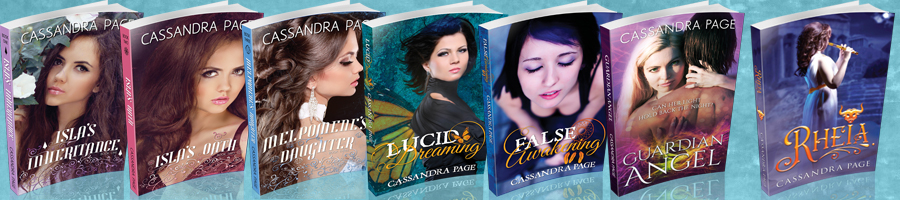
PitchWars Mentee Bio
Posted: December 6, 2013 Filed under: On me, On the Isla's Inheritance trilogy, On the Lucid Dreaming duology | Tags: aussie-owned, Isla's Inheritance, Lucid Dreaming, PitchWars 4 Comments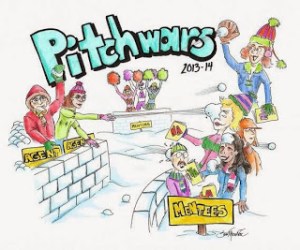 If you’re a writer and on Twitter, you’ve probably heard of PitchWars, an annual battle run by Brenda Drake where writers attempt to win the love of one of several mentors. Those mentors in turn get overwhelmed with, ah, love, but choose one writer (and two spares!) to polish and take forward to the final round. There, each writer–mentor team competes for the further love of one or more agents.
It’s a giant lovefest, basically. I believe there’s some sort of prize involved, but I doubt the winning writer cares, because agent love!
Last year I entered PitchWars with Isla’s Inheritance. I didn’t win, but what I did do was receive some encouraging feedback and insightful advice that helped me improve the manuscript into something truly saleable. I’m confident that if it weren’t for that advice, Isla wouldn’t have the deal it does.
The other thing PitchWars gave me last year was exposure to an awesome network of writers, some of whom are now my closest tweeps and crit partners. It was via PitchWars that I met Stacey Nash and the rest of the guys I work with on Aussie Owned and Read.
Lucid Dreaming, which is a new adult urban fantasy unrelated to Isla, is now taking its turn in the PitchWars ring.
Pimp My Bio
The PitchWars mentors have bios, so we have the best chance possible of finding a match for our manuscript. One of the mentors, Dannie, is encouraging entrants to write their own bios, so the mentors can stalk them in turn.
Presumably this is so we know how they feel, having us paw over their blogs for clues. :p
Ten Things About Me

BATMAN!
One. I’m a single mother to the cutest four year old boy in the world. (Yes, he really is.) Sometimes he moonlights as Batman. I’m really looking forward to him learning to read, so that I can share my joy in books with him.
Two. This Sunday, as an early Christmas present, we are getting two Cairn Terriers, a mother-and-son team named Chilli and Leo. Chilli is an Australian Champion going into retirement at the advanced age of two. Leo is named after the Ninja Turtle.
There will be pictures—oh yes!
Three. I work full time as a professional editor for a big organisation, which means I’m used to the process. I’ve been editing for five years now (with breaks for coffee).
Four. COFFEE.
Last weekend my boyfriend and I went to an isolated national park to go caving, and he brought his espresso machine. Because, as he said, “Just because we’re on holidays, we don’t have to live like savages.”
Five. I’m an uber-nerd. One of the things that drew me to some of the mentors I chose is that they liked the same nerdy things as me. Doctor Who, Firefly… even the political nerdiness (and writing genius) that is The West Wing.
Six. I tabletop roleplay. I used to live action roleplay too. I dressed up as a vampire before they sparkled in the sun. (See point five.)

I have a TARDIS teapot.
Seven. I’ve written three books now, and each of them has an element of Greek mythology. I could say that this is by virtue of my name—Cassandra being the infamous Greek prophetess cursed not to be believed—but who knows?
(As an aside, the mythological Cassandra clearly never heard of reverse psychology. “Yeah, bringing that big wooden horse inside the walls of Troy and then having an early night is a TOPS IDEA!” “What? No way! Burn the horse!”)
Eight. Other than the aforementioned shows (and Castle, because Nathan Fillion), I watch very little television. I discovered that, despite points one and three, I could still find time to write if I quit most computer games and TV. Before that I was a WoW addict. And had a flirtation with Farmville. DON’T JUDGE ME!
Nine. I’ve been reading urban fantasy for longer than I’ve known what the genre is called. I used to call it “books that have magical elements but are set in the real world.” This is why people shouldn’t let me name things.
I also love fantasy, light sci-fi, cyberpunk and some horror. I don’t mind PNR but it’s not my true love like urban fantasy is—I just struggle to get into books where the romance is the only plot.
Ten. My writing weakness is semicolons. I LUFF THEM! But don’t worry, mentors, a crit partner already made me take 160 of them out of Lucid Dreaming. *tear*
Show, don’t tell
Posted: November 16, 2013 Filed under: On the Isla's Inheritance trilogy, On writing | Tags: editing, Isla's Inheritance, writing 10 CommentsI’ve been in the edit cave since I finished Lucid Dreaming at the end of August. There’s been Isla’s Inheritance, Lucid Dreaming and now Isla’s Oath, as well as a couple of critiques for good friends. If there was a NaNoEditMo, I’d be totally caning it — even if the goal were more than the 50,000 that the NaNoWriMo folks are aiming for.
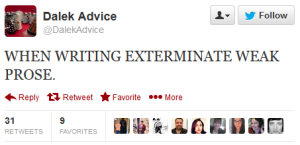
Weak prose: daleks say no
At least, that’s what I’m telling myself. (I’m not doing NaNoWriMo because I’m more of a NaNoSlowMo!)
Anyway, I always knew one of the writing mantras was show, don’t tell. But it wasn’t till after I went through my wonderful editor’s feedback on Isla’s Inheritance that I truly appreciated the breadth of this phrase.
It’s a funny expression, in a way. I mean, we’re writers. By definition, everything we do is telling, not showing. But the trick is to make the reader forget that you’re telling them. 😉
I always applied it to info dumps: those really boring parts of a book where you, say, summarised a piece of a character’s history. Better to have the character discuss said history in conversation — with someone who doesn’t know about it, obviously. (Don’t commit that awful crime you see on TV where characters repeat things to each other that no real person would, just to convey meaning to the reader/watcher. Ugh.)
That’s not to say that I didn’t have any info dumps in Isla’s Inheritance, but I managed to keep them under control for the most part. Or at least I recognised them when I saw them when I edited under my own steam, and cut them out.
But where I hadn’t fully applied show, don’t tell was in describing my character’s emotions, and in things she observed in the world around her. My manuscript was full of phrases like:
I felt guilty.
I heard sirens.
I saw him flinch.
Better to say:
My stomach churned with guilt.
The wail of sirens drew closer. (Or “The sirens’ wails drew closer”, if you’re on a passive sentence crusade.)
He flinched.
They convey the same meaning, but the latter set punches it up a notch. It’s the difference between telling someone a story and giving them the full immersion experience.
Show, don’t tell is my new favourite piece of advice. I may get it tattooed on my arm. (Ok, probably not, but it’s still a good one!)
Scary stories, and a giveaway
Posted: October 31, 2013 Filed under: Short stories | Tags: Halloween, short story Leave a comment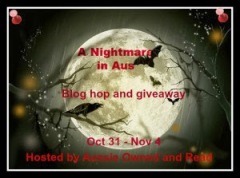
As you may be aware, over at Aussie Owned and Read (AOR) we’re hosting a bloghop called A Nightmare in Aus. Despite the name it’s open internationally, and you can win a bucketload of prices, both at AOR and at many of the participating blogs. There are books, Amazon vouchers, books, writing critiques, and more books!
To enter the AOR giveaway, click here. And to see which blogs are in the blog hop, or to enter your own, click here!
Also at AOR you’ll find a short story — well, more of a snapshot in the unlife of a vampire — that I wrote. Go. Read it. Say nice things. :p
And here is another of my stories, which is less vignette-y and more … well, read it and see.
Happy Halloween!
The Self-Fulfilling Prophesy
Word spread faster than dawn light in the little village of Dewdale.
“The ewe had a two-headed lamb! And the old oak by the river was struck by lightening and burned to the ground last night. It’s an omen.”
“Nothing good’ll come of it.”
“What’s it an omen of?”
“Ask old Mer. He’ll know.”
“Yes. Talk to Mer.”
“He’ll know.”
Before the sun was halfway up the sky, most of the village had gathered before the porch of old Mer’s run-down hut. Mothers clutched babes tight to their breasts, and several of the men held scythes and pitchforks in white-fingered grips. Old Mer, perched on his carved chair, scratched his bristled chin with dirty fingernails and squinted at the group. He hunched forward so that his failing sight could see the farthest of his supplicants. He didn’t let his satisfaction show on his face, which was grim.
“It’s a dark omen,” he murmured. The group strained to listen. “An omen,” he paused, “of death.”
The crowd gasped, the sound sibilant. There was a murmur, but old Mer stilled it with a glance.
“What can we do?” one member of the crowd asked, made bold by the fact that he knew this was what the old man wanted to hear.
“The Gods are angry. There must be a sacrifice, or there will be bloody death before the moon is full.”
The mothers held their babies tighter; the men scowled. Old Mer leaned back and stretched his spindly legs out to catch the sun. “Someone appropriate will pass through the village before then.” He knew this to be true; the traders came back from the capital at this time of year, and Dewdale wasn’t far from the trade road.
The crowd was satisfied with this, and dispersed rapidly enough to home and field.
A child was posted near the road to keep watch.
*
The man and woman didn’t suspect a thing. Coming into the village to seek shelter from an oncoming storm, they found the people of Dewdale were eager to accommodate them. The couple were grateful, for the woman would soon bear a child and found it hard to walk far; walking in the rain would be worse.
“Shall it be the man or the woman?”
“The man.”
“No, the woman. She and the child will be a double sacrifice. The Gods will be happy then.”
“The man will cause trouble.”
“You’re right. Maybe it should be both.”
*
Warm broth was brought from the kitchen of the village midwife. The rich meaty taste disguised the herbs she had added. Both husband and wife were sound asleep within moments of finishing their meal, the man’s head hitting the table with a thud, the woman’s slipped more gently to rest on her arms.
They didn’t wake when the villagers carried them to the green and tied them like rag dolls, to the hastily erected pyres.
They did wake, briefly, when the flames began to eat their bodies.
*
“Three of the goats were found, necks broken, near the creek.”
“It’s an omen!”
“What’s it an omen of?”
“Old Mer will know.”
Old Mer did know. Again the child was sent to the road to watch. Traders were plentiful at this time of year.
*
The woman who was welcomed that night was dressed in rags, and the village was grateful that it was a hag rather than a respectable couple who would go to the Gods this night, to prevent the bloodshed. The midwife watched eagerly as the woman sniffed at the broth, took a sip – and frowned as she placed the cup back down on the table.
“Sorry, lass. I can’t drink this.”
“Why not?”
“Because I’m allergic to some of the spices in it.” She squinted at the midwife. “But then, I’ve never met a soul who didn’t have a reaction to carronroot.”
The midwife, fearing for herself under the hard stare, cried out. The villagers who’d been waiting for her to call them came charging through the door. They hardly blinked when they saw the hag still conscious, grabbing her by the arms as she struggled to be free.
The screaming would be irritating, but better than the bloodshed old Mer predicted.
The hag’s cries rang out across the village as she was carried to the pyre. Old Mer frowned. He gestured with the burning torch, signalling another villager forward to help.
“Come forward, angry spirits of the murdered,” the hag shrieked. “Come forward, and have your revenge on the one who condemned you to death!”
The third man covered the hag’s mouth with his hand and glared at her. She tried to bite him and, although she had lost her teeth decades before, the slick feeling of her gums on his palm made him pull back his hand with a grimace.
“They will come,” she hissed, her voice penetrating. “The ghosts are angry. There must be a sacrifice, or there will be bloody death before the night is out.”
The villager frowned. The words were familiar. “What manner of sacrifice?”
“The ghosts demand a life. The life of the man who condemned them. They say, should the sacrifice be made, there will be no more omens of death.”
The men who held the hag from the ground carefully put her on her feet and turned to Mer.
The rest of the crowd also turned.
The old man tried to fend them off with the torch, but there were more of them than he could stop.
As the old man burned, the villagers thought they could se a crowd of ghostly figures standing close to the fire, smiling. Or maybe it was just smoke.
When they turned to the old woman for confirmation, she was gone.
Writing process blog tour
Posted: October 28, 2013 Filed under: On the Isla's Inheritance trilogy | Tags: blog hop, Isla's Inheritance 1 CommentI was tagged by Melissa A. Petreshock to participate in a blog hop about my writing process. It’s a simple one – answer four questions, and then tag three more authors, until it spreads, virus-like, across the WHOLE INTERWEBS!
Mwahahahahahah!
Ahem.
So, here are the questions, and my answers:
What are you working on right now?
I’m currently doing the first-round edits on my debut novel, Isla’s Inheritance, which comes out with Turquoise Morning Press in the second half of 2014. When that’s done, I’ll be doing a quick brush-up edit on the sequel, Isla’s Oath, so it’s ready to send to TMP when they ask for it. And then I’ll have to get to work on the third book in the trilogy. I’ve got an outline ready to go, although there are still a few blank spots that need sorting out. I’m looking forward to it. I haven’t drafted anything new in more than a month and I’m getting twitchy!
How does it differ from other works in its genre?

A fairy. Not like my fairies. (Source)
The series is a young adult urban fantasy—with fae. There are a few ways it differs, but my favourite one is the setting. I’ve always been interested in the mythological creatures of Europe, but at the same time I always wanted to write a novel set in Australia. I struggled with this for a long time, until I came up with the notion that maybe some of these mythological creatures fled to Australia over the years, came here to escape tyrannical leaders.
So I have fae, but they aren’t pretty, girly fairies—they are from a very cruel world. And they are hiding. When Isla, with her curious heritage, starts making some “noise”, that attracts all sorts of unwanted attention, with consequences not only for her but for her family and fae she’s never even met.
Why do you write what you do?
My muse doesn’t give me a choice.
It’s true. I started on the first chapter of a historically inspired Steampunk/fantasy, and my muse came along with her steel cap boots and said NO, you will write another urban fantasy. (That one is Lucid Dreaming, which I’m getting ready to pitch between other projects.)
I think one reason is that I am mostly reading urban fantasy these days. And part of it is that the idea of the sort of heavy-duty worldbuilding you need to do for a fantasy novel intimidates me, and I’m pretty much a giant chicken. (I will try it one day, if my muse permits.)
I’ve considered writing contemporary fiction with no supernatural element whatsoever, but every time I do, I start thinking about a magical element to the story. My imagination just doesn’t seem to work that way.
How does your writing process work?
Because I’m a single, working mother with a young son, I don’t get time to write every day. I wish I could, but I don’t. I usually manage once or twice a week—my goal when I’m drafting is to produce at least 2000 words a week. That means I write slowly. My most recent manuscript, which was Lucid Dreaming, took me seven months to draft. But it also means I have a lot of plotting time. My commute to and from work, moments of peace in the shower, even standing in a queue for a sandwich—those are all times when I can think about the story and what’s going to happen next.
It means I have yet to get “writer’s block”, because when I sit down to write I almost always know exactly what I need to happen in that scene. It’s the one upside of having so little time to actually write, so I’ll take advantage of it while I can!
Look for these authors next week…
Katie Hamstead, whose second book, Kiya: Mother of a King, came out this month with Curiosity Quills Press.
S. M. Johnston, whose debut novel, Sleeper, comes out in December 2013 with Entranced Publishing.
Stacey Nash, whose debut novel, Forget Me Not, comes out in February 2014, also with Entranced Publishing.
Edits, procrastination and Chicken of the Year…
Posted: October 16, 2013 Filed under: On the Isla's Inheritance trilogy | Tags: editing, Isla's Inheritance, Turquoise Morning Press 2 CommentsI edit for a living. Not in the publishing industry, mind you—so don’t try and pitch me anything!—but in the public sector. Lots of boring non-fiction. So I’m pretty familiar with the process.
Not the receiving end of it, though.
As I mentioned in my last post, I got my first-round edits back from Turquoise Morning Press a few days ago. In her email, Shelby said, “Please don’t be discouraged when you open it and see all the comments and marks. This is the first round and I ask a lot of questions.”
Uh oh, I thought. That’s the same thing I write in my feedback emails when I’ve totally smashed a piece.
I mentioned it to a colleague, who laughed and asked me what I’d do if I opened the document and it was a wall of red. I squirmed.
I should add, everything Shelby said in the email itself made perfect sense, and some of it confirmed quiet suspicions I’d had about some of my characters (one in particular I neglected as the book went on, and I probably shouldn’t!).
I wasn’t able to open the file at first. I was still in the process of setting up my PC, and hadn’t installed Word yet (a long story that involves a product key not kept with the disc, because it was in my email, which I couldn’t access until my ADSL had been set up, which I couldn’t access because my network card wasn’t wireless—ok, not that long a story).
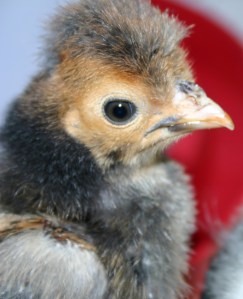
This is basically me, without the glasses. (Source)
But I got my Word and email set up on Sunday night. It’s now Wednesday, and I probably qualify for Chicken of the Year.
I told myself that, since I was part-way through a beta-read of Stacey’s manuscript, I really should finish that first.
I finished it yesterday evening.
Now I’m telling myself that I’ve got guests tonight, so I couldn’t possibly have time to have a quick look at Shelby’s comments. Thursday. I’ll do it Thursday.
Although I do still have to unpack the rest of my books, and sort out the garage so I actually have room to use it as a, you know, garage.
Maybe by the weekend?
You may commence making chicken noises in three, two, one—GO!
I’m baaaack!
Posted: October 13, 2013 Filed under: On me, On the Isla's Inheritance trilogy | Tags: betas, Isla's Inheritance, real-estate, Turquoise Morning Press 2 CommentsSo I know you guys have all been wondering where I was. Well, probably not, because if you read my blog at all you know I was about to move into my new house — and if you don’t, you wouldn’t care. 😉
I’ve been in the new place for five days and we only just got the PC set up and connected to the internet. I was a bit alarmed to find myself getting twitchy and a little depressed about being sans PC. Even though I had my smart phone and access to social media, at least, I really felt the lack of access to the internet — and to word processing facilities.
Especially when I downloaded my emails yesterday and saw that my editor at Turquoise Morning Press SENT BACK THE FIRST ROUND OF EDITS ON ISLA’S INHERITANCE!
*faints*
I haven’t cracked open the file yet — I’ll save that for when my little guy is in bed — but Shelby’s notes in the email were spot on. I’m really looking forward to getting stuck into them. (Make a note of when I said that, because I bet you $100 I’ll be suffering soon enough!)
I’m also beta reading a YA sci-fi by my friend Stacey, which I haven’t been able to touch for a week, so it’ll be good to get back into that too. The last time I read it was a climactic scene and having to wait has been killing me!
I’ve unpacked two and a half out of six bookshelves — I had to wait to do the rest till the PC was set up, in case we had to move furniture. It’s been fun reuniting with all my novels; once they are all out and looking fine I’ll post a photo of my study. I’m surrounded by books and have dual screens. And this is my view:
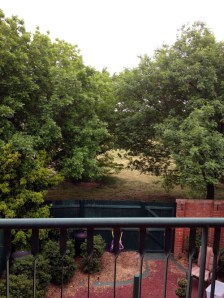
How’s the serenity?
Aww yeah.
He said, she said: dialogue tags
Posted: September 26, 2013 Filed under: On the Isla's Inheritance trilogy, On writing | Tags: editing, Isla's Inheritance, words to be wary of, writing 4 Comments
Source: wiki commons
I mentioned dialogue tags briefly a while ago in a post about “crimes” I commit when drafting—I tend to leave out the name of the other actor in a conversation between them and my first-person main character. It’s one of the things I edit in later.
Here’s a more comprehensive set of thoughts on dialogue tags. Anyone who’s read On Writing by Stephen King will know his advice, but here’s a summary:
- Don’t underestimate the power of “said”. Readers usually don’t notice it, and it lets you anchor the identity of the speaker in the reader’s mind with a minimum of fuss.
- You don’t have to attribute every single line of dialogue. In a back-and-forth conversation between two characters, it’s usually pretty obvious who is speaking for several lines after you include a dialogue tag. And if you have “X said” at the end of every quote, your reader will get annoyed.
- Dialogue tags other than “said” should be used sparingly (see example one, below).
- Consider using character action as part of the same paragraph that contains the dialogue. The action then identifies the speaker.
Example one: too many dialogue tags
This excerpt is taken from Isla’s Inheritance, although I’ve edited it to demonstrate how jarring excessive dialogue tags can be.
“It’s me. Dominic,” he said.
“Dommie?!” I squealed.
“If you must,” he replied dryly.
“I didn’t know you were back!” I exclaimed.
“Got back a few days ago; been catching up with the folks. Hence the lack of effort,” he laughed, indicating his Halloween costume with a wave of his sheet.
“It could have been embarrassing—I almost wore the same thing,” I admitted.
I’ve actually seen poorly edited books that read like this. I sit there wondering whether the author used a thesaurus to avoid repeating the same descriptive word—which means I’ve stopped paying attention to the story and am paying attention to the poor craftsmanship instead.
To make it clear: I’m not saying to never use these words. But I avoid any dialogue tag that doesn’t describe something the reader wouldn’t have gotten from the dialogue itself. For example, “shouted” and “whispered” are okay in moderation, as are “murmured” and “muttered”. But there’s never a reason to use “exclaimed” (because the punctuation mark already indicates that the dialogue is an exclamation), and if you’re using words like “flirted”, consider instead describing the flirtation. (“Hi there,” I flirted doesn’t tell us much; “Hi there,” I said with a wink is much more descriptive.)
Example two: a mix of tags and action
Here is the same sample text as in example one, with minimal dialogue tags, and action used to anchor the reader in the scene. (I also used fewer adverbs.)
“It’s me. Dominic.”
“Dommie?!” I sat up straight.
“If you must,” he said, voice dry.
“I didn’t know you were back!”
“Got back a few days ago; been catching up with the folks. Hence the lack of effort.” He indicated his Halloween costume with a wave of his sheet.
“It could have been embarrassing—I almost wore the same thing.”
Because there are only two characters, I don’t need to attribute every line. It gets more complicated when you’re dealing with multiple characters, but that’s where use of action really comes into its own.
Know the rules before you break them
One technique I noticed Aussie bestseller John Marsden use is not bothering even trying to attribute the dialogue. He used this particular technique when he had a bunch of teenage characters chatting excitedly and it didn’t really matter who was saying what. Stripping all the dialogue tags and action out sped the dialogue up to a sprint, which conveyed the conversation’s sheer chaos.
This is definitely a case where you need to understand the rules before you disregard them, though—the same technique wouldn’t have worked in any of the other dialogue scenes in his book, so he didn’t use it there.
Variety is key
As with most things in life, the best guide for dialogue tags is “everything in moderation”. If you mix up “said” with other dialogue tags, no dialogue tags and action, you’ll have a pretty solid foundation for conveying your dialogue and furthering your story.
Updates, and a call for content
Posted: September 25, 2013 Filed under: On the Lucid Dreaming duology, Uncategorized | Tags: betas, Lucid Dreaming Leave a commentI’ve been up since 5.30am (it’s now 7.22am as I write this, and I’m about to leave for work). So this is a bit of a rambling post. Please forgive any incoherent bits.

This is completely unrelated, but here’s a photo of a carved timber-and-metal raptor I saw at a woodworking showroom last weekend. It’s only $15k – buy it for me? 🙂
On Lucid Dreaming…
A few months ago I blogged about the importance of critique partners. I talked about the different approaches to getting feedback—whether you’re a perfectionist who edits your work before letting others read it, or whether you’re a sharer who is happy to let people see it and provide feedback when it’s still in its raw state.
I’ve done a little of both with my three manuscripts. But yesterday I just sent my latest manuscript, Lucid Dreaming, to my beta readers after a pretty thorough edit. Two of these beta readers haven’t read for me before, which made me even more anxious about them seeing my writing. Also, all of my beta readers are sheer awesome, which is a little daunting.
Of course, last night I couldn’t sleep. I felt all adrift. These are the classic signs that I need to embark on another project, to keep myself busy and not fretting. (Have they opened the document yet? Do they hate the first chapter? What if they notice that I’m faking it?) I have edits of Isla’s Oath to get on with, but I printed the manuscript before I moved temporarily into my parents’ house, and then, like an idiot, put it in a box. So that’s going to have to wait till we move into our new home—which is in about a fortnight.
Once I’m done with Isla’s Oath, the plan is to start on the third book in the trilogy. So I need to do some plotting there too.
On zombies…
I’ve spruiked The Zombie Project a few times here, and posted my short. If you want to read the whole set but can’t be bothered looking for all the stories, the amazing Chynna-Blue has put up a master post that details all of the contributors thus far, and links to the stories.
So now there’s no excuse. :p
(Spruiking is Australian slang for speaking in public, usually trying to promote or sell something. If you’re wondering.)
On blog content…
I’ve already contacted the ISP to start the process of getting broadband set up for the new house. But it could take weeks, and I can’t blog from work—so I’m looking at scheduling a bunch of posts for the next few weeks. If you are interested in writing a guest post or being interviewed, drop me a line at cassandrapage01_at_gmail.com (replace _at_ with @). The only catch is I’d need your post/answers by about 4 October at the latest.
Naming your book – and naming my book!
Posted: September 18, 2013 Filed under: On the Lucid Dreaming duology, On writing | Tags: editing, Lucid Dreaming, writing 5 CommentsLet me start out by saying that I suck at naming my books. Seriously. I come up with working titles during the drafting stage that don’t work for one reason or another, and then I get to the end of the process and can’t think of anything else.
 For example, Isla’s Inheritance originally had a title that actually contained a (minor) spoiler. I know, right? I’m an idiot. The working title was a great title—just not for that book. (I may use it for the third book in the trilogy; that remains to be seen.) The second book in the series was “Book Two” for ages, till it eventually became Isla’s Oath after Sharon suggested it.
Likewise, the book I just finished had a working title that might work for the name of a series, but doesn’t really grab me for the first book (in fact, I just googled it and it already is the name of a series … so that’s not going to work either, gorramit!). So I’ve been noodling new ideas for the past few weeks as I’ve been editing, settling on my criteria for a good book name.
These are my thoughts.
1. It shouldn’t have the name of a well-known book.
This point is pretty obvious. Bestsellers receive more promotion—anyone who walks into a store looking for your book may come out with the bestseller the bookseller has heard more about. (We’re not talking about your hardcore fans here, because they’ll know the author—but it’s amazing the number of people who buy gifts or hunt for books based on a fragment of information!)
For example, I thought about calling Isla’s Inheritance simply “Inheritance”, but Christopher Paolini already did that for his last Eragon book. Rats. If you’re not sure who else has used your potential title, Goodreads and Amazon searches are your friends.
I’ve been agonising about whether it’s okay for my book to share a title with any other work of fiction. If there’s an obscure self-published novel with only one or two ratings that has the same title, is that okay? I’m thinking probably. I have more than two relatives I can persuade to rate my book, so I should at least be the more popular one. 😉
One thing you can do, especially on sites like Goodreads, is give your book a subtitle: often the name of the series. Or, for some genres, titles that incorporate a unique, unifying element can work. Harry Potter is taken, though.
2. If it’s part of a series the titles should be thematically related … but also easy to remember.
As much as I’m not a huge fan of the Twilight series, Stephanie Meyer—or her editor—deserves huge amounts of respect for coming up with an awesome series of book titles. They are connected but not samey. You know which book is which. And they are short, which makes them easy to remember.
Maybe it’s just me, but I find a long series where the titles are all too close to one another very confusing. Charlaine Harris’s Sookie Stackhouse series of thirteen books is a good example. All of the books have the word “Dead” in the title. I just couldn’t tell the titles apart after a while—which made buying the next one trickier than it had to be! The titles were clever, but distinct? Easy to remember? Not for me, at least.
I haven’t plotted the sequel to my latest book yet—I need to write the third in Isla’s trilogy first—but there will be one. So I want a title that lends itself to that as well.
3. I like titles to be clever and beautiful.
My absolute favourite book titles are the ones that not only sound beautiful but have a double meaning—something where the readers go “oooooooooh!” at some point during the story. Those are hard to come by. Two examples off the top of my head are Bound by J. Elizabeth Hill and Forget Me Not by Stacey Nash (I’ve only seen a draft first chapter of the latter and I already know how perfect that title is for that book).
I love the poetry of Isla’s Inheritance and Isla’s Oath. They both roll off the tongue. But if my editor came up with something that did that and also had a double meaning, I’d give her a big wet kiss and change both titles in a heartbeat. (And of course, unless you’re self-publishing, there’s a good chance the title you’ve agonised over will get changed anyway. I gather this is especially true at the big end of town. But it pays to show you’ve put some thought into it; submitting a manuscript called “Insert Clever Title Here” doesn’t really show you at your professional best.)
So, after all of this consideration, what is the (tentative) title of my latest novel?

(I really wanted a gif with exploding fireworks but I couldn’t find one in the two minutes I spent googling!)


 Cassandra Page