50k words dance
Posted: May 17, 2014 Filed under: On the Isla's Inheritance trilogy | Tags: music 2 CommentsI like round numbers. And 50k is the NaNoWriMo target. So it’s pretty exciting to me when a MS gets to 50k, like Isla#3 just did — even though it will be at least another 20k words before I’m done. And it took me almost six months to get this far, not one.
When I tweeted my victory, Wendy made the following suggestion:
So, gentle reader, I would like you to imagine me dancing like this (only with less coordination and more singing along; Jamiroquai is very catchy!):
A couple of things: PitchSlam and bookends
Posted: May 1, 2014 Filed under: On the Lucid Dreaming duology | Tags: aussie-owned, bookends, Lucid Dreaming, pitches Leave a commentJust a quick note to let you know of two other places you can find me, or at least my various thought bubbles.
Today over at Aussie Owned and Read, I’m looking at bookends. You know, the things you use to stop your books from falling over if you don’t already have so many that there’s nowhere for them to go? Those.
Also, in the past few days I was a Pitch Slam finalist. I got some awesome feedback on my pitch and first 250 words during the “audition” rounds and was then chosen to be part of Team Stray Tats. I have a stray tat (or a tat of a cat that may be stray — haha, I rhymed), so that seemed appropriate. You can see my pitch here.
I got one request too. *plays air guitar* Thanks to Lucas for having enough faith in me to put me on the team. 🙂

Meet my character: Isla Blackman
Posted: April 25, 2014 Filed under: On the Isla's Inheritance trilogy | Tags: blog hop, Isla's Inheritance 5 CommentsI was tagged in the Meet My Character blog hop by the fabulous historical fiction author Nicole Evelina. (Thanks, Nicole!) The idea is that you can write about a character in a new release or WIP. Given my impending release and WIP are both about Isla, she was my obvious choice.
However, I’ve written this based on the first book, for reasons.
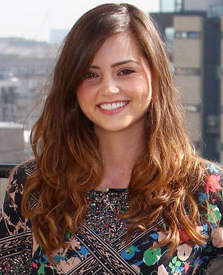
Jenna-Louise Coleman, who looks a lot like I imagine Isla would. (Source.)
What is the name of your character? Is she fictional or a historical person?
Her name is Isla Rose Blackman, and she’s about to turn eighteen. Her father is David Andrew Blackman, a small farmer and hobbyist ironmonger with a farm outside Canberra. Isla lives with her aunt, Elizabeth Kent, and cousins, Sarah and Ryan. But she sees her father regularly and adores him.
This meme started among the histfic writers, hence the second half of the question. Since I write urban fantasy, the answer is always going to be “fictional”. As much as it might be hilarious to write a vampire story involving a real life politician, for example, I suspect I’d be sued shortly afterwards!
When and where is the story set?
For the most part, it is set in Canberra—Isla moved in with her aunt when she started high school so she’d be closer to class. And it is a contemporary story…in timeframe if not always in subject matter.
What should we know about Isla?
Isla has a good head on her shoulders. Her father raised her to be practical and have a critical mind; for example, she never went through the new age phase Sarah did as a teenager. When her cousins drag her to a Halloween party, she thinks it’s all a bit of fun but nothing more—an excuse to dress up. She only ever agreed to take part in the séance because Dominic was there, and she’d had a crush on him when she was younger.
Turns out he’s still hot.
What is the main conflict? What messes up her life?
The first speedbump in the road is when the séance tries to contact Isla’s mother, who passed away in childbirth, and the “spirits” reply “SHE IS NOT DEAD”. Isla can’t understand why the girl running the séance would set her up like that, given they’ve never met before…but then all sorts of weird things start happening.
What is the personal goal of the character?
At first, Isla hopes for a lightbulb moment where she suddenly knows what she wants to do with her life. She has the grades for university, but decides to take a gap year because she isn’t sure what she wants to study.
After a while, though, she just wants everything to go back to normal.
When can we expect Isla’s Inheritance to be published?
October 2014. *faints*
Who’s next in this blog hop?
I’m tagging two awesome writers, contemporary author Lauren K. McKellar, and fantasy and urban fantasy author K. A. Last. I loved both of their recent releases, The Problem With Crazy and Immagica respectively. Check them out!
If my manuscript were a song…
Posted: April 21, 2014 Filed under: On the Lucid Dreaming duology | Tags: Lucid Dreaming, music, pitches 1 CommentYesterday I entered Lucid Dreaming in Pitch Slam. The theme is one of those musical talent shows, like Australian/American/Armenian Idol. You audition (send your pitch) and if Simon Cowell doesn’t hate you, you move on to the next round. The agents, if they make requests, do so as record executives.
I know, right? How cute is that? 🙂
Anyway, as well as providing details like genre and word count, I had to name a song that sums up my manuscript.
For Lucid Dreaming, that was easy. (For Isla, I’d have a lot more trouble.) It’s Enter Sandman by Metallica. But it has to be an orchestral version, because violins. VIOLINS!
Ahem. What song would you choose for your manuscript/s or WIP/s?
Isla’s Inheritance word cloud
Posted: March 24, 2014 Filed under: On the Isla's Inheritance trilogy | Tags: Isla's Inheritance 6 CommentsSomething fun from me today. I was stalking getting a link from Tess Grant‘s blog for her spot on This Writer’s Space in a couple of weeks, and I saw her post about an awesome word cloud app called Wordle. You paste in a selection of text and it ignores the common English (or other langauge) words and gives you a word cloud of the rest.
The results weren’t perfect – it didn’t seem to acknowledge the apostrophes as part of a word so there were a handful of fragments — such as “don” and “ll”. Once I removed those, I really liked the result.
Can you tell that Dominic features pretty heavily in that chapter? 😉

I’d love to see these results for other novels. If you do it, link me your blog in the comments so I can check it out!
Limiting your superpowers
Posted: February 21, 2014 Filed under: On the Isla's Inheritance trilogy, On the Lucid Dreaming duology | Tags: protagonists, urban fantasy 2 CommentsI’m a huge fan of superpowers—special abilities beyond the norm—having downsides or weaknesses. There’s nothing more boring (IMO YMMV ETC) than Captain Cheesecake, the speculative fiction superhero main character who can do anything. I’m looking at you, Superman—although he had kryptonite, his day-to-day abilities are over the top compared to other superheroes.
The contemporary equivalent of Captain Cheesecake is, of course, Ms Mary Sue (or Mr Mary Stu), the beautiful, talented and charming main character who seems to get whatever she wants and has men falling all over her. You particularly see her in fan fiction—and that’s where the term Mary Sue came from—but she crops up in traditional publishing from time to time as well.
Forgive me for saying it, Twilight fans, but Bella is a good example of a Mary Sue.
If a main character is going to have a supernatural ability, it’s important to me as a reader that it have clearly articulated limitations. It’s important as a writer too, because it’s hard to convolute your character’s life if he or she can just wave a magical doodad and unkink the twists in your plot.
And life is always more fun with a little kink.

Did she just say…?
Vampires become weak from lack of blood, and usually can’t go in the sun. Mages burn their own internal reserves, an act that limits their magical capacity. Wizards have wands, which can be lost or broken, or need special ingredients that are hard to find. Werewolves have issues with silver and hairy palms. Physically enhanced characters have limitations on how much damage they can take or how far they can push themselves before they keel over (except Captain Cheesecake Superman).
I’m a big fan of an energy limitation because it can be applied in so many different ways—vampires’ requirement for blood is a good example. I’ve used these types of limitations with the main characters in both my novels/series to date: Isla (of Isla’s Inheritance, funnily enough) and Melaina (from Lucid Dreaming).
In Isla’s case particularly, I also wanted to show the consequences of misusing special powers: what happens when they get out of control. It’s hard to give examples—because hello, spoilers—but think Mickey Mouse in The Sorcerer’s Apprentice. Or Renfield in Dracula.
(It’s really like neither of those things except only peripherally, but that’s the best I can think of.)
Also, another thing to consider is this: moral dilemmas are fun. Just because you can do a thing, should you? This subject could be a whole other blog post (and probably will be one day)—but a character’s morals can impose as much of a limitation on the use of a power or talent as any other, more-physical impediment to their use. (I guess this is where Superman redeems himself. Ok, fine, you can come out of the naughty corner, Clark.)
If you’re a speculative fiction writer, how have you stopped your main characters or bad guys from using their special abilities to wreak complete havoc with your plot and the world around them? And for the readers, what are your favourite examples of a writer putting the breaks on a power?
If you want to do something right…
Posted: January 26, 2014 Filed under: On the Isla's Inheritance trilogy, On the Lucid Dreaming duology, On writing | Tags: aussie-owned, Australia, blog hop, contests 6 Comments
(Okay, that may not be the most inspirational title for an Australia Day blog post, but I think it sums up what I am about to say pretty well.)
I love urban fantasy. Love it! I’ve felt that way since I didn’t know what the genre was called—back when Interview With the Vampire was filed in the sci-fi and fantasy section of the bookstore and the paranormal shelves didn’t exist. (Say what you will about it, we have Twilight to thank for their creation.) I thoroughly enjoyed Anita Blake’s early adventures, and loved Sookie Stackhouse when she came along too.
When I started thinking about the sort of novel I might write, I toyed with fantasy, but urban fantasy drew me back like a lodestone.
Then I’d think about where to set the book, and come unstuck. Because all the urban fantasy novels I read were set in America or, less usually, England. Wouldn’t Americans (who, lets be honest, are the biggest market of English-speaking readers in the world) prefer to read books set in their own country? The streets of New Orleans, Chicago, New York—those were the places haunted and hunted by the supernatural. Not sunny Australia.
I could’ve tried to write a book set in the States—I did think about it—but I felt like a fraud. I knew my Australian slang would reveal the lie. I’ve never even been to America. How could I pull that off?
So I didn’t write the book. Because “write what you know”, right?
Over the past few years, urban fantasies—and their kissing cousin, the paranormal romance—have started to appear, set in Australia. Maybe they’ve been around for longer and I only just began to notice them through the blanket coverage of foreign authors in Australian chain bookstores.
Okay, I thought, I can do this. Only… those books were all set in Sydney or Melbourne. Could Canberra, with its population of 360,000, be a viable setting for an urban fantasy? It may be the nation’s capital, but almost no one outside Australia has heard of it. Two out of three tourists think Sydney is the capital. (I just made that stat up, but I’d bet it’s true!)
And then it hit me like a boomerang in the face: if someone needs to do it to test the water, to see whether it’s a viable location for an urban fantasy, why shouldn’t that be me? I’ve lived here all my life so it definitely ticks the “write what you know” box. I love this city, with its wide open spaces, bush corridors, national monuments and occasionally dubious public art*.
Of course my books are set here.
*If you want to see what I’m talking about, do a Google image search for “Belconnen owl” and tell me what you think it looks like from behind. Then search for “Skywhale”, because LOL.
This post is part of Aussie Owned and Read’s Australia Day/Blogaversary blog hop. You can find other participating blogs or register your own here. And there is a GIANT GIVEAWAY too, which you can enter here.
Beginnings: starting in the right place
Posted: January 6, 2014 Filed under: On the Isla's Inheritance trilogy, On writing | Tags: editing, Isla's Inheritance, writing 4 Comments
Starting your journey… Source
One bit of advice you’ll often hear from agents and various other book people—such as PitchWars mentors and other competition judges—is to make sure your book starts in the right place. I’m basically giving you that same message, but thought I’d do it with an example.
The inciting event—the first big, life-changing incident that triggers the plot—in Isla’s Inheritance happens at a Halloween party. That event is in the first chapter of the novel, and always was…but the first draft of that chapter started with Isla and her cousin Sarah receiving the party invitation and sorting out costumes. I’m still fond of that scene, because it sets up the relationship between the two characters, and Sarah is a lot of fun to write. But it wasn’t the best place. Isla thinking about whether she had time to get her homework done before the party wasn’t exactly the sort of thing that hooked the reader.
In my defence, it was my first novel, and I learned by making the mistake. :p
The fact my opening sucked bugged me all through drafting the book, so after I’d finished and taken the time to get a bit of distance from the writing, I went back again. (The distance is crucial. As I said, I was fond of the costume-choosing scene, which meant I needed to take the time to see it for what it was.) I cut the first part, and started the scene instead with the two girls and Sarah’s older brother, Ryan, arriving at the party. That’s better, I thought!
That was the version of the book I started querying. I entered it in PitchWars at the end of 2012, and the feedback I got from mentors really shook me. I was still starting in the wrong place, damnit! Again, I was still taking time to establish the characters. I had Sarah and Isla giggle over an old school crush. Dance. I thought I was setting the scene, but it was still slow.
I went back and amputated even more from the scene. By this point I’d probably removed around 2000 words. Now it starts with Isla, at the party, meeting Dominic—her eventual boyfriend—and getting invited to participate in a séance. Sarah doesn’t even appear until the end of the chapter.
Whether that ends up being the perfect starting point for the book will ultimately be decided by my editor at Turquoise Morning Press, and—if she is happy with it—by the reader. But it is far, far better than where I began.
If you’re getting told your book starts too slowly, have a look at what you’re trying to show the reader in your opening scene. For example, say you start with your character jogging, thinking about their life (apparently this is a very common beginning, as is staring into a mirror). You want the reader to see upfront that your main character is a physical creature who has problems that need pondering. Instead, why not start with the manifestation of the problems. You can always have the character jog later, or mention the athletics trophies being knocked to the ground during a zombie attack—that sort of thing.
Obviously there are exceptions to every rule. (For example, if your character is doing a marathon and they rupture their Achilles tendon in the first page, or get hit by a car, because the rest of the story is about their healing journey.)
I’d like to think I’ve learned this lesson now. I’ve started three other novels, and all of them have a much quicker beginning to the plot. But I learned it the hard way. Avoid my mistake, grasshopper!
In case you missed it, check out my latest advice post over at Aussie Owned and Read… Querying agents and publishers: a glossary.

New year’s resolutions: 2014 edition
Posted: December 31, 2013 Filed under: On the Isla's Inheritance trilogy, On the Lucid Dreaming duology | Tags: new year's resolutions, writing 8 Comments
I did alright with my 2013 resolutions. They were all successes except for the “get more exercise” one — because in the course of attempting that, I tore my Achilles tendon at the gym in May. As it turns out they take FOREVER to heal. Curses!
Anyway, here are my resolutions for 2014. You could just as equally call this post “writing goals” because that’s what they are.
1. Celebrate the launch of Isla’s Inheritance in October (or thereabouts). Convince as many of you as possible to buy it.
2. Finish writing and editing the third book in Isla’s trilogy, so it’s ready to go to Turquoise Morning Press when they ask for it. (My goal is to write a minimum of 2000 words a week. I know that may not seem like much, but I’m time poor. This is why I write so slowly.)
3. Find a home for Lucid Dreaming, whether that be via the agent/traditional press route or the small press route.
4. Start writing something else. Possibly a sequel to Lucid Dreaming, although there’s that Steampunk I’ve been thinking about for aaaages.
5. Read. I’ll set my Goodreads target to 40 again, see how it goes.
What about you? Do you do the resolution thing? Or, even if you don’t, do you have 2014 goals?
So, whassup? I’m glad you asked…
Posted: December 24, 2013 Filed under: On me, On the Isla's Inheritance trilogy, On the Lucid Dreaming duology, Short stories | Tags: contests, Isla's Inheritance, Lucid Dreaming, short story, writing Leave a commentI know I haven’t posted a huge amount lately. What with work being busy–that last-minute “HALP I NEED TO GET THIS DONE BEFORE THE END OF THE YEAR!” rush–as well as various non-work edits that needed finishing, I haven’t had much time for blogging.
Here’s a brief rundown on the things that have been happening lately.
PitchWars
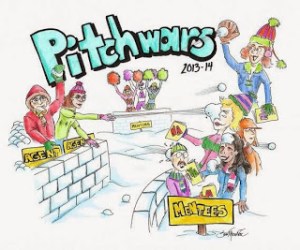
If you read this post, you’d know I entered Lucid Dreaming into PitchWars, one of the festive season pitching contests. I didn’t get chosen as a mentee, obviously, or you’d have heard me yelling all around the globe, without the aid of technology.
What I did get, once again, was some fantastic feedback. The mentors didn’t have to, and frankly I’m not sure how they found the time given some of them had close to 100 entries, but three of the four I pitched to gave me personalised feedback. They were also very encouraging, and said things like “I have every confidence I will see your words in the bookstore some day in the not so distant future.” Aww. Also, squee!
And Dannie, one of the mentors I pitched to, also gave me an honourable mention on her blog:
Most creative use of technology in mentor stalking: Cassandra Page
I stalk like a BOSS.
Anyway, following some edits to my manuscript, I then entered it in…
PitchMAS
 PitchMAS is a bi-annual three-day pitchfest and workshop, held in July and December. It has two phases. The first is where 75 pitches are selected to be posted to the blog, where they can be requested by agents and acquisition editors for various presses.
My pitch for Lucid Dreaming was selected to go on the blog, and, as you can see, I got some interest. I got even more from the Twitter pitches. I’m not going into details because a lady doesn’t, er, pitch and tell, but if you want to know badly enough, the information is out there the Twitterverse. You just need to stalk like a BOSS too.
Santa Clash
 The premise of Santa Clash was that a bunch of writers would produce Christmas-themed short stories. They didn’t have to continue on from one another like the Zombie Project did. No, this time the catch was much more diabolical. Each writer was challenged to write in a genre they didn’t usually delve into. I was given “adult”. Those of you who know me will realise how HARD THIS WAS FOR ME!
My short story, Letting Go, went up yesterday. I’ve had two people tell me they cried when they read it, so, you know. There’s that.
Meanwhile, over at Aussie Owned and Read

Today my December post went up over at Aussie Owned and Read. It’s called Stop, Revive, Survive, after the NSW road safety message. Don’t drive when tired this Christmas, mkay? Or write, actually.
Also, the post has some of my holiday snaps on it. Ok, one holiday snap. It’s a pretty one, though. Promise.
Isla 3
Finally, edits complete, last weekend I was able to get started on the third book in Isla’s trilogy. I only started yesterday but I’m pleased to say drafting is JUST like falling off a bike. You skin your knees, and maybe your teeth are kinda wobbly afterwards (or is that just me?), but you don’t actually forget how to ride.
My TMP editor will be pleased to know I’ve only bled on the manuscript a little bit so far. I will try and clean it up before I send it to her. I promise.
PS. Don’t forget to enter my blogaversary giveaway if you haven’t already. 🙂


 Cassandra Page