Interview: Suzanne van Rooyen, author
Posted: December 28, 2013 Filed under: On Books | Tags: Interview, lgbt, small presses, writing Leave a commentToday I’m interviewing Suzanne van Rooyen, whose LGBT YA, The Other Me, came out on 19 December. Suzanne is originally from South Africa but ended up in Finland after a short stay in Perth, Australia.
 First and foremost: why did you leave Australia? Was it something I said?!
Haha, probably not 😉 South Africans are often told that moving to Australia is like a home away from home. It isn’t and I wasn’t prepared for the culture shock. I was also living in Perth, which might not be the nicest city in Australia. While there were some things I absolutely loved about Australia – like living a five-minute walk from the beach, the size of the ravens and waking up to a chorus of cockatoos – ultimately, the heat (so much hotter than I’d ever experienced in SA!) and the lack of job opportunities for my then-boyfriend-now-husband made the move to Finland all the more appealing.
The Other Me is your first contemporary release after a series of science fiction works. Can you tell us about it?
With pleasure! I blog over at YAtopia and one of my fellow bloggers and authors there, Lisa Burstein, made a comment once about how in writing the author needs to open a vein and bleed a little. This had a huge impact on me and ever since then, those words niggled and gnawed until I eventually quit my zombie WIP and started writing a far more personal story. Inspired by my high school experiences at a Catholic all-girls school in South Africa, that novel became The Other Me. This is the story of fifteen-year-old Treasa, who thinks she’s an alien – the kind from outer-space with embarrassing tentacles – because she can’t come up with a better explanation for why she feels so out of place at her school or in her own skin. It takes falling for an emotionally scarred boy with baggage of his own for Treasa to understand, and accept, who she truly is.
You’ve said that the story is incredibly personal to you. Do you think that made it harder or easier to write?
In some ways easier because the emotions were real and the situations were largely inspired by my own experiences (I honestly went through a stage believing I must be from Mars because I felt so weird and ostracized by my peers) – not always my direct experiences, but experiences friends and family members had. This also made it harder because I needed to maintain the distance between fact and fiction while still tapping into that emotional well. I’d never really believed authors could cry while writing – I mean, just change the story so it’s not so sad, or how can it affect them when they know what’s coming? But I cried while writing The Other Me and in places I didn’t expect it, where the characters ambushed me with their own emotions and reactions to the situations I placed them in. While this story may have started out inspired by personal experience, it took on a life of its own, becoming Treasa’s and Gabriel’s story, and no one else’s.
 Does it affect how you feel about the idea of people you know reading it? (My debut hasn’t been released yet and I’m quite frankly terrified!)
Oh yes, I’m terrified of people reading it and miscontruing fiction for fact. I’m also really excited because this book is different and it doesn’t mince its words. Treasa has an important story to tell, and so does Gabriel. As afraid as I am about how people might react to me, the author, I’m more excited to see how people might connect and relate to my characters. Ultimately, this is a story that needed telling and I have no control over readers’ reactions. I’m trying to be Zen about it. *munches all the cookies and eyes the red wine longingly*
What is your next project? If it’s a secret I promise not to tell anyone. *shifty eyes*
My next to-be-published work is a quirky YA science fiction novel called I Heart Robot, which will be released from Month9Books in 2015.
My current WIP is set in the I Heart Robot universe, but across the Atlantic, and is all about cyborgs instead of androids.
You’re also the publicity manager for Entranced Publishing. What’s the single biggest piece of advice you’d give to a new author?
I’ve been asked this a lot recently and I’m not sure I’m qualified to answer it considering I still feel like a ‘new’ author myself. Perhaps the best advice I can give others is the type of advice I wish people had given me when I first entered the industry:
Be authentic and be sincere especially in online social media. The cultivated persona will only take you so far.
Persevere and have patience. Publishing is a waiting game: waiting to hear from agents, to hear from editors, for a book release, for reviews, for the shiny new idea… It all takes patience.
Dream big but set realistic goals. Chances are your first book deal won’t be six figures and go straight to film. That doesn’t mean you can’t dream about that one day being a reality, but in the mean time set attainable goals to avoid disappointment and disillusionment.
When in doubt, keep writing. As Ray Bradbury said, “You fail only if you stop writing.”
Quick! Choose! Science fiction or fantasy? Small press or traditional? The West Wing or Game of Thrones? Coffee or tea?
Gah! You’re seriously making me choose between all the things I love!?
Fantasy – it’ll always be my first love and first choice for reading
Small press – my experiences so far have been wonderful
Game of Thrones – only because of the dragons!
Coffee – because there’s just no starting the day without it
Suzanne is an author and peanut-butter addict from South Africa. She currently lives in Finland and finds the cold, dark forests nothing if not inspiring. Although she has a Master’s degree in music, Suzanne prefers conjuring strange worlds and creating quirky characters. When not writing you can find her teaching dance and music to middle-schoolers or playing in the snow with her shiba inu. She is rep’d by Jordy Albert of the Booker Albert Agency.
So, whassup? I’m glad you asked…
Posted: December 24, 2013 Filed under: On me, On the Isla's Inheritance trilogy, On the Lucid Dreaming duology, Short stories | Tags: contests, Isla's Inheritance, Lucid Dreaming, short story, writing Leave a commentI know I haven’t posted a huge amount lately. What with work being busy–that last-minute “HALP I NEED TO GET THIS DONE BEFORE THE END OF THE YEAR!” rush–as well as various non-work edits that needed finishing, I haven’t had much time for blogging.
Here’s a brief rundown on the things that have been happening lately.
PitchWars
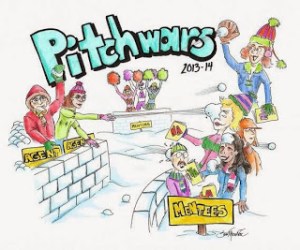
If you read this post, you’d know I entered Lucid Dreaming into PitchWars, one of the festive season pitching contests. I didn’t get chosen as a mentee, obviously, or you’d have heard me yelling all around the globe, without the aid of technology.
What I did get, once again, was some fantastic feedback. The mentors didn’t have to, and frankly I’m not sure how they found the time given some of them had close to 100 entries, but three of the four I pitched to gave me personalised feedback. They were also very encouraging, and said things like “I have every confidence I will see your words in the bookstore some day in the not so distant future.” Aww. Also, squee!
And Dannie, one of the mentors I pitched to, also gave me an honourable mention on her blog:
Most creative use of technology in mentor stalking: Cassandra Page
I stalk like a BOSS.
Anyway, following some edits to my manuscript, I then entered it in…
PitchMAS
 PitchMAS is a bi-annual three-day pitchfest and workshop, held in July and December. It has two phases. The first is where 75 pitches are selected to be posted to the blog, where they can be requested by agents and acquisition editors for various presses.
My pitch for Lucid Dreaming was selected to go on the blog, and, as you can see, I got some interest. I got even more from the Twitter pitches. I’m not going into details because a lady doesn’t, er, pitch and tell, but if you want to know badly enough, the information is out there the Twitterverse. You just need to stalk like a BOSS too.
Santa Clash
 The premise of Santa Clash was that a bunch of writers would produce Christmas-themed short stories. They didn’t have to continue on from one another like the Zombie Project did. No, this time the catch was much more diabolical. Each writer was challenged to write in a genre they didn’t usually delve into. I was given “adult”. Those of you who know me will realise how HARD THIS WAS FOR ME!
My short story, Letting Go, went up yesterday. I’ve had two people tell me they cried when they read it, so, you know. There’s that.
Meanwhile, over at Aussie Owned and Read

Today my December post went up over at Aussie Owned and Read. It’s called Stop, Revive, Survive, after the NSW road safety message. Don’t drive when tired this Christmas, mkay? Or write, actually.
Also, the post has some of my holiday snaps on it. Ok, one holiday snap. It’s a pretty one, though. Promise.
Isla 3
Finally, edits complete, last weekend I was able to get started on the third book in Isla’s trilogy. I only started yesterday but I’m pleased to say drafting is JUST like falling off a bike. You skin your knees, and maybe your teeth are kinda wobbly afterwards (or is that just me?), but you don’t actually forget how to ride.
My TMP editor will be pleased to know I’ve only bled on the manuscript a little bit so far. I will try and clean it up before I send it to her. I promise.
PS. Don’t forget to enter my blogaversary giveaway if you haven’t already. 🙂
Show, don’t tell
Posted: November 16, 2013 Filed under: On the Isla's Inheritance trilogy, On writing | Tags: editing, Isla's Inheritance, writing 10 CommentsI’ve been in the edit cave since I finished Lucid Dreaming at the end of August. There’s been Isla’s Inheritance, Lucid Dreaming and now Isla’s Oath, as well as a couple of critiques for good friends. If there was a NaNoEditMo, I’d be totally caning it — even if the goal were more than the 50,000 that the NaNoWriMo folks are aiming for.
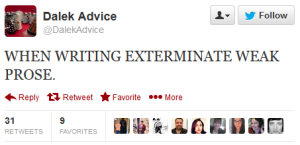
Weak prose: daleks say no
At least, that’s what I’m telling myself. (I’m not doing NaNoWriMo because I’m more of a NaNoSlowMo!)
Anyway, I always knew one of the writing mantras was show, don’t tell. But it wasn’t till after I went through my wonderful editor’s feedback on Isla’s Inheritance that I truly appreciated the breadth of this phrase.
It’s a funny expression, in a way. I mean, we’re writers. By definition, everything we do is telling, not showing. But the trick is to make the reader forget that you’re telling them. 😉
I always applied it to info dumps: those really boring parts of a book where you, say, summarised a piece of a character’s history. Better to have the character discuss said history in conversation — with someone who doesn’t know about it, obviously. (Don’t commit that awful crime you see on TV where characters repeat things to each other that no real person would, just to convey meaning to the reader/watcher. Ugh.)
That’s not to say that I didn’t have any info dumps in Isla’s Inheritance, but I managed to keep them under control for the most part. Or at least I recognised them when I saw them when I edited under my own steam, and cut them out.
But where I hadn’t fully applied show, don’t tell was in describing my character’s emotions, and in things she observed in the world around her. My manuscript was full of phrases like:
I felt guilty.
I heard sirens.
I saw him flinch.
Better to say:
My stomach churned with guilt.
The wail of sirens drew closer. (Or “The sirens’ wails drew closer”, if you’re on a passive sentence crusade.)
He flinched.
They convey the same meaning, but the latter set punches it up a notch. It’s the difference between telling someone a story and giving them the full immersion experience.
Show, don’t tell is my new favourite piece of advice. I may get it tattooed on my arm. (Ok, probably not, but it’s still a good one!)
This short film gave me ALL OF THE FEELS!
Posted: November 8, 2013 Filed under: On writing | Tags: muses, writing Leave a commentI while ago I reviewed the children’s picture book The Fantastic Flying Books of Mr Morris Lessmore. My son got it for his fourth birthday, and I loved it — it’s such a sweet metaphor for books as a source of healing after disasters.
Then my boy wanted to see the short film on which the book was based, so we watched it together. In the video version, the other subplot, about Morris rediscovering his muse and getting his own book to “fly” (a metaphor for not sucking) is more prominent and just as beautiful.
It’s fifteen minutes long, but well worth your time.
ALL OF THE FEELS, YOU GUYS!
Update: words to be wary of
Posted: October 31, 2013 Filed under: On writing | Tags: editing, words to be wary of, writing Leave a comment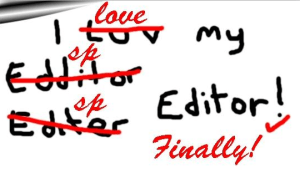 I’ve been doing a lot of editing in the last two months. A lot. I’ve done a first read on Lucid Dreaming, and separately incorporated feedback from a CP on it. I’ve CPed something in return. And, the biggest one of all, I got my first-round edits back from Turquoise Morning Press on Isla’s Inheritance.
So I guess it’s no surprise that I’ve added words to my list of things to keep an eye out for. So here’s an updated version. Maybe it will help others out too.
Adverbs (words usually ending in ly) – Do a search for words ending in “ly” and see whether you need them. Sometimes you can delete them outright; other times you can write around them. Rarely will you need them.
Dialogue tags such as gasped, shouted, yelled, cried, squealed, exclaimed, pronounced, whispered… I could go on all day. Check out this post if you want more information.
began to, started to, suddenly – “She began to run” is a long-winded way of saying “she ran”. Sometimes “began to” can be useful—say, when a girl begins crying halfway through an argument with her boyfriend—but not usually. And the house “suddenly” exploding isn’t any more shocking than the house exploding.
had – I’ve seen some people suggest you never need the word “had”. I don’t agree; in a past-tense novel it can be useful to flag that you’re talking about something that happened prior to the current scene. For example, “I had been to the shops”. If you say “I went to the shops” the way you would in a present-tense document (or life) then people will get confused about when the event happened. That being said, it’s not always necessary so use with caution.
of the – This is a typical indicator of a passive sentence, which is often unnecessary and always more wordy than an active sentence. For example: “The hair of the dog” vs “The dog’s hair”. Times you might want to keep a passive sentence include when the actor in the sentence is irrelevant or unknown; for example, “He was killed” versus “Bob killed him”. The latter is spoileriffic!
around, possibly, probably, likely, usually, almost, mostly – Do you need the qualification? If not, it should go.
seemed to – Because both my books are in the first person I overuse this phrase to describe my character’s interpretation of others’ feelings, thoughts or opinions. But nine times out of ten it doesn’t need to be there.
realised, knew, thought, saw, heard, felt (or their present-tense equivalents) – These phrases all flag a place where you’re telling rather than showing. “I felt angry” is the author telling the reader how the character felt, rather than showing it: “My fists clenched as fury raced through my veins”. (It’s terrifying how often I misuse these words!)
of – Sometimes this is unnecessary. Consider ‘The rage beat inside of my heart’. What is the ‘of’ contributing?
that – Sometimes you need “that” in a sentence. There are quite a few of them throughout this blog post. But you can often delete it with no impact on the meaning. Also, make sure you shouldn’t really be using ‘which’.
very, really, pretty (when it’s being used to mean “very”), just, simply, totally, finally, apparently, allegedly, supposedly, usually, awesome, fabulous, fantastic, incredible, wonderful – I keep these in dialogue and thoughts (because that’s how people talk), but at almost no other time. Note a lot of them are also adverbs?
Writing space
Posted: October 24, 2013 Filed under: On writing | Tags: real-estate, writing 7 Comments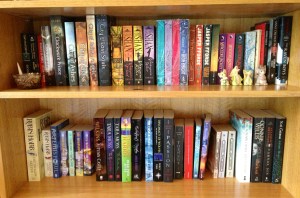
My to-be-read shelf has conducted a hostile takeover of adjacent territory
My writing space is almost set up. I was adamant when I bought my new house that as well as a bedroom for me and one for my son, there’d be a third room I could use as a study.
My old house was big. It was four bedrooms, and had an L-shaped lounge. There, one of the bedrooms was a library, and the computer lived in one part of the lounge. It was good then, because if my toddler was playing in the lounge or watching TV I could watch him while attempting to write (or, more likely, playing on social media). I wrote both of my Isla books there, and most of Lucid Dreaming.
This place is smaller. But I have my study. I had to put one bookshelf in the lounge because they wouldn’t all fit (and a smaller one in the dining room — yes, I have a lot of bookshelves). But the other five, and my computer desk, all tuck away quite nicely into my study.
There’s a view of our courtyard, and beyond that of the local park. And the study is far enough away from the lounge room that as my son grows older I won’t have to listen to him watch TV or play Final Fantasy XXIII on the Playstation 7.
As you can tell, I love it. It’s no isolated cottage at the end of a winding path, surrounded by flower gardens, but I did alright. ❤
What’s your ideal writing environment?
Writing for Young Adults
Posted: October 7, 2013 Filed under: On writing | Tags: contests, guest post, writing, young adult 1 CommentToday’s guest post is by Lauren K. McKellar, whose debut YA novel, Finding Home, came out on 1 October. Yay!
I have to confess: I wasn’t a YA author by choice.
I’ve always loved writing and reading, and my taste has always been to read up. When I was ten, I read Lord of the Rings. At eleven, there wasn’t anything ‘mature’ enough for me in the school library, so I read the dictionary.
 Yep, I had all the friends.
When I decided I wanted to try writing again, like I used to when I was younger, it was natural that I should try my hand at my current flavour of the moment: chick lit. I tried it during NaNoWriMo of 2011 and, needless to say, like many good first forays do, it sucked.
Badly.
Then I saw a competition advertised, Hardie Grant Egmont’s The Ampersand Project. It looked perfect: run by Aussies, a comp for first-time authors…it had everything! The only thing that didn’t quite fit with my master plan was the age group: it was for Young Adult writers.
‘No worries,’ I told my partner. ‘I’ll just write a YA.’
Ha! Like it’s that easy.
My first attempts at YA were terrible, so much worse than my first chick lit novel. I gave up. I deleted documents, I scrunched up pieces of paper and I threw my virtual competition entering spirit in the bin.
Then, something crazy happened.
I read a YA book.
It was completely by accident and, to be honest, I don’t think I knew it was YA before I picked it up.
And what happened? I was hooked.
I loved it. I loved it so much that I went out and bought a stack of other YA books, gorging myself on these teenage novels like a starving person at an all-you-can-eat buffet. Possibly with less restraint.
At the eleventh hour, I went back and attempted a complete rewrite of my Ampersand attempt. This time, I was armed with knowledge. I knew things, things I didn’t know before, including:
- Don’t write down to your audience. Who likes being spoken to like they’re a little kid? Not me.
- Try to avoid trends, e.g. brands of phone, social media specifics and current bands/movies. Trends change quickly for us all, but not so much as they do for teenagers.
- Don’t preach. My novel does feature a lot of teenage drinking, and it was hard to straddle the line between positive message and lecturing on the evils of booze. I’d like to think I’ve achieved it. Or, if not, I’ve given it a damn good shot!
- Research your genre. The kind of YA books I liked showed me things, things that some people might frown upon but that I loved reading about when I was a teenager. I wanted to read about sex. I wanted to read about drugs. I didn’t want them glossed over; I wanted details.
That doesn’t mean it’s the right thing to do, and Finding Home (my debut novel) doesn’t feature a whole heap of graphics on either matter. But they both feature. And I think that’s okay.
I didn’t get chosen for the Ampersand project. Honestly, I’m a little embarrassed when I think back to the copy I handed in then.
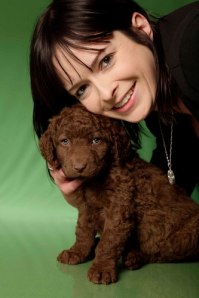 Luckily for me, though, I did get a publishing contract. I actually had two publishers who I tricked into thinking that Finding Home was worth putting to print.
And, after much hard work, deliberation and excitement, Finding Home is on sale now, for young adults, through Escape Publishing, a Harlequin Australia imprint.
And do I read chick lit anymore? Hell to the no.
For a chance to win one of two $5 Amazon cards, one $10 Amazon card or a copy of Finding Home, click HERE!
Lauren McKellar is a writer and reader of Young and New Adult books. Her debut novel. Finding Home, is out now, and can be bought from all your usual eBook sites (links available here). She also works as a freelance editor for novels for all age groups and you can chat to her on Twitter or Facebook any time you like!
He said, she said: dialogue tags
Posted: September 26, 2013 Filed under: On the Isla's Inheritance trilogy, On writing | Tags: editing, Isla's Inheritance, words to be wary of, writing 4 Comments
Source: wiki commons
I mentioned dialogue tags briefly a while ago in a post about “crimes” I commit when drafting—I tend to leave out the name of the other actor in a conversation between them and my first-person main character. It’s one of the things I edit in later.
Here’s a more comprehensive set of thoughts on dialogue tags. Anyone who’s read On Writing by Stephen King will know his advice, but here’s a summary:
- Don’t underestimate the power of “said”. Readers usually don’t notice it, and it lets you anchor the identity of the speaker in the reader’s mind with a minimum of fuss.
- You don’t have to attribute every single line of dialogue. In a back-and-forth conversation between two characters, it’s usually pretty obvious who is speaking for several lines after you include a dialogue tag. And if you have “X said” at the end of every quote, your reader will get annoyed.
- Dialogue tags other than “said” should be used sparingly (see example one, below).
- Consider using character action as part of the same paragraph that contains the dialogue. The action then identifies the speaker.
Example one: too many dialogue tags
This excerpt is taken from Isla’s Inheritance, although I’ve edited it to demonstrate how jarring excessive dialogue tags can be.
“It’s me. Dominic,” he said.
“Dommie?!” I squealed.
“If you must,” he replied dryly.
“I didn’t know you were back!” I exclaimed.
“Got back a few days ago; been catching up with the folks. Hence the lack of effort,” he laughed, indicating his Halloween costume with a wave of his sheet.
“It could have been embarrassing—I almost wore the same thing,” I admitted.
I’ve actually seen poorly edited books that read like this. I sit there wondering whether the author used a thesaurus to avoid repeating the same descriptive word—which means I’ve stopped paying attention to the story and am paying attention to the poor craftsmanship instead.
To make it clear: I’m not saying to never use these words. But I avoid any dialogue tag that doesn’t describe something the reader wouldn’t have gotten from the dialogue itself. For example, “shouted” and “whispered” are okay in moderation, as are “murmured” and “muttered”. But there’s never a reason to use “exclaimed” (because the punctuation mark already indicates that the dialogue is an exclamation), and if you’re using words like “flirted”, consider instead describing the flirtation. (“Hi there,” I flirted doesn’t tell us much; “Hi there,” I said with a wink is much more descriptive.)
Example two: a mix of tags and action
Here is the same sample text as in example one, with minimal dialogue tags, and action used to anchor the reader in the scene. (I also used fewer adverbs.)
“It’s me. Dominic.”
“Dommie?!” I sat up straight.
“If you must,” he said, voice dry.
“I didn’t know you were back!”
“Got back a few days ago; been catching up with the folks. Hence the lack of effort.” He indicated his Halloween costume with a wave of his sheet.
“It could have been embarrassing—I almost wore the same thing.”
Because there are only two characters, I don’t need to attribute every line. It gets more complicated when you’re dealing with multiple characters, but that’s where use of action really comes into its own.
Know the rules before you break them
One technique I noticed Aussie bestseller John Marsden use is not bothering even trying to attribute the dialogue. He used this particular technique when he had a bunch of teenage characters chatting excitedly and it didn’t really matter who was saying what. Stripping all the dialogue tags and action out sped the dialogue up to a sprint, which conveyed the conversation’s sheer chaos.
This is definitely a case where you need to understand the rules before you disregard them, though—the same technique wouldn’t have worked in any of the other dialogue scenes in his book, so he didn’t use it there.
Variety is key
As with most things in life, the best guide for dialogue tags is “everything in moderation”. If you mix up “said” with other dialogue tags, no dialogue tags and action, you’ll have a pretty solid foundation for conveying your dialogue and furthering your story.
Naming your book – and naming my book!
Posted: September 18, 2013 Filed under: On the Lucid Dreaming duology, On writing | Tags: editing, Lucid Dreaming, writing 5 CommentsLet me start out by saying that I suck at naming my books. Seriously. I come up with working titles during the drafting stage that don’t work for one reason or another, and then I get to the end of the process and can’t think of anything else.
 For example, Isla’s Inheritance originally had a title that actually contained a (minor) spoiler. I know, right? I’m an idiot. The working title was a great title—just not for that book. (I may use it for the third book in the trilogy; that remains to be seen.) The second book in the series was “Book Two” for ages, till it eventually became Isla’s Oath after Sharon suggested it.
Likewise, the book I just finished had a working title that might work for the name of a series, but doesn’t really grab me for the first book (in fact, I just googled it and it already is the name of a series … so that’s not going to work either, gorramit!). So I’ve been noodling new ideas for the past few weeks as I’ve been editing, settling on my criteria for a good book name.
These are my thoughts.
1. It shouldn’t have the name of a well-known book.
This point is pretty obvious. Bestsellers receive more promotion—anyone who walks into a store looking for your book may come out with the bestseller the bookseller has heard more about. (We’re not talking about your hardcore fans here, because they’ll know the author—but it’s amazing the number of people who buy gifts or hunt for books based on a fragment of information!)
For example, I thought about calling Isla’s Inheritance simply “Inheritance”, but Christopher Paolini already did that for his last Eragon book. Rats. If you’re not sure who else has used your potential title, Goodreads and Amazon searches are your friends.
I’ve been agonising about whether it’s okay for my book to share a title with any other work of fiction. If there’s an obscure self-published novel with only one or two ratings that has the same title, is that okay? I’m thinking probably. I have more than two relatives I can persuade to rate my book, so I should at least be the more popular one. 😉
One thing you can do, especially on sites like Goodreads, is give your book a subtitle: often the name of the series. Or, for some genres, titles that incorporate a unique, unifying element can work. Harry Potter is taken, though.
2. If it’s part of a series the titles should be thematically related … but also easy to remember.
As much as I’m not a huge fan of the Twilight series, Stephanie Meyer—or her editor—deserves huge amounts of respect for coming up with an awesome series of book titles. They are connected but not samey. You know which book is which. And they are short, which makes them easy to remember.
Maybe it’s just me, but I find a long series where the titles are all too close to one another very confusing. Charlaine Harris’s Sookie Stackhouse series of thirteen books is a good example. All of the books have the word “Dead” in the title. I just couldn’t tell the titles apart after a while—which made buying the next one trickier than it had to be! The titles were clever, but distinct? Easy to remember? Not for me, at least.
I haven’t plotted the sequel to my latest book yet—I need to write the third in Isla’s trilogy first—but there will be one. So I want a title that lends itself to that as well.
3. I like titles to be clever and beautiful.
My absolute favourite book titles are the ones that not only sound beautiful but have a double meaning—something where the readers go “oooooooooh!” at some point during the story. Those are hard to come by. Two examples off the top of my head are Bound by J. Elizabeth Hill and Forget Me Not by Stacey Nash (I’ve only seen a draft first chapter of the latter and I already know how perfect that title is for that book).
I love the poetry of Isla’s Inheritance and Isla’s Oath. They both roll off the tongue. But if my editor came up with something that did that and also had a double meaning, I’d give her a big wet kiss and change both titles in a heartbeat. (And of course, unless you’re self-publishing, there’s a good chance the title you’ve agonised over will get changed anyway. I gather this is especially true at the big end of town. But it pays to show you’ve put some thought into it; submitting a manuscript called “Insert Clever Title Here” doesn’t really show you at your professional best.)
So, after all of this consideration, what is the (tentative) title of my latest novel?

(I really wanted a gif with exploding fireworks but I couldn’t find one in the two minutes I spent googling!)
‘Where do you get your ideas?’
Posted: September 15, 2013 Filed under: On the Isla's Inheritance trilogy, On writing | Tags: fanfic, inspiration, Isla's Inheritance, muses, writing 6 CommentsI think the single most common question authors—especially very successful authors—get asked is about their sources of inspiration. The question is almost a stereotype now. And a lot of them reply along the line of, “The real trick is making them stop!”
I used to not understand this answer. I spent a lot of time toying with ideas, usually for high fantasy novels, but never getting far because the well would run dry: the ideas I had felt derivative, or paper thin.
It wasn’t till I said “hell with it” and started writing anyway that I discovered the truth. Like writing skill, the ability to come up with story ideas—for me at least—is like a muscle. The more I write, the more I come up with ideas, the easier it is. I suspect a lot of other writers are the same.
Getting to the point where I had an idea with enough weight for an entire novel was a long process, though. I started out, like a lot of people, writing fanfiction. I wrote some short stories in another writer’s fantasy world; it felt easy to me, because the worldbuilding had been done. This was in the days before the internet was huge (don’t laugh!) so the stories were published in the author’s “official” fanzine and distributed via the post. Old school, yo. *poses*
Then I wrote two or three novella-length stories that were another type of fanfiction: the type with famous people as characters (no, I won’t say who). But the stories were my own. These novellas were about 25k words each; when a friend pointed out to me that if I’d put that amount of effort into real fiction I’d have a novel, it was a sobering realisation. And a motivating one, too. It showed me I could do it, whereas before I’d thought I couldn’t.
So I revisited one of the novellas, and took an extra element of an old (non-fanfic) short story, threw them in a pot, and stirred. Then I started from scratch with the ideas born from this mix. The result was Isla’s Inheritance. The only element from the original novella fanfic that has carried across is one of my original (non-famous) characters: Isla’s cousin Sarah.
And once I finished Isla’s Inheritance, that seemed to open the floodgates on my subconscious. Ideas for a sequel, and another beyond that. Another urban fantasy idea (now finished). A solid fantasy/Steampunk concept (outlined). And other, half-formed ideas.

The muses from Hercules (copyright Disney; source).
These days it seems like whenever I hear a story on the news, or am talking to a friend, part of my brain is turning what I’m hearing over and looking at it from all sides to see whether there’s a kernel of a story idea there. I can see why writers call that their muse. I think of it more as part of myself—but a part I have very little control over. As my friend Stacey Nash describes in her latest blog post, it seems to have a mind of its own.
I’m curious though—do you find it easy to come up with story ideas? Has that always been the case, or have you had to train yourself/awaken the muse, like I have?


 Cassandra Page