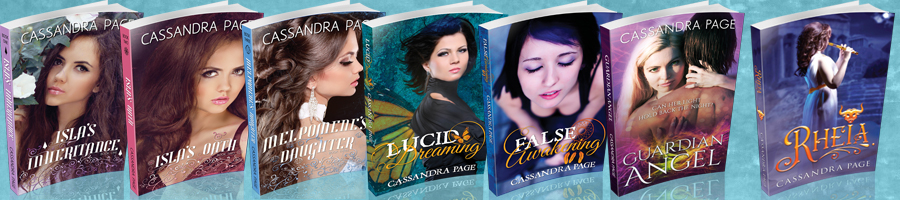
Updates, and a call for content
Posted: September 25, 2013 Filed under: On the Lucid Dreaming duology, Uncategorized | Tags: betas, Lucid Dreaming Leave a commentI’ve been up since 5.30am (it’s now 7.22am as I write this, and I’m about to leave for work). So this is a bit of a rambling post. Please forgive any incoherent bits.

This is completely unrelated, but here’s a photo of a carved timber-and-metal raptor I saw at a woodworking showroom last weekend. It’s only $15k – buy it for me? 🙂
On Lucid Dreaming…
A few months ago I blogged about the importance of critique partners. I talked about the different approaches to getting feedback—whether you’re a perfectionist who edits your work before letting others read it, or whether you’re a sharer who is happy to let people see it and provide feedback when it’s still in its raw state.
I’ve done a little of both with my three manuscripts. But yesterday I just sent my latest manuscript, Lucid Dreaming, to my beta readers after a pretty thorough edit. Two of these beta readers haven’t read for me before, which made me even more anxious about them seeing my writing. Also, all of my beta readers are sheer awesome, which is a little daunting.
Of course, last night I couldn’t sleep. I felt all adrift. These are the classic signs that I need to embark on another project, to keep myself busy and not fretting. (Have they opened the document yet? Do they hate the first chapter? What if they notice that I’m faking it?) I have edits of Isla’s Oath to get on with, but I printed the manuscript before I moved temporarily into my parents’ house, and then, like an idiot, put it in a box. So that’s going to have to wait till we move into our new home—which is in about a fortnight.
Once I’m done with Isla’s Oath, the plan is to start on the third book in the trilogy. So I need to do some plotting there too.
On zombies…
I’ve spruiked The Zombie Project a few times here, and posted my short. If you want to read the whole set but can’t be bothered looking for all the stories, the amazing Chynna-Blue has put up a master post that details all of the contributors thus far, and links to the stories.
So now there’s no excuse. :p
(Spruiking is Australian slang for speaking in public, usually trying to promote or sell something. If you’re wondering.)
On blog content…
I’ve already contacted the ISP to start the process of getting broadband set up for the new house. But it could take weeks, and I can’t blog from work—so I’m looking at scheduling a bunch of posts for the next few weeks. If you are interested in writing a guest post or being interviewed, drop me a line at cassandrapage01_at_gmail.com (replace _at_ with @). The only catch is I’d need your post/answers by about 4 October at the latest.
Naming your book – and naming my book!
Posted: September 18, 2013 Filed under: On the Lucid Dreaming duology, On writing | Tags: editing, Lucid Dreaming, writing 5 CommentsLet me start out by saying that I suck at naming my books. Seriously. I come up with working titles during the drafting stage that don’t work for one reason or another, and then I get to the end of the process and can’t think of anything else.
 For example, Isla’s Inheritance originally had a title that actually contained a (minor) spoiler. I know, right? I’m an idiot. The working title was a great title—just not for that book. (I may use it for the third book in the trilogy; that remains to be seen.) The second book in the series was “Book Two” for ages, till it eventually became Isla’s Oath after Sharon suggested it.
Likewise, the book I just finished had a working title that might work for the name of a series, but doesn’t really grab me for the first book (in fact, I just googled it and it already is the name of a series … so that’s not going to work either, gorramit!). So I’ve been noodling new ideas for the past few weeks as I’ve been editing, settling on my criteria for a good book name.
These are my thoughts.
1. It shouldn’t have the name of a well-known book.
This point is pretty obvious. Bestsellers receive more promotion—anyone who walks into a store looking for your book may come out with the bestseller the bookseller has heard more about. (We’re not talking about your hardcore fans here, because they’ll know the author—but it’s amazing the number of people who buy gifts or hunt for books based on a fragment of information!)
For example, I thought about calling Isla’s Inheritance simply “Inheritance”, but Christopher Paolini already did that for his last Eragon book. Rats. If you’re not sure who else has used your potential title, Goodreads and Amazon searches are your friends.
I’ve been agonising about whether it’s okay for my book to share a title with any other work of fiction. If there’s an obscure self-published novel with only one or two ratings that has the same title, is that okay? I’m thinking probably. I have more than two relatives I can persuade to rate my book, so I should at least be the more popular one. 😉
One thing you can do, especially on sites like Goodreads, is give your book a subtitle: often the name of the series. Or, for some genres, titles that incorporate a unique, unifying element can work. Harry Potter is taken, though.
2. If it’s part of a series the titles should be thematically related … but also easy to remember.
As much as I’m not a huge fan of the Twilight series, Stephanie Meyer—or her editor—deserves huge amounts of respect for coming up with an awesome series of book titles. They are connected but not samey. You know which book is which. And they are short, which makes them easy to remember.
Maybe it’s just me, but I find a long series where the titles are all too close to one another very confusing. Charlaine Harris’s Sookie Stackhouse series of thirteen books is a good example. All of the books have the word “Dead” in the title. I just couldn’t tell the titles apart after a while—which made buying the next one trickier than it had to be! The titles were clever, but distinct? Easy to remember? Not for me, at least.
I haven’t plotted the sequel to my latest book yet—I need to write the third in Isla’s trilogy first—but there will be one. So I want a title that lends itself to that as well.
3. I like titles to be clever and beautiful.
My absolute favourite book titles are the ones that not only sound beautiful but have a double meaning—something where the readers go “oooooooooh!” at some point during the story. Those are hard to come by. Two examples off the top of my head are Bound by J. Elizabeth Hill and Forget Me Not by Stacey Nash (I’ve only seen a draft first chapter of the latter and I already know how perfect that title is for that book).
I love the poetry of Isla’s Inheritance and Isla’s Oath. They both roll off the tongue. But if my editor came up with something that did that and also had a double meaning, I’d give her a big wet kiss and change both titles in a heartbeat. (And of course, unless you’re self-publishing, there’s a good chance the title you’ve agonised over will get changed anyway. I gather this is especially true at the big end of town. But it pays to show you’ve put some thought into it; submitting a manuscript called “Insert Clever Title Here” doesn’t really show you at your professional best.)
So, after all of this consideration, what is the (tentative) title of my latest novel?

(I really wanted a gif with exploding fireworks but I couldn’t find one in the two minutes I spent googling!)
‘Where do you get your ideas?’
Posted: September 15, 2013 Filed under: On the Isla's Inheritance trilogy, On writing | Tags: fanfic, inspiration, Isla's Inheritance, muses, writing 6 CommentsI think the single most common question authors—especially very successful authors—get asked is about their sources of inspiration. The question is almost a stereotype now. And a lot of them reply along the line of, “The real trick is making them stop!”
I used to not understand this answer. I spent a lot of time toying with ideas, usually for high fantasy novels, but never getting far because the well would run dry: the ideas I had felt derivative, or paper thin.
It wasn’t till I said “hell with it” and started writing anyway that I discovered the truth. Like writing skill, the ability to come up with story ideas—for me at least—is like a muscle. The more I write, the more I come up with ideas, the easier it is. I suspect a lot of other writers are the same.
Getting to the point where I had an idea with enough weight for an entire novel was a long process, though. I started out, like a lot of people, writing fanfiction. I wrote some short stories in another writer’s fantasy world; it felt easy to me, because the worldbuilding had been done. This was in the days before the internet was huge (don’t laugh!) so the stories were published in the author’s “official” fanzine and distributed via the post. Old school, yo. *poses*
Then I wrote two or three novella-length stories that were another type of fanfiction: the type with famous people as characters (no, I won’t say who). But the stories were my own. These novellas were about 25k words each; when a friend pointed out to me that if I’d put that amount of effort into real fiction I’d have a novel, it was a sobering realisation. And a motivating one, too. It showed me I could do it, whereas before I’d thought I couldn’t.
So I revisited one of the novellas, and took an extra element of an old (non-fanfic) short story, threw them in a pot, and stirred. Then I started from scratch with the ideas born from this mix. The result was Isla’s Inheritance. The only element from the original novella fanfic that has carried across is one of my original (non-famous) characters: Isla’s cousin Sarah.
And once I finished Isla’s Inheritance, that seemed to open the floodgates on my subconscious. Ideas for a sequel, and another beyond that. Another urban fantasy idea (now finished). A solid fantasy/Steampunk concept (outlined). And other, half-formed ideas.

The muses from Hercules (copyright Disney; source).
These days it seems like whenever I hear a story on the news, or am talking to a friend, part of my brain is turning what I’m hearing over and looking at it from all sides to see whether there’s a kernel of a story idea there. I can see why writers call that their muse. I think of it more as part of myself—but a part I have very little control over. As my friend Stacey Nash describes in her latest blog post, it seems to have a mind of its own.
I’m curious though—do you find it easy to come up with story ideas? Has that always been the case, or have you had to train yourself/awaken the muse, like I have?
Four ways to see your writing anew
Posted: September 12, 2013 Filed under: On writing, Uncategorized | Tags: editing, words to be wary of Leave a comment
A plotters journey: an artist’s impression (image: Wiki Commons)
Drafting a novel is like hiking through a huge forest. Your approach to the impending journey may vary: some of us come up with a detailed map, set their feet on the a path and power on through, while others see the edge of the trees, think “let’s see what’s in there”, and wander in. Most of us have approaches somewhere in the middle: we might know where we want to end up, but not have a specific path in mind. Almost all of us get distracted by things along the way; sometimes the distractions turn out to be just that, while other times they are a valuable addition to your journey.
But there’s an idiom that also applies to a writer who is in the middle of or has just finished drafting a novel.
I can’t see the forest for the trees.
Whether you love your work or hate it, when you type THE END, you are not seeing it clearly. Everything from being able to discern the dead wood, those scenes, characters or chapters that don’t move the story forward, to spotting typos is harder. You don’t have the altitude. You’re still in the trees.
So here are four ways to see your work differently: to get a Google maps perspective on your forest.
1. DO SOMETHING ELSE!
This is the first and most important, which is why I gave it shouty caps. If you can possibly avoid it, don’t jump straight back into editing. Give the manuscript a few weeks to stew. Read a book (or five). Write something else. Go on holiday. Spend some time with the loved ones you’ve been neglecting. You’ve written a novel, which is a thing to be proud of. Celebrate, but not by re-reading it.
This point should be applied in conjunction with one or more of the other suggestions, below. The only exception is if you’re up against a hard deadline that doesn’t give you the luxury of time. I’m not talking about a pitching contest you want to enter—there will always be more pitching contests—but something with legal ramifications, like a contractual requirement.
2. Read it in hard copy.
Speaking of trees (sorry about that, forests of the world)… This is my favoured approach. I wish I could get the necessary distance while still reading my words on a screen, but that’s the place where I drafted it, and I just can’t. On paper I can see misspelled or misused words, tracts of exposition—they all leap out at me. Usually I do a dirty word search before I hit print and make those amendments to the soft copy (looking for the crimes against English that I know I commit when drafting). Then I sit down with a pen and have at it.
This does have the drawback that I have to enter my edits onto the soft copy afterwards. It’s tedious but, for me, worth it.
3. Change the appearance of the words.
If you draft in Arial, try looking at your manuscript in Times New Roman. Or Comic Sans MS, if that’s what floats your boat—just remember to change it back before you submit it to any agents or publishing houses. I know some people who actually format their book and read it on their Kindle, to try and put themselves into the role of a reader rather than the author.
As an aside, I do this with all my blog posts. I write them in Word, do one proofread in the WordPress data entry screen, and then do a final check in the blog preview screen.
4. Read it aloud.
Obviously this is better for picking up line edit problems—passive sentences, overused words, that sort of thing—rather than structural problems. Although if you get bored reading a scene maybe that’s a sign the scene could go. There are also text-to-speech programs that you could use if you don’t want to read your 150,000-word opus aloud for fear of never being able to speak again. (And, um, if that’s your first novel I also recommend reconsidering the length.)
I’m tempted to add a fifth point here that says “see point one”, but I won’t. You get the idea.
Do you have other tricks that you use to let you see your words afresh?
Re-imagining A Myth: ‘Endre’ Blog Tour
Posted: September 10, 2013 Filed under: On Books | Tags: blog hop, book launch, guest post, research, small presses 5 CommentsI don’t know if you guys will recall my posts from back in July as part of Team Ull. I even wrote limericks. Four of them. Well, Ull is the tres sexy main man in The Elsker Saga by ST Bende, and — in case you also missed yesterday’s post — the second book in the series, Endre, came out yesterday. I’m very pleased to have ST herself here to talk to you about re-imagining a myth.
Hei hei. I’m ST Bende and I write about Norse gods with a good clean dose of romance on the side. I love spending time with my imaginary friends in Asgard (and I really love spending time in their secret lair in the Cotswolds, England!). And I love learning about the world they come from. Researching Norse mythology was one of my favorite parts of writing the books of The Elsker Saga, but it was also one of the most difficult. Because when you have an endless supply of amazing stories you could re-imagine, how do you possibly choose between them?
I strongly considered re-imagining the incredibly silly story about everyone’s favorite Norse God, the God of Thunder himself. When Thor’s beloved hammer, Mjolnir, was kidnapped by an evil jotun (who naturally would only return the hammer in exchange for an Asgardian bride), Thor dressed in drag and traipsed off to Jotunheim in full bridal regalia. He returned, Mjolnir in hand and a trail of dead jotuns in his wake.
I also thought about sharing the story of Loki, Odin’s blood-brother, who seriously ticked off the God of Thunder when he cut off Sif’s gorgeous hair. In order to avoid death-by-Thor, Loki had to convince the dwarves to weave Sif some new hair made of actual gold. This eventually led to the creation of the mighty Mjolnir. (It always comes back to that hammer with those gods.)
In the end, I chose to tell the story of the relatively unknown God of Winter, Ull. He was the son of the Goddess of Beauty (Sif) and the stepson of the God of Thunder (Thor). He was once worshipped pretty widely across Scandinavia, but there aren’t many stories out there about him. He made the perfect blank page — I got to create the god of my dreams, and make him the perfect match in every way for my human heroine, Kristia. And then I got to give them the perfect Asgardian wedding. (I nearly lost myself in Pinterest for a few weeks. Best. Research. Ever!)
I set Ull and Kristia’s love story against the heartbreaking tale of Ragnarok. The fall of Asgard and Midgard (Earth) was fated long ago, a necessary evil for the redemption of humankind. But my version of Ragnarok has more than a few surprises, courtesy of the newest Asgardian. After all, sometimes finding your destiny means doing the exact opposite of what the Fates have in store. Don’t you think?
Now tell me in the comments — if you could re-imagine any myth or fairytale, which would it be? And why?
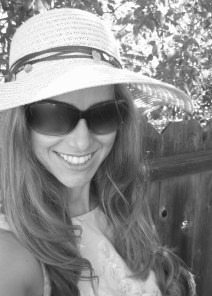
The gorgeous ST Bende
Before finding domestic bliss in suburbia, ST Bende lived in Manhattan Beach (became overly fond of Peet’s Coffee) and Europe… where she became overly fond of McVities cookies. Her love of Scandinavian culture and a very patient Norwegian teacher inspired the books of The Elsker Saga (TUR, ELSKER and ENDRE). She is an audio co-host of #NALitChat, and helps compile indie new releases for the USA Today HEA blog. She hopes her characters make you smile and that one day, pastries will be considered a health food.
Find ST on Goodreads, Twitter, Pinterest, her blog, or send her an e-mail at stbende(at)gmail(dot)com. While you’re at it, introduce yourself to @UllMyhr on Twitter — when he’s not saving the cosmos from dark elves, he loves meeting new friends. Especially the human kind.
Endre is availalbe from Amazon or Barnes and Noble.
Giveaway:
The Zombie Project: Firebreak
Posted: September 10, 2013 Filed under: Short stories | Tags: short story 1 CommentI’ve mentioned The Zombie Project before. It’s a project masterminded by the gorgeous Chynna-Blue: she herded a bunch of writers together and got them to agree to a series of short stories all set in the same world. The only rule was that each story had to contain an element of the one before. And this Sunday just past, it was my turn.
My story is #11 in the sequence. If you haven’t already, I recommend reading the entire series. But if you are too time poor for that (I get it, believe me!), I’d recommend you at least read two, as my short below continues on from them. The two are “Thinking Big” by Julie Hutchings and “The Light” by Jolene Haley.
Then you can read mine, “Firebreak”, here or by scrolling down.
Warning: contains zombies, swearing and gross stuff. Also American spelling, since it’s set in small town America.
FIREBREAK
Someone had killed her zombie.
Ruth Ann realized something was wrong as soon as she entered the back of Blue’s diner. The stench of rotting vegetable matter and tattered flesh hung in the air like offcuts on a compost heap. The zombie stink had been barely noticeable when she’d gone out; now it was so heavy in the air she could taste it.
The broom closet door hung ajar. Someone had tried to shove the dismembered limbs back in and slam the door—but several decaying fingers were jammed in the gap, ragged fingernails blackened and broken.
She opened the door, braced for an attack, and saw the zombie’s corpse. The stink hit her with a noisome fist. She swallowed bile.
The zombie had been decapitated, dismembered.
Trembling, Ruth Ann nudged the hand inside with the toe of her shoe. One of the fingernails fell off, plopping to the linoleum: a jagged accusation.
Someone knew her secret. She was poisoning the townsfolk with zombie toxins: a death that left their corpses inanimate, as a corpse rightly should be, not shambling around as this one had. Mr. Carter, the government agent who’d contracted her in exchange for her own survival, had given her another week to “take care” of the small town of Haley. No survivors.
But someone knew.
I don’t want to die.
She’d have to move more quickly.
*
There were so few of them left, Ruth Ann thought as she welcomed her dinner guests. Only a dozen—plus Ruth Ann—out of a population of over three hundred. Some had fled when the virus came. The rest, the stubborn ones who hadn’t wanted to leave their homes…well, they’d died.
Earlier that day Ruth Ann had crisscrossed Haley on foot, spreading the word that she was cooking up a batch of chili and wanted everyone to come along. The walk was harrowing, not because Haley was big but because Ruth Ann kept jumping at shadows. Every time she spoke to someone, she expected they’d thrust an accusatory finger at her and thunder, “WHAT HAVE YOU GOT IN YOUR CLOSET, RUTH ANN?” Her guilt was an invisible shroud that covered her, head to toe.
But no one could see it except her. With each cheerful acceptance of her invitation, her smile felt more brittle.
When she was sure everyone knew about dinner, and that they’d come—desperate for one last chance at community before the Lord took them all, she supposed—she’d returned to Blue’s to prepare the feast.
Ruth Ann’s sister, Penny, had disappeared—she hadn’t been seen since the day before. Ruth Ann was pretty sure she’d run away with her friend Mason, fleeing north toward rumors of sanctuary. She’d seen them whispering together yesterday, had thought about asking them—but had then decided it was for the best if they left.
She hadn’t served the contaminated food to Penny. She’d hoped Mr. Carter would take both of them in at the end, but had been too afraid to ask until her work was done. Until she’d earned the ticket into the uncontaminated compound that he’d promised her.
But Penny running away made things easier.
“It’s not exactly a Sunday roast, is it?” Father David said, smiling to take the sting from his words as Ruth Ann brought a steaming pot of chili to the table. She’d shoved the smaller tables together and covered them with checkered cloths to give the illusion of a big dining table. A wilting sprig of rosemary served as a centerpiece, its scent overwhelmed by the chili; Ruth Ann had gone heavy on the garlic and chili powder to compensate for the lack of fresh onions and jalapenos. And for other things.
“No sir,” Ruth Ann said. “All we’ve got left is mince. And packet food.”
“What I’d give for a plate of fresh roast beef,” Father David sighed, taking the pot from her. Bobby retrieved the ladle and slopped the chili into the Father’s bowl and then his own. “Not meat you need to curry or spice so you can’t taste how old it is.”
Ruth Ann clenched her jaw, nodded.
“On the bright side,” Bobby said, sniffing appreciatively, “Ruth Ann makes a mean chili.” JC, Bobby’s drinking buddy, wasn’t there. He’d succumbed to the fever days earlier. Bobby’s face still showed the traces of the heavy drinking he’d done after the funeral.
“Thanks,” Ruth Ann said, swallowing nerves that tasted like acid. “Would anyone like a drink?”
“What kind?” Wade rasped. The town alcoholic, he’d never pass up free liquor.
“Well, I sure ain’t serving you water. I got some whiskey. On the house.”
Laughter. Money hadn’t been worth spit for almost a month. And Blue’s owners were dead, the bank manager too probably—who would care if she gave away the last of the stock? Ruth Ann went behind the counter and sloshed brown liquid into glass tumblers, hoping no one would notice how her hands shook. Then she carried the trays back to the table. “It’s bottom-shelf whiskey,” she apologised as she handed out the drinks.
“That’ll be just fine,” Wade said, cupping his glass in his hands like it was precious. Ruth Ann used to feel that way about coffee, until the waters were contaminated with corpses. Would they have fresh coffee in the compound?
“May I say Grace?” Father David asked as Ruth Ann sat. She nodded and he bowed his head. “Oh Lord, we thank You for the bounty we are about to receive, here at the end of days. Please have mercy on those of Your flock who are left on this Earth, and let our final passage into Your arms be one of grace. Amen.”
“Amen,” everyone murmured.
“A toast.” Father David held his glass high. “To Haley’s Last Supper. And to Ruth Ann, for providing it.”
Ruth Ann’s fingers tightened on the greasy tumbler. Did he know? But, although their eyes were afraid, the others were laughing. And so was Father David, expression untroubled as he patted Ruth Ann on the hand.
Her guests downed their drinks, some of them coughing as the liquor burned down their throats like napalm. Rick, a sheep farmer who clung to his land despite the lack of livestock, gasped. “You weren’t kiddin’, Ruth Ann. That’s rough as guts.”
She dimpled a smile at him, leaned forward so her cleavage caught his eye, distracting him from the alcohol’s sour aftertaste. “When the supply trucks come through, I promise I’ll get you the sweetest whiskey. And a roast for the Father.”
“Get a doctor out here too,” grumbled Betty, a woman in her eighties who was as weathered—and tough—as old rocks. She slurped at the chili. “If we had a doctor, maybe that damn fever wouldn’t have taken the whole damn town.” Her husband nodded emphatically but didn’t speak, too busy eating.
Father David looked crestfallen at the profanity, but Betty ignored him.
“Sure thing.” Ruth Ann sat back in her chair as the others ate, talking about what other luxuries they’d order from the imaginary supply truck. Fresh bread. Cheese. Peanuts. Chocolate. She nibbled at a dry tortilla chip, pretending to sip her whiskey. None of them noticed she didn’t touch the meat, or the way she carefully wiped her lips after each touch of the glass. None of them noticed the level of whiskey in her glass didn’t change.
The zombie had already been crudely dismembered, and its flesh hung loose on the bone. Still, grinding the meat and drawing enough of the juices to spike the whiskey bottle had taken her all afternoon.
The sickness struck suddenly. Before, when she’d shown restraint in how much of the zombie’s flesh she’d served a customer, it had taken days for the fever to hit. She’d never had to see the consequences of her actions. But now, the cramps were swift and brutal. First one, then another of her guests—her neighbors—clutched their stomachs, eyes widening. Father David stared at Ruth Ann, clutching his belly with clawed hands, a dawning awareness in his eyes.
“Poison?” he gasped. The veins on his throat stood out like snakes.
Of a sort. “Heartburn from the chili, most like.” Ruth Ann jumped up, knocking her chair over. It clattered to the floor. “I have some antacid out back. Be right back.”
She ran to the kitchen and, taking a deep breath, locked the door behind her.
They took a long time to die, screaming and cursing her name. Ruth Ann hid in the kitchen until the agonized sounds ceased, covering her ears to block out their cries. Rocking in a corner of the kitchen where she’d prepared their last meal. The decaying stench of zombie flesh was noticeable despite the air freshener she’d used to try and hide it; it sent rotten tendrils up her nose and made her gag. Tears stained her cheeks, but she ignored them.
I don’t want to die.
Silence finally settled like gravedust. It took her another half hour to muster the courage to walk back out to the diner.
The air stank—not the putrid vegetable smell of her zombie, but of human waste. Shit and piss stained pants and skirts already dirty from lack of washing.
When the diner’s door slammed open, Ruth Ann very nearly voided herself too.
Mason stood in the doorway, framed by the setting sun. His hair was disheveled, his eyes wide. A filthy axe hung from his hand, forgotten as he stared at the corpses. And at Ruth Ann, standing behind the counter.
“You killed them,” Mason said. The light in his wrist glowed orange, like hers. Like the ones in the corpses’ wrists. How long would it be before they went out?
“The sickness—”
“Yeah.” His voice was flat. “Where’d you get the zombie? There ain’t been any around Haley. We were safe.”
“Not for long.” She inched toward the shotgun under the counter. “They were comin’. Where’s Penny?”
“Dead.” His words were a punch to the gut. Ruth Ann gasped. “She got bit.”
Her eyes were drawn to the axe like metal filings to a lodestone. The gore crusted across the blade was fresh. The world swam around her; she clutched the counter with both hands to steady herself. “You killed her?”
“Your zombie killed her,” Mason growled. And he lunged across the room, leaping over Betty’s still twitching corpse. She grabbed for the shotgun as Mason’s haymaker struck her jaw, hard; she flew back into the empty cake rack, knocking her head against it.
When her vision cleared, Mason was standing over her, axe raised, knuckles of the other hand ragged and bleeding. His eyes were mad—not angry, crazed. Small rust-colored specks covered his cheek like blackheads. The shotgun was behind him, out of reach.
“Why?” He narrowed his eyes at her.
“They offered me a way out.” Ruth Ann’s mouth tasted of copper. She ran her tongue across her teeth. Loose. The inside of her lip bled where her teeth had bit into it.
“The government?”
She nodded. The axe that filled her vision trembled, about to fall, to behead her the way it had her zombie. She glanced around, frantic, for some weapon. All she could see were rat droppings.
“For the love of God, Ruth Ann, why?” Mason’s voice broke on the last word.
“They’re buildin’ a firebreak.” Tears stung her eyes. “The zombies don’t travel far, and if there are no people to infect it stops them spreadin’. He said it would save America. What’s left of it, anyway.”
“So you poisoned them with fuckin’ zombie bits?”
“He said they ran out of everything else,” she whispered. “Used it up. All the chemical weapons and poisons. Gone.”
A moan on the other side of the bar, like a ghost rising from the grave. The sound of folks stirring, fingers scrabbling against dirty tiles.
Ruth Ann, behind the counter, couldn’t see what was happening on the other side, but the sight of Mason’s face, bleached pale, told her.
The rotting vegetable stink oozing across the room confirmed it.
“Oh, Christ.”
“I think you fucked up, Ruthey,” Mason said. He snatched up the shotgun in his free hand and darted toward the kitchen. She leapt to her feet, tried to follow—and he slammed the door in her face, locking it.
“Let me in!” she screeched, pounding on the solid timber. “I don’t want to die!”
“Neither did they!” Mason screamed back.
Ruth Ann turned. The people she’d slain were shuffling to their feet, bodies contorting as foaming green liquid spewed from their mouths. Father David was closest to her. He growled, a low, crazed sound, like a rabid dog. His eyes were glassy, and a red LED glittered in his wrist.
She’d given them too much. A quick transformation instead of a slow death.
“I don’t want to die,” Ruth Ann whispered as they closed in around her.
Happy book birthday! ‘Endre’ by ST Bende
Posted: September 9, 2013 Filed under: On Books | Tags: book launch, contests, small presses, urban fantasy Leave a comment
Endre by ST Bende
Book II of The Elsker Saga
Release: September 9, 2013 (HELLO, TODAY!)
Genre: New Adult Paranormal Romance
Publisher: Entranced Publishing (Rush imprint)
Blurb:
Sometimes, finding your destiny means doing the exact opposite of what The Fates have planned.
Winning the heart of an immortal assassin was a dream come true for Kristia Tostenson. Now she’s knee deep in wedding plans, goddess lessons, and stolen kisses. But her decision to become immortal could end in heartbreak — not only for Kristia, but for the god who loves her. Because while Ull would do anything to protect his bride, even the God of Winter is powerless against the Norse apocalypse. Ragnarok is coming. And the gods aren’t even close to ready.
Availalbe from Amazon or Barnes and Noble.
Review Snippets:
“If you’re looking for a different take on New Adult that has plenty of swoon-worthy moments, some nail-biting action, and a mythological world you can lose yourself in, this book is for you.”
Giveaway:
About the Author:
The gorgeous ST Bende
Before finding domestic bliss in suburbia, ST Bende lived in Manhattan Beach (became overly fond of Peet’s Coffee) and Europe… where she became overly fond of McVities cookies. Her love of Scandinavian culture and a very patient Norwegian teacher inspired the books of The Elsker Saga (TUR, ELSKER and ENDRE). She is an audio co-host of #NALitChat, and helps compile indie new releases for the USA Today HEA blog. She hopes her characters make you smile and that one day, pastries will be considered a health food.
Find ST on Goodreads, Twitter, Pinterest, her blog, or send her an e-mail at stbende(at)gmail(dot)com. While you’re at it, introduce yourself to @UllMyhr on Twitter — when he’s not saving the cosmos from dark elves, he loves meeting new friends. Especially the human kind.
Excerpt:
“What do you want to know?” Ull lowered his sunglasses lazily and eyed me with a look that made my insides burn.
“Well,” I paused. “Uh… what am I supposed to do if I’m attacked?”
“You mean if this happened?” Ull launched himself off the chaise, wrapping one arm around my waist and dragging me across the beach. He cradled me in his arms and landed in the froth where the ocean met the shore.
“See? I’m totally defenseless!” I gazed up at him, my back pressed firmly against the wet sand. He hovered over me, supporting his weight on his forearms.
“I am afraid you are.” Piercing blue eyes locked in on mine. Between the depth of his stare and the heat from his abs, I forgot everything else.
“Um …” I bit my bottom lip.
Ull tilted his head to one side, a small smile playing at one corner of his mouth. “Now what did you want to know?”
“I–” I broke off as a wave washed over us. The warm saltwater lapped up to my waist then retreated, leaving a film of sand over my legs.
“You were asking me how to defend yourself?” Dangit, it was hard to focus with Ull’s dripping body pressing against mine. Yes, I wanted whatever it was I’d asked about. Self-defense, right. But there was something else I wanted more.
I bent my knee and twined my calf around Ull’s. I shifted my hips just an inch and stared into those endless blue eyes. They sparkled in the sunlight. My arms were trapped beneath his torso, so I turned my palms upward to touch the spot where his chest met his shoulders. It was so smooth, so firm, and so very, very warm. My eyes never left his as I moved my thumb along the line of his shoulder, down his biceps and down to the crook of his arm. I drew a slow circle inside his elbow and Ull blinked.
“Kristia,” he whispered.
“Yes?” I tried to reach up to stroke the stubble lining his square chin, but my arms were pinned.
“You are not trying to defend yourself.”
“So?” I raised my head and kissed his jaw. “Maybe I don’t feel like fighting you off.”
“Mmm,” Ull closed his eyes as I kissed my way up to his ear. “So if someone came after you, you would just let them do this?”
He swiftly rolled onto his back, forcing me on top of him. He shoved his fingers in my hair and tugged gently, pulling my head back. He kept the other hand just above the bottom of my bikini, firmly pressing my hips into his. I squirmed against the hold, trying to find a way out of his grip. Though I tactically had the upper hand, I couldn’t move.
“Well I wouldn’t let just anyone do this.”
“I should hope not,” he growled softly. He raked his teeth along my throat and paused at the hollow of my neck. “Because this could end very badly for you.” He ran his tongue along my collarbone. I shivered.
In a lightning-quick move, Ull flipped me onto my back and pinned my arms above my head with one hand. I gazed adoringly at the fierce assassin glowering over me. “And this. What would you do if someone did this to you?”
“Uh,” I blinked. If I told Ull what I really wanted to do right now, I’d turn every possible shade of crimson.
“Focus Kristia.” Ull stared at me. “What would you do if you were trapped?”
“I… uh… I’d,” I blushed. “You seriously want me to fight you off?”
“If you are so bent on going through with this little exercise, then yes. Give it your best shot. And then I believe, you promised to pay me for the lesson.”
“Gladly.” I narrowed my eyes and wrenched my arm as hard as I could. It didn’t budge. I tried again but it was futile.
“You are outmaneuvered and I am twice your weight. Try something else.” Ull commanded.
I threw my shoulder into his chest and tried to roll to one side.
“You cannot out-force me. Look at the difference in our masses. Think tactically, Kristia. What can you do that will debilitate me?”
My eyes widened. “You don’t want me to–”
“I want you to find a way to get me off you. Do what you have to do.”
I closed my eyes and raised a knee to his groin. Ull groaned and rolled off me.
“I’m so sorry! You said to–”
He raised a hand and waved at me, turning away.
“I’m sorry,” I repeated.
“That was good.” He rolled back with a grimace. “But if someone is bent on capturing you, they will come back for more. And quickly. Your next step should be to run.”
“If you want I can get some ice for–”
“Run, darling.” It was a threat. “Now.”
Editing: my four (well, five) writing weaknesses
Posted: September 6, 2013 Filed under: On writing | Tags: aussie-owned, editing, writing 11 CommentsBefore we start, have you guys read my interview with the awesome Steampunk writer Jay Kristoff over at Aussie Owned and Read? If not, it’s here. Go on, I can wait.

An overworked train metaphor, chugging away… (Image via Wiki Commons)
Since I finished my most recent work-in-progress, I’m back on the editing train, steaming my way from the tiny villiage Stream of Consciousness to the (hopefully) shiny metropolis Compelling Prose.
(Fact: sometimes “steaming” can also be applied as an adjective to my first drafts!)
One of the things that makes you a better editor of your work is to know your writing weaknesses—the crimes you commit against the English language when you’re caught up in the initial drafting rush—so you can spot and fix them. Here are a few of mine, to give you an idea of what I’m taking about.
I LOVE the word “that”. Love it. In my first book, there were hundreds of unnecessary uses. I’m getting better but it’s still a problem. I use it when it’s necessary, when it’s unnecessary, and when it’s just plain wrong—for example, when I should instead say “who”, I say “that”. Every time. When I finished my manuscript a fortnight ago, I did a search for the word “that” and checked each usage.
It took hours.
I describe impossible bodily actions. My characters’ eyes do all sorts of things they shouldn’t. They roam the room instead of staying in their sockets where they are meant to be, the cheeky little sods. So I search for “eyes” and make sure to change it to “gaze” (or similar) when I’ve used it in that context.
As an aside, I’ve seen a senior editor suggest the word “blush” causes a similar problem in first-person books. Blushing is actually a reddening of the cheeks, and the first person character can’t see her own cheeks to know they reddened; she feels her cheeks burn, but can’t see it. This editor consequently said not to say “I blushed”. One to watch out for.
I describe redundant body parts. “He shrugged his shoulders”; “she nodded her head”. Given these are the traditional body parts to use, mentioning them is redundant. The only time you should mention the body part in these cases is when the character is using an atypical part—for example, nodding a hand during a puppet show.
Likewise, saying a first-person (or close-perspective third-person) character “saw” or “heard” something is almost always unnecessary. Given they are telling the story, if you describe something to the reader it’s implicit that the character noticed it.
He said, she said. When I’m describing dialogue between two characters in the first person, I can go for ages without mentioning the name of the second character. It’s all “I said, he said”. My solution to this is, again, to search for the character name and scan through the section of dialogue. Word 2010 highlights any found words in yellow, so if I see a whole page with no yellow, that’s a sign it needs review.
Complex sentences. I love these too. I go nuts with the ands, commas, dashes and semicolons to link ideas together. Sometimes it’s not a problem, but other times—such as during fight scenes or other adrenalin moments—a long sentence slows the action down. When I edit, I find these scenes and chop the sentences up, sometimes even into fragments.
So, those are my main writing sins—and yes, you got five instead of four. Counting? Me?
What are your writing weaknesses?
Twitter etiquette: auto-DMs
Posted: September 1, 2013 Filed under: On social media, On Twitter | Tags: Twitter 3 Comments
Spam makes baby twitter bird sad.
I recently got into a discussion with someone on Twitter after I unfollowed them. They tweeted me and asked why, and what they could do to win me back.
Never mind the fact that I’ve never had anyone do that before — most people, especially those with thousands of followers like this person — take the occasional loss of a follower in their stride. I’d never had a personal interaction with this person beforehand, and had only followed them for a few days before I unfollowed.
I tried to explain my reasons to them (as I write this I still haven’t decided whether to relent on the unfollow). And I’ll explain them here for you.
DO NOT SEND TWITTER DMS TO PEOPLE YOU DON’T KNOW, ASKING THEM TO DO STUFF.
This is spam. It doesn’t matter whether the DM contains a link, or even whether you’re asking them to do stuff on behalf of someone else — it’s still spam: an unsolicited request to do something they otherwise wouldn’t have.
Think of it like this. When you tweet, your followers see the tweet in their timeline. If they’re looking at the time, anyway. They can either choose to read it or ignore it, and if they choose to read it they can then elect to do the thing you’re asking them to do, or not. It’s like an ad on TV, or in a magazine.
When you DM someone, they will definitely read it, sure. But it’s more like telemarketing: ringing someone up (probably at dinnertime!) and asking them for stuff. I don’t like people ringing me, or DMing me, unless I know them or have otherwise invited contact.
A lot of people send auto-DMs when you follow them. Some are just “hey, thanks for the follow”. Others contain links to blogs and things — which is, to my mind, a little obnoxious. Put the link in your bio; I’ll find it if I want to.
For the record, I usually don’t unfollow someone for this particular offence. But I know people who do, so my advice would be don’t do it.
The person I unfollowed not only sent the auto-DM welcome message (with link), but then went on to send another DM to all their followers a few days later. It didn’t contain a link, but it did ask me to do something. It was spam. Again.
I’ll give someone another chance once, but twice? When I don’t even know you? No thanks.
I think a lot of people with things to sell on Twitter are bewitched by the idea that a DM is a guaranteed read. What they don’t realise is that it’s almost always also guaranteed to piss people off.
If you want people to click on your blog link, or like you on Facebook, or do whatever it is you are tempted to ask them to do, then my suggestion is this: be engaging. Be sociable. Be friendly, and genuine. Don’t just tweet about your product — you can mention it, of course, but it shouldn’t be more than a quarter of your overall tweets (probably less). Talk about other things. Show that you’re a person.
And have the link in your bio, so that when you’ve won people over they click on the link because they want to. Because they like you, or are a fan.
Thus endeth the lesson/rant.
Cover Reveal and Excerpt: ‘Finding Home’ by Lauren K. McKellar
Posted: August 30, 2013 Filed under: On Books | Tags: aussie-owned, book covers, contests, small presses Leave a commentI’m thrilled to be a part of the cover reveal for Finding Home, written by my dear friend Lauren K. McKellar. Also, the excerpt gave me goosebumps! I can’t wait for this release!

Synopsis:
Moody, atmospheric, and just a little bit punk, Finding Home takes contemporary YA to a new level of grit…
When Amy’s mum dies, the last thing she expects is to be kicked off her dad’s music tour all the way to her Aunt Lou in a depressing hole of a seaside town. But it’s okay — Amy learned how to cope with the best, and soon finds a hard-drinking, party-loving crowd to help ease the pain.
The only solace is her music class, but even there she can’t seem to keep it together, sabotaging her grade and her one chance at a meaningful relationship. It takes a hard truth from her only friend before Amy realises that she has to come to terms with her past, before she destroys her future.
Finding Home, Lauren K McKellar’s debut novel, is coming October 1, 2013. Add it to Goodreads today.
Click HEREto enter a giveaway celebrating this sexy new cover!
Excerpt:
‘Look, I have to go. Can we talk about this later?’ Dad was asking Mum. Joe had shut the door behind him, and it was a good thing he did too, because when Dad had finished speaking, Mum picked up an empty bottle of Grey Goose vodka and threw it at his head. She missed, missed by a mile, but that didn’t stop the bottle hitting the wall behind him and shattering into thousands of tiny pieces.
‘Jesus!’ Dad exclaimed. He turned around, surveying the damage.
‘Oh, look what I did! Can’t have clean-cut Stevie D trashing the green room. People might talk!’ Mum’s voice dripped with sarcasm. It sounded hoarse, no doubt a result of the hours she’d spent alternating between crying and screaming up until now.
‘Even if this was our bloody lounge room, I would still be furious! You can’t just throw s**t like that.’
‘I’ll throw whatever I want to throw!’ Mum yelled. ‘You’re so uptight.’ She walked up to Dad and put her hands on his shoulders, shaking them. ‘Give up this stupid dream already.’
‘And do what? I can’t afford your habits any other way. If I don’t sing, you have to get a job.’ Dad shook his head.
I inched around behind them and started to pick up the pieces of glass. They were all different sizes, and some had gotten stuck in the carpet. They required a bit of twisting to retrieve, but the others I could pick up with ease and place in my hand.
‘What do you want me to do? I don’t have any skills. And there’s clearly only one thing you think I’m good at these days,’ Mum said, leering. She pulled at her top, exposing her décolletage.
I focused on the glass again. I counted each piece in my hand. Thirty-six, thirty-seven, thirty-eight. On the fortieth piece, a shard broke through my skin, spilling bright red blood. Funny. I hadn’t thought my skin would be so thin.
‘Amy, you’re hurt!’ Mum pushed past Dad and came to kneel next to me. ‘What are you doing?’ She knocked my hand with her own, and the pieces of glass flew up into the air and landed back on the floor.
All my efforts — ruined.
‘Let me see,’ Dad said.
‘Get the hell away from her!’ Mum yelled, raising her voice again.
‘Do we have to do this in front of Amy?’ Dad asked. I felt them turn to look at me. Did they think I hadn’t heard? That the fights they’d been having all day in the adjacent hotel room hadn’t resonated with a hatred that travelled through walls?
‘Please don’t,’ was all I could say. But it was enough. Dad left the room, and Mum tended to my hand, spilling some vodka to cleanse it before wrapping it in a spare t-shirt.
‘I’m sorry, baby,’ Mum whispered to me. ‘I promise, things are going to get better.’
Only they didn’t. They got much, much worse.
Find Lauren McKellar at her website, or on Twitter or Facebook.


 Cassandra Page