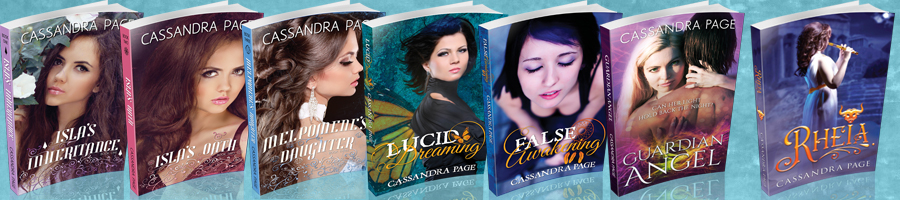
The problem with timezones, aka “I’m in a competition”…
Posted: January 16, 2013 Filed under: On social media | Tags: blogging, Boomerang, contests, Gmail, scheduling, Tweetdeck, Twitter 1 CommentThe problem with being on the opposite side of the planet from the majority of the English-speaking world is that sometimes competitions go live at, say, 4am. I’ve started taking major advantage of scheduling. I use TweetDeck (a free program) to schedule some of my Twitter posts for while I’m asleep and hopefully dreaming of David Tennant in leather pants (hello, Fright Night!), or while I’m at work. WordPress lets you schedule blog posts too, which is awesome.
The gorgeous Stacey and I were chatting about the awesomeness that is the Miss Snark agent blog (which I’ve raved about here before – you can find a link to Her Royal Snarkiness on my Links page). Stacey asked me if I’d heard of Miss Snark’s First Victim, a blog started by the first writer Miss Snark ever critiqued. In the spirit of helping other writers the way she was helped, MSFV runs regular competitons, including the annual Baker’s Dozen and the Secret Agent contents.
So I looked it up and decided I wanted to try my new opening paragraphs in the Secret Agent contest. (I’d try Baker’s Dozen but it’s not till the end of the year!) And of course the window for entries to be received was something like 3am to 7am. On a Tuesday morning.
Google to the rescue! I found a neat little Firefox/Chrome plugin called Boomerang. I like to imagine it was designed by an timezone-challenged Aussie much like myself, given the name, but it also has a feature to resend emails so maybe not. Boomerang works with Gmail and lets you schedule your emails. I searched for the timezone of the contest, figured out the local time to send the email, and kapow! (Also, send!)
Even more excitingly, I’ve been chosen at random by the random number generator gods to be one of the January Secret Agent contest entrants. Take that, timezone differences!
(Let’s take a quick moment out while I hyperventalate at the idea that my words are going to be more widely available than a few beta readers or Pitchwars mentors. It’s only 250 words, but still!)

Aaaah!
(Ok, I’m done.)
… The only thing is that the entries go live on Wednesday morning. Or Wednesday LATE-o’clock, local time. I don’t think scheduling can help me with this one.
Final score:
Me: 1,
Timezone differences: 1.
The One Lovely Blog Award
Posted: January 15, 2013 Filed under: On me | Tags: blog hop 9 CommentsI’ve been tagged in another blog hop given an award. It’s one that we writers give to each other. Don’t tell Amazon!
Here is my award, which I received from Rhiann. It is very pretty.

My award is a 300×300 jpg.
I also did up a bronzed version of it, because I have this preconceived notion that awards should be metallic. And possibly have a ribbon. This one doesn’t have a ribbon. (I hope that playing with the award picture doesn’t make me ineligible for the award.)

Ribbonless bronzed version of award.
Anyway, on to the blog hop award details. The rules state that I must share seven things about myself and pass the award on to seven other bloggers. I’ve added a rule too: that I may not say anything I’ve previously revealed on the blog (lucky I haven’t been writing it long). So here are my seven things:
- I’ve only ever been on one overseas holiday, which was almost twelve months ago. We went to Scotland and stayed in a CASTLE, and to Spain. We’d planned to go to Italy too, but …
- … in Valencia I fell off a hat and sprained my ankle so severely I ended up in a cast and we had to come home. (Yes, a hat. That’s not a typo. In my defence it was a giant fibreglass hat. Google “Gulliver Valencia” and you’ll see what I mean.)
- When I got to high school I didn’t try very hard in year seven English. I wasn’t lazy; I just didn’t quite realise what was expected of me in the homework department. So in year eight I got bumped down from Advanced English to the regular kind. The teacher took us to the library one lesson and just got us to choose books to take back to class and read. That was when I discovered adult fantasy novels. It was totally worth having to sit next to the bitchy girl who copied off my work.
- In year eleven and twelve I had an inspirational teacher (well, several, but this one is relevant to my story). He used to come into class late and practicing his golf swing. I remember arguing with him about the lyrics to Salt Water by Julian Lennon. But he also really encouraged me to write. I loved that class to the point where, when the guidance counsellor asked me what I wanted to study at university and I had no idea, I said maybe English just because I loved it. That’s how I ended up with a Bachelor of Arts in Communication.
- My first crush was on the Goblin King in Labyrinth. It’s also the first movie I remember seeing in the cinema. (Between this and the reference to Salt Water you can guess roughly how old I am. I really ought to stop being so obvious!)
- I slowed down in my writing for a while (never play World of Warcraft if you want any kind of life) and then stopped altogether for about 18 months when I had my son. Having a baby also broke my WoW addiction, so there was an upside. It was after that—maybe due to withdrawals, although there were other things going on at the time—that I picked up the old novel fragment that eventually turned into Isla’s Inheritance.
- In the last month or so I started going to the gym. Not to be a wanker about it or anything, but my son is three now and getting fast—soon he’ll be able to outrun me. Not cool!
The seven people I tag are:
Amber Bardan – http://amberabardan.blogspot.com.au/
Carey Torgesen – http://seattletfiles.blogspot.com.au/
Chynna-Blue Scott – http://chynnablueink.wordpress.com/
Julie Israel – http://julieisrael.wordpress.com/
Kristen Jett – http://kristenjett.com/blog/
Pippa Jay – http://pippajay.blogspot.co.uk/
Veronica Bartles – http://i-am-so-grateful.blogspot.com.au/
Internet research while writing, aka “You Googled what, now?!”
Posted: January 15, 2013 Filed under: On writing | Tags: internet, research, writing Leave a commentTwo thoughts occurred to me tonight, while I was on hold for half an hour, listening to music I think may have been composed by monkeys. Not trained monkeys either: ones that fling poop at you at the zoo.
One is that writers really have it a LOT easier these days than they did 20 years ago. Hello, internet! (And yes, I know 20-year-ago writers still have it easier than writers 40 years ago, when they were either typing or handwriting their novels. But I wasn’t alive 40 years ago, and this is all about me. It’s my blog post. :p )
I went to university in the ‘90s and I remember how slow it was to research anything. Don’t get me wrong, I love libraries. But when you’re in the middle of writing a scene and you suddenly want to know the airspeed velocity of an unladen swallow, you can’t beat the internet for giving you a quick answer! (Or the correct phrasing of a Monty Python quote.)
The other thought I had is that I Googled (and Wikied) some seriously odd things while writing my first two novels.
Here is a selection, off the top of my head:
- The average weight of a six-year-old boy.
- The colour of happiness.
- Bluebottles, aka Portuguese Men O’ War.
- The Greek muses.
- Intensive care units. One of my best friends ended up having a short stay in one after some surgery, so he helped fill out the details. The things people do for friendship; seriously! What a champ!
- Different types of European faeries. Look up the sluagh some time; I bet you $10 JK Rowling based the Dementors on them.
- Charm bracelets. I actually ended up with a Pandora bracelet because of this research (oops)!
- The shape of a shark’s jawbone.
- French cakes.
- Car keys, tyre irons and the buckles on seatbelts. When you’re writing a book about faeries suddenly you have a burning desire to understand what common metal items are made of.
- Godwin’s Law.
- The phases of the moon.
- Management of NSW national parks. Even more boring than it sounds.
- The various gaits of horses. Not just what they’re called (I knew that) but the rhythm.
- Canberra’s elevation above sea level.
- Antique furniture.
- Sidelights. You know the long, thin window that a lot of houses have beside the front door? Those things.
The funny thing is that none of this is big stuff. That’s partly because my books are urban fantasy and I set them in my home town, so I didn’t need to invent a setting from scratch. I have a huge amount of respect for those that do this, and do it well. All the little details I looked up are because I’d visualise a scene and know what something looked like, but not necessarily know how to describe it well. Hence, the internet.
In his book On Writing*, Stephen King says that the key to good description is to get a clear mental picture of your scene, and then to describe the most interesting details—not going overboard in the process. I’m still learning to get the balance right, as my most recent bout of editing has demonstrated to my acute embarrassment. But being able to look up something I’ve imagined in my scene, when I don’t know what it’s called (for example, the sidelight), is invaluable.

I love you, internet. Never leave me!
What’s the oddest thing you’ve looked up while drafting?
* If you haven’t already got a copy of On Writing you should go buy one. Right now. Go!
My editing process, and words to be wary of…
Posted: January 9, 2013 Filed under: On writing | Tags: adverbs, editing, passive sentences, words to be wary of, writing 7 Comments
I’ve made this all blurry so you can’t read my shame.
I mentioned here that I like to let a completed manuscript sit for a month before I do my first edit on it. I have one very good reason: to give myself a bit of distance from the draft, so I can start to see issues with the text, pacing, plot, characters—everything. This month, between reading and thinking about my next book I’ve started re-editing Isla’s Inheritance (my first MS).
One of the other tricks I use to give myself some impartiality on my work is to edit a hard copy printout. I draft on screen (well, duh), usually in a san serif font like Arial or Calibri. Then I convert it to Times New Roman, a serif font, and print it. Some studies claim san serif fonts are easier to read on screen and serif fonts on paper; it works for me, at any rate.
I love Word track changes when I’m editing other peoples’ work. It saves me (or them) having to enter in the edits, which is great. But if I read my work on screen I tend not to see things that need fixing. Incorporating all those hard copy edits onto the electronic manuscript is tedious, but I have yet to find a better way that works for me.
Other tricks I’ve heard writers use to try and give themselves that mental space include changing font size; formatting it so it looks like a book (justified text, number of words per line, etc); reading out loud; or even using a text-to-speech function so their computer reads it out loud for them. Maybe one of these will work for you.
I waffle when I write. Unnecessarily passive sentences, wordy sentences—you name it. This time around, I’ve been especially brutal with dialogue tags. You know the things you put after someone speaks? Those. I try and avoid using them if it’s obvious who is speaking. Sometimes I can indicate who’s speaking by having them do something in the same paragraph as the dialogue. For example:
“Get stuffed.” He scratched his chin with his middle finger.
If I can’t avoid a dialogue tag, my first choice is “said”. Readers don’t even see “said”; they skim right over it without pausing, so it doesn’t slow them down (if they stop and notice a word, it’s usually the wrong word). The only time I use any other dialogue tag (whisper, grunt, gasp, cry, wail, snarl, growl) is when there is no way the reader could get the tone from the words. For example, I wouldn’t usually use “yell” or “shout” because you can convey that with an exclamation point and the words the character is using.
If you do decide to use a dialogue tag other than “said”, make sure you don’t go overboard. A conversation in which everyone is gasping, crying and growling is, well, silly.
I’m also a big fan of the find and replace tool as a supplement to a thorough read of my work; if I notice I’m overusing a word or phrase, I’ll search for it throughout the entire document.
Here is a list of words and phrases to be wary of; some of these I’ve added to my list after folks on Twitter commented on them. Thanks, Twitter. 🙂
Suspicious words
Adverbs (words usually ending in ly) – Stephen King describes adverbs as being like dandelions; one might be an unusual and attractive feature in your garden, but if you leave it, it will spread until you have no lawn, just weeds. I do a search for words ending in “ly” and see whether I need them. Sometimes I can delete them outright; other times I can write around them. I rarely leave them. (Note: “rarely” in the previous sentence is an adverb, which I decided to leave. So too would be “seldom”, which doesn’t end in ly. This is why a word search is a supplement to a proper edit, not a replacement for one.)
around – I tend to use this to qualify numbers. “I woke at around seven.” The reader doesn’t care about whether the number is that precise. As the Cyberman said to, well, everyone else: DELETE, DELETE, DELETE!
began to, started to – “She began to run” is a long-winded way of saying “She ran”. Sometimes “began to” can be useful—say, when a girl begins to cry halfway through an argument with her boyfriend—but not usually.
had – I’ve seen some people suggest you never need the word “had”. I don’t agree; in a past-tense novel it can be useful to flag that you’re talking about something that happened prior to the current scene. For example, “I had been to the shops”. If you say “I went to the shops” the way you would in a present-tense document (or life) then people will get confused about when the event happened. That being said, it’s not always necessary so use with caution.
of the – This is a typical indicator of a passive sentence, which is often unnecessary and always more wordy than an active sentence. For example: “The hair of the dog” vs “The dog’s hair”. Times you might want to keep a passive sentence include when the actor in the sentence is irrelevant or unknown; for example, “He was killed” versus “Bob killed him”. The latter is spoileriffic!
possibly, probably, likely, usually, almost, mostly – Do you need the qualification? If not, it should go.
seemed to – Because both my books are in the first person I overuse this phrase to describe my character’s interpretation of others’ feelings, thoughts or opinions. But nine times out of ten it doesn’t need to be there.
suddenly – I tend to include this one (when drafting) to give the reader that sense of shock. But really, “the house suddenly exploded” isn’t any more shocking than “the house exploded”. Roll out the Cybermen again.
that – Sometimes you need “that” in a sentence. There are quite a few of them throughout this blog post. But you can often delete it with no impact on the meaning. When I searched it in my first manuscript, I removed it 600 times! That was horrifying. (See what I did there?)
very, really, pretty (when it’s being used to mean “very”), just, simply, totally, finally, apparently, allegedly, supposedly, usually, awesome, fabulous, fantastic, incredible, wonderful – I keep these in dialogue and thoughts (because that’s how people talk), but at almost no other time. Note a lot of them are also adverbs?
What words do you try and edit out of your manuscript?
My next project
Posted: January 5, 2013 Filed under: On the Isla's Inheritance trilogy, On writing | Tags: fantasy novel, Isla's Inheritance, Lucid Dreaming, urban fantasy, writing 7 CommentsNow I’ve finished Book Two (the as-yet-unnamed sequel to “Isla’s Inheritance”) I’ve decided to write something different. I do intend to also write Book Three—the series was always envisaged as a trilogy—but, for several reasons I won’t bore you with, I thought a break might be a good idea.
My dilemma is I have two different story ideas.
One is a fantasy novel. I have the main characters, most of a plot, and the beginnings of a setting. I also have the resources available to research the rest of the setting. I think it could be awesome.
The other is an urban fantasy. I only have the main character. It’s a cool concept, and one that isn’t too overdone (I think! Or hope!). The plot would make or break the idea.
Common sense is telling me to write the fantasy novel, purely because it’s more developed. But urban fantasy is my favourite genre. And I am terrified of complex world-building. I’ve never done it before, and you can’t write a fantasy novel without it.
Terrified, I say!
I’m leaning toward the fantasy novel because it scares me more, and maybe that’s a good thing. I should challenge myself and not chicken out and write something similar to the two books I’ve done so far.
If you have any thoughts I’d be grateful, but this post is really a whinge because I hear that’s what blogs are for. 😉
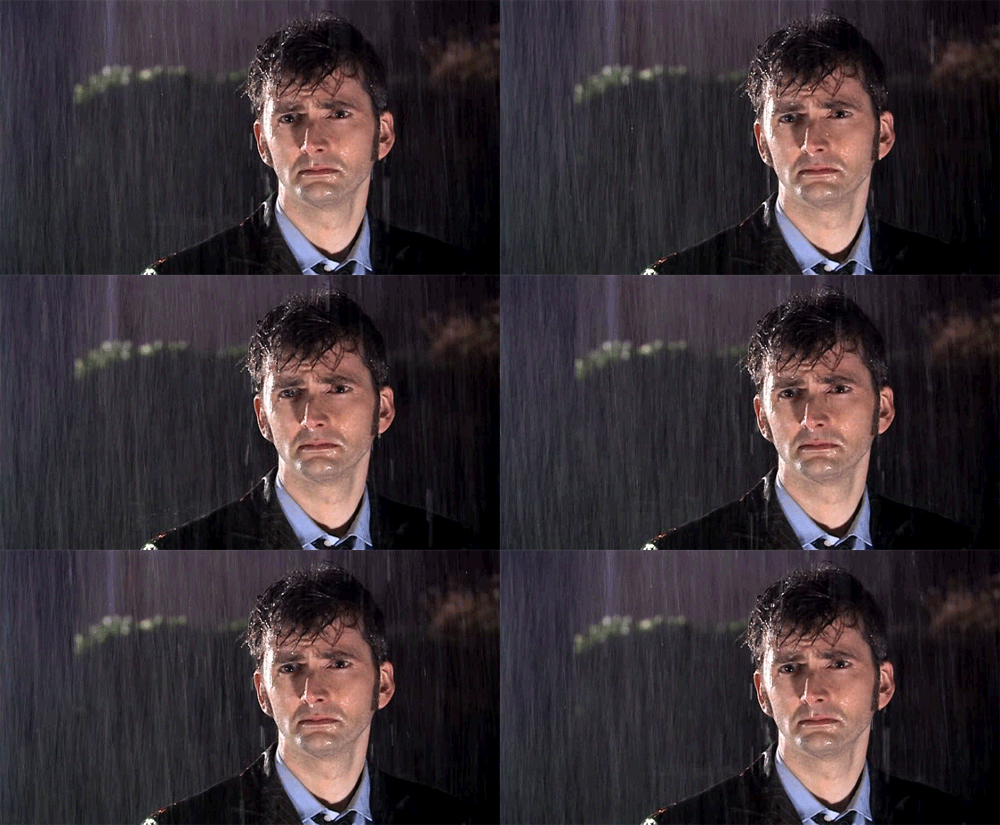
Emo Doctor Who is emo. Like me. Wah!
The Next Big Thing blog hop (aka tag, I’m it)
Posted: January 2, 2013 Filed under: On the Isla's Inheritance trilogy | Tags: blog hop, Isla's Inheritance, urban fantasy, young adult 4 CommentsThe lovely Katie tagged me about three weeks ago to participate in a blog hop (I’ve since also been tagged by Ruth). If you’ve never seen a blog hop before, the premise seems to be that one theme unites a bunch of posts by different bloggers, with the aim of drawing people to new blogs they otherwise might not see. Like a giant pyramid scheme: you’re tagged by one person and tag five more. But without the requirement that you send me cash! (Unless you want to. Oh, go on! Please send me cash!)
The thing is, Katie tagged me before I even had a blog. So here I am. Better (fashionably) late than never, right?
I always was a little slow.
So here are my ten questions:
What is the working title of your book?
Isla’s Inheritance.
The sequel is currently going under the sexy title of “Book Two”. What can I say—I suck at naming things.
Where did the idea come from for the book?
Psychic vampires. You know the ones: they feed on your BRAINWAVES! Like zombies, but with less mess. There aren’t actually any vampires in my book, psychic or otherwise … but that’s where the idea came from. Then I added in faeries to the pot, and stirred.
What genre does your book fall under?
Young adult urban fantasy. I’ve had at least one person describe it as paranormal—I have a scene with a ouija board. But there are more faeries.
Which actors would you choose to play your characters in a movie rendition?
This is far and away the hardest question of the ten. Especially since I rarely watch movies, so I have no idea who the current crop of young actors are. So here are some older actors. Imagine them younger. :p
Isla – Emma Watson
Sarah – Molly C Quinn
Dominic – David Tennant
Jack – Jamie Campbell Bower
What is the one-sentence synopsis of your book?
When Isla discovers her mother is an aosidhe—one of the fae ruling class—she must come to terms with her father’s deception and her own, sinister new abilities in order to save him.
Will your book be self-published or represented by an agency?
Represented by an agency. If the stars align and I can find that agent that loves me and hugs me and calls me George. Or Cassandra. Or even just offers to represent me. I’m not that fussy. And the hugging might be a bit weird.
How long did it take you to write the first draft of your manuscript?
I had the first ~10k words sitting there for years. Once I actually sat down and picked it up again, it took me about twelve months (give or take) to finish. Another six to edit, including getting feedback from beta readers.
Book Two took me about eight months to draft from scratch. I’m getting faster!
What other books would you compare this story to within your genre?
It’s a supernatural coming of age tale. I didn’t write it with a particular book in mind or anything, but I’m sure there are others out there.
I gather that Julie Kagawa’s Iron Fey books have a half-human teenage girl as the main character. But I haven’t read them. I will eventually—I really should—but I heard of them when I was partway through drafting Isla’s Inheritance and I thought if I read them I’d only see whatever similarities there were and lose hope. And maintaining the momentum can be tricky enough as it is, especially for the first book, when you’re full of self-doubt and haven’t yet proven to yourself that you can do it.
That being said, I’ve read the basic premise and, other than the main characters’ genetics, I think my books have very little in common with Kagawa’s. Maybe I’ll add reading the first one to my list of resolutions for next year.
Who or what inspired you to write this book?
I’ve always loved urban fantasy; it’s my favourite genre. Of course, I didn’t used to know that was what the genre was called. I used to call them “novels that are set in the real world, but with a supernatural element”. I told you I suck at naming things!
What else about your book might pique the reader’s interest?
It’s set in Australia. Isla’s father moved here from England in order to avoid the consequences of the actions that led to Isla’s birth … which I won’t elaborate on here. (Spoilers!)
And I tag…
I’m meant to tag five other blogger writers for this, but I’ve been nosing around and it seems the ones I thought might be interested have already done it. I really am late to the party… Anyway, if you’re interested, let me know in the comments (with a link to your blog) and I’ll edit you in! 🙂
To tweet or not to tweet! *chirps*
Posted: December 31, 2012 Filed under: On social media, On writing | Tags: agents, blogging, Facebook, social-media, Twitter, writing 9 Comments
A noob twitter hatchling, uh, hatches.
The days of authors being able to isolate themselves from their readers and concentrate on their craft are well and truly gone. There may be some fabulously rich bestsellers that don’t need to bother with social media, but they are few and far between. Even successful authors have a Facebook page, or Twitter, or a blog—or all of the above. (I know, because I follow some of them.) Apparently “word of mouth” is the newest craze in book marketing. That’s code for “the author maintains a social media presence”. It has the benefit of being cheaper than paid advertisements.
And it works too. I only discovered about Jacqueline Carey’s new urban fantasy, Dark Currents, via her Facebook page. I then went on to buy it—in hardcover, no less—and loved it. (And now I’m blogging about it. I should be on retainer!)
And if it’s important for them—the ones that have made it past the gauntlet of interns, agents, acquiring editors and whatever other publishing industry professionals exist (hey, I don’t know; I’ve never dealt with them!)—how much more important is it for self-published indie authors? And wannabes like me? Many agents say that if they are interested in a writer’s work, they will look them up on social media. I expect it’s mostly to determine whether the writer is crazy, arrogant or otherwise likely to be hard to work with, but part of it is also to see whether the author has a significant platform, like thousands of followers on Twitter or a crazy-popular blog.
All of these are reasons to engage with social media, whether you want to or not. But there are others.
I’ve been a Facebook person for years now: a personal profile only accessible to family and friends. I mostly post photos and cute updates about my son (as I was drafting this he asked me if I was king of our house; damn straight!). I haven’t actually created a public profile for my writing … mostly because it feels strange to create a regular Facebook account for it (one where I become Facebook friends with people), and to create a “fan” page when I have nothing for anyone to be a “fan” of feels like tempting fate.
But in November I decided to join Twitter. I’m sending my first book out to agents, and thought it was time I gave the social-media-as-writer thing a whirl. I had no idea what I was doing, but it’s easy to get the hang of. I’ve had non-Twitter friends ask me what I tweet about, and I tell them the truth: mostly I just chat to people. It’s not about posting the cleverest or most insightful thing (at least, not for me—I’m not that clever and am definitely not insightful!). It’s just about being friendly. Sometimes I’m funny but it’s usually by accident.
I got lucky, too—within a few weeks one of the people I was following tweeted about a contest called Pitchwars. Even better, I heard about it in time to actually enter. I chose three mentors to submit my query letter and the first few pages of my manuscript to, and sat back to wait. I also befriended other entrants and a few of the mentors; the competition had a super-supportive atmosphere that I found surprising, but also a huge relief. I don’t deal well with overly hostile alpha types.
I didn’t win, or even get picked for the final three by my mentors—although apparently I made some shortlists. It turned out that my query letter—which I’d already sent to a dozen or so agents by then—blew chunks. Several kinds, in new and interesting colours. Disheartening, much? I did get some lovely compliments back on my writing, though, as well as some specific and constructive feedback on the query and opening pages. The query in particular is, oh, a thousand times better now. If I ever meet the agents who got the original version, I plan to studiously avoid eye contact.
I also got invited to collaborate on a new blog (more on that next month)—which consequently encouraged me to start my own, personal blog (hi!). And I found myself a new beta reader for my book (the aforementioned Chynna-Blue). AND I’ve started following the tweets of a bunch of agents and agent interns, which is educational and occasionally alarming.
All this in less than two months.
So what’s my point?
I got onto Twitter with the misguided notion that it might be a good idea to build up some sort of following so that when I published my book (either traditionally or as an indie author) more people would know about it than my boyfriend and my mother. But I’ve found a brilliant, supportive community of writers who share opportunities, provide feedback and are a willing cheer squad. And many of them comment about the fact they’re writing, which I for one find an excellent motivator.
If you’re a writer trying to decide whether to bother with Twitter—if you can’t imagine what worth there could be in 140 characters—then DO IT! Be friendly and polite, and see how far it gets you.
Also, you never know. Maybe when that agent googles you they’ll like what they see.
My new year’s resolutions…
Posted: December 30, 2012 Filed under: On me, On writing | Tags: new year's resolutions, writing Leave a commentI don’t usually do these things. Resolutions, I mean. But I’ve decided this year that I will – so here, blogosphere, are my declarations of intent for 2013:
1. By the end of the year, I will have either found an agent or publisher, or will look at indie publishing routes for Isla’s Inheritance and its sequel.
2. I will finish writing another novel. (I’d aim for two but, let’s be honest, I don’t have that much spare time!)
3. I will edit my second book and see if I can find some beta readers for it, so it’s ready to go.
4. I will stop being a cagey, secretive writer with people I know personally. I may be a wannabe published author but, with two novels completed, I can probably say I’m a writer, at least. :p
5. I will get more exercise. I will use the gym at work: it’s free and I really have no excuse.
Do you do the new year’s resolution thing? If so, what are yours?
Edit: Number four: check! I outed myself on Facebook to all and sundry today. Now if only the others come so easily. 😉
What to do after you finish your manuscript.
Posted: December 29, 2012 Filed under: On the Isla's Inheritance trilogy, On writing | Tags: agents, editing, Isla's Inheritance, writing 6 CommentsI finished my second manuscript last night. I’ve still got to incorporate a couple of things: nuances I missed in the mad rush for the finish. But once that’s done, the drafting stage of the unnamed book I’ve been calling Book Two (yes, I’m a creative genius) will be complete.
You may be thinking—especially seeing I’m an editor by trade—that I’d be jumping straight into editing it. And I’m keen, believe me. I have all the crazy momentum of the last few weeks of writing, the urge to be doing, boiling away in my brain. But that would be a really, really bad idea. So if you’re in the same boat as me, this is my advice to you (imagine me shouting this through a megaphone in a hostage situation):
Put the manuscript down. Back AWAY from the manuscript!
When you first finish writing anything—novel, short story, article, shopping list—you are too close to see it objectively. There are a few tricks to let you review it more impartially. Some people suggest changing the font so you’re looking at it differently to how you saw it during drafting—this works for me when I preview the final version of a blog post, so it ought to work for a novel too. (It probably won’t work for a shopping list, unless you draft those electronically.)
I personally like to print my manuscript and edit in hard copy. Transcribing edits back into the soft copy is a bitch, but it’s worth it.
However, the best thing you can give yourself is time.
When I finished Book One (now called ISLA’S INHERITANCE), I made myself wait a full month before I opened it again. The only thing I let myself do was a spellcheck and some formatting. That’s it. But I didn’t waste that intervening period.
I read an agent’s blog. There are quite a few out there, but the one I chose was Miss Snark. The blog has been dark since 2007, but the archives are available and they are pure gold, my friend. They stopped me from making rookie mistakes when I eventually started querying agents. No, my mistakes (and I have made them) have been unique and individual ones!
This time, I’m thinking about pulling out Stephen King’s On Writing, which is one of the best books on the subject out there. I’ll reread it, see what lazy habits I developed in the drafting stage so I’m ready to go when I start editing. Also, while Book Two was a sequel to ISLA’S INHERITANCE—and I do have the beginnings of Book Three bubbling away in my subconscious (I’d always planned a trilogy)—I’ve also got an idea for a completely different book, which requires world-building and research. So I’ll work on that too.
As you can see, I won’t be wasting all that energy and forward momentum. I’ll just be using it in different ways.
Where I rant about lazy writing…
Posted: December 28, 2012 Filed under: On writing | Tags: coincidence, editing, writing 5 CommentsI recently discovered an entirely new fantasy series by one of my long-time favourite authors, and gleefully ordered all five books off the interwebs. (Ok, clearly the series wasn’t that new. But it was new to me. M’kay?) The first one, where she introduces the premise of the series, was very cute, although the combat at the end felt tacked on. The bad guy appeared out of nowhere because I guess she realised she needed an ending.
But…
I’ve just finished the third book. And I’m regretting having bought the other two. This is an experienced but prolific writer, and I can’t figure out whether she’s gotten lazy, or whether she makes her publishers so much money that when she says she doesn’t need an editor they actually believe her instead of saying, “YES YOU DO, PENMONKEY! NOW WRITE! AND DO YOUR MONKEY DANCE! MWAHAHAHA!”
(That’s what publishers do, right?)
There were a few things about the book that bugged me:
1. The lead characters fell in love in about two days. But this was a fantasy/romance novel, so I guess you get that as part of the genre.
2. The enter key? It’s to your right… One particularly noteworthy paragraph is a PAGE AND A HALF LONG! More than forty lines! I ended up getting bored and skipping it. I don’t care how magnificent your prose is, how exciting the fight scene, that is just too long—especially in genre fiction. (Maybe that’s the norm in literary fiction; I don’t know. I don’t read it for a reason!)
3. A lot of the information was repeated. The storyline followed two characters, and they would often notice the same things separately. Not even big, important things, but things like décor. What material the inn is constructed of. As a reader, I already know after the first time you mention it. I don’t need to have unimportant things described twice! (Or even important ones!)
4. The characters seemed to share a brain (except when it came to noticing the décor). The author would have one character discover something the hard way. Then the other, in the next scene, would intuit the exact same thing with absolutely no prompting or justification whatsoever. One character discovers a hidden tunnel; the other guesses there must be hidden tunnels. One character decides to go to the stable and try to talk to another in secret; the other coincidentally decides that exact moment is a GREAT time to go to the stables. Lazy. Lazy. Lazy! (See how annoying that repeating thing is?)
I don’t think there should ever be a coincidence in a novel that favours the protagonist. I’ve got no problem with the best friend coincidentally turning up at the worst possible time, so it looks like the main character is doing something inappropriate with the best friend’s boyfriend. I’ve got no problem with the bad guys—or police—coincidentally arriving when the good guys are trying to break into the occult bookstore to steal a tome to prevent the apocalypse. Go nuts making life hard for your protags.
But if you have the coincidences rain down to help the main characters, expect me to throw your book across the room and then rant on the internet about it.


 Cassandra Page