On author interviews
Posted: January 23, 2014 Filed under: On Books | Tags: Interview 10 CommentsI’ve interviewed a few different people on my blog now, and I’ve had feedback from several of them about how I ask insightful or “hard” questions or how I’ve done my research.

Source: wiki commons
My desire for research before interviewing someone arises from back in the days before time (here imagine me gesticulating wildly with my walking stick), when I was at university. I did a professional writing degree, which included journalism units—as an aside, it was their helpful advice about how to deal with your interview subject if they start crying that put me off journalism as a career path.
Arising from all of this is the fact that I don’t usually agree to interview people if I can’t cyberstalk research them beforehand, to find out what their interests are, or something about the book beyond what’s in the blurb. My favourite interview subjects are the ones who not only have an interesting, updated blog, but have posted links to the interviews they’ve done elsewhere.
The downside, of course, is that research is time consuming. I’ve easily spent an entire evening stalking researching someone for an interview.
The alternative to research, of course, is form questions. But for form questions to really work, they need to have something special about them.
Chuck Wendig does this well. He has an interview series where a bunch of different authors answer the same few questions each week—it’s really interesting to compare the different answers you can get to the same question. Also, his questions aren’t just “Can you tell us about your book?” They really dig into the author’s motivations and desires. The latest series is “Five Things I Learned Writing My Book”.
Other interviewers with a series of interviews narrow the focus down to a particular aspect of writing. For example, I saw one recently that was all about dialogue.
Another approach is the one taken by Valerie Rian, who recently interviewed me for her blog. She had form questions, but provided a huge list and I got to cherry pick the ones I thought I had an interesting answer to. That’s kind of like the interview subject doing the research for the most appropriate questions on your behalf, which I thought was quite clever.
All of this got me to wondering whether I should embrace one of these two approaches for some of my future blog interviews, especially for authors that don’t have a big web presence. I’m certainly thinking about it.
When you’re reading author interviews, what sort of questions are you most interested in the answers to?
Cover reveal and excerpt: ‘The Problem With Crazy’ by Lauren K. McKellar
Posted: January 17, 2014 Filed under: On Books | Tags: aussie-owned, book covers, contests, self-publishing 1 CommentA week ago I reviewed Lauren K. McKellar’s debut novel Finding Home. Today I’m excited to be a part of the cover reveal for her next book, The Problem With Crazy. I’m really looking forward to this release. Like, REALLY!
The problem with crazy is that crazy, by itself, has no context. It can be good crazy, bad crazy . . . or crazy crazy—like it was when my ex-boyfriend sung about me on the radio.
Eighteen-year-old Kate couldn’t be more excited about finishing high school and spending the summer on tour with her boyfriend’s band. Her dad showing up drunk at graduation, however, is not exactly kicking things off on the right foot—and that’s before she finds out about his mystery illness, certain to end in death.
A mystery illness she is likely to inherit.
When your whole life goes from adventure and ecstasy to sad and suicidal, what’s the point? Not knowing who to love, and who to trust . . . where does it end?
The Problem With Crazy is a story about love and life; about overcoming obstacles, choosing to trust, and learning how to make the choices that will change your life forever.
A portion of sales from this book will be donated to a Huntington’s disease-related charity (details to be confirmed).
Excerpt
Gypsy Rose placed a series of cards on the table, one after the other. They were brightly coloured, garish-looking things, full of shapes and objects, some of which I recognised and some of which I didn’t.
“Is there anything specific you want to know?”
The words stuck in my head.
Yes, when is my dad going to die?
Sure, will he remember me at all?
Okay, let’s start with am I going to have a mental illness and lose control of my words and movements?
“Oh you know, just general stuff.” I smiled vaguely and bit my lip.
Click here to enter Lauren’s The Problem With Crazy giveaway!

Join in the release day blitz, complete with prizes, fun, games, and a partridge in a pear tree on February 13 2014. Sign up today.
 Lauren K. McKellar is a writer and editor of fact and fiction. She has worked in publishing for more than eight years, and recently returned to her first love: writing books that make you feel.
Lauren loves to write for the Young and New Adult markets, and blogs with Aussie Owned and Read, as well as vlogging with the YA Rebels.
In her free time, Lauren enjoys long walks on the beach with her two super-cute dogs and her partner-in-crime/fiancé.
Find Lauren McKellar at her website, or on Twitter, Facebook or Amazon.
Call for nominations: best romance
Posted: January 14, 2014 Filed under: On Books | Tags: aussie-owned, Cassandra Clare, romance 13 Comments
Last Valentine’s Day over at Aussie Owned and Read we had the Choose Your Favourite Couple competition. (Cassandra Clare’s Clary and Jace won, with Ron and Hermione second.) Those couples were nominated by the members of the Aussie Owned and Read team.
This year we want to do it differently. We want YOU to nominate your favourite romance. Here are the rules:
1. The book must be either young adult or new adult. (No erotica please.)
2. It can be any genre, not just romance.
3. Leave a comment below with the name of the book, the author, and the romantic couple.
4. Despite the competition being at Aussie Owned and Read, neither the author nor the couple need to be Australian. Or even human. We don’t judge!
Nominations close on 7 February.
Easy, right? Aaaand GO!
Review: ‘In Stone’ by Louise D. Gornall
Posted: January 12, 2014 Filed under: Reviews | Tags: reviews, small presses, young adult 3 Comments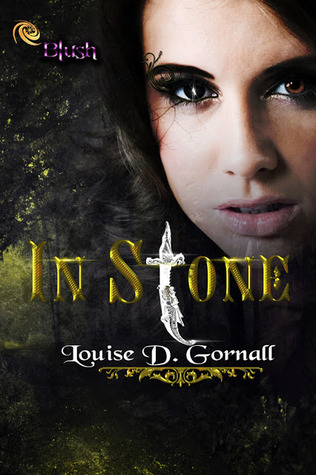
Beau Bailey is suffering from a post-break-up meltdown when she happens across a knife in her local park and takes it home. Less than a week later, the new boy in school has her trapped in an alley; he’s sprouted horns and is going to kill Beau unless she hands over the knife.
Until Eighteenth-century gargoyle, Jack, shows up to save her.
Jack has woken from a century-long slumber to tell Beau that she’s unwittingly been drafted into a power struggle between two immortal races: Demons and Gargoyles. The knife is the only one in existence capable of killing immortals and they’ll tear the world apart to get it back. To draw the warring immortals away from her home, Beau goes with Jack in search of the mind-bending realm known as the Underworld, a place where they’ll hopefully be able to destroy the knife and prevent all hell from breaking loose. That is, provided they can outrun the demons chasing them.
From the opening paragraphs, I loved In Stone. Beau’s voice shines from the beginning. Even crying over her broken heart in the park, her sass came through. I wanted to take her home, make her a hot chocolate and watch chick flicks with her. Which is saying a lot, because I NEVER watch chick flicks.
But then, I suspect neither does Beau. She’s a little bit goth, without pigeonholing herself as a goth. Her best friend is a little bit punk. They are the teenage girls I wish I’d had the courage to be.
I devoured In Stone in a few days. The pacing of the story is very well handled, pulling you along with the action, but with enough moments for self-reflection that it doesn’t feel rushed. You may see one of the plot twists in the last few chapters coming (although I didn’t), but probably not the rest.
Another plus for me: the book is an urban fantasy rather than a paranormal romance—there is a romantic element there, but it’s not an insta-love plot. Beau’s life doesn’t suddenly revolve around Jack; there is tension there, but it’s a slowly blossoming flower. Her independence is one of the things I loved about her.
The knife Beau and Jack set out to destroy is a bit like the One Ring from Lord of the Rings. Whoever wields it gains the power of life and death over previously immortal creatures. Both the demons and the gargoyles (who are ostensibly the good guys) would love to get hold of it, to tip the war in their favour. But even previously sane gargoyles who pick up the knife go all nutty bananas, turning into power-hungry maniacs. Beau, as a human, seems unaffected—which is why Jack needs her to come with him on his quest to destroy the knife.
All of that said, while I noticed the comparison, the book didn’t feel derivative. It stands as its own story.
One last thing: In Stone was released by Entranced Publishing. It’s a good example of a high-quality work by a small press. I’m the world’s biggest grammar nitpicker, and I didn’t notice any editing errors in the book.
I’m definitely looking forward to the sequel. Five stars!

Review: ‘Finding Home’ by Lauren K. McKellar
Posted: January 10, 2014 Filed under: Reviews | Tags: aussie-owned, AWW, reviews, small presses 4 Comments
In the interests of starting as I mean to go on with reviewing works by Australian women writers (and other writers more broadly) on my blog, I decided to do a review of one of my favourite YA reads from 2013. Unlike almost everything I read, Finding Home is contemporary rather than speculative fiction. But, despite being outside my usual reading habits, it blew me away. (For the sake of full disclosure, I think the author, Lauren McKellar is very talented and cute as a button. I’m pleased to be able to call her my friend. But this hasn’t affected my review of this book. Trust me!)
When Amy’s mum dies, the last thing she expects is to be kicked off her dad’s music tour all the way to her Aunt Lou in a depressing hole of a seaside town. But it’s okay — Amy learned how to cope with the best, and soon finds a hard-drinking, party-loving crowd to help ease the pain.
The only solace is her music class, but even there she can’t seem to keep it together, sabotaging her grade and her one chance at a meaningful relationship. It takes a hard truth from her only friend before Amy realises that she has to come to terms with her past, before she destroys her future.
I devoured Finding Home in a day. While not everyone has a pop star father — who I imagine looks like an Australian Rod Stewart — Amy’s experiences with teenage parties and high school life are so authentic that most teenagers, and adults who remember what it was like to be teenagers, will be able to identify.
Amy makes some bad choices, but as a reader you’re taken on that journey with her. Even though you can see the trainwreck coming, you can still understand why she did what she did in each case. She sometimes acts like a brat but, although I wanted to shake her at times, I never felt her actions were unrealistic.
Most importantly, after she hits rock bottom she comes out the other side, a better person who has learned from her experience and does the right thing.
Finding Home tackles a couple of big teenage issues: problem drinking and unprotected sex. Amy’s mother is an alcoholic, and after her death it’s unsurprising that Amy struggles with the same issue. Like so many teenage — and, let’s be honest, adult — girls, she makes a bad decision while drunk. McKellar takes us through the experience and it’s aftereffects in a very realistic fashion, something I’ve never seen in a book before. And she manages to look at both issues without being preachy, something that’s vital in a YA read. Teeangers can smell a moral lesson like my dog can smell a pocketful of treats, but greet it with much less enthusiasm!
I give Finding Home five stars. I’m really looking forward to other books by this author.
The Dream Journal – One Writer’s Inspiration
Posted: January 8, 2014 Filed under: On writing | Tags: dreams, guest post, inspiration, Lucid Dreaming 1 CommentToday’s guest post is by Mary Crockett, co-author of Dream Boy, which is due for release in mid-2014.
When Cassandra invited me to do a guest post, I used the title of her manuscript, Lucid Dreaming, as a springboard. I’ve always been obsessed with dreams—not surprising for someone whose upcoming co-authored novel is named Dream Boy, right?

But it’s not just me who’s obsessed. Fascination with dreams is as old as dreams themselves. Ancient Egyptians looked to dreams for portents of the future, while Australian Aborigines saw dreams as the secret to understanding the past. There’s Aristotle’s On Dreams, Freud’s Interpretation of Dreams, the Biblical representation of dreams as God’s cosmic telephone, the zillion weird dreams that figure in folklore and fairy tales, the zillion more books that interpret the symbolism of dreams… and of course let’s not forget Leonardo DiCaprio going all dark and broody as the lovelorn dream thief in Inception.
As a writer, though, I’m perhaps most interested in how we can allow our dreams to inspire and shape creative works.
That’s where the dream journal comes in.
One of the characters in Dream Boy keeps just such a journal. Drawing a line down the middle of the page, she writes everything she remembers about a dream on one side; on the other, she jots notes about real life events that may have triggered her subconscious.
In the notebook, reality goes in one place and dreams go in another; a clear line is drawn between the two. Of course, very little in life is quite as tidy as that—certainly not our creative processes.
So, why keep a dream journal in the first place?
For one thing, it’s fun.
For another, all the weird stuff that floats around in your subconscious can be a good place to go when your work-in-progress gets blocked up. Make a game of it: choose some random element from a recent dream and work it into a scene you’re writing. It will keep you going—and in writing, if you just keep going (somewhere… anywhere!), you often end up headed in the direction you genuinely needed to go.
(Plus, here’s a secret: the random element you select is probably not that random, even if it seems downright absurd. What happens when you dream and what happens when you write is not so different, really. They both connect to the subconscious. And the images that feed the subconscious have a way of making their own sense, regardless of your intentions.)
Perhaps most importantly, however, using a journal to map out the chaotic terrain of your dreams can feed your over-all imaginative life in very rewarding ways.
As you go along—recording your dreams—you are essentially trying to make sense of something that is by its very nature senseless. That process inevitably opens you up to contradiction. (Real world says X and ONLY X is true; Dreamworld says Y and Z and X’s second cousin Arnie is true. On Tuesdays. On other days, it says that baseballs turn into feathers when you sneeze on them. And your favorite dog never really died, but was just trapped all this time in a bomb shelter with elves.)
Contradiction, as you can see from the above, is pretty noisy. But it is also (at least in my experience) inspiring.
Think of it this way: the tension between two opposing ideas is often the wire on which good writing balances. So, exploring the boundary between reality and dream allows us to perch for a moment on that wire. When we return to our work of fiction, we see more. We see better. We see connections we might have missed otherwise.
But what about those who don’t even remember their dreams? How can any of this help them?
Unexpectedly, I have found that the very act of keeping a dream journal stimulates the recollection of dreams. So the more you plan to remember, the more you remember. Weird, but true.
Here’s how it works in two super-easy (super-cheesy?) steps:
- Put a notebook and pen beside your bed. Before drifting to sleep, remind yourself that you intend to remember and record your dreams. You might even say something as socially uncomfortable as “Hey, you are going to dream, and you will remember your dreams! They will be interesting dreams! Enjoy!”
- In the morning, before you get up or start thinking about your day, write down whatever scraps of dream you remember.
And at first they may be just scraps. But as you go on, exercising both your memory and tolerance for awkward conversations with yourself, you may find that you can build up to a pretty impressive recall. And remembering your dreams is a good thing—not only for the creative advantage—but also because your dreams can be an important shaping influence in your life.
I recently tweeted my two-year-old’s dream: “The cat was in my dream, and he was happy to be with me.” (Of course in real life, the cat barely tolerates my son, so this was pure wish fulfillment.) I was amazed at how many people tweeted back to share their own dreams—from the workaholic who dreams only of work to the woman who dreams of resuscitating zombies with a friendly Tyrannosaurus Rex.
Dreams are something we take with us into our day. Whether we entirely remember them or not, they are there, an essential part of us—telling us who we are. (Maybe in some ways even making us who we are.)
So listening to dreams—paying attention to wildness of the mind at moments when it answers to no master—is a worthwhile endeavor. And a dream journal is a great place to start.
About DREAM BOY (coauthored by Mary Crockett and Madelyn Rosenberg)
Annabelle Manning feels like she’s doing time at her high school in Chilton, Virginia. She has her friends at her lunchtime table of nobodies. What she doesn’t have are possibilities. Or a date for Homecoming. Things get more interesting at night, when she spends time with the boy of her dreams. But the blue-eyed boy with the fairytale smile is just that—a dream. Until the Friday afternoon he walks into her chemistry class.
One of friends suspects he’s an alien. Another is pretty sure it’s all one big case of deja vu. While Annabelle doesn’t know what to think, she’s willing to believe that the charming Martin Zirkle may just be her dream come true. But as Annabelle discovers the truth behind dreams—where they come from and what they mean—she is forced to face a dark reality she had not expected. More than just Martin has arrived in Chilton. As Annabelle learns, if dreams can come true, so can nightmares.
Pre-order DREAM BOY today: Amazon | Barnes & Noble | Indiebound
Add DREAM BOY to your Goodreads list.
About Mary
A native of the Shenandoah Valley of Virginia, Mary grew up as the youngest of six children in a family of misfits. She has worked as everything from a history museum director to a toilet seat hand model. In her other life, she’s an award-winning poet, professional eavesdropper, and the person who wipes runny noses. If you tweet at her @MaryLovesBooks, chances are she will tweet back.
Connect with Mary: Website | Blog |Twitter | Facebook | Goodreads | Tumblr | Pinterest
Beginnings: starting in the right place
Posted: January 6, 2014 Filed under: On the Isla's Inheritance trilogy, On writing | Tags: editing, Isla's Inheritance, writing 4 Comments
Starting your journey… Source
One bit of advice you’ll often hear from agents and various other book people—such as PitchWars mentors and other competition judges—is to make sure your book starts in the right place. I’m basically giving you that same message, but thought I’d do it with an example.
The inciting event—the first big, life-changing incident that triggers the plot—in Isla’s Inheritance happens at a Halloween party. That event is in the first chapter of the novel, and always was…but the first draft of that chapter started with Isla and her cousin Sarah receiving the party invitation and sorting out costumes. I’m still fond of that scene, because it sets up the relationship between the two characters, and Sarah is a lot of fun to write. But it wasn’t the best place. Isla thinking about whether she had time to get her homework done before the party wasn’t exactly the sort of thing that hooked the reader.
In my defence, it was my first novel, and I learned by making the mistake. :p
The fact my opening sucked bugged me all through drafting the book, so after I’d finished and taken the time to get a bit of distance from the writing, I went back again. (The distance is crucial. As I said, I was fond of the costume-choosing scene, which meant I needed to take the time to see it for what it was.) I cut the first part, and started the scene instead with the two girls and Sarah’s older brother, Ryan, arriving at the party. That’s better, I thought!
That was the version of the book I started querying. I entered it in PitchWars at the end of 2012, and the feedback I got from mentors really shook me. I was still starting in the wrong place, damnit! Again, I was still taking time to establish the characters. I had Sarah and Isla giggle over an old school crush. Dance. I thought I was setting the scene, but it was still slow.
I went back and amputated even more from the scene. By this point I’d probably removed around 2000 words. Now it starts with Isla, at the party, meeting Dominic—her eventual boyfriend—and getting invited to participate in a séance. Sarah doesn’t even appear until the end of the chapter.
Whether that ends up being the perfect starting point for the book will ultimately be decided by my editor at Turquoise Morning Press, and—if she is happy with it—by the reader. But it is far, far better than where I began.
If you’re getting told your book starts too slowly, have a look at what you’re trying to show the reader in your opening scene. For example, say you start with your character jogging, thinking about their life (apparently this is a very common beginning, as is staring into a mirror). You want the reader to see upfront that your main character is a physical creature who has problems that need pondering. Instead, why not start with the manifestation of the problems. You can always have the character jog later, or mention the athletics trophies being knocked to the ground during a zombie attack—that sort of thing.
Obviously there are exceptions to every rule. (For example, if your character is doing a marathon and they rupture their Achilles tendon in the first page, or get hit by a car, because the rest of the story is about their healing journey.)
I’d like to think I’ve learned this lesson now. I’ve started three other novels, and all of them have a much quicker beginning to the plot. But I learned it the hard way. Avoid my mistake, grasshopper!
In case you missed it, check out my latest advice post over at Aussie Owned and Read… Querying agents and publishers: a glossary.

Interview: Ingrid Alexandra, Australian author
Posted: January 4, 2014 Filed under: On Books | Tags: book launch, Interview, small presses, Turquoise Morning Press, young adult Leave a comment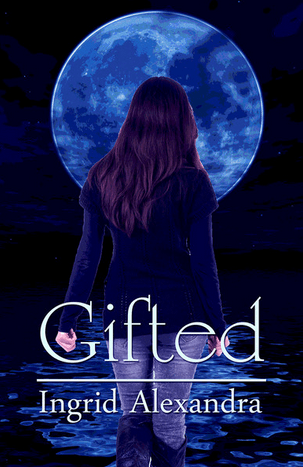
Today I’m interviewing fellow Turquoise Morning Press author and Australian, Ingrid Alexandra, about her debut novel, paranormal young adult GIFTED.
Gifted came out on 27 December. Did you squee more that day, or on Christmas morning when you saw Santa had been?
That question made me giggle. Of course I ‘squee-ed’ more on December 27th! It felt like all my Christmases had come at once, if you’ll pardon the cliché! But I was pretty stoked seeing Santa had been, too. 😉
How would Lucy, your main character, describe her greatest strength and her greatest weakness? And would you agree with her?
That’s an interesting question. Strangely enough, Lucy’s greatest weakness was what eventually became her greatest strength. Lucy lacked self-belief and allowed herself to be governed by fear. It was overcoming that fear and believing in herself that became her greatest strength. Sorry, you asked what Lucy would say. Well, I think that’s what she’d say – and I’d agree with her. 😉
And what about Heath Stone? (What a great name, by the way.)
Thank you! Heath’s weakness, by his own admission, was Lucy. But that’s secondary to the real issue. On a deeper level, Heath was afraid to pursue something he believed would be too complicated and potentially dangerous. But he grew to understand that the greatest things in life often require the greatest risks and so, similarly to Lucy I suppose, the characteristics that could be construed as weaknesses were, in the end, transformed to strengths. Both characters had the courage to overcome adversity, to challenge their innermost fears and take a flying leap of faith in to the unknown!
Tell us about Duruga. Did you create it for your story?
I’m so glad you asked! Duruga is a place close to my heart. Although I won’t reveal the ‘real’ location, I will say that the descriptions in the novel are based on a real place where I am privileged to spend much of my leisure time. It really is a little piece of paradise!
Music seems to have played a strong role in your life. Do you think that has affected the story you wrote?
You’ve done your homework! 😉 (I didn’t get a cyberstalking award during PitchWars for nothing!) I had to think about that question quite a bit, actually. I suppose, indirectly, my love of music influences the way I express myself in my own art. All creative art forms share a common link in that they are based on the creation and expression of a concept, story or feeling, but I don’t think that in this case there is a direct link between music and how GIFTED was created. A great question, though. Food for thought. 🙂
What has been the most surprising thing about your publication journey so far?
Wow, to pick only one…?! 😉 Hmm. Aside from all the incredible people I’ve met along the way and the support network I’m privileged to have attained, I suppose I’d have to say I was most surprised by my own resilience. I didn’t think I had very thick skin (I’m a sensitive soul!), but it turns out thick skin can be grown. 😉 I faced countless rejections in various forms in my journey towards publication, but I truly surprised myself that I was able to pick myself up, dust myself off and try again. It’s been said so many times, but believing in yourself is vital. I recall, even at my weakest moments when I doubted myself and my ability, I never stopped believing that I could do this and that my dream would be realised. It wasn’t easy. But courage is being afraid, being uncertain of something, and doing it anyway.
In dark times that belief is what drove me, what got me out of bed in the morning, what gave me something to live for. Dreams are essential. Don’t let anyone tell you they’re wrong, or just a fantasy or that you could be doing something better with your life. I believe it is unfailing passion, dedication and self-belief that will win you your dreams in the end, whatever they be. 🙂 But self-belief is the single most irreplaceable ingredient. Without it, you set yourself up for failure.
Cassandra, I’d just like to thank you for this opportunity to discuss my story and my characters with you and for your insightful, thoughtful questions. 🙂 (Aww. Thanks for dropping by!)
Lucy Jones possesses an unusual—and extraordinary—gift. Her ability to sense the emotions of others is both a blessing and a curse, eventually driving her to seek refuge from its consequences by fleeing her hometown of Sydney.
The coastal town of Duruga is everything she imagined it would be: sleepy, isolated and void of the emotional chaos that plagued her in the city. But when the mysterious Heath Stone enters her life, Lucy is overwhelmed by startling sensations in his presence. Frightened and intrigued by this uncommon reaction to a person, Lucy is uncontrollably drawn to Heath. Despite her efforts, and the sinister warnings from the townsfolk, she cannot fight the force of her attraction.
When strange events begin to occur and the truth about Duruga’s sordid history is unveiled, Lucy suspects that there may be more to the quiet town, and to Heath, than she had first imagined.
As Lucy and Heath’s fates become irrevocably entwined, the answers Lucy has been seeking all her life may be closer than she ever wanted to believe.
Excerpt
Gripping the steering wheel, my eyes slammed shut and I sat for several seconds with my heart pounding in my ears. My breath came out in gasps, my lungs constricting in anxiety. Images, dotted with light beneath my eyelids, teased me with things I wasn’t sure I’d seen. The vision of a ghostly, young man’s face, so alarmingly handsome and with eyes of such intense green I wondered if they could be real. I dug the heels of my hands into my eyes, trying to see clearly, though the headlights provided a limited view of the shadowy world outside the car.
The road was deserted.
I shook my head, blinking to make sure I was seeing right. What the hell just happened? Was I hallucinating? If someone had been there, where was he now?
And, my conscience taunted, what might have happened if he hadn’t been there to stop you?
A tingle ran down my spine and I tensed, on alert. Someone was out there. I knew because I could sense him. Nearby. He had to be there for me to feel the strange, weaving warmth, the rapid pulse in my veins. And sadness, so deep and powerful I clutched my chest against a sob.
GIFTED is available on Amazon and Barnes & Noble.
Ingrid Alexandra has been writing since she could put pen to paper. Growing up, she took pleasure in learning musical instruments, visual arts, dance, acting, singing and, of course, she spent a great deal of time reading and writing. Having so many interests meant her career aspirations had a habit of changing, but her profession eventually chose her.
She dabbled in writing short stories and novellas as a child and teen, and began writing full-length novels in recent years. Being a child at heart, it was a natural progression for her to move in to writing fiction for children and young adults. Her love of teaching and interest in human emotion and psychology play a large role in the creation of her novels.
You can find Ingrid at her website or on Twitter.
DOGGIES!
Posted: January 3, 2014 Filed under: On me | Tags: pets 4 Comments(This is post is entirely unrelated to books or writing. If you’re here for those things alone, thanks for dropping by and I’ll see you next time!)
I haven’t forgotten I promised you pictures of my new doggies: Chilli and Leo, the crime-fighting mother and son duo. They are both purebred Cairn Terriers. If you think they look familiar, you might be thinking of Toto from The Wizard of Oz. Or, if you have small children, Hairy McLary from Donaldson’s Dairy.
This is Chilli. She’s a champion show dog who is now slumming it with us.
And this is her son, Leo. He’s named after the blue Ninja Turtle.
Leo really, really loves Chilli.
But that’s ok, because she loves him too.
New year’s resolutions: 2014 edition
Posted: December 31, 2013 Filed under: On the Isla's Inheritance trilogy, On the Lucid Dreaming duology | Tags: new year's resolutions, writing 8 Comments
I did alright with my 2013 resolutions. They were all successes except for the “get more exercise” one — because in the course of attempting that, I tore my Achilles tendon at the gym in May. As it turns out they take FOREVER to heal. Curses!
Anyway, here are my resolutions for 2014. You could just as equally call this post “writing goals” because that’s what they are.
1. Celebrate the launch of Isla’s Inheritance in October (or thereabouts). Convince as many of you as possible to buy it.
2. Finish writing and editing the third book in Isla’s trilogy, so it’s ready to go to Turquoise Morning Press when they ask for it. (My goal is to write a minimum of 2000 words a week. I know that may not seem like much, but I’m time poor. This is why I write so slowly.)
3. Find a home for Lucid Dreaming, whether that be via the agent/traditional press route or the small press route.
4. Start writing something else. Possibly a sequel to Lucid Dreaming, although there’s that Steampunk I’ve been thinking about for aaaages.
5. Read. I’ll set my Goodreads target to 40 again, see how it goes.
What about you? Do you do the resolution thing? Or, even if you don’t, do you have 2014 goals?


 Cassandra Page