Review: ‘Endsinger’ by Jay Kristoff
Posted: January 23, 2015 Filed under: Reviews | Tags: jay kristoff, reviews, steampunk Leave a comment
A TREMBLING EARTH
The flames of civil war sweep across the Shima Imperium. With their plans to renew the Kazumitsu dynasty foiled, the Lotus Guild unleash their deadliest creation—a mechanical goliath known as the Earthcrusher, intended to unite the shattered Empire under a yoke of fear. With the Tiger Clan and their puppet Daimyo Hiro in tow, the Guild marches toward a battle for absolute dominion over the Isles.A BROKEN REBELLION
Yukiko and Buruu are forced to take leadership of the Kagé rebellion, gathering new allies and old friends in an effort to unite the country against the chi-mongers. But the ghosts of Buruu’s past stand between them and the army they need, and Kin’s betrayal has destroyed all trust among their allies. When a new foe joins the war tearing the Imperium apart, it will be all the pair can do to muster the strength to fight, let alone win.A FINAL BATTLE
The traitor Kin walks the halls of Guild power, his destiny only a bloody knife-stroke away. Hana and Yoshi struggle to find their place in a world now looking to them as heroes. Secret cabals within the Lotus Guild claw and struggle; one toward darkness, the other toward light. And as the earth splits asunder, as armies destroy each other for rule over an empire of lifeless ash and the final secret about blood lotus is revealed, the people of Shima will learn one last, horrifying truth.There is nothing a mother won’t do to keep her children by her side.
Nothing.
Endsinger is the third and final book in The Lotus War trilogy by Aussie author Jay Kristoff. All the setup from the first two books—the various factions, wars, betrayals, rivalries and romances—comes to a head in Endsinger. That’s probably why the paperback was 661 pages. Seriously, there were times when, after reading for a couple of hours, I had to stop due to wrist strain. By the end I had to stick the cover together with sticky tape because the book was collapsing under its own weight!
If you’ve read the first two books in the series, you’ve already got an idea of what to expect from Jay’s style. His prose is beautifully, darkly descriptive, so much so that I half expected to get a chest infection from reading about Shima’s polluted air and soil. The Lotus Guild and its toxic chi industry—made from the Lotus Bloom they worship and adore—have driven the land over the edge, killed the animals and created great swathes of deadlands where nothing can survive.
(A note on the prose: if you’re the sort who prefers a straightforward style over lush metaphor, you might want to look at a sample of Jay’s writing before deciding whether it’s for you. It’s definitely a matter of taste: one person’s “descriptive” can be another’s “florid”.)
And, like the first two books, his story is bloody. He isn’t afraid to kill characters, which is only fitting. This is a war, after all. But there are a couple of particularly traumatic deaths in Endsinger. I won’t say who they are, obviously, but although I found them sad, they fall into the category of “noble sacrifice for a greater good”, which I’m okay with as a reader. It would be unrealistic if no one died.
Jay’s style is like a lot of epic fantasy, in that he tends to jump between characters, giving little bursts from different perspectives. During battle scenes, particularly, this can be four or five times in a chapter. But he doesn’t head hop within each scene, which is good; when he’s telling a story from a character’s perspective, he is faithful to that character, and manages to portray them as fully fledged people with their own motivations and desires, even the ones that only appear once or twice. (Even the puppy.)
I love the relationships between characters—especially between Yokiko and Buruu, although that’s been an ongoing thing and my adoration is therefore no surprise to me. I have a new favourite in Endsinger though, which is the street rat Yoshi. He’s learned from his (it must be said) rather stupid, cocky behaviour in the previous book, but he still has a bit of swagger there. I just loved his attitude.
Overall, my favourite part of Endsinger is the way all the loose threads are tied into a neat bow (probably made of flesh or intestines or something). There are a few eye-opening moments as we get to see what’s really been going on this whole time—things that were just part of the world in the first two books turn out to have been significant all along. I really admire the level of craft that went into achieving that.
I’ve seen some people shelve this as young adult on Goodreads, but I’d suggest it’s more for older teenagers and adults. Did I mention bloody?

Review: ‘Eleven Weeks’ by Lauren K. McKellar
Posted: January 15, 2015 Filed under: Reviews | Tags: aussie-owned, AWW, new adult, reviews 7 Comments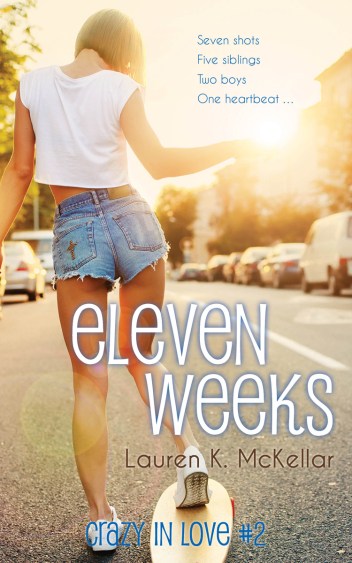
Eleven weeks.
Seven tequila shots.
Five siblings.
Two boys.
One heartbeat.
***
Stacey is good at pretending.
She pretends that the boy she’s in love with doesn’t exist.
She pretends that she’s happy to live and die in this small town.
She pretends that her life is carefree while her best friend’s world crumbles before her very eyes.
But Stacey’s got a secret …
And it’s going to ruin everything.
Note: Eleven Weeks comes out on 28 January. I was fortunate enough to get an ARC.
Stacey is Kate’s best friend in the first book in this series, The Problem With Crazy. During Eleven Weeks, we follow Stacey’s story during more or less the same period of time that The Problem With Crazy covers (I think Eleven Weeks starts a little earlier, but it ends at the same point).
Stacey always came across as a caring friend but also as a girl who likes to party. She was a cheerleader in high school and not particularly academically inclined. It’s not that she’s stupid, just that she found boys far more interesting than homework — the sort of character that in your stereotypical teen movie would be the mean girl. Except Stacey’s not the mean girl; she’s lovely, and totally supportive of Kate throughout her struggle with her father’s Huntington’s diagnosis (and her wait to find out whether she has it too).
When you find out what was going on during that same period of time — the things that Stacey is dealing with on her own, because she doesn’t want to burden her friend — you realise that Stacey is selfless almost to the point of self-destruction. There were times I wanted to just shake her and say tell your friend, but of course I knew she wouldn’t, because otherwise we’d have known about it in the first book. 😉 I imagine that in the third book, when Kate finds out what Stacey was hiding from her, she’s going to kill her.
As far as what Stacey’s big secret is, I won’t spill it here, but I think you can guess it pretty easily from the blurb. One thing that is misleading in the blurb is the bit about “two boys” — it makes it sound like there’s a love triangle in Eleven Weeks, which I’m happy to report there isn’t. There’s just Michael, the friend who clearly likes her but that Stacey thinks is too good for her. Michael is adorable.
I felt so bad for Stacey, despite her frustratingly stubborn determination to keep her secret for as long as possible. It becomes clear pretty quickly that, even though she was popular in school, she has almost no sense of self-worth. It’s the cause of her continued rejection of Michael, and of her lack of ambition. The way her family constantly runs her down, doing everything but describing her as a dumb blonde to her face, is simply awful. I wanted to beat her mother and sister around the head with a blunt object at several points.
Some people shouldn’t be allowed to have kids.
Stacey is also quite naïve about certain things, but no more so than any other teenage girl in the same boat as her. Still, she tried her best to handle everything (once she got over the initial shock and denial).
Eleven Weeks has its teary moments, but I didn’t find it quite as soul-shattering as The Problem With Crazy, which broke me over and over. I’m really looking forward to the next book in the series, mostly because I really want to see Kate end up with Lee, and for everyone to live happily ever after! (Although given Lauren has form for breaking hearts, I’m a little nervous about that…)
Review: ‘Fight For Me’ by K. A. Last
Posted: January 10, 2015 Filed under: Reviews | Tags: aussie-owned, AWW, reviews, urban fantasy, young adult 1 Comment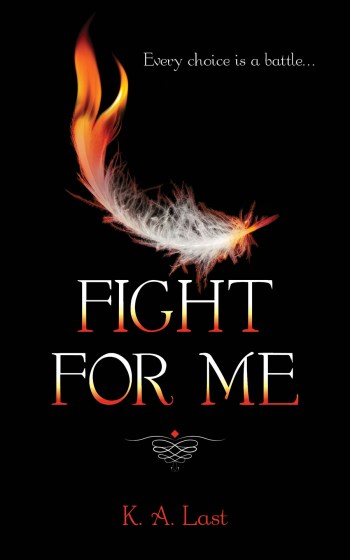
“How can I fight for you when I don’t know what I’m fighting for?”
When Grace Tate became one of the fallen to protect a vampire, it got her into more trouble than she’d bargained for. She’s angry at Charlotte for hiding the truth, and with Josh living in the city and Seth missing, life is harder than ever.
It’s about to get a lot harder…
Grace doesn’t want to leave Hopetown Valley, but when Josh ignores her calls she decides to go and search for him. She doesn’t expect to run into Seth as well.
When she reaches the city, Grace learns that Charlotte is the most hunted vampire in Wide Island. The city vamps want her blood, and the angels are after her soul. Grace gets caught in the crossfire of a battle she never wanted, but to win one war, she has to fight another.
Torn between the one she gave up everything for, and the one who sacrificed everything for her, Grace has to face Charlotte, and the past, if she wants to fight for her future. But how can she fight for someone who doesn’t want to fight for her?
Every choice Grace makes becomes a battle, and in every battle someone has to die.
I read this book last October, but as it comes out next week — 17 January — now seems like a good time to post my review. That also means it counts towards my 2015 Aussie Women Writers challenge, and I’d already beaten the 2014 one. Winning!
Fight For Me is the sequel to Fall For Me, a series about a protection angel named Grace Tate and her human twin brother, Archer. Grace reincarnates over and over as a twin of the Tate boys, down the family line, an arangement that means she has a telepathic link with each one and lets them be an awesome vampire-hunting duo.
Everything’s going swimmingly till Charlotte shows up and drags Archer, Grace and Josh — Grace’s boyfriend — into her mess. Fight For Me picks up after the dust settles. Of course, the peace and quiet don’t last long.
While Fall For Me was a good read — fast-paced, with a plot twist at the end that made me gasp — Fight For Me is great. I think Kim really hit her mark with this one, maybe because the initial worldbuilding has been taken care of and she can really sink her teeth into the story. (See what I did there?)
In the first book I didn’t like Josh very much; he got super jealous of Grace and her love/hate relationship with fellow fallen angel Seth, and his attitude kind of bugged me. Fight For Me is dual POV between Grace and Josh, which worried me at first, but although Josh is clearly still very troubled in the second book (because spoilers), seeing it from his perspective made me understand him better. He’s still not my favourite — if I had to choose a boyfriend for Grace, I’d choose Seth. But Josh still redeemed himself somewhat in my eyes.
My favourite character in both this book and the previous one is Archer, Grace’s brother. He’s a total smartass, and isn’t afraid to tell it like it is when Grace is getting a little overwrought. But at the same time he’s protective of her. He’s basically what Xander from Buffy would be if you made him a slayer too.
As with Fall For Me, Fight For Me had an awesome plot twist at the end, and again I didn’t see it coming, although in hindsight the clues were there. I love that!
Finally, the epilogue makes it clear there’s at least one more book in the series, which is always exciting. I love a trilogy!

Review: ‘Dead Witch Walking’ by Kim Harrison
Posted: January 2, 2015 Filed under: Reviews | Tags: reviews, urban fantasy 6 Comments
All the creatures of the night gather in “the Hollows” of Cincinnati, to hide, to prowl, to party … and to feed.
Vampires rule the darkness in a predator-eat-predator world rife with dangers beyond imagining — and it’s Rachel Morgan’s job to keep that world civilized.
A bounty hunter and witch with serious sex appeal and an attitude, she’ll bring ’em back alive, dead … or undead.
I’d never heard of Kim Harrison before, but now I’m wondering why. I discovered her when I asked on Twitter for some urban fantasy audiobook recommendations before Christmas; on Boxing Day I had to drive my son interstate to spend some time with his father, and wanted something to listen to on the way back. Nicole Evelina recommended this series.
My favourite thing about Dead Witch Walking is the world-building. Rachel Morgan’s world is one where, following a terrible virus outbreak halfway through last century, the supernatural creatures all got outed by virtue of the fact that there weren’t as many humans to hide amongst anymore. Now they live in plain sight, tending to stick to their own communities but otherwise part of society.
Rachel, a witch, starts out working as a runner (a type of cop) for Inderland Security — sort of like the FBI for supernatural types. But she decides very early on that she’s tired of getting all the milk runs rather than the real jobs she knows she can do. She’s confident in her own abilities, although that does tend to lead her to be reckless at times. She decides to quit, and two of her IS colleagues, Jenks the pixie and Ivy the living vampire, quit with her to go freelance.
Unfortunately the IS has a policy of not letting runners leave in the middle of their contract, and the consequence is to take a hit out on them — presumably to discourage that sort of behaviour from everyone else.
The hit on Rachel was the one thing I was left scratching my head over. It is commonly known that the IS do this; even the human version of the IS, the FIB, knows about it. But somehow it’s sanctioned? I guess because the FIB figures so long as no one else gets hurt, it’s the supernaturals in-fighting, and whatever, but I just would’ve expected the law enforcement bodies to frown on assassinating people, even if it’s then done on the sly.
The characters were fun. Jenks is sarcastic and has as much attitude as any of the full-size characters, only packed into a pixie-sized package. Imagine if Tinker Bell was able to speak, and that’s what Jenks is like. Rachel’s recklessness is offset by Ivy’s OCD-level of planning, which causes tension between them at times. The other source of tension is Rachel’s paranoia that Ivy wants to eat her. While it’s understandable, it does get a little old after a while. Fortunately, there is character growth on Rachel’s part throughout the book, and I liked her courage and willingness to admit when she’s screwed up.
A comment on the audiobook: the narrator, , was very versatile. She managed to capture Rachel’s general no-nonsense narration — that businesslike delivery — while still acting out her moments of fear and the other characters. One of my beefs with James Marsters’ delivery of the Jim Butcher books is that his delivery is done in a sort of lazy noir drawl that he never breaks up, no matter which character he’s voicing. Gavin is much better (sorry, James!).

Australian Women Writers Challenge wrap up
Posted: December 19, 2014 Filed under: On Books | Tags: aussie-owned, AWW, reviews 3 Comments
The 2014 Australian Women Writers Challenge was set up to help overcome gender bias in the reviewing of books by Australian women. The challenge encourages avid readers and book bloggers, male and female, Australian and non-Australian, to read and review books by Australian women throughout the year. You don’t have to be a writer to sign up. You can choose to read and review, or read only. – AWW
As I blogged earlier in the year, I was originally aiming to read and review six books by Australian Women Writers this year. But by August I’d already done seven…so I upped my goal to ten, and as I write this I’m at eleven. Yippee! (There is one more AWW book close to the top of my to be read pile, but I doubt I’ll get there this year. It can get me started on next year’s challenge!)
There’s actually a twelfth book I read this year, but I’m not posting the review till next January, closer to the book’s release date, so I’m not counting it here.
Here is the full list, with links. These are some very talented ladies, and if my reviews have helped spread the word at all, I’m pretty happy with that. I’m especially happy as, out of these eleven books, six of them are by my co-bloggers at Aussie Owned and Read. ❤
- Sleeper by S. M. Johnston (sadly this book is currently unavailable)
- Forget Me Not and Remember Me by Stacey Nash
- The Problem with Crazy by Lauren McKellar
- Immagica by K. A. Last
- Kiya: Mother of a King by Katie Hamstead
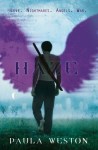
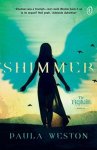
- Haze and Shimmer by Paula Weston
- Dancing on Knives by Kate Forsyth
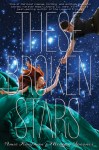
- These Broken Stars by Aime Kaufman and Meagan Spooner
- Cassandra by Kerry Greenwood






Review: ‘An Abundance of Katherines’ by John Green
Posted: December 1, 2014 Filed under: Reviews | Tags: reviews, young adult 4 Comments
Katherine V thought boys were gross
Katherine X just wanted to be friends
Katherine XVIII dumped him in an e-mail
K-19 broke his heartWhen it comes to relationships, Colin Singleton’s type happens to be girls named Katherine. And when it comes to girls named Katherine, Colin is always getting dumped. Nineteen times, to be exact.
On a road trip miles from home, this anagram-happy, washed-up child prodigy has ten thousand dollars in his pocket, a bloodthirsty feral hog on his trail, and an overweight, Judge Judy-loving best friend riding shotgun — but no Katherines. Colin is on a mission to prove The Theorem of Underlying Katherine Predictability, which he hopes will predict the future of any relationship, avenge Dumpees everywhere, and finally win him the girl. Love, friendship, and a dead Austro-Hungarian archduke add up to surprising and heart-changing conclusions in this ingeniously layered comic novel about reinventing oneself.
Like The Jewel, An Abundance of Katherines was another impulse purchase in a bookstore, and I decided to read it this month because I’m doing a Goodreads challenge where we have to read a mixed bag of genres. (All my choices have been young adult, but this one is contemporary, so that totally counts as different. Right? Right?)
Having only read two John Green books now, I may not be qualified to say Katherines is “typical John Green”. But it kind of is. The three main characters are flawed but very, very bright. In this case, we have Colin, his best friend Hassan, and a girl they meet on their road trip, Lindsey.
Colin is obsessed with making something of his life and, as the book begins when Katherine XIX dumps him, is struggling with heartbreak. Hassan is funny but a lazy slob — he’s also somewhat contemptuous of Colin at times, but it’s clear that Colin largely appreciates his honesty, so that softens the attitude a little. Lindsey is a bit of a chameleon. The thing I liked about Katherines, though, is that all three characters grow over the course of the story, which is just as well, because otherwise Colin’s whining about girls would have worn me down to the point where I wanted to punch him in the nose. 😉
The main thing I was wondering when I went into Katherines was how a very nerdy boy like Colin managed to get no less than 19 girls to date him. It makes more sense when you realise Colin defines even a five-minute relationship in the playground as “dating”! And then overthinks it. No wonder he’s so miserable!
Green makes abundant (seewhatIdidthere) use of footnotes throughout the book, to expand on facts Colin was prevented from relating, outline the basics of his theorum, or to provide translations and explanations, mostly for the Muslim terminology Hassan uses. I sometimes found the footnotes a little irritating, but that was largely in cases where I already knew the thing the footnotes were telling me. If I was reading this at 17, though, I doubt that would’ve been a problem.
The dialogue is clever, and the humour is a bit boyish for me at times but at other times is very funny. There aren’t any real surprises in the plot, and I can see echoes of The Fault in Our Stars in some of the dialogue (mostly the “Okay?” “Okay.” thing) and the road trip device. But since Katherines came first, it’s more like foreshadowing, I guess!
This was a fun read, despite the flashback-inducing maths!
Review: ‘The Iron King’ by Julie Kawaga
Posted: November 20, 2014 Filed under: Reviews | Tags: reviews, urban fantasy, young adult 2 Comments
Meghan Chase has a secret destiny; one she could never have imagined.
Something has always felt slightly off in Meghan’s life, ever since her father disappeared before her eyes when she was six. She has never quite fit in at school or at home.
When a dark stranger begins watching her from afar, and her prankster best friend becomes strangely protective of her, Meghan senses that everything she’s known is about to change.
But she could never have guessed the truth — that she is the daughter of a mythical faery king and is a pawn in a deadly war. Now Meghan will learn just how far she’ll go to save someone she cares about, to stop a mysterious evil, no faery creature dare face; and to find love with a young prince who might rather see her dead than let her touch his icy heart.
Given my book is written in the same category as Kawaga’s (young adult -> urban fantasy -> fae), part of me is a little nervous about reviewing this. I don’t want my minor gripes with the book to be viewed as sour grapes! I promise they’re not. And overall I did like the book. I just found the first third of The Iron King to be a bit slow, and a little predictable. But once Meghan got to Oberon’s Summer Court and the Winter Court arrived for their biannual party, things got interesting.
One thing I loved about this book was that Kawaga added an extra element to the original mythology and the Midsummer Night’s Dream characters: the concept of a new breed of fae that has arisen from mortal dreams of technology. Instead of being mortally wounded by it, they are often made of it or control it, making them deadly to the traditional fae. The descriptions of some of these new fae, like Virus and Ironhorse, were delightful. (In fact, Kawaga’s writing in general was very good.)
Meghan is a bit of a traditional young adult heroine: she winds up being gorgeous, and all the boys like her. It’s unclear whether the best friend is going to turn into a love interest or if his determination to protect Meghan arises from their friendship and the fact Oberon will disembowel him if he fails. But the pretty Winter Court prince, Ash, is definitely struck by a case of love at first sight (as is Meghan for him), and the nature of the Iron King’s interest is also a little predictable.
That being said, I didn’t mind Meghan too much. She reminded me of Sarah from the Labyrinth, rushing off to rescue her kid brother from the evil king. Some of the evil king’s minions were clearly inspired by the packrats in the Labyrinth’s junkyard, although I viewed this as more of a homage than outright imitation. And honestly, Labyrinth deserves more of that!
Normally I hate insta-love but the relationship between Ash and Meghan (such as it was) didn’t bother me as much as they usually do, possibly because this was urban fantasy rather than paranormal romance; it wasn’t the main focus of the plot by any means. Maybe it was just adolescent hormones, at least on Meghan’s part. (As for Ash, who knows what his excuse is? He might be a thousand years old!)
Once it got going, this was a fun read. I own the rest of the series — I have poor impulse control and bought the boxed set without having read it — and I’m happy to keep reading. The way The Iron King ended definitely made me want to know what happens next.

Review: ‘Storm Front’ by Jim Butcher
Posted: November 2, 2014 Filed under: Reviews | Tags: reviews, urban fantasy 4 Comments
Lost items found. Paranormal Investigations.
Consulting. Advice. Reasonable Rates.
No Love Potions, Endless Purses, or Other Entertainment.Harry Dresden is the best at what he does. Well, technically, he’s the only at what he does. So when the Chicago P.D. has a case that transcends mortal creativity or capability, they come to him for answers. For the “everyday” world is actually full of strange and magical things — and most of them don’t play well with humans. That’s where Harry comes in. Takes a wizard to catch a — well, whatever.
There’s just one problem. Business, to put it mildly, stinks. So when the police bring him in to consult on a grisly double murder committed with black magic, Harry’s seeing dollar signs. But where there’s black magic, there’s a black mage behind it. And now that mage knows Harry’s name. And that’s when things start to get… interesting.
Magic. It can get a guy killed.
Harry Dresden is an interesting character. Unlike Atticus in Kevin Hearne’s Hounded, Harry has flaws that make him complex and interesting, even if he’s frustrating at times. As an example, Harry has a terminal case of chivalry (other characters accuse him of being chauvanistic and I think they may be right). This lets the females around him play him, or gets him in trouble even when said females aren’t actually asking him to defend them at all. Sometimes I found that annoying — for example, when he refused to tell the female detective what he knew about the murders because it would “put her in danger”, I wanted to bang his head against a concrete wall. But to Harry’s credit, he does seem to realise by the end of the book what an epic mistake this was.
The thing I did like about Harry was that he wasn’t a musclebound action hero-type. In fact, in Storm Front he’s at the losing end of several fights that make it clear that he’s the tall, weedy variety of nerd that spends a lot of time studying. Which makes sense, if you’re a wizard. He’s very self-aware, to the point where he’s self-depreciating at times. But there’s no false modesty or rampant ego here; he knows what he’s capable of and is confident in his skills, but also admits his flaws.
I have a vague feeling I’ve read Storm Front before, but it was long enough ago (and I’m getting old and forgetful enough) that I couldn’t remember most of the plot. Instead, I had a feeling for two thirds of the book that I knew where the whodunnit plotline was going, and alternated between suspecting I’d read it before and wondering whether the plot was just very predictable. I’m coming down on the “I’ve read it before” side of the fence, though. Regardless, the story carries you along to the point where I resented when real life intruded. So there’s that.
The side characters are — with the exception of the Big Bad at the end — all painted in shades of grey. Some of them lean toward quite dark grey, like the mob boss and the brothel-owning vampire — but there is still something sympathetic about them.
Storm Front — and I assume the rest of the series — can be summed up as a magical noir detective novel. Four stars.
Review: ‘Cassandra’ by Kerry Greenwood
Posted: October 22, 2014 Filed under: Reviews | Tags: AWW, glbt, reviews 3 Comments
On Mount Olympus, Aphrodite, the goddess of love, yawned. Even perfection can become tedious. “My lord,” she called to Apollo, “Sun God and brother. Let us play a game with mortals — my power against yours.”
And so Cassandra, the golden-haired princess cursed with the gift of prophecy, and Diomenes, the Achean with the healing hands, become puppets of the gods. Their passions are thwarted, their loves betrayed, their gifts rendered useless for the sake of a wager between the immortals. Doomed, magnificent Troy is the stage, Cassandra and Diomenes the leading players in this compelling story of the city’s fall. Both have found love before, and lost it. Will they find each other in the light of the burning city?
And, if they do, can their love survive the machinations of malicious gods and men?
I originally bought this book — because of the name, obviously — about 15 years ago. Because I’ve been on an Ancient Greek kick lately, I decided to re-read it.
Both Cassandra and Diomenes are healers who’ve had close encounters with gods early on in their lives. Cassandra and her twin, Eleni, are given the gift of prophecy as small children, while Diomenes becomes a healer after his life is saved by Glaucus, healing priest of Asclepius. During his illness, Thanatos, god of death, blesses him.
Maybe these blessings are what made the two the target of Aphrodite and Apollo’s wager. The gist of the bet is that Aphrodite believes she can get the two together, while Apollo is determined to keep them apart. Posiedon and Athena weigh in, wanting to see Troy destroyed in the process (although Posiedon later changes his mind). The whole thing gets very messy, as you can imagine.
We don’t see much of the gods in the book, just in the occasional page of dialogue at the end of a chapter. Mostly, what we see is the poor mortals, struggling with the twists and turns their lives take. Both Cassandra and Diomenes find love elsewhere and lose it, but to me the greater tragedy was the fall of Troy itself. Compared to the culture of the Acheans (Greeks), Troy as Greenwood writes it was a beacon of progress and good behaviour, where women were given equal rights and the gods were offered sacrifices of herbs or precious goods rather than blood. Greenwood takes some liberties with the original myth, so the ending isn’t quite as horrific as it could have been — there is at least a little bit of hope there.
One thing I’d forgotten between readings is just how much sex there is in this book, both hetero and homosexual. For the most part that’s fine with me, although fair warning: if you want a “clean” read this isn’t it. 😉 Also, during some of the war scenes the inevitable rape and treatment of captured women as slaves is quite confronting. A lot of it happens “off camera” but still, Greenwood doesn’t pull any punches.
The other thing that’s quite chilling about this retelling of Troy is Greenwood’s portrayal of Achilles: he is an insane psychopath, far and away the worst of the Greeks. It particularly struck me given I just read The Song of Achilles by Madeline Miller not long ago, which is a much kinder portrayal. It’s interesting to see such different takes on the same character.
Cassandra is the second book in a trilogy, but stands alone; I’ve never read the other two. If you like gritty, “realistic” historical fantasy, this may be the book for you.
Review: ‘Hounded’ by Kevin Hearne
Posted: October 16, 2014 Filed under: Reviews | Tags: kevin hearne, reviews, urban fantasy 2 Comments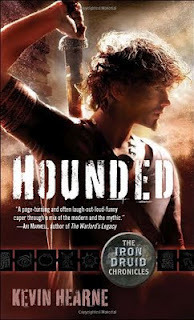
Atticus O’Sullivan, last of the Druids, lives peacefully in Arizona, running an occult bookshop and shape-shifting in his spare time to hunt with his Irish wolfhound. His neighbors and customers think that this handsome, tattooed Irish dude is about twenty-one years old — when in actuality, he’s twenty-one “centuries” old. Not to mention: He draws his power from the earth, possesses a sharp wit, and wields an even sharper magical sword known as Fragarach, the Answerer.
Unfortunately, a very angry Celtic god wants that sword, and he’s hounded Atticus for centuries. Now the determined deity has tracked him down, and Atticus will need all his power — plus the help of a seductive goddess of death, his vampire and werewolf team of attorneys, a bartender possessed by a Hindu witch, and some good old-fashioned luck of the Irish — to kick some Celtic arse and deliver himself from evil.
I finished this last month, but hadn’t quite gotten around to writing a review (I guess I’ve had other things going on lately — dunno!). I’d heard Kevin Hearne’s name on Twitter, and since I love urban fantasy I thought I’d use my monthly Audible credit to download the audiobook of Hounded.
I found it a little hard to get into at first. Some of that was the voice actor; the guy is good but all the previous audiobooks I’ve listened to had smexy British voice actors, so it took me a little while to adjust. Maybe because of that, I was really aware of just how much exposition there is early on in this story. The book is told from Atticus’s point of view, and he likes to interrupt a conversation to provide us a little backstory, or an explanation of druidic magic. It felt a little heavy on the tell rather than the show.
The characters are fun, although Atticus is a little bit of a male Mary Sue (a Mary Stu?) — he’s pretty much perfect. Handsome, powerful, unique, and all the hot goddesses want to sleep with him. He’s also meant to be 2100 years old but, even in his thoughts, sounds like his claimed age of 21.
However, for me he was redeemed by his sense of humour and loyalty to his best friend, Oberon. Oberon is a wolfhound who communicates with Atticus via telepathy. He is very literal, and absolutely hilarious. Far and away my favourite character … although the Morrigan was also pretty awesome. I liked Granuaile too. Actually, I liked most of the characters, despite Atticus’s immaturity at times. (The wedgie scene made me cringe. Dude, you were born BCE — act your age!)
The story follows events in Atticus’s life as Angus Og, the Celtic god of love and Atticus’s lifelong enemy, finds out where he is and starts to send minions after him. It doesn’t help that people who are ostensibly on Atticus’s side tend to complicate his life too. The story was fast-paced and kept me interested, and like I said, it was very funny. Just don’t expect anything deep from this book; it definitely fits into the “read for entertainment” category.


 Cassandra Page