Website design: creating an attractive author image
Posted: May 9, 2013 Filed under: On social media | Tags: blogging, guest post, social-media, websites, writing 2 CommentsToday’s guest post is by Amber A. Bardan, contemporary and paranormal romance writer and winner of North Texas Romance Writers of America‘s 2013 Great Expectations.
I’m so excited to be guest blogging for Cassandra today! I thought I’d blog about something I know a little be about. My day job (as in the job that actually pays me money so I can spend the rest of the time writing) is as a Web and Graphic Designer. Let’s face it the reason you get an author website is so publishers and agents can look you up and see that you appear professional. Obviously you want your website or blog to look pretty, and thereby enhance your professional image.
It’s also the foundation of your one day ‘published author’ platform. I want to stop here a moment and say something; at the end of the day your writing is what is going to sell you – everything else is secondary so don’t stress too much if you have no domain, few blog followers, and only a couple of Twitter followers. These things are only a complement to good writing.
However, the advantage of setting yourself up professionally is that other writers, prospective readers or whomever our blog/website is targeting are far more likely to take you seriously if you look the part. So here are my tips on creating a good looking author website.
Creating Strong Visual Appeal
· Keep it simple
Look at the majority of successful bloggers and aspiring writers; their blogs and websites are usually simple. If not, they usually have professionally designed themes.
Either way they are not generally loaded with photos, images, clip art, hundreds of colors or varying text sizes—it’s simple and consistent.
· Quality graphics
If you are going to use graphics to enrich your website or blog make sure they are good quality, royalty-free images. Nothing looks worse than tacky clipart on a website. Sites like Shutterstock, iStock and Dreamstime have millions of beautiful, professional images available to purchase for a very small fee. You only need one great image to create a website background or blog banner.
· Color Choice
This is the biggest problem with DIY websites and blogs! We all know ‘those’ websites with black background and yellow or magenta text… Apart from not being visually appealing, color choice effects visibility and your website’s or blog’s accessibility.
Chose two colors—with big contrast. You might introduce a third color for enhancement, but only use it with a light hand.
De-saturated colors work well. But always use web-safe colors (no neon yellow or magenta)
When using a color for a background or text I suggest always pairing it with white. For example, with a dusky blue background, use white text. With a white background, use dusky blue text. You can use more than one color against white, such as a white background with a dusky blue text and pale blue embellishments, but never put a colored text on a colored background.
· Templates and Professionals
Another option is to purchase professional services in the form of professional web design or web/blog templates. This option can give you a very professional and individual result—if you choose your source wisely. Of course, custom is the most expensive option but there are more affordable templates available from template stores for a small cost (some are even free). If you do choose this option ensure you do your research; look at portfolios and get a good understanding of what is included, what you need to do yourself, and total costs.
You can find Amber on Twitter or at her blog.

Interview: Lauren Spieller on query letters
Posted: May 7, 2013 Filed under: On writing | Tags: agents, aussie-owned, Interview, queries Leave a commentI interviewed Lauren over at Aussie Owned and Read.
Space cat. Enough said.

Lauren Spieller is a literary agency intern who has read more queries than the rest of us even want to contemplate. She has kindly agreed to answer a few questions about her job.
First off, let me say THANK YOU for having me! I love talking about querying and writing, so this is a treat.
We’re glad to have you! You’re an editorial intern at a literary agency. Can you tell us what that involves?
I’ve had two internships. The first involved reading the slush—a lot of it—and deciding which queries to forward on to the agent. I loved doing this because it a) taught me how to get a feel for a manuscript from only a few pages, and b) helped me hone my editing skills.
My current internship—with P.S. Literary Agency—is a tad more editorial, which is fabulous. So far my focus has been on reading…
View original post 548 more words
Cover reveal: ‘Sleeper’ by S. M. Johnston
Posted: May 3, 2013 Filed under: On Books | Tags: book covers Leave a commentI’m lucky to have such talented friends. Today I am honoured to be part of the cover reveal for Sleeper by S. M. Johnston. It is a new adult science fiction (with paranormal elements, my favourite kinds!), and will be coming out with Entranced Publishing in December! You can add it to your to-be-read list on Goodreads here.
After a life-saving heart transplant, eighteen-year-old Mishca Richardson is plagued by nightmares and an urgent desire to find her birth parents, which she puts down to post-operation depression. But her new heart seems to bring more than a second chance at life in the form of speed, strength and love at first sight.

“Sleeper” by S. M. Johnston
About the Author:
Sharon is a writer from Mackay in Queensland, Australia who has short stories published in anthologies and was also runner-up in the Australian Literary Review’s Young Adult short story contest with KARMA. By day she is a public relations executive and by night she writes weird fiction and soulful contemporaries while her husband, two sons and cat are fast asleep.
You can find her on Facebook, Twitter or at her blog. She also contributes to Aussie Owned and Read.

Sharon M. Johnston
Inspired by others’ successes
Posted: May 2, 2013 Filed under: On Twitter, On writing | Tags: Thursdays Children, Twitter 9 Comments
I didn’t think I would be participating in Thursday’s Children this week, because I had so much scheduled for the blog: cover launches, new release blog tours and giveaways. But it occurred to me that the very reason for all these posts was actually a source of inspiration to me, and that maybe I should share it for anyone else who is struggling right now.
The fact is I get a huge buzz from the successes of other authors—especially my friends, obviously, but also people I follow but am not even that close to on Twitter.
In the past couple of weeks one person in the writing community on Twitter got a three-book deal. Another got an agent. Two others have launched their books, while two have revealed covers for their books. And I know of someone who has had a contract offer and is considering it now (and no, I won’t say who it is—I don’t want to steal their thunder).
I don’t know if there’s something in the water in Publishing Land at the moment to make all these awesome events occur at once, or whether it’s because my circle of writerly folks on Twitter has expanded to the point where I’m just hearing more news. It could be a little of both. But I LOVE IT!
I’m not saying a tiny part of me isn’t jealous—but it’s not the kind of spiteful jealousy that makes me resent the successful people. It’s not the kind that eats at my heart, or even brings me down a little. It’s more of an “oh, that must be nice!” reaction, which is completely overridden by the happiness I feel for these people.
At the end of the day, we’re not all competing for one job; there are a lot of publishers and agents out there, and just because someone else gets picked up for something, that doesn’t reduce the size of the pie for the rest of us. (Mmm, pie…) It’s also a good indication publishing is thriving despite all the changes to the industry, which has to be good news for all of us.
Also, I’ve had UB40’s cover of Kingston Town stuck in my head since I heard it on the radio on Tuesday, and who could be gloomy with such a cute little reggae tune playing? (Given the peppy nature of this post, maybe Don’t Worry, Be Happy by Bobby McFerrin would be more appropriate, but my brain isn’t listening.)
Click here to see this week’s other Thursday’s Children blog posts.
What happens after you sign with a small press?
Posted: May 1, 2013 Filed under: On writing | Tags: book launch, editing, guest post, small presses 2 CommentsToday’s guest post is by the amazing Katie, whose book, KIYA: HOPE OF THE PHARAOH, came out yesterday with small press Curiosity Quills. I’m excited to have her here as the first stop on her blog hop to celebrate the book’s launch. You can find out more about that at her blog.
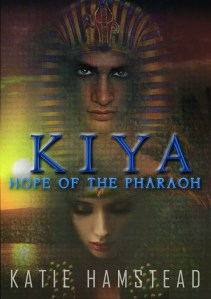
Kiya: Hope of the Pharaoh
Thank you so much Cass for having me on your blog today.
So Cass asked me to talk about my process of publication after I signed with a small press.
For a start, I needed to format my manuscript for their standard requirements. Curiosity Quills has a handy author’s guide to say what they use for font etc. So once I’d gone through and implemented that, I sent my manuscript to my coordinator.
My coordinator manages everything. She picked the release date and assigned me my editor, cover designer, proofreader and so forth, and is my liaison for each of them as well as everyone else working behind the scenes. She does a very good job too.
So once she had my manuscript I filled out a cover outline. It asked what I wanted to see on the cover, and if I had any ideas I could draw them up too.
Then, I waited. For several months.
When my number came up, everything seemed to just jump into action. My editor contacted me and we began my process. I only did two rounds of editing, but some other I know do more. It depends from author to author. Editing was intense. My editor was fantastic though, and walked me through the whole process. She was always just an email away if I found myself stuck, and was my cheerleader on Facebook when I got frustrated.
My CPs were also a great help during this time, as I bounced emails back and forth with them. Their patience with me is astounding!
During my edits, my cover design came through. Let me just say, I loved this cover from the moment I saw it. It was brightened a little, the sun in the background was added, but it still looked awesome. I’m so happy with it.
Finally, my editor told me she sent my final to the proofreader! Hooray! After that, all I needed to do was check the manuscript one last time with the proofreader’s notes, and add my dedication and thank yous.
All in all, I survived. I was a bit stressed through edits while trying to meet deadlines, but it wasn’t a bad experience. I learned a lot from everyone involved and I believe it’s made me a better writer.
About the author:
Katie J Teller (nee Hamstead) was born and raised Aussie, but now live in Arizona with her Navajo husband and their beautiful little girl. You can find her at her blog or on Twitter.
The genre dilemma: urban-paranormal-fantasy? Para-urban-tasy?
Posted: April 30, 2013 Filed under: On the Isla's Inheritance trilogy, On writing | Tags: genre, Isla's Inheritance, paranormal romance, urban fantasy, writing 2 CommentsI commented a little while ago that ISLA’S INHERITANCE, my first novel, is either urban fantasy or paranormal fiction, depending how you look at it. I usually call it urban fantasy. On the off chance a clearer answer is actually out there, I decided to go to that font of everything: Wikipedia.
Wiki defines urban fantasy as follows:
“Urban fantasy is a sub-genre of fantasy defined by place; the fantastic narrative has an urban setting. Many urban fantasies are set in contemporary times and contain supernatural elements. However, the stories can take place in historical, modern, or futuristic periods, as well as fictional settings. The prerequisite is that they must be primarily set in a city.”
First sentence: check. Second and third sentences: check. Fourth sentence: … uh. Sort of.
It is set in a city. But the city is Canberra, which isn’t known as the bush capital for nothing. It’s a sprawling place with a population of several hundred thousand, and a lot of parks, reserves and other pockets of nature within it. For a story about modern-day faeries with an iron allergy, it’s pretty much the perfect setting.
But is it an urban city, in the sense people mean? No, not really. We don’t have a subway (or rail!) or lots of high rise buildings. New York it ain’t. Sydney it ain’t. Also, most of my scenes are set in the suburbs. I asked an agent on Twitter if that was okay, and got a resounding no. They quipped that it would have to be suburban fantasy.
Uh oh.
Okay, let’s look at paranormal then.
Uh oh again.
It seems that paranormal is only actually defined as a subcategory of romance, called (funnily enough) paranormal romance.
“Paranormal romance is a sub-genre of the romance novel. A type of speculative fiction, paranormal romance focuses on romance and includes elements beyond the range of scientific explanation, blending together themes from the genres of traditional fantasy, science fiction or horror. Common hallmarks are romantic relationships between humans and vampires, shapeshifters, ghosts, and other entities of a fantastic or otherworldly nature.”
My book has a romantic element, but that element isn’t the focus of the story. And it’s something that develops over a longer arc than is typical in your paranormal romance novels, where usually the characters lust after each other from pretty early on.
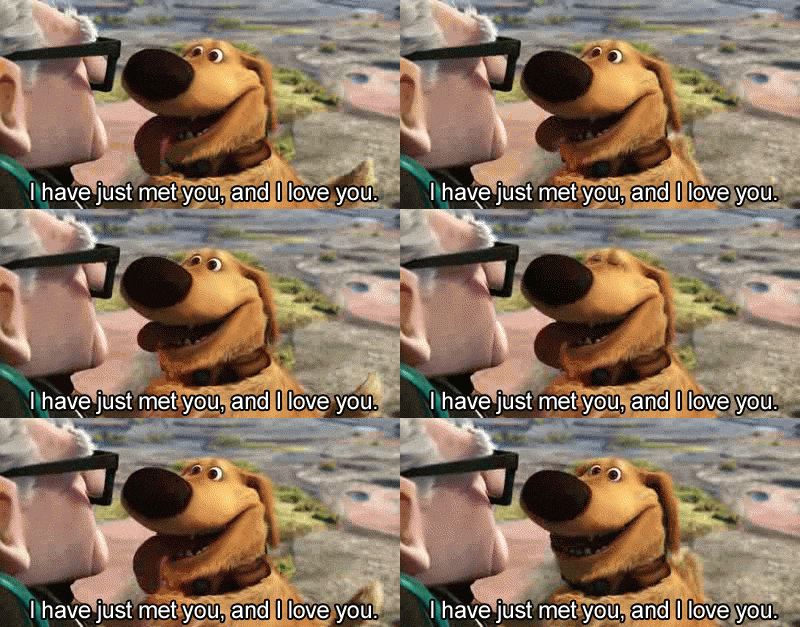
Of the two genres, I think my decision to call Isla’s Inheritance urban fantasy is right, because it has more of the hallmarks of that genre. For example, this one: “While several adult stories focus on professional heroes, many teen urban fantasy novels follow inexperienced protagonists who are unexpectedly drawn into paranormal struggles. Amidst these conflicts, characters often gain allies, find romance, and, in some cases, develop or discover supernatural abilities of their own.”
Have you struggled to categorise your work? How did you resolve it?
Interview: Summer Heacock, Women’s Fiction writer
Posted: April 28, 2013 Filed under: On writing | Tags: editing, Interview, writing 8 CommentsRemember how a while back I mentioned an amazing woman on Twitter who’d just drafted an entire novel in four days? (No, that isn’t a typo. FOUR (4)!) Her name is Summer Heacock and she kindly agreed to do this interview about her writing process.
I was completely awestruck when I heard you’d done the first draft of a manuscript in four days (I can’t even manage four months!). Tell us a little about Pineapple!
I have to be honest, I didn’t expect or plan that in the slightest! I’d been planning to write this story idea for a little over a year, but every time I sat down to write or plot, I was stuck staring at the screen, or writing out crap. I was actually coming to the point where I thought I would have to move on to another story because this one just wasn’t coming out!
Randomly, I happened upon a picture on Google at like 2AM on Friday night and thought the guy looked like what I thought the main fella in Pineapple would look like. The next afternoon, I was thinking certain parts of the book through, decided to sit down and scrap everything I’d written before, and damned if the words didn’t just start falling out.
For those who obsess on numbers like I do, how many words did you average a day? How many hours a day were you writing?
I averaged about 15,000 words a day. I still had to do real life, I’ve got kids and a husband, but for Saturday afternoon and most of the day Sunday, I was a total recluse and in the word zone. I totally need to buy my hubs a pony for the slack he picked up when I was pretty much ignoring life for two days.
I’d say I was writing 4–8 hours per day, depending on the day, and what else had to be done, like getting the kids ready for and to and from school, and so on.
Okay, I’m looking at that and it seems slightly insane… I swear, I’m aware my brain isn’t normal. I have these word binges where I’ll dump out giant word counts but then not be able to write anything for weeks.
Because I write so slowly, I do a quick edit of what I wrote in the previous session before I start drafting the next bit—mainly to remind myself of where I was up to. I’m guessing you don’t have that problem! What is your editing process?
Eek. Um. Well, I’m not sure I have a process. Outside of making sure I have Jelly Bellies and a playlist of music going, I just sort of dive in and hope for the best. But I’m utter crap at editing, so don’t strive to be like me, kids.
Are you a plotter or a pantser? Was Pineapple fully plotted before you started?
I’m both! I usually will have a scene in my head that inspires an entire story. Usually it’s something near the end of the book, so I have that in mind, and sort of just write out what happens to get to that point. With some stories, I have a more info, like multiple scenes that I piece together and fill in the blanks. I will do a rough outline with those scenes marked to get to, and the rest kind of pops up as I’m watching it all happen in my head.
I seriously hope other writers are as loony as I am…
What other projects do you have on the go right now?
I’m revising Pineapple now, and hoping to get it shiny and on point after my betas get through with it. I try not to work on more than one story at a time, but I have another MS that is waiting patiently to get started on after Pineapple is finished. It’s probably the most outlined story I’ve ever had before starting, and it’s quite different than my other Women’s Fic stories, so I’m intimidated and excited to see if I can pull it off when it’s time.
Until then, all the Pineapple! I have strong feels for this story, so I hope I can do it proud.
Tell us about yourself.
Let’s see. I am a writer, a mother and a wife. I am relatively badass at all these things. You will notice I did not say housekeeper up there. I suck at that. Like, hard. I am a writer of very strange characters that if I didn’t put word to paper would take over my brain, and who knows what would happen then. I write to SAVE LIVES, people.
When I am not donning my Super Mom/Wifey underoos, you will find me on Twitter or at my blog. I write Women’s Fiction and dabble in YA when I’m feeling froggy for it. You will find my fluency in profanity present in ALL THESE THINGS.
I am repped by the unfathomably brilliant Sarah LaPolla of Curtis Brown. I genuinely have no idea how I managed to snag someone so incredible as my agent, but I’ma run with it before she realizes she signed a crazy person.
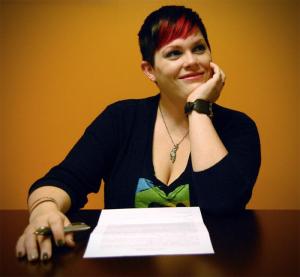
Summer Heacock
Fiction isn’t just imagination: researching your novel
Posted: April 27, 2013 Filed under: On writing | Tags: guest post, research, writing 9 CommentsToday’s guest post is by the amazing Nicole Evelina, whose dedication to research is awe-inspiring. Don’t believe me? Check out her blog!
I’m a historical fiction writer, so I do a lot of research. But you don’t have to be writing in another time period to find research necessary when writing a novel. Sure, you can make up a lot, but chances are good that unless your characters have the exact same life experiences as you, you’re going to need to do a little fact-finding along the way.

Picture via Wikimedia Commons
Why research is important
Research can be as simple as getting the details of your character’s occupation right or accurately depicting a route through a city. Sometimes it’s providing realistic descriptions of places that your readers may have lived or want to visit after reading your books. Things like that may seem trivial when we’ve got plots bursting from our brains but, trust me, someone out there will know when you’re making things up, and they will call you on it, especially in the age of social media. Of course, no one can get everything right, but it’s up to us as professionals to try.
Research can seem daunting, but I look at it this way: you start broad and then narrow in on the details that will make your book ring true to readers. Usually this means doing background research first. This is the broad information that allows you to feel like you understand the world in which your character lives. For me, this means culture, history, politics, religion, law, dress codes, prejudices, etc. But in other genres, it may just be reading about what a private investigator does or how the myth of vampires evolved over time. Only you will know exactly what you need.
With my basic information in mind, I plot my book. Sometimes I do more detailed research before I write a first draft, focusing on those things I know will play a major role in my characters’ lives. Once I’ve got a draft that makes some semblance of sense, I fact check my details – usually even up to the last minute – because it’s those little things that make fiction feel like reality.
More than just going online
So, how do you go about doing your research, especially if you haven’t done any since college? Well, thanks to the internet, it’s easier than ever. Sometimes all you need to is search Google Maps or Google Earth to get what you need. Other times, you can find the information right on the web. But I recommend verifying anything you find online in some sort of established reference material, just to be certain it’s accurate. There’s a lot of misinformation out there, so it’s better to be safe than sorry.
I’m not a doctor, but I play one in my books
Nothing beats in-person research. Sometimes that means visiting a place in person to get a feel for the area and see its nuances for yourself. Or you could interview an expert or two. If you’re a method writer, you could take a class on your subject or even ask if you can shadow someone who does what you’re curious about. People are amazingly willing to help, especially if they know you’re doing research, so don’t be afraid to be honest with them.
Between the pages
But not everything requires you to go this in-depth. Sometimes good old fashioned book research will do just fine. Amazon’s catalogue and Google Books are great ways to see what books exist on your subject. Some you will want to buy, but don’t worry if you can’t afford or don’t desire to amass an entire collection. Your public library will quickly become your best friend. And even if your city doesn’t have the book you want, they can probably get it through the interlibrary loan system. You’d be surprised what obscure titles will come to you from colleges all around the country (or even the world) if you’re just willing to wait a few weeks.
It’s worth it
Research may seem like a pain, but most of us became writers because we love exploring other worlds, other lives. That’s exactly what research is. If it helps, think of yourself as an actor taking on a role—you’ll have to live your characters’ lives even more in depth and for a longer period of time than you would if you were playing them in a movie. Your readers will be inhabiting their lives for the duration of their time with your book, so you owe it to them to get things right. If you go into research with a positive attitude, you’ll not only come out with a better story, you’ll be a little wiser, too.
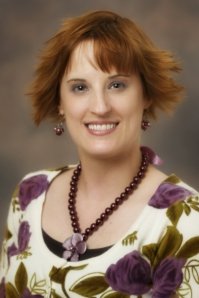
Nicole Evelina is a historical fiction writer from the Midwestern United States, represented by Jen Karsbaek of Foreword Literary. She’s currently writing an Arthurian legend trilogy. Her first book, Guinevere of Northgallis, is complete and she’s working on the sequel, Camelot’s Queen.
Inspired by cover art
Posted: April 25, 2013 Filed under: On the Isla's Inheritance trilogy, On writing | Tags: book covers, Isla's Inheritance, self-publishing, Thursdays Children 14 Comments
As I’ve previously established, I love looking at gorgeous cover art. And as I’ve also recently established, I’m coming to the end of my agent query ride on ISLA’S INHERITANCE. But that doesn’t mean the end of the ride for the manuscript, just that it’s time to consider my options for unagented publication.
So. I like to think ahead. I like to look at cover art produced by different small presses, and at indie books’ cover art, and imagine what sort of art I might have on Isla’s Inheritance. And I have a couple of very talented friends, who’ve helped me put together a draft cover.
My very talented friend, Krystal, is a photographer, and although she usually does outdoor shots with children she was happy to do a photoshoot with a gorgeous model, and send me the images. My other very talented friend, Kim, is an indie author who designs covers, so when I sent her a manipulated version of the cover (complete with cheesy font and plain background) she very politely told me what I was doing wrong and helped me come up with something a thousand times better.
Unfortunately it’s too early for me to share the cover with you, even though I’m bursting with enthusiasm about it and want to show everyone. Partly because there’s no guarantee if I publish with any publishing house that I’ll be able to use it as my cover, although in that case I’ll turn it into art for the blog. And partly because cover reveals are actually a big deal in the promotional cycle of a book (as you may have noticed from the recent cover reveals I’ve been posting), which requires me to have an impending release to promote.
But I’ve saved it as my desktop wallpaper. And sometimes I sit and look at it, and it gives me ALL THE FEELS! So even if no one ever sees it but Krystal, Kim, me and my boyfriend (when he uses my computer), it was worth the time I spent on it.
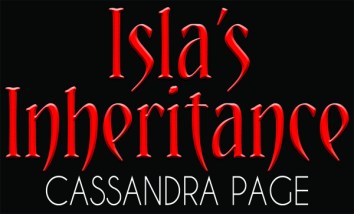
This isn’t the cover, but it is the title with the image removed. ALL THE FEELS.
Click here to see this week’s other Thursday’s Children blog posts.
Cover reveal and giveaway: ‘Sacrifice: a Fall For Me Prequel’ by K. A. Last
Posted: April 23, 2013 Filed under: On Books | Tags: book covers, contests 2 CommentsSeth’s heart is breaking. He knows his decision will hurt the one person he keeps breathing for, but he can’t take it anymore. He can’t be near Grace knowing she will always be just out of reach.
Grace is oblivious to Seth’s turmoil. She loves him unconditionally, but not in the way he wants. They both know that in Heaven physical love is forbidden, and to break the rules is to defy everything they’ve ever been taught.
When Grace and Seth are sent on a mission to save a young mother and her unborn child, Grace must face the fact that Seth won’t be returning home. She doesn’t understand Seth’s decision and hates him for it. But what neither of them realise is how big a part that single decision will play in shaping their entire future.
What would you sacrifice for the one you love?

“Sacrifice” by K.A. Last
Add it on Goodreads now!
Want to read Fall For Me while you wait? You can find it on Goodreads here!
Giveaway details
To celebrate her upcoming release, K.A. Last is giving away an Amazon voucher to one lucky winner. To enter, click:
=======> HERE!<=======
About K. A. Last
K. A. Last was born in Subiaco, Western Australia, and moved to Sydney with her parents and older brother when she was eight. Artistic and creative by nature, she studied Graphic Design and graduated with an Advanced Diploma. After marrying her high school sweetheart, she concentrated on her career before settling into family life. Blessed with a vivid imagination, she began writing to let off creative steam, and fell in love with it. She now resides in a peaceful leafy suburb north of Sydney with her husband, their two children and a rabbit named Twitch.


 Cassandra Page