Review: ‘Eleanor & Park’ by Rainbow Rowell
Posted: March 6, 2016 Filed under: Reviews | Tags: geekery, reviews Leave a comment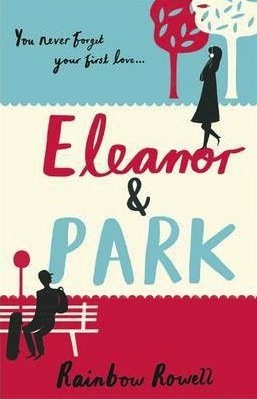
Eleanor is the new girl in town, and with her chaotic family life, her mismatched clothes and unruly red hair, she couldn’t stick out more if she tried.
Park is the boy at the back of the bus. Black T-shirts, headphones, head in a book – he thinks he’s made himself invisible. But not to Eleanor… never to Eleanor.
Slowly, steadily, through late-night conversations and an ever-growing stack of mix tapes, Eleanor and Park fall for each other. They fall in love the way you do the first time, when you’re young, and you feel as if you have nothing and everything to lose.
I bought this over a year ago, and it’s taken it this long to work to the top of my TBR pile. So I expect most of you will have already read it if you’re going to, but anyway…
I really enjoyed Eleanor & Park, for so many reasons, but I didn’t adore it — and I’m really struggling to put my finger on exactly why that is. Maybe I was in the mood for something a little more fun? I didn’t really know much about the book except that it was a contemporary romance set in the 80s (or do the 80s count as historical now?!).
Don’t get me wrong, there are fun parts to Eleanor & Park — I started high school at the end of the 80s so all the references to mix tapes and big hair made me gigglecringe (that’s totally a word). I loved their banter about comic books, and the way they bonded over them almost by accident. When Park tells Eleanor he’s going to give her the best Batman comic ever to read and she makes a crack about how in that one Batman raises two eyebrows instead of one, I laughed. A lot.
But, well, when the blurb talks about Eleanor’s chaotic family life, chaotic isn’t the right word. Horrific. Abusive. Dreadful (in the sense that, as a reader, it fills you with dread). It isn’t a fun place to experience. Park becomes Eleanor’s escape from all that, and I loved him for it — almost as much as she loved him.
As far as the plot goes, this story is heavy on the romance. I saw the plot twists coming — I tend to do that in romances; I don’t know why that is given I don’t read that many. But I didn’t mind too much. It was definitely a fast read, and technically well executed.
Rainbow Rowell’s writing is very, very good. She jumps between Eleanor’s and Park’s perspective all the time, but with little subheadings so you know who you’re reading about (it’s not just sloppy head-hopping like you sometimes see). There isn’t much description of the world around them — only the things that they think are important, which works. My favourite scenes were the high-emotion scenes where she gives you a snippet from each character and their thoughts mirror one another. It was so beautiful. *sniff*
The other thing worth mentioning is that both Eleanor and Park come across as real people. Park is half-Korean and looks it (unlike his brother, who looks more Irish). Eleanor is overweight. One of the sweetest things is that, when you see each character through the other’s eyes, they are the most beautiful things ever. Park never even seems to notice that Eleanor is overweight. Eleanor does notice that Park looks Korean, but she adores everything about him — especially his skin and his eyes.
If you love contemporary YA, 80s perms, comics and mix tapes, then Eleanor & Park is definitely worth checking out.

Review: ‘You’re Never Weird on the Internet (Almost)’ by Felicia Day
Posted: March 3, 2016 Filed under: Reviews | Tags: geekery, memoir, non-fiction, reviews Leave a comment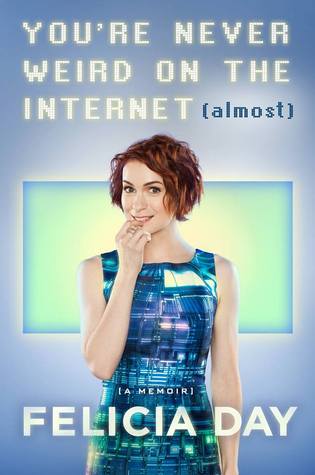
From online entertainment mogul, actress, and “queen of the geeks” Felicia Day, a funny, quirky, and inspiring memoir about her unusual upbringing, her rise to Internet-stardom, and embracing her individuality to find success in Hollywood.
The Internet isn’t all cat videos. There’s also Felicia Day—violinist, filmmaker, Internet entrepreneur, compulsive gamer, hoagie specialist, and former lonely homeschooled girl who overcame her isolated childhood to become the ruler of a new world… or at least semi-influential in the world of Internet Geeks and Goodreads book clubs.
After growing up in the south where she was “home-schooled for hippie reasons”, Felicia moved to Hollywood to pursue her dream of becoming an actress and was immediately typecast as a crazy cat-lady secretary. But Felicia’s misadventures in Hollywood led her to produce her own web series, own her own production company, and become an Internet star.
Felicia’s short-ish life and her rags-to-riches rise to Internet fame launched her career as one of the most influential creators in new media. Now, Felicia’s strange world is filled with thoughts on creativity, video games, and a dash of mild feminist activism—just like her memoir.
Hilarious and inspirational, You’re Never Weird on the Internet (Almost) is proof that everyone should embrace what makes them different and be brave enough to share it with the world, because anything is possible now—even for a digital misfit.
If you’re a fan of Joss Whedon’s work, you may remember Felicia from his hit internet web series, Doctor Horrible’s Sing-along Blog. She played Penny. *sniff* She’s also been on Buffy, Supernatural, and lots of other shows … but before she was on Doctor Horrible, she created her own web series, The Guild.
The Guild is inspired by Felicia’s own experiences in online computer games, especially her addiction to World of Warcraft. I had a WoW addiction myself there for a couple of years (though I still managed to go to work), so the show and its characters really resonated for me. In fact, I quit WoW when I got pregnant because I “didn’t want to be a Clara” (the sweet but very neglectful mother in The Guild).
So I guess I owe Felicia a big thank you for saving my son’s childhood! Yay!
All of this is by way of explanation for why I picked up this book, and why I loved it — and Felicia — so, so much.
You’re Never Weird on the Internet (Almost) is a relatively quick read (or listen — I bought the audiobook, which is narrated by the charming Felicia herself). And it’s one I thoroughly recommend for geeks. If you didn’t understand my paragraph about WoW, then some of the stuff in the book may go over your head. Although Felicia does a really good job of making the geek jargon accessible, I am not qualified to say how good a job she did, because I already knew what she was talking about.
Felicia is very honest about herself, her upbringing and her failings: she describes herself variously as anxious, driven and a control freak, and provides many, many examples of each. The book reveals things about her that I didn’t know, including how awful things got for her after she got doxxed by GamerGate. (I wanted to give her a hug, and then set fire to certain parts of the internet.)
What she doesn’t talk about is her adult personal life. She mentions several times that she has a boyfriend, but if you’re expecting salacious details, don’t hold your breath — she never even says what his name is. On the other hand, given the doxxing, who can blame her? Likewise, she mentions that she’s no stranger to restraining orders and talks about a disturbed fan turning up at her house, but doesn’t go into details about any of it. Again, fair enough.
Still, if you want to hear funny anecdotes about her homeschool experience, singing lessons, university violin performance, acting experience and so much more, this book is wonderful. I especially recommend it for the embarrassing stories of Felicia geeking out over other celebrities at fan conventions. That made me feel so much better about my incoherent behaviour whenever I’ve ever met anyone even slightly famous.
Thanks, Felicia!

Review: ‘Wake of Vultures’ by Lila Bowen
Posted: February 28, 2016 Filed under: Reviews | Tags: delilah s. dawson, glbt, reviews, WeNeedDiverseBooks Leave a comment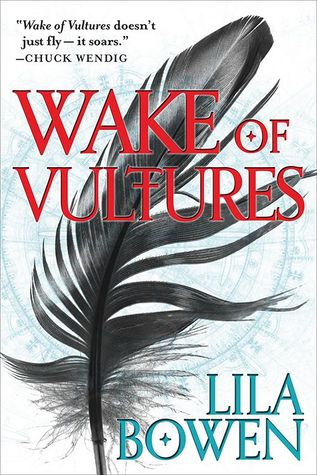
A rich, dark fantasy of destiny, death, and the supernatural world hiding beneath the surface.
Nettie Lonesome lives in a land of hard people and hard ground dusted with sand. She’s a half-breed who dresses like a boy, raised by folks who don’t call her a slave but use her like one. She knows of nothing else. That is, until the day a stranger attacks her. When nothing, not even a sickle to the eye can stop him, Nettie stabs him through the heart with a chunk of wood, and he turns into black sand.
And just like that, Nettie can see.
But her newfound sight is a blessing and a curse. Even if she doesn’t understand what’s under her own skin, she can sense what everyone else is hiding — at least physically. The world is full of evil, and now she knows the source of all the sand in the desert. Haunted by the spirits, Nettie has no choice but to set out on a quest that might lead to her true kin… if the monsters along the way don’t kill her first.
A historical fantasy about a half Native American, half African American bisexual girl who dresses like a man? This is the book I didn’t know I needed till I had it. Delilah S. Dawson (writing here as Lila Bowen) is one of my favourite authors, and I confess that I probably wouldn’t have picked this up if she hadn’t written it — not for any particular reason, just because I don’t usually read books set in the American Wild West (or a facsimile thereof). So Wake of Vultures would never have even crossed my radar.
And that would’ve been a tragedy, because Nettie Lonesome’s story is a cracking read. The action whisks you along, and it doesn’t get bogged down in self-reflection — though there is certainly a bit of that, as poor Nettie has received exactly no education and, as other characters keep telling her, has a lot to learn about people. Consequently, she is baffled by notions like bisexuality or why a woman would actually choose to wear skirts rather than pretending to be a man.
From my (admittedly white, non-American) perspective, Dawson/Bowen handled the issues of race and gender identity with tact. There’s no stereotyping — there are good and bad guys both white and “Injun” (as Nettie refers to them, given she was raised by whites; the phrase is something the author acknowledges is not PC these days but would have been accurate in the 1800s Texas that Durango is based off). Even the monsters have a range of good and bad types.
As far as the monsters go, if there’s a method to determining the ones we encounter then it isn’t made clear to Nettie — and therefore us — in this book what that is. There are vampires, harpies, werewolves, skinwalkers, the Cannibal Owl (a Native American bogeyman), dwarves and bludbunnies (a critter from Dawson’s steampunk series). I guess European-mythology creatures can emigrate just as easily as Europeans can!
I enjoyed the other characters, particularly Winifred — who is the first female Nettie really gets to know who is happy and proud to be female — and Sam Hennessey, one of her fellow Rangers. There is a hint of romance in the story, but if you only like your romance to include kissing scenes and heavy petting, you won’t find any of that here (the closest we come to a kissing scene actually made me cringe for poor Nettie and the other party). I actually liked that, though. Nettie is so confused by who she is and what she wants that if she’d jumped into the sack with someone it would’ve seemed very out of character.
I can’t wait for the next book in the series, Horde of Crows. The ending isn’t a cliffhanger per se, but it sure left me wanting more.
Writing reviews: my philosophy
Posted: February 23, 2016 Filed under: Reviews | Tags: reviews 7 CommentsBefore I start, I feel I should point out that this post isn’t my review policy.
This is my review policy:
I’m not primarily a book blogger, and I don’t take review requests; I post reviews for books I happen to be reading and felt strongly enough about that I wanted to share my thoughts with others. Please don’t ask me to review your book — as my local grocery says, refusal may offend.
Although that makes me wonder exactly how they refuse! 😉
So. Having established that, let’s move on.
Before I joined Goodreads I wasn’t a book reviewer. A book addict, yes, but I didn’t leave reviews anywhere … unless you count enthusiastic word of mouth. I joined that site in 2012, but mostly used it to sort and track my reads. If I left reviews, they were a paragraph or less. I did leave star ratings, though.
That changed in mid-to-late 2013. By then I’d joined Twitter and started blogging with Aussie Owned and Read, and I’d really begun to understand how vital reviews are to authors, especially indie and mid-list authors who struggle to get the word out. That was when I started writing longer reviews and blogging about them, becoming a pseudo-book blogger.
I call myself a pseudo-book blogger, because I’m only on the fringes of the very enthusiastic and dedicated book blogging community. I don’t get free ARCs from publishing houses — thank goodness, as I don’t think I could handle the pressure — or chase ARCs in general. I buy my books, because I love to support authors. And I love to own books.
(I got heckled by the removalists as they were hauling box after box of books up to what is now my study. True story.)
Goodreads helpfully pointed out to me the other day that my average star rating for all the books I’ve reviewed since I joined Goodreads is 4.38 stars. They even provide a handy graph.
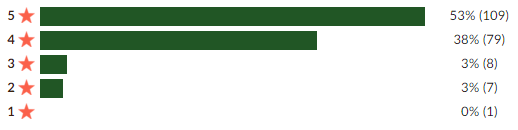
I remember having a discussion with another reviewer where I gave something four stars and then listed a few things that left me wanting more in the book. She told me that, if it were her, such a review would carry a three-star rating at best.
All of which got me to wondering whether I rate books too highly when I review them.
For those that aren’t familiar with the Goodreads star ratings, they are:
One star: Did not like it
Two stars: It was ok
Three stars: Liked it
Four stars: Really liked it
Five stars: It was amazing
After thinking about it, though, I’ve come to the conclusion that, by those descriptions, I’m rating just fine, in my own way. Here are a few reasons I think account for my high average ratings:
- If I give something a half-star rating, I round up rather than down. This means that, at a guess, my true average would actually be in the high 3-stars. The reason I round up is because writing is hard work, and I prefer to be nice to fellow authors where I can. If maths gives them a slight bonus, I’m okay with that.
- I’m not that risky a reader, all things considered. I know what I like, and that’s what I usually read. When I read outside my usual genres, it tends to be books by writers that I’ve met on social media or otherwise admire. This means I’ve been exposed to their writing before and generally have a sense for what I’m in for. (For example, I discovered Chuck Wendig’s and Delilah S. Dawson’s books by reading their blogs.)
- On the handful of occasions I’ve read books where I really was tempted to give a low rating, I’ve usually just not rated the book. There are, of course, exceptions: for example, Red Riding Hood filled me with rage. I didn’t feel bad about one-starring it, because the decision that got under my skin was one the publisher (presumably) made, not the author. And I think we can all agree that publishing without the last chapter in a whodunit is a low blow.
Does choosing not to rate a book rather than give it a one- or two-star rating mean that my reviews somehow have less integrity? That’s one of the things I’ve been wondering. I don’t think that it does, but I guess others may agree. It kind of brings me back to what I said originally: I’m not a book blogger or professional reviewer. I review for fun, to spread the word about awesome stories that I’ve enjoyed.
What do you think? If someone reviews books, are they obliged to rate and review every book they read in all its messy glory?
Review: ‘William Shakespeare’s Star Wars: Verily, A New Hope’ by Ian Doescher
Posted: February 20, 2016 Filed under: Reviews | Tags: geekery, reviews, shakespeare Leave a comment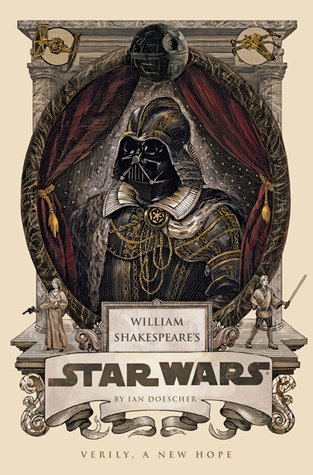
MAY THE VERSE BE WITH YOU!
Return once more to a galaxy far, far away with this sublime retelling of George Lucas’s epic Star Wars in the style of the immortal Bard of Avon. The sage of a wise (Jedi) knight and an evil (Sith) lord, of a beautiful princess held captive and a young hero coming of age, Star Wars abounds with all the valor and villainy of Shakespeare’s greatest plays. ‘Tis a tale told by fretful Droids, full of faithful Wookiees and fearsome Stormtroopers, signifying… pretty much everything.
Reimagined in glorious iambic pentameter, William Shakespeare’s Star Wars will astound and edify Rebels and Imperials alike. Zounds! This is the book you’re looking for.
I bought this as a present for a friend because the concept tickled me. When I got it home I started flicking through it … and before I knew it, I’d read the entire thing. (Sorry, Peter!)
Though I do love episode seven, I’d otherwise describe myself as a casual fan of the Star Wars franchise — I don’t own any of the DVDs and the only book I’ve read is Chuck Wendig’s Aftermath, because I’m a fan of his writing. Likewise, I’ve read some Shakespeare, but probably not since my university days.
Still, I’m familiar enough with each to recognise the famous quotes, which is fortunate, because I got a lot of joy from seeing Star Wars rendered in iambic pentameter, and from seeing Shakespeare quotes adapted to a Star Wars plot. (There was also a cheeky reference to Star Trek’s “boldly go” statement, which made me snigger.) Doescher has clearly taken a lot of care in adding these sorts of in-jokes for the reader, which take this book from a straight retelling to something both beautiful and slyly amusing.
The other thing I really liked about the adaptation is the Shakespearean use of the soliloquy to give glimpses into the true nature of each of the major characters. We hear C3PO talk about his true feelings for R2-D2 (despite his constant, snark-filled badgering), R2-D2 in turn reveal his disdain for C3PO, Darth Vader give a glimpse into the darkness in his soul, and Han reveal that he’s not just a scruffy criminal but something more. Luke’s starry-eyed desire for adventure and realisation it’s not all it’s cracked up to be makes me like his character more than his whining in the movie did.
The language is a lot easier to follow than genuine Shakespeare too, because — although Doescher has used the rhythm and basic linguistic trappings — I didn’t have to look up any of the words to see what they meant. YMMV. As I said, I haven’t read Shakespeare for a long time!
I strongly recommend this for fans of the movies who also love a bit of Shakespeare.
Review: ‘The Twenty-One’ by Lauren K. McKellar
Posted: February 16, 2016 Filed under: Reviews | Tags: aussie-owned, AWW, reviews 1 Comment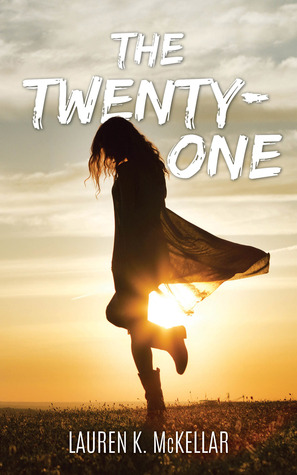
I look both ways before I cross the road. I knot my laces twice. Boring? Sure. But it’s also settled. Stable. Safe.
And I like safe.
Because broken bones may be hard to heal, but broken hearts are even harder. And when the man I loved and lost reappears in my life, I won’t fall for his charms again … will I?
Joel Henley just might be my biggest risk yet.
My name is Ellie Mayfield. And this is my undoing.
Before I started reading this book, I asked the author whether I’d need to have the tissues on standby. She said maybe. MAYBE. Afterwards, she clarified that tissues may not have been absorbent enough. Related to this, I have a Goodreads shelf called “made me cry”. There are now eleven books on there (I don’t cry that easily while reading), and three of them are by Lauren K. McKellar.
Needless to say, this book is one that will give you feels. Many feels.
At the start of the book, Ellie (who is a side character in McKellar’s How To Save A Life) could best be described as a bit of a doormat. Her mother is an a-grade cow and her younger sister is manipulative and getting worse. Ellie doubts herself when she shouldn’t and lets her family take advantage of her, putting her own desires to one side and seeing herself as bound by a promise to her dying father to look after them both when he’s gone.
That’s when we meet Joel Henley, Ellie’s high school boyfriend. He left her suddenly when she was 16, and within the blink of an eye manages to again sweep her off her feet, dragging her along with him as he works through a bucket list of twenty-one things he wants to do before he turns twenty-one. Everything seems to be going swimmingly till maybe halfway through the book … and that’s when (as is traditional in these sorts of books, I guess?) the wheels come off.
From that point on, everything gets harder on all fronts — but there are sweet moments too, bright spots in the gloom like stars in the night sky. That comparison isn’t just me being poetic; stars are a theme throughout the book, one I like to think McKellar put there deliberately for that exact reason.
I really liked Joel. I especially liked the way that he helps Ellie to stand on her own two feet, take (reasonable) risks and discover the spine that she forgot she had all along. Her character growth as a result of his influence is wonderful to watch, and those moments where she put her foot down and said no to others were simply glorious.
If you’re a fan of heart-wrenching stories then pretty much anything by McKellar is worth a look. Most of her books largely stand alone, so you don’t need to read How to Save a Life to be able to follow this one, but I loved that book too, so you definitely should.
Review: ‘The Wise Man’s Fear’ by Patrick Rothfuss
Posted: February 13, 2016 Filed under: Reviews | Tags: fantasy, reviews Leave a comment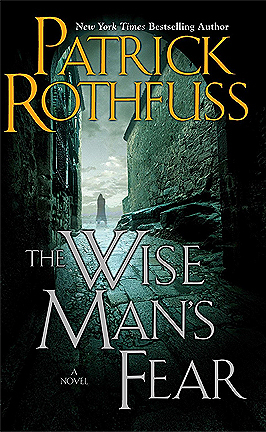
“There are three things all wise men fear: the sea in storm, a night with no moon, and the anger of a gentle man.”
My name is Kvothe.
I have stolen princesses back from sleeping barrow kings. I burned down the town of Trehon. I have spent the night with Felurian and left with both my sanity and my life. I was expelled from the University at a younger age than most people are allowed in. I tread paths by moonlight that others fear to speak of during day. I have talked to Gods, loved women, and written songs that make the minstrels weep.
You may have heard of me.
So begins the tale of a hero told from his own point of view — a story unequaled in fantasy literature. Now in The Wise Man’s Fear, an escalating rivalry with a powerful member of the nobility forces Kvothe to leave the University and seek his fortune abroad. Adrift, penniless, and alone, he travels to Vintas, where he quickly becomes entangled in the politics of courtly society. While attempting to curry favor with a powerful noble, Kvothe uncovers an assassination attempt, comes into conflict with a rival arcanist, and leads a group of mercenaries into the wild, in an attempt to solve the mystery of who (or what) is waylaying travelers on the King’s Road.
All the while, Kvothe searches for answers, attempting to uncover the truth about the mysterious Amyr, the Chandrian, and the death of his parents. Along the way, Kvothe is put on trial by the legendary Adem mercenaries, is forced to reclaim the honor of the Edema Ruh, and travels into the Fae realm. There he meets Felurian, the faerie woman no man can resist, and who no man has ever survived…until Kvothe.
In The Wise Man’s Fear, Kvothe takes his first steps on the path of the hero and learns how difficult life can be when a man becomes a legend in his own time.
The Wise Man’s Fear is the second in The Kingkiller Chronicle. If you haven’t read the first book, then this isn’t the place to start; they need to be read in order. This book continues Kvothe’s retelling of his life to date, picking up where the first book leaves off. It is now day two of Kvothe telling the story and, again, the book jumps between Kvothe’s tale and events in the inn where he is telling it.
I adore the foreshadowing that Rothfuss is able to do by virtue of glimpses of “current” events. One non-spoilery example is the fact that Kvothe at some point killed a king. I’ve been getting a kick out of building my own little theory as to who that might be and why, and will be very interested to see how the story unfolds. Likewise, the fate of Denna has a question mark over it. Regardless of what I think of her (I have mixed feelings), she is definitely past-Kvothe’s love, and her marked absence from present-Kvothe’s life (and his obvious depression) suggests she meets some kind of sticky end.
I NEED TO KNOW WHAT HAPPENS, YOU GUYS.
There are elements of this book that I didn’t enjoy as much as the first book, although I suppose they are inevitable given the story is about the development of a hero (who must at some point have learned magic and how to fight). They mostly revolve around loose threads. I get really frustrated when characters seem to put one (quite important) thing on hold to chase up another. I’m not talking about Kvothe taking a break from university — I think that was a good idea to mix up the story — but when he decided to take a several month (several hundred page) detour before reporting back to Alveron, I got a bit twitchy. Especially with the Felurian episode … although why that was important became clear by the end of the book.
Still, even the more tangential bits of history are interspersed with action set in the present, and there are little mysteries unfolding there too. For example, what is going on with his student, Bast (a character I really enjoy)?
Overall I’ve given The Wise Man’s Fear 4.5 stars. It was very good, but the first book in the series was very, very good. Regardless, I will definitely be going back for book three, Doors of Stone, when it comes out … which will hopefully be some time this decade. *sniff*
Review: ‘Storm in a Teacup’ by Emmie Mears
Posted: February 4, 2016 Filed under: Reviews | Tags: reviews, urban fantasy Leave a comment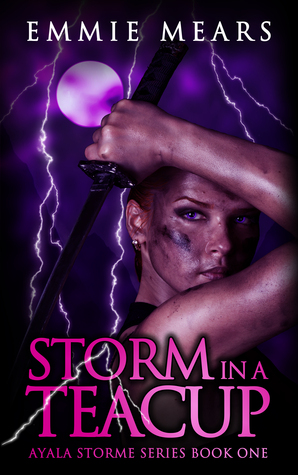
Mediator Ayala Storme handles PR by day and kills demons by night. She avoids Mediator luncheons and a fellow Mediator who’s been trying to get in her pants for years. She does her job. She keeps her sword clean and her body count high. But when a rash of disappearances leads her to discover that Nashville’s hellkin are spawning a new race of monster in human hosts, Ayala will be the first line of defense against these day-walking killers.
That is, until one of the creatures saves her life.
Ayala’s new knowledge of the hybrids’ free will challenges everything she’s ever known about her job. Racing the clock while trying to outrun her comrades and enemies alike, she’s not sure who will catch her first…
I got the ebook of Storm in a Teacup last year, and it kicked around on my Kindle for a while, until I began to crave a fresh new urban fantasy. And boy, does this series deliver.
Despite a couple of somewhat cheesy elements (the main character’s surname being one, and the fact she and the other Mediators all have violet eyes being the other), Storm in a Teacup gave a fresh face to the idea of a society of demon hunters in an alternate USA.
The violet eyes indicate that a person is destined to be a Mediator; they are taken from their parents and trained from a young age. The means by which they get their supernatural powers — whether they are inherent, or bestowed during the training via external means — aren’t addressed in the first book, but hopefully will be down the track. One of the side-effects of that power is quite sinister and makes me wonder if the Mediators’ origins are less than pure. The “taking babies from their parents” thing is another sign, as is the euphemistic name. They don’t really “mediate” anything that we see; they are basically the world’s pest control, trained to slaughter any demons that stick their noses out of hell. And they don’t even get paid for it, which I found even more appalling!
Ayala is a strong female lead who knows what she wants. She has a taste for luxury in the privacy of her own home, and orange hair … although I never pictured her that way due to the book’s cover. (Also, orange and violet? Poor girl!) Far and away my favourite thing about the book was Ayala’s voice. She is clever, sassy and fun, and tells her story in a first-person, conversational and often hilarious style that totally drew me in. I’d recommend this book just for the voice!
As far as the plot goes, it starts out in a fairly conventional “monster hunt” way, with the demons being the usual, icky and irredeemable evil. As the blurb foreshadows, though, the results of the demons’ new project aren’t as black and white as all that, and Ayala is quickly thrown between the rock of her Mediator indoctrination (demons bad) and the hard place that is her moral code (don’t kill the innocent). I saw the main plot twist coming, but was happy to be taken along for the ride.
Although there is a lot of violence, the sex scene is of the “fade to black” sort, making this book a fairly clean read for anyone from their late teens onwards. (I don’t remember there being swearing, but I tend not to notice that as much.) The story resolves itself, so I was left satisfied, but there are enough elements and questions left that I’ll be reading on to find out more about this intriguing world.
Review: ‘Pretend…’ by Stacey Nash
Posted: January 25, 2016 Filed under: Reviews | Tags: aussie-owned, AWW, reviews Leave a comment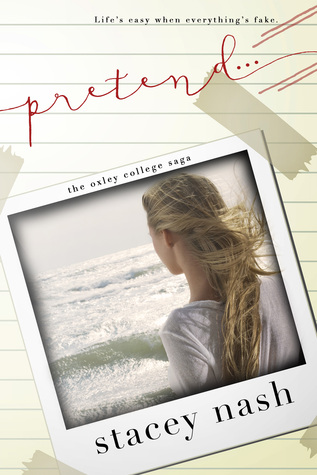
Life’s easy when everything’s fake.
Savannah West had it all: popularity, good grades and a family who loved her, but how quickly things can change. Living half a state away doesn’t stop the painful memories of her past ripping her heart in two. And sometimes lies are easier than coping with the truth.
The thing she didn’t bank on was Dane Beaumont. A blast from her horrendous past, he’s the last person she expected to run into at college … and it’s not just because he knows the truth. Hot as sin, he’s more off limits than generic brand clothing, but staying away isn’t easy when he insists on looking out for her. Dealing with the reality of finding her place in the world, Savvy must face the guy who tears down all her carefully placed walls and pull herself together. It’s time to grow up.
Pretend… is the sequel to Shh! and Wait! — which I have also reviewed — and is part of the Oxley College series. (Oxley is the name of a student housing dormitory at Armidale University, if you’re wondering.) Pretend… is actually set concurrently with Shh!, which was a lot of fun — I enjoyed those little outside glimpses into Olivia and Logan’s story.
I confess I wasn’t in love with Savannah’s story to the same extent as either Olivia’s or Hex’s; my main reservation is neatly captured by the blurb. Although Savvy has issues and traumas in her past, most of her current problems are caused by her own reluctance to be honest with people. I’m not saying I didn’t understand why — it’s definitely easier to pretend to be the carefree socialite than to risk rocking the boat — but still. The end result was that, at times (particularly at around 60%), I wanted to knock her gorgeous blond head into a wall.
I also didn’t like Dane as much as Logan, who was the love interest in the first book. The reasons for this are mostly personal taste: I don’t generally enjoy cocky alpha male types. And Dane seems quite shallow and vain at first. However (and this is a big however), given the dual POV, we get to see inside his head, which gives us a chance to see that there is more going on than a surfboard and immaculate pecs. I admit he, erm, grew on me. :p
And the pairing of Savvy and Dane really worked. I liked that he saw past her smokescreen and was, from the start, the one she could rely on, who knew the truth and who called her out on her BS. I liked the way they grew throughout the book.
The other thing I really loved about Pretend… was how much of it was set at the beach. It made me really hanker for a holiday!
Like all the Oxley College books, Pretend… is sweet new adult romance, meaning that although there is heated kissing (boy howdy!), the sex all happens off camera, so to speak. There is more swearing in this book than in the previous two, which I actually found a relief as it read more naturally.
If you enjoy clean-ish college/university romances with raw and honest alpha male leads and fashion-conscious female leads with tragic pasts, then Pretend… is the book for you. Although the story would stand alone, if it were me I’d start with Shh! and then read this one, then Wait!.
Australian Women Writers Challenge – 2015 wrap up
Posted: December 30, 2015 Filed under: Reviews | Tags: AWW Leave a comment
The Australian Women Writers’ Challenge is part of a world-wide movement to raise awareness of excellent writing by women. It helps readers to challenge the subconscious stereotypes that govern our choice of books to read. The challenge encourages avid readers and book bloggers, male and female, Australian and non-Australian, to read and review books by Australian women throughout the year. You don’t have to be a writer to sign up. You can choose to read and review, or read only.
This is my second year doing the Australian Women Writers Challenge — last year I read and reviewed eleven books by Aussie women, so this year I decided to up my goal to fifteen. Yesterday in the wee small hours of the night, and just in the nick of time, I finished my final book!
This was one of three reading challenges I signed up to this year. The other two were a diverse genres one (again for Australian writers), which I didn’t quite achieve, and the general Goodreads challenge, which I did. As Meatloaf said, two out of three ain’t bad…
Here is a link to each review, as well as my star rating for each book:
- Fairytales for Wilde Girls by Allyse Near – 4 stars
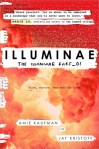
- Illuminae by Amie Kaufman and Jay Kristoff – 5 stars
- Never Forgotten by Stacey Nash – 4 stars
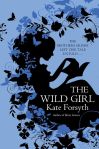
- The Wild Girl by Kate Forsyth – 4 stars
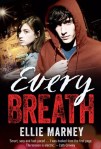
- Every Breath by Ellie Marney – 5 stars
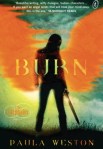
- Burn by Paula Weston – 5 stars
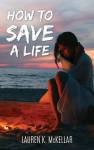
- How to Save a Life by Lauren K. McKellar – 5 stars
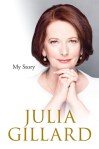
- My Story by Julia Gillard – 3.5 stars
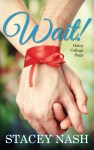
- Wait! by Stacey Nash – 5 stars
- The Intern by Gabrielle Tozer – 4 stars
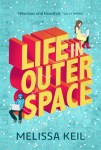
- Life in Outer Space by Melissa Keil – 5 stars
- The Problem With Heartache by Lauren K. McKellar – 4.5 stars
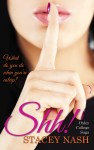
- Shh! by Stacey Nash – 5 stars
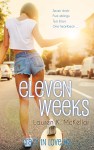
- Eleven Weeks by Lauren K. McKellar – 5 stars
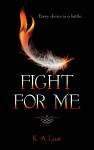
- Fight For Me by K. A. Last – 5 stars
I’ve discovered some awesome new-to-me authors this year (such as Ellie Marney, Melissa Keil and Allyse Near), as well as revelling in new releases by some old favourites (such as Kate Forsyth, Paula Weston and the Aussie Owned and Read girls).
It’s been a good year. 🙂






 Cassandra Page