
Review: ‘The Scorpio Races’ by Maggie Stiefvater
Posted: November 6, 2019 Filed under: Reviews | Tags: reviews Leave a comment
It happens at the start of every November: the Scorpio Races. Riders attempt to keep hold of their water horses long enough to make it to the finish line. Some riders live. Others die.
At age nineteen, Sean Kendrick is the returning champion. He is a young man of few words, and if he has any fears, he keeps them buried deep, where no one else can see them.
Puck Connolly is different. She never meant to ride in the Scorpio Races. But fate hasn’t given her much of a chance. So she enters the competition — the first girl ever to do so. She is in no way prepared for what is going to happen.
Things I loved about The Scorpio Races (a list):
One: the writing. Stiefvater’s prose is magical and lyrical and (in this book at least) kind of old fashioned in a way that made me think this book was set last century, although I don’t think it’s ever confirmed explicitly. She is a master of her craft and I was in awe listening* to it.
* Yes, this was an audiobook listen for me, although I’m pretty sure I also own the paperback somewhere in this dusty TBR pile.
Two: the water horses. These fae horses from Scottish myth are all too real in the book: powerful, beautiful and deadly carnivores that are driven especially wild by the “Scorpio Sea”: the ocean at the time of year that the star sign is in effect. (This, of course, is apparently the perfect time to race them, because humans are silly.) Stiefvater’s water horses are slightly magical — they have the power to lull riders into complacency on their backs, to make them more vulnerable — and they are susceptible to iron and other fae-binding magics.
Three: the magics. This book is magical realism. The magic isn’t flashy; it’s quiet ritual, spit and blood. And maybe it isn’t magic at all but science and home truths. Who knows?
Four: the characters. With the book written in a dual POV, we were able to see inside both Sean and Puck in a way that made both of them — on the surface, rather difficult to like — complex and loveable. The romance between them is subtle and beautiful and I think it takes them both, headstrong and certain as they are, by surprise. It’s also utterly clean; the most they exchange is a kiss. I loved it, and them.
Five: the stories. In many ways, this is a slow story — it’s not all horse chases (like car chases, but on … well, you know). There’s a lot of time given to the various relationships: Puck and her brothers, Sean and his employer, the humans and their horses. But there was definitely enough to keep me going.
Recommended for: lovers of the fae at their gritty, bloody best; fans of young adult books; lovers of gorgeous prose.

Review: ‘Shadow of the Conqueror’ by Shad M. Brooks
Posted: November 1, 2019 Filed under: Reviews | Tags: reviews Leave a comment
Who better to fight back the darkness of the world than the one responsible for most of it?
Daylen, once known as the Great Bastard, the Scourge of Nations, Dayless the Conqueror, has lived in hiding since his presumed death. Burdened by age and tremendous guilt, he thinks his life is coming to an end. Unbeknownst to him he’s about to embark on a journey towards redemption where his ruthless abilities might save the world. Many battles await with friends to be made and a past filled with countless crimes to confront, all the while trying to keep his true identity a secret.
Indeed, it might be too much if not for the fabled power awaiting him.
CW: Rape
This would’ve been a DNF (did not finish) for me except I bought the audiobook and the cost of that — as well as the excellent narrators, because somehow it had the same pair that does a lot of Brandon Sanderson’s audiobooks — kept me going. By the end I’d grudgingly decided to give it a second star, despite its serious flaws.
The story could’ve been really good (I’m not opposed to an antihero in principle) given a hard edit and the attention of a sensitivity reader — the frequent use of rape and rapists was often ham-handed and, in one awful instance, literally nauseating. That and the “tell, don’t show” use of info dumps and shallow descriptions of everything but technology and sword fights really dragged the story down.
The magic system had promise, but its application seemed rather inconsistent — if the main character were a roleplaying character, the magic could’ve been used to modify any attribute (strength, intelligence, fortitude, etc), skill or even magical artefact. The end result was that the he was so versatile he was never really in any danger — which meant there wasn’t the sense of peril that keeps you on the edge of your seat. We always knew that Daylen would come up with some neat trick that even the order that has had this same power for centuries couldn’t think of.
I definitely won’t be following this series.

Review: ‘Dev1at3’ by Jay Kristoff
Posted: October 9, 2019 Filed under: Reviews | Tags: reviews Leave a comment
Lemon Fresh has seen better days.After the climactic battle in Babel, she finds herself separated from Ezekiel and Cricket in the wastelands. Lemon’s abilities to manipulate electricity mark her as a deviate, and deadly corporate operatives are hunting her to use as a weapon in the war between BioMaas Incorporated and Daedelus Technologies. Instead, Lemon finds herself falling in with a group of fellow deviates — a band of teenagers with astonishing abilities, led by an enigmatic figure known as the Major, who may hold the secrets to Lemon’s past.
Meanwhile, Cricket finds himself in possession of the puritanical Brotherhood, a religious cult set for a head-on collision with the Major and his band. Searching for Lemon, Ezekiel finds a strange ally in an old enemy, and uncovers a plot that may see him reunited with his beloved Ana.
And inside Babel, a remade Eve hatches a plan to bring an end to the world.

Note: This book — and therefore this review, to an extent — contains spoilers for the first book in the series, so if you haven’t read that and want to, maybe check out my review of that instead.
You know those books you read that have awesome, sassy sidekick best friends, and even though the main character has romance and epic adventure on their side, you kinda love the best friend more? That’s how I felt about Lemon Fresh in Lifel1k3, the first book in this trilogy. And guess what? I got what I wanted in the sequel! Fizzy!
Lemon isn’t the only point of view character in Dev1at3 (in the same way that Eve isn’t in the first book); she shares the stage with Ezekiel and Cricket, mainly, with a few chapters featuring other characters. But she’s a big-hearted girl who doesn’t mind sharing — which, honestly, along with her brash “street face”, is why I love her.
This book shares the same high-octane pacing and twisty turny things as the first book, but because Ezekiel gets more page time, he began to feel fleshed out to me in a way that I just didn’t feel in the first book. There, he seemed to just be obsessed with Ana, whereas in the second book he finds a more substantial goal than finding his old GF: saving the world. (It probably helps that the two are related, though…) That’s the reason why I’ve given Dev1at3 half a star more than I did Lifel1ke — it was just that little bit more awesome.
Dev1at3 does end on a cliffhanger, and — although I didn’t find it as much of a kick in the teeth as I did at the end of the first book — I am totally hanging out for the third book in the series. Can I have it now, please?
Review: ‘Fake’ by Beck Nicholas
Posted: August 30, 2019 Filed under: Reviews | Tags: AWW, reviews Leave a comment
Seventeen-year-old Kath McKenny has a date to the end-of-term party with her since-forever crush. He publicly messaged her to confirm, but there’s been a recent status update: he’s taking the new girl — giggly, pretty, well-developed Lana Elliot — instead.
After being thoroughly humiliated in front of half the school, best friend Chay talks Kath into revenge: a scheme to create the perfect — and very fake — online guy for Lana. Once she falls for him, they’ll show her what it’s like to get brutally dumped.
Everything is going to plan until Kath starts spending more-than-just-friends time with the other new kid in town — Lana’s dreamy older brother, Sebastian. Kath finds herself getting in deep — in love and drowning in guilt, she tries to put an end to her prank, but it’s taken on an unstoppable momentum of its own, with very real consequences.
As her plotting begins to unravel, so do the people Kath thought she knew: Her mother has a secret online life. Her father has a whole new family. Her best friend is barely recognisable. Her boyfriend has a disturbing hidden past.
And her enemy is more familiar than she knew.
I’ve only previous read one book by Beck Nicholas, The Last Days of Us, which came out at the start of last year. Fake pre-dates it by a few years, and was apparently Nicholas’s debut, but the writing is as clean and compelling. It isn’t so heart-wrenching as Last Days, but is still an interesting exploration of teen and family relationships.
I was really able to relate to our main character, Kath; she’s indecisive and comes across as a little shy, but it’s more because she wants to coast under the radar at her school and in the town that her mother and she fled to almost a decade earlier. The reasons why don’t become clear till late in the book, so I won’t reveal spoilers, but it’s clear her father did something to betray the family that landed them in the news. As a result, Kath does not want to be the centre of attention. She’d rather write stories in her head and maybe go to the end-of-year party with her long-time crush.
Her best friend, Chay, is very different. She also comes from a troubled family life (we never see her father, but he’s strict in a way that seems heavy handed and possibly abusive) but her solution is to be loud and proud, dressing and acting in ways that are designed to get attention. Chay is sometimes a hard character to like, because she does pressure Kath into doing things that are against Kath’s nature for her own reasons, but she never actually wants to hurt Kath and stands by her with things get rough.
Sebastian is sweet and mysterious. I found that the nature of the mystery was very well telegraphed, but others might not have the same experience with the story, so I’ll leave it at that! His sister, Lana, is the “mean girl” of the story and pretty easy to hate … but as the story progresses, we get a good look at her and can see why she is behaving the way she is. Personality-wise, she’s very much a combination of Chay and Kath, so it’s fascinating to see how it all goes wrong between them. I found myself feeling a tiny bit sorry for her (and I don’t blame her in the slightest for her eternal loathing of Kath by the end of the book — let’s be real, the friends had it coming).
The other star of this story is Kath’s mother. Maybe it’s because I’m an older reader, but I really emphathised with her struggle with a teen girl who is at times volatile and sarcastic, and her desire to find something new for herself. Love the present parent in young adult fiction.
I am definitely going to track down more of Nicholas’s books; she has a knack with telling in a compelling way a story that has complicated characters. If you like to read young adult — whether you’re a teen or not! — then definitely check out this book.

Review: ‘Crashing the A-List’ by Summer Heacock
Posted: August 23, 2019 Filed under: Reviews | Tags: reviews Leave a comment
After four months of unemployment, former book editor Clara Montgomery is still stuck sleeping on her little brother’s ugly couch in Queens. Determined to keep her minuscule savings account intact, she takes a job clearing out abandoned storage units, but is in no way prepared for stumbling upon dead snakes or trying to identify exactly where the perpetual stench of beets is emanating from.
When Clara comes across a unit that was once owned by an escort service, she finds the brothel “résumé” of a younger Caspian Tiddleswich… an astonishingly famous British actor. Her best friend thinks she should sell the gossip to a tabloid to fund her way off the couch from hell, but Clara instead manages to track down Caspian’s contact info, intending to reassure him that her lips are sealed.
Unfortunately, Caspian misinterprets Clara’s attempt at altruism and shows up on her doorstep, accusing her of blackmail. When the paparazzi capture a photo of them together, Caspian’s PR team sees an opportunity to promote his latest film—and if Clara wants to atone for her “crimes,” she’ll have to play along. Pretending to be Caspian’s girlfriend seems like it will be a tolerable, if somewhat daunting, penance … until their fake romance becomes something more than either of them expected.
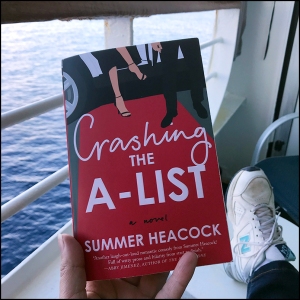
This was another one of the books I read on my cruise last month, and the only one I read in paperback (which is why I’ve got a picture of it on the balcony of my stateroom at the bottom of this review!).
I’ve been excited for this book since I first heard about it; I read and loved Summer’s The Awkward Path to Getting Lucky, and was looking forward to more of that awkward humour. And there is a lot of awkward humour in this story — the whole inciting event is basically the main character, Clara, getting drunk and calling a celebrity to reassure him that his secret is safe with her. She doesn’t remember doing it afterwards, and is therefore very shocked when he shows up at her door.
She’s even more shocked that he thinks she’s blackmailing her … but not as shocked as poor Caspian must be that Clara is, he thinks, about to destroy his life.
This chick lit has the sort of romance that goes from hate to love, although the arc does involve a few more bouts of hate in amongst the love parts. Despite the way Caspian treats Clara at times, it’s clear from very early on that he is actually a good person who is scared and feels trapped. That doesn’t excuse some of his behaviour, something that Clara thankfully holds him to account for — if she hadn’t, I’d have been disappointed, but Clara is nobody’s doormat.
This book definitely has the “what can go wrong will go wrong” aspects of Summer’s previous novel, but the stakes felt a lot higher in this book than in Getting Lucky. I think I had a bit of a crush on Caspian myself by the time that Clara did — despite my indifference to Benedict Cumberbatch, the clear inspiration for the character — so every time something came up that threw a spanner in the works, I was all nooooooooo.
Crashing the A-List was a wonderful holiday read that kept me up too late and made me laugh, swoon and tear up a little. Get it in your eyeballs.
Review: ‘All Aces’ by Ellie Marney
Posted: August 17, 2019 Filed under: Reviews | Tags: AWW, reviews Leave a comment
A teenage contortionist and a young cardsharp risk danger to right a family legacy of injustice…
Nineteen-year-old contortionist Ren Putri is committed to circus, study and self-discipline – in that order. But after being rescued from a carnival fire by cardsharp Zep Deal, she’s overwhelmed by some highly disorderly thoughts. Zep has a history of trouble, and now he’s been suspected of sabotaging the circus that’s become his whole life. Ren is already coping with family, and keeping secrets of her own – but she can’t resist a mystery. Will Ren’s penchant for solving puzzles bring the case against Zep to rights, or will digging further into the bad blood between rival carnivals only put them both in danger?
Dark YA romance, with a criminal twist – Circus Hearts: Step. Right. Up.
I read this book hot on the heels of All Fall Down (book two in the series) and I loved it almost as much. I’ve spent a bit of time thinking about why it wowed me slightly less — and don’t get me wrong, I still gave it 4.5 stars, and it was still awesome. I mean, it has a main character who is, if anything, even more interesting than either Sorsha or Fleur from the previous books. Sorsha was struggling with trauma but is overall very sweet, and Fleur is an alpha personality who doesn’t like to ask for help, but Ren shows the signs of having obsessive compulsive disorder.
I love that Marney and the other characters don’t make a thing about it — this isn’t a book about OCD, if that makes sense — it’s just a book where the main character has these traits but is also an awesome contortionist and a very determined young lady who is out to save a hot guy she knows and has decided, against the advice of her friends, to befriend.
The relationship between her and Zep is a bit more of a slow burn than either of the previous two, but they had some awesome chemistry and Marney’s ability to write a hot kissing scene has not diminished as this series has progressed. Oof! As with the first book, especially, I loved the description of each of their talents: Ren’s contortionism and Zep’s cardsharp skills.
One of my tiny niggles with the book — and there are slight spoilers for book two here — is that it seemed to start off on a slightly odd note; I don’t know why the circus folk would be giving Zep side eye and assuming he might have been directly responsible for the accidents in All Fall Down when the perpetrator had been arrested at the end of the previous book. (Maybe they assumed he was a co-conspirator and I missed it? I mean, it could have been true — but he did save Ren during one of the incidents, so he’d have had to be in two places at once.)
Another thing I found a bit jarring but that was 100% in character was Ren’s decision-making around the trouble she gets herself and Zep into over the course of this story. Talk about stirring up a hornet’s nest! But given the way that she thinks about the world — as a puzzle or a problem to be solved — I can also see her wanting to take charge the way she did. She also comes from a complicated, more traditional family situation where her mother is trying to pressure her to leave the circus, and her perceived inability to break free from that was definitely a contributing factor.
Overall, I’m sad this book has ended and that the series was only a trilogy. You should 100% check it out if you like books that blend romance, crime and carnival life into a spangled, steamy whole!

Review: ‘All Fall Down’ by Ellie Marney
Posted: August 10, 2019 Filed under: Reviews | Tags: AWW, reviews Leave a comment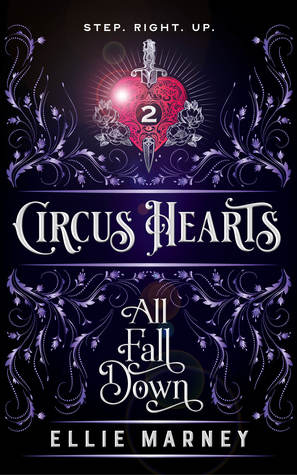
A ringmaster’s daughter and a bearded lady’s son join forces to stop a saboteur…
Nineteen-year-old Fleur Klatsch is loyal to her trapeze team and her ringmaster father, dedicated to the circus, and tough on everyone around her. After a series of accidents at Klatsch’s Karnival, Fleur is left holding the ball: she’s running the carnival, trying to stop a saboteur, and taking care of her dad. She doesn’t need anyone’s help, least of all Eugenia Deloren’s son, Marco, who’s been trying to break out of show life since the moment he was born into it. All Marco needs to do is get Klatsch’s back on its feet so he can leave. But after one fateful kiss with Fleur, will he really want to? And will Fleur and Marco figure out who’s trying to kill the show before someone kills them…
Dark YA romance with a criminal twist – Circus Hearts: Step. Right. Up.
This book is set a few months after the events in All the Little Bones, and follows a different pair of characters, Fleur and Marco. In fact, each book in this trilogy focuses on a different romance with the same overarching setting (like Amie Kaufman and Meagan Spooner did in the Starbound series). Strictly speaking, you don’t need to read the first book to appreciate the second, but it would definitely help give useful context for events early on.
I was a bit apprehensive going into this one because Fleur is a bit of a typical “mean girl” and a spoiled brat in the first book — Sorsha interprets a lot of what she does as resulting from feeling threatened because Sorsha is a better trapeze artist than Fleur (not arrogance, just truth). But even in the first book it was clear that Fleur thought that Sorsha and her monumental baggage were a threat to the circus more broadly, not just to her personally. I liked that nuance. Of course, that didn’t stop Fleur from doing something stupid, which she is still paying for at the start of All Fall Down.
Fleur does learn from her mistakes, though she is still far from perfect: she’s proud, stubborn and doesn’t want to ask from help, least of all from Marco, the childhood friend that disappeared from her life. Still, she doesn’t have a choice, and over the course of the book she really grows into a leader who not only thinks about the wellbeing of her employees but earns their trust too.
Like the relationship between Colm and Sorsha, the one between Fleur and Marco is sizzling and built on a solid base of friendship. Hawt. I also appreciated that the obstacles to the romance in this book don’t feel contrived (my pet peeve in romance, as I mentioned last time — I once threw a book across the room because one of those obstacles would have been so easily addressed by the main character if she’d bothered!).
The crime element of this story is more front and centre than in All the Little Bones; I really enjoyed trying to figure out who was behind the “accidents”, and wondering what was going to happen next.
I can’t rave about this series enough, you guys.
Review: ‘All the Little Bones’ by Ellie Marney
Posted: August 6, 2019 Filed under: Reviews | Tags: AWW, reviews Leave a comment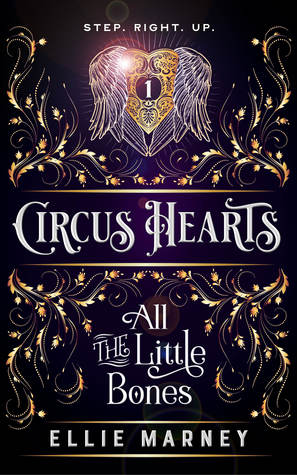
A teenage trapeze artist and an apprentice strongman on the run from a terrible crime…
Seventeen-year-old Sorsha Neary’s life is changed in one night when she defends herself behind the vans of her family circus troupe. Now Sorsha and apprentice strongman Colm Mackay are travelling south, to evade the fallout and escape the long arm of the law. All they have in their favour is talent, an old promise, and slim acquaintance with the crew members and performers of their new home, Klatsch’s Karnival. But the question for Sorsha and Colm isn’t if the police will catch up with them, but when…
Dark YA romance, with a criminal twist – Circus Hearts: Step. Right. Up.
I’ve read Ellie Marney’s Every trilogy (you can read the reviews of those books here) but I didn’t realise that she’d also self-published a trilogy of books set in a circus until recently. When I saw them, I had to snap the first book up. I read it recently, during a reading binge while I was on holidays, and then I had to download the second and third books the next time I had internet access because I was so captivated by the first one.
I thought about reviewing all three in one post, because I read them back-to-back and all of my thoughts about them are a bit jumbled up, but I’ll try to unpick them and be coherent about All the Little Bones specifically.
The story is told from the perspective of 17-year-old trapeze artist Sorsha, who from the first line is clearly running from a trauma that she doesn’t want to dwell on and that she’s been pushed to duck responsibility for. The trauma is fresh, and she’s still in the “nightmares and vomiting” stage of coping with it. Poor thing. I just wanted to give her hugs, cookies, and the name of a rock solid therapist and lawyer.
Beside her is Colm, who is sweet and supportive, throwing away everything he had and taking literal beatings to keep Sorsha safe. He is adorable and a great fit for her; her healing process throughout the story is in part due to him.
Still, despite the romance sub-plot, this isn’t a romance genre novel — although boy howdy, can Marney write a kissing scene! Sorsha and Colm start out clearly attracted to one another, and there’s no big, contrived fall-out between them to generate plot partway through (which is my least favourite romance genre trope). I’d describe Every as a young adult crime series rather than a romance one. All the Little Bones is a little less crime-focused in that the crimes take place before the book starts; it’s more focused on the aftermath.
And it’s focused on the circus! I loved that as a setting — it, as much as Marney’s gorgeous prose, is what made me gobble up this book and spend my mobile phone data downloading the next two. I love the glitz and glam, the behind-the-scenes action, the second-hand thrill of performing (which I’d hate in real life, let’s be real). It was so much fun to read about.
Definitely check this one out.
Review: ‘Greythorne’ by L.M. Merrington
Posted: August 2, 2019 Filed under: Reviews | Tags: AWW, reviews 3 Comments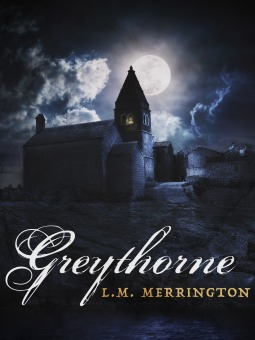
How did Lucy Greythorne die?
From the moment Nell Featherstone arrives at Greythorne Manor as a governess to eight-year-old Sophie, she finds herself haunted by the fate of the mistress of the house, and entranced by the child’s father, the enigmatic Professor Nathaniel Greythorne.
When a violent storm reveals Lucy’s body is not in her grave, Nell becomes suspicious about the Professor’s research. But what she discovers in his laboratory will turn all her ideas about life and death, morality and creation on their head.
Enthralled by a man walking a fine line between passion and madness, Nell must make an impossible choice between life, death, and life after death, where any mistake could be her last.
Disclaimer: L.M. Merrington and I worked together, once upon a time. Still, I’ve done my best to give this an honest review.
I’ve been meaning to read Greythorne for more than a year; I bought it on ebook a while back, but I’ve been in a massive reading slump that has been hard to break out of. Still, I recently went on a cruise that meant I had to pack light, which meant I turned to my Kindle for most of my reads. It’s fair to say that the gothic horror genre didn’t really suit the sunny, tropical places my trip took me to, but I still really enjoyed this story!
Greythorne is by Aussie writer L.M. Merrington, but it is set somewhere that reminds me of coastal Victorian England. (I can’t remember if the book actually gave an exact location and timeframe, but it definitely had that feel to me: cold, crashing beaches; horse-drawn carts; trains and gaslight.)
The manor in which the story is set has the sense of crushing isolation that you’d expect from a gothic horror novel. This isolation is amplified by the fact that Nell, a first-time governess, has no family of her own, and that those who know her aren’t expecting to hear from her any time soon — or perhaps at all. She is truly alone on the island.
From very early on the story’s main male character, Nathaniel Greythorne, gives off serious Dr Frankenstein vibes, with his interest in biology, death and the “natural sciences”. I love speculative fiction in all its forms, so I was so there for this part of the story, trying to figure out what mischief Greythorne was up to in his cellar laboratory. (There were some surprises for me, despite how avidly I was watching, so yay!)
If you’re after a fast-paced read, this book may not be for you; true to its gothic horror roots, the story is told in a way that seems almost gentle, conveying a creeping dread and a growing sense that something is very, very wrong. The slow build is really hard to achieve, but Merrington did a great job — once Nell got to the island and met the Greythornes, I was hooked.
On the other hand, if you’re after a relatively short, “spoopy” read with a creepy setting and a mad but charming antagonist who wouldn’t be out of place in Arkham, then definitely check Greythorne out.
Review: ‘Invasive’ by Chuck Wendig
Posted: April 26, 2019 Filed under: Reviews | Tags: Chuck Wendig, reviews Leave a comment
Hannah Stander is a consultant for the FBI—a futurist who helps the Agency with cases that feature demonstrations of bleeding-edge technology. It’s her job to help them identify unforeseen threats: hackers, AIs, genetic modification, anything that in the wrong hands could harm the homeland.
Hannah is in an airport, waiting to board a flight home to see her family, when she receives a call from Agent Hollis Copper. “I’ve got a cabin full of over a thousand dead bodies,” he tells her. Whether those bodies are all human, he doesn’t say.
What Hannah finds is a horrifying murder that points to the impossible—someone weaponizing the natural world in a most unnatural way. Discovering who—and why—will take her on a terrifying chase from the Arizona deserts to the secret island laboratory of a billionaire inventor/philanthropist. Hannah knows there are a million ways the world can end, but she just might be facing one she could never have predicted—a new threat both ancient and cutting-edge that could wipe humanity off the earth.
I read (ok, listened to the audiobook of) Invasive just after finishing Zer0es, because I wanted more. Not necessarily more of the hackers from the first story, but more of that weird parallel Earth with its almost sci-fi tech and its Hollywood-esque storytelling.
It’s fortunate that I didn’t go into Invasive expecting it to be about the hackers from the first book, because it wasn’t (although Wade does get a brief cameo, and Agent Hollis is a secondary character). It was closer to single POV — the main character is Hannah, and although we get chapters from other characters, they are interludes rather than whole chunks of the story.
I loved Hannah. She’s a futurist who gets anxiety attacks about the direction humanity is heading in, the child of doomsday preppers who absorbed what they taught her but didn’t subscribe to their beliefs about the futility of trying to improve the world (except maybe in her nightmares). She’s good with people, good with tech … but not so perfect as to be super-human and unbelievable.
Did I mention that I love her?
Like Zer0es, Invasive is fast-paced. Unlike Zer0es, it has a lot more gore. If this were a movie, it’d have an MA15+ rating (an R rating in the States) for the gore alone. The blurb mentions weaponising the natural world, and one look at the cover will tell you which part of the natural world. Let’s just say that I wasn’t scared of ants before I read this book, but … well, I won’t be walking past a trail of them any time soon. Urk.
Still, I actually think this is a better book than Zer0es (which I loved). Having less POV characters gives it more focus, makes you more invested in the action, because a lot more is riding on Hannah’s perspective and efforts. In an ensemble cast book like Zer0es, the characters feel more … disposable, almost?
I don’t know if there will be more stories in this world, but I really, really hope there will be.


 Cassandra Page