Imprecise use of pronouns, with Doctor Who!
Posted: May 20, 2013 Filed under: On writing | Tags: editing, pronouns, television, writing 7 CommentsHave you entered my double Amazon giveaway yet, which I’m running to celebrate my book deal and 1000 Twitter followers? The details are here.
One thing I see a lot at work is people using pronouns imprecisely. There was a great example in pop culture over the weekend with the season finale of Doctor Who, where an imprecise pronoun was actually used as a plot device. I’ll explain below what I mean, so please take this as your spoiler alert if you haven’t seen the episode yet! The spoiler material will be at the bottom of the post, beneath the delicious, delicious picture of David Tennant…
First, what is a pronoun? Here’s a dictionary definition.
Pronoun noun
1. one of the major form classes, or parts of speech, comprising words used as substitutes for nouns.
2. any such word, such as I, you, he, she, it, this, who, what, they, us, them.
Basically, it’s a word we use as a substitute for a noun (or a proper noun, like a name), to avoid repeating the noun. Here are a few examples:
Cassandra is writing a post on grammar because she (Cassandra) is a grammar geek.
Cassandra admired the Doctor Who script because it (the script) took advantage of poor grammar.
Where you need to be cautious is where the antecedent (the noun to which the pronoun is referring) is unclear. I find this happens a lot in my writing where there are two people of the same sex acting in a scene. For example:
Leander didn’t like Brad, because he was jealous.
Who is jealous? Brad or Leander? To make it clear, we need to rewrite the sentence.
Jealous, Leander didn’t like Brad.
(Better would be something like “Jealousy drove Leander’s dislike of Brad.”) In this case, the rewrite actually removed the pronoun—which is more elegant than repeating Leander’s name. That won’t always be the case.

Grammar is cool. (Image belongs to BBC; no copyright infringement intended, although perving definitely is.)
Now, what was the example from Doctor Who? It’s this quote, from a madman:
“The Doctor has a secret he will take to the grave. It is discovered.”
Most of the characters assumed (and the viewer was meant to assume) that the “it” was the secret. It’s logical assumption, because secrets are more traditionally discovered than graves. But in this case, the secret was actually secondary; it was the discovery of the grave that was significant. The Doctor and River both realised this as soon as they heard the quote, but they had the advantage of knowing what Trenzalore (the place mentioned in the context of the madman’s quote) was.
I think as writers we can take a lesson from this example. (Note that I added “example” after the pronoun “this” just then, because otherwise there are a lot of things preceding it to which it could have referred.) And the lesson is this one: avoid unclear antecedents for pronouns … unless you’re using it deliberately, as a plot device. Then go nuts.
Or, to paraphrase the English poet Robert Graves, master the rules of grammar before you attempt to bend or break them. :p
Inspired by My Island Home
Posted: May 16, 2013 Filed under: On writing | Tags: Australia, Thursdays Children 18 Comments
Have you entered my double Amazon giveaway yet, which I’m running to celebrate my good news? The details are here.
I was pottering around the kitchen trying to think of what the single biggest thing is that inspires my writing. And then it hit me like a parrot in the crotch (which, by the way, actually happened to a guy I know; I gather it wasn’t very pleasant). My biggest source of inspiration is the Australian landscape.
So far, all of my novels are set in Australia. And that’s not just because I’m writing what I know (although it is) but because I love this place. I love the scraggly eucalypts, the ridiculous wildlife, the low mountains worn down by time. I love the fact that—because our land is so old and the landscape crinkles are so low—the sky is huge. Looking up is like watching a movie in widescreen.
I love the magpies’ song, and the sight of a flock of cockatoos wheeling in the sky, and the sere colours. I love the first spray of wattle flowers toward the end of winter, when there’s still frost on the ground overnight, because the plants are declaring that spring is coming!
I know a lot of people here hanker after the lush greenery of Europe. I’ve been to Scotland and I’m not saying it wasn’t magnificent in its own way—I’d love to visit again some day—but this place is home.
I’ve been reading John Marsden’s Tomorrow series, and his passages on the Australian bush really resonate with me. Ellie’s love for the country could be my own. Here’s one extract, to illustrate what I mean.
It takes me over and I become part of it and it becomes part of me and I’m not very important, or at least no more important than a tree or a rock or a spider abseiling down a long thread of cobweb. As I wandered around, on that hot afternoon, I didn’t notice anything too amazing or beautiful or mindbogglingly spectacular. I can’t actually say I noticed anything out of the ordinary: just the grey-green rocks and the olive-green leaves and the reddish soil with the teeming ants. The tattered ribbons of paperbark, the crackly dry cicada shell, the smooth furrow left in the dust by a passing snake. That’s all there ever is really, most of the time. No rainforest with tropical butterflies, no palm trees or Californian redwoods, no leopards or iguanas or panda bears.
Just the bush.

Click here to see this week’s other Thursday’s Children blog posts.
Interview: Lauren Spieller on query letters
Posted: May 7, 2013 Filed under: On writing | Tags: agents, aussie-owned, Interview, queries Leave a commentI interviewed Lauren over at Aussie Owned and Read.
Space cat. Enough said.

Lauren Spieller is a literary agency intern who has read more queries than the rest of us even want to contemplate. She has kindly agreed to answer a few questions about her job.
First off, let me say THANK YOU for having me! I love talking about querying and writing, so this is a treat.
We’re glad to have you! You’re an editorial intern at a literary agency. Can you tell us what that involves?
I’ve had two internships. The first involved reading the slush—a lot of it—and deciding which queries to forward on to the agent. I loved doing this because it a) taught me how to get a feel for a manuscript from only a few pages, and b) helped me hone my editing skills.
My current internship—with P.S. Literary Agency—is a tad more editorial, which is fabulous. So far my focus has been on reading…
View original post 548 more words
Inspired by others’ successes
Posted: May 2, 2013 Filed under: On Twitter, On writing | Tags: Thursdays Children, Twitter 9 Comments
I didn’t think I would be participating in Thursday’s Children this week, because I had so much scheduled for the blog: cover launches, new release blog tours and giveaways. But it occurred to me that the very reason for all these posts was actually a source of inspiration to me, and that maybe I should share it for anyone else who is struggling right now.
The fact is I get a huge buzz from the successes of other authors—especially my friends, obviously, but also people I follow but am not even that close to on Twitter.
In the past couple of weeks one person in the writing community on Twitter got a three-book deal. Another got an agent. Two others have launched their books, while two have revealed covers for their books. And I know of someone who has had a contract offer and is considering it now (and no, I won’t say who it is—I don’t want to steal their thunder).
I don’t know if there’s something in the water in Publishing Land at the moment to make all these awesome events occur at once, or whether it’s because my circle of writerly folks on Twitter has expanded to the point where I’m just hearing more news. It could be a little of both. But I LOVE IT!
I’m not saying a tiny part of me isn’t jealous—but it’s not the kind of spiteful jealousy that makes me resent the successful people. It’s not the kind that eats at my heart, or even brings me down a little. It’s more of an “oh, that must be nice!” reaction, which is completely overridden by the happiness I feel for these people.
At the end of the day, we’re not all competing for one job; there are a lot of publishers and agents out there, and just because someone else gets picked up for something, that doesn’t reduce the size of the pie for the rest of us. (Mmm, pie…) It’s also a good indication publishing is thriving despite all the changes to the industry, which has to be good news for all of us.
Also, I’ve had UB40’s cover of Kingston Town stuck in my head since I heard it on the radio on Tuesday, and who could be gloomy with such a cute little reggae tune playing? (Given the peppy nature of this post, maybe Don’t Worry, Be Happy by Bobby McFerrin would be more appropriate, but my brain isn’t listening.)
Click here to see this week’s other Thursday’s Children blog posts.
What happens after you sign with a small press?
Posted: May 1, 2013 Filed under: On writing | Tags: book launch, editing, guest post, small presses 2 CommentsToday’s guest post is by the amazing Katie, whose book, KIYA: HOPE OF THE PHARAOH, came out yesterday with small press Curiosity Quills. I’m excited to have her here as the first stop on her blog hop to celebrate the book’s launch. You can find out more about that at her blog.
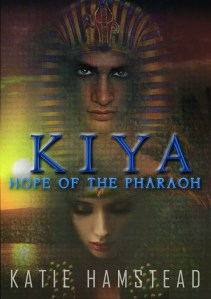
Kiya: Hope of the Pharaoh
Thank you so much Cass for having me on your blog today.
So Cass asked me to talk about my process of publication after I signed with a small press.
For a start, I needed to format my manuscript for their standard requirements. Curiosity Quills has a handy author’s guide to say what they use for font etc. So once I’d gone through and implemented that, I sent my manuscript to my coordinator.
My coordinator manages everything. She picked the release date and assigned me my editor, cover designer, proofreader and so forth, and is my liaison for each of them as well as everyone else working behind the scenes. She does a very good job too.
So once she had my manuscript I filled out a cover outline. It asked what I wanted to see on the cover, and if I had any ideas I could draw them up too.
Then, I waited. For several months.
When my number came up, everything seemed to just jump into action. My editor contacted me and we began my process. I only did two rounds of editing, but some other I know do more. It depends from author to author. Editing was intense. My editor was fantastic though, and walked me through the whole process. She was always just an email away if I found myself stuck, and was my cheerleader on Facebook when I got frustrated.
My CPs were also a great help during this time, as I bounced emails back and forth with them. Their patience with me is astounding!
During my edits, my cover design came through. Let me just say, I loved this cover from the moment I saw it. It was brightened a little, the sun in the background was added, but it still looked awesome. I’m so happy with it.
Finally, my editor told me she sent my final to the proofreader! Hooray! After that, all I needed to do was check the manuscript one last time with the proofreader’s notes, and add my dedication and thank yous.
All in all, I survived. I was a bit stressed through edits while trying to meet deadlines, but it wasn’t a bad experience. I learned a lot from everyone involved and I believe it’s made me a better writer.
About the author:
Katie J Teller (nee Hamstead) was born and raised Aussie, but now live in Arizona with her Navajo husband and their beautiful little girl. You can find her at her blog or on Twitter.
The genre dilemma: urban-paranormal-fantasy? Para-urban-tasy?
Posted: April 30, 2013 Filed under: On the Isla's Inheritance trilogy, On writing | Tags: genre, Isla's Inheritance, paranormal romance, urban fantasy, writing 2 CommentsI commented a little while ago that ISLA’S INHERITANCE, my first novel, is either urban fantasy or paranormal fiction, depending how you look at it. I usually call it urban fantasy. On the off chance a clearer answer is actually out there, I decided to go to that font of everything: Wikipedia.
Wiki defines urban fantasy as follows:
“Urban fantasy is a sub-genre of fantasy defined by place; the fantastic narrative has an urban setting. Many urban fantasies are set in contemporary times and contain supernatural elements. However, the stories can take place in historical, modern, or futuristic periods, as well as fictional settings. The prerequisite is that they must be primarily set in a city.”
First sentence: check. Second and third sentences: check. Fourth sentence: … uh. Sort of.
It is set in a city. But the city is Canberra, which isn’t known as the bush capital for nothing. It’s a sprawling place with a population of several hundred thousand, and a lot of parks, reserves and other pockets of nature within it. For a story about modern-day faeries with an iron allergy, it’s pretty much the perfect setting.
But is it an urban city, in the sense people mean? No, not really. We don’t have a subway (or rail!) or lots of high rise buildings. New York it ain’t. Sydney it ain’t. Also, most of my scenes are set in the suburbs. I asked an agent on Twitter if that was okay, and got a resounding no. They quipped that it would have to be suburban fantasy.
Uh oh.
Okay, let’s look at paranormal then.
Uh oh again.
It seems that paranormal is only actually defined as a subcategory of romance, called (funnily enough) paranormal romance.
“Paranormal romance is a sub-genre of the romance novel. A type of speculative fiction, paranormal romance focuses on romance and includes elements beyond the range of scientific explanation, blending together themes from the genres of traditional fantasy, science fiction or horror. Common hallmarks are romantic relationships between humans and vampires, shapeshifters, ghosts, and other entities of a fantastic or otherworldly nature.”
My book has a romantic element, but that element isn’t the focus of the story. And it’s something that develops over a longer arc than is typical in your paranormal romance novels, where usually the characters lust after each other from pretty early on.
Of the two genres, I think my decision to call Isla’s Inheritance urban fantasy is right, because it has more of the hallmarks of that genre. For example, this one: “While several adult stories focus on professional heroes, many teen urban fantasy novels follow inexperienced protagonists who are unexpectedly drawn into paranormal struggles. Amidst these conflicts, characters often gain allies, find romance, and, in some cases, develop or discover supernatural abilities of their own.”
Have you struggled to categorise your work? How did you resolve it?
Interview: Summer Heacock, Women’s Fiction writer
Posted: April 28, 2013 Filed under: On writing | Tags: editing, Interview, writing 8 CommentsRemember how a while back I mentioned an amazing woman on Twitter who’d just drafted an entire novel in four days? (No, that isn’t a typo. FOUR (4)!) Her name is Summer Heacock and she kindly agreed to do this interview about her writing process.
I was completely awestruck when I heard you’d done the first draft of a manuscript in four days (I can’t even manage four months!). Tell us a little about Pineapple!
I have to be honest, I didn’t expect or plan that in the slightest! I’d been planning to write this story idea for a little over a year, but every time I sat down to write or plot, I was stuck staring at the screen, or writing out crap. I was actually coming to the point where I thought I would have to move on to another story because this one just wasn’t coming out!
Randomly, I happened upon a picture on Google at like 2AM on Friday night and thought the guy looked like what I thought the main fella in Pineapple would look like. The next afternoon, I was thinking certain parts of the book through, decided to sit down and scrap everything I’d written before, and damned if the words didn’t just start falling out.
For those who obsess on numbers like I do, how many words did you average a day? How many hours a day were you writing?
I averaged about 15,000 words a day. I still had to do real life, I’ve got kids and a husband, but for Saturday afternoon and most of the day Sunday, I was a total recluse and in the word zone. I totally need to buy my hubs a pony for the slack he picked up when I was pretty much ignoring life for two days.
I’d say I was writing 4–8 hours per day, depending on the day, and what else had to be done, like getting the kids ready for and to and from school, and so on.
Okay, I’m looking at that and it seems slightly insane… I swear, I’m aware my brain isn’t normal. I have these word binges where I’ll dump out giant word counts but then not be able to write anything for weeks.
Because I write so slowly, I do a quick edit of what I wrote in the previous session before I start drafting the next bit—mainly to remind myself of where I was up to. I’m guessing you don’t have that problem! What is your editing process?
Eek. Um. Well, I’m not sure I have a process. Outside of making sure I have Jelly Bellies and a playlist of music going, I just sort of dive in and hope for the best. But I’m utter crap at editing, so don’t strive to be like me, kids.
Are you a plotter or a pantser? Was Pineapple fully plotted before you started?
I’m both! I usually will have a scene in my head that inspires an entire story. Usually it’s something near the end of the book, so I have that in mind, and sort of just write out what happens to get to that point. With some stories, I have a more info, like multiple scenes that I piece together and fill in the blanks. I will do a rough outline with those scenes marked to get to, and the rest kind of pops up as I’m watching it all happen in my head.
I seriously hope other writers are as loony as I am…
What other projects do you have on the go right now?
I’m revising Pineapple now, and hoping to get it shiny and on point after my betas get through with it. I try not to work on more than one story at a time, but I have another MS that is waiting patiently to get started on after Pineapple is finished. It’s probably the most outlined story I’ve ever had before starting, and it’s quite different than my other Women’s Fic stories, so I’m intimidated and excited to see if I can pull it off when it’s time.
Until then, all the Pineapple! I have strong feels for this story, so I hope I can do it proud.
Tell us about yourself.
Let’s see. I am a writer, a mother and a wife. I am relatively badass at all these things. You will notice I did not say housekeeper up there. I suck at that. Like, hard. I am a writer of very strange characters that if I didn’t put word to paper would take over my brain, and who knows what would happen then. I write to SAVE LIVES, people.
When I am not donning my Super Mom/Wifey underoos, you will find me on Twitter or at my blog. I write Women’s Fiction and dabble in YA when I’m feeling froggy for it. You will find my fluency in profanity present in ALL THESE THINGS.
I am repped by the unfathomably brilliant Sarah LaPolla of Curtis Brown. I genuinely have no idea how I managed to snag someone so incredible as my agent, but I’ma run with it before she realizes she signed a crazy person.
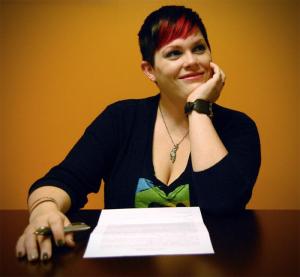
Summer Heacock
Fiction isn’t just imagination: researching your novel
Posted: April 27, 2013 Filed under: On writing | Tags: guest post, research, writing 9 CommentsToday’s guest post is by the amazing Nicole Evelina, whose dedication to research is awe-inspiring. Don’t believe me? Check out her blog!
I’m a historical fiction writer, so I do a lot of research. But you don’t have to be writing in another time period to find research necessary when writing a novel. Sure, you can make up a lot, but chances are good that unless your characters have the exact same life experiences as you, you’re going to need to do a little fact-finding along the way.

Picture via Wikimedia Commons
Why research is important
Research can be as simple as getting the details of your character’s occupation right or accurately depicting a route through a city. Sometimes it’s providing realistic descriptions of places that your readers may have lived or want to visit after reading your books. Things like that may seem trivial when we’ve got plots bursting from our brains but, trust me, someone out there will know when you’re making things up, and they will call you on it, especially in the age of social media. Of course, no one can get everything right, but it’s up to us as professionals to try.
Research can seem daunting, but I look at it this way: you start broad and then narrow in on the details that will make your book ring true to readers. Usually this means doing background research first. This is the broad information that allows you to feel like you understand the world in which your character lives. For me, this means culture, history, politics, religion, law, dress codes, prejudices, etc. But in other genres, it may just be reading about what a private investigator does or how the myth of vampires evolved over time. Only you will know exactly what you need.
With my basic information in mind, I plot my book. Sometimes I do more detailed research before I write a first draft, focusing on those things I know will play a major role in my characters’ lives. Once I’ve got a draft that makes some semblance of sense, I fact check my details – usually even up to the last minute – because it’s those little things that make fiction feel like reality.
More than just going online
So, how do you go about doing your research, especially if you haven’t done any since college? Well, thanks to the internet, it’s easier than ever. Sometimes all you need to is search Google Maps or Google Earth to get what you need. Other times, you can find the information right on the web. But I recommend verifying anything you find online in some sort of established reference material, just to be certain it’s accurate. There’s a lot of misinformation out there, so it’s better to be safe than sorry.
I’m not a doctor, but I play one in my books
Nothing beats in-person research. Sometimes that means visiting a place in person to get a feel for the area and see its nuances for yourself. Or you could interview an expert or two. If you’re a method writer, you could take a class on your subject or even ask if you can shadow someone who does what you’re curious about. People are amazingly willing to help, especially if they know you’re doing research, so don’t be afraid to be honest with them.
Between the pages
But not everything requires you to go this in-depth. Sometimes good old fashioned book research will do just fine. Amazon’s catalogue and Google Books are great ways to see what books exist on your subject. Some you will want to buy, but don’t worry if you can’t afford or don’t desire to amass an entire collection. Your public library will quickly become your best friend. And even if your city doesn’t have the book you want, they can probably get it through the interlibrary loan system. You’d be surprised what obscure titles will come to you from colleges all around the country (or even the world) if you’re just willing to wait a few weeks.
It’s worth it
Research may seem like a pain, but most of us became writers because we love exploring other worlds, other lives. That’s exactly what research is. If it helps, think of yourself as an actor taking on a role—you’ll have to live your characters’ lives even more in depth and for a longer period of time than you would if you were playing them in a movie. Your readers will be inhabiting their lives for the duration of their time with your book, so you owe it to them to get things right. If you go into research with a positive attitude, you’ll not only come out with a better story, you’ll be a little wiser, too.
Nicole Evelina is a historical fiction writer from the Midwestern United States, represented by Jen Karsbaek of Foreword Literary. She’s currently writing an Arthurian legend trilogy. Her first book, Guinevere of Northgallis, is complete and she’s working on the sequel, Camelot’s Queen.
Inspired by cover art
Posted: April 25, 2013 Filed under: On the Isla's Inheritance trilogy, On writing | Tags: book covers, Isla's Inheritance, self-publishing, Thursdays Children 14 Comments
As I’ve previously established, I love looking at gorgeous cover art. And as I’ve also recently established, I’m coming to the end of my agent query ride on ISLA’S INHERITANCE. But that doesn’t mean the end of the ride for the manuscript, just that it’s time to consider my options for unagented publication.
So. I like to think ahead. I like to look at cover art produced by different small presses, and at indie books’ cover art, and imagine what sort of art I might have on Isla’s Inheritance. And I have a couple of very talented friends, who’ve helped me put together a draft cover.
My very talented friend, Krystal, is a photographer, and although she usually does outdoor shots with children she was happy to do a photoshoot with a gorgeous model, and send me the images. My other very talented friend, Kim, is an indie author who designs covers, so when I sent her a manipulated version of the cover (complete with cheesy font and plain background) she very politely told me what I was doing wrong and helped me come up with something a thousand times better.
Unfortunately it’s too early for me to share the cover with you, even though I’m bursting with enthusiasm about it and want to show everyone. Partly because there’s no guarantee if I publish with any publishing house that I’ll be able to use it as my cover, although in that case I’ll turn it into art for the blog. And partly because cover reveals are actually a big deal in the promotional cycle of a book (as you may have noticed from the recent cover reveals I’ve been posting), which requires me to have an impending release to promote.
But I’ve saved it as my desktop wallpaper. And sometimes I sit and look at it, and it gives me ALL THE FEELS! So even if no one ever sees it but Krystal, Kim, me and my boyfriend (when he uses my computer), it was worth the time I spent on it.
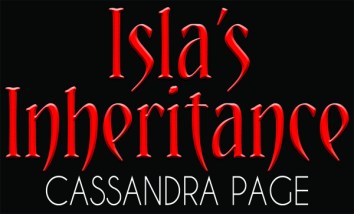
This isn’t the cover, but it is the title with the image removed. ALL THE FEELS.
Click here to see this week’s other Thursday’s Children blog posts.
Finding time to write
Posted: April 18, 2013 Filed under: On writing | Tags: Thursdays Children, writing 15 Comments
Rhiann Wynn-Nolet suggested to me that a solution to my bouts of disillusionment about the growing pile of agent rejections (other than to write something else, which I’m doing) was to join the group of bloggers that do the Thursday’s Children blog hop.
It’s based around that old children’s poem:
Monday’s child is fair of face,
Tuesday’s child is full of grace,
Wednesday’s child is full of woe,
Thursday’s child has far to go,
Friday’s child is loving and giving,
Saturday’s child works hard for a living,
But the child who is born on the Sabbath Day
Is bonny and blithe and good and gay.
Thursday’s Children: we have far to go. For the record, I was born on a Sunday—Easter Sunday, in fact—although I don’t feel particularly bonny or gay (not that there’s anything wrong with that), and I’m only occasionally good!
Anyway, the theory is that we’re meant to blog about something inspirational on a Thursday. One Thursday, every Thursday, random Thursdays: it’s up to the individual blogger.
Here goes my first attempt at writing a post about inspiration.
Writing: if I can do it, you can do it.
I’m a single mum to a preschooler. I am trying to sell my house, so we need to maintain a display home level of tidiness, and I work thirty hours a week. All of that means not a hell of a lot of spare time.
But I set myself the goal of writing a minimum of a thousand words a week on my WIP, and (except for the week I was really sick) I have done that for the last year or so. Before that, when I was writing my first novel and was a bit more timid, my goal was five hundred words a week, but I usually wrote a thousand anyway.
I don’t always reach my goal in one sitting. I’m usually in bed by 9.30. But five hundred words, twice a week. That’s doable.
I know there are people in worse boats than me. People who work two or three jobs: the same situation but 60 hours a week or more. I’m blessed in many ways. I work with words in my day job, so I keep my grammar skills honed, and sometimes they send me on editing courses. And I get paid reasonably well for those thirty hours (although not that well; like I said, I am trying to sell my house).
But I thought I didn’t have time to write. Then I discovered that if I gave up computer games—especially those addictive Facebook-based time-wasters—and watched less TV, I had time to read and write again. At a thousand words a week, I won’t be breaking any land speed records. I heard about one amazing lady on Facebook who recently wrote an ENTIRE NOVEL in four days. She averaged twelve-to-fifteen thousand words a day. I’m in awe of her, believe me (she must cane NaNoWriMo!). But I can average a novel and a bit a year, and that’s not bad.
So. Whenever anyone tells me they have this great idea for a novel but they can’t find the time to write, I want to shake them till their teeth rattle. Because if I can, you can. Maybe that’s less inspirational than it is a goad to your ego, but hey: whatever works! Write the damned book. 😉
Click here to see this week’s other Thursday’s Children blog posts.


 Cassandra Page