Review: ‘The Last Days of Us’ by Beck Nicholas
Posted: January 15, 2018 Filed under: Reviews | Tags: aussie-owned, AWW, reviews 2 Comments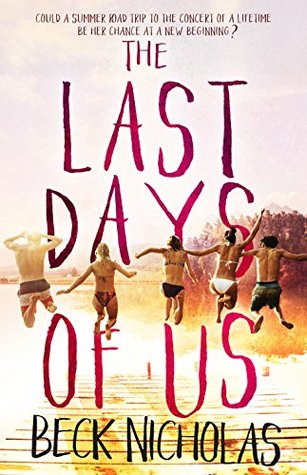
Five teens, one derelict Kombi and an unforgettable road trip…
Six months ago, Zoey’s life went off the rails. After the tragic loss of her brother, she partied her way to oblivion, estranged her best friend, Cass, and pushed away her now ex, Finn. But when her destructive behaviour reaches dangerous heights, Zoey realises she needs to pull herself together and get her old life back, including her ex. There’s just one complication: Finn is now dating Cass.
Now, it’s the last week of summer and Zoey, Cass and Finn are setting out on the road trip of a lifetime to see their favourite musician, Gray, perform live, joined by Finn’s infuriatingly attractive bad-boy cousin Luc and his vibrant younger sister Jolie. Zoey thinks this is her chance to put things to rights and convince Finn they should get back together. But she wasn’t counting on her friends’ lingering resentment, Luc’s disarming sincerity, and Jolie’s infectious love for life to turn her plans upside down.
I bought this book yesterday, and finished it last night (well, technically this morning — it was after midnight). That’s something that never happens to me these days, so I needed you to know that upfront. I mean, I’ve owned this book for so short a time that I haven’t even taken a bookstagram pic of it to go with this review yet!
While some of the speed with which I read it is due to the relatively short length of this young adult contemporary, especially compared to the last book I reviewed here on the blog, most of it is due to Nicholas’s accessible writing style and the natural momentum of a road trip story.
But The Last Days of Us isn’t just any road trip story. Firstly, it’s Australian, set on the road between Adelaide and Melbourne as the characters travel there to see the musician Grey in concert. That has particular appeal for me, because — although that’s not a drive I’ve done myself — I’ve seen photos of a lot of the landmarks that the teens visit. It’s always self-affirming to see your own world in fiction.
Secondly, The Last Days of Us is a powerful exploration of grief and grieving. As the blurb says, Zoey is trying to piece her life back together after losing herself in alcohol and wild parties following her brother’s death. She has broken up with her boyfriend, has grown distant from her best friend (who is now dating her boyfriend, so that seems fair), and is estranged from her parents. She can see that her life is a mess, but the only way she can see to fix it is to try and return to the “old” Zoey, the one she was before Dan died. She tries to do this in a very literal sense — same haircut, same fashion sense, same boyfriend.
Some may find Zoey’s intention to get between Cass and Finn a little shocking, but it didn’t prevent me from being able to get behind her as a character. For a start, Zoey isn’t particularly nefarious about it. She doesn’t set out to directly sabotage Cass with Finn. She instead tries to reconnect with him, show him that the old Zoey is back (even if she’s not and never can be), and see if that is enough. Also, it’s clear from the beginning that Finn is a terrible choice for Zoey (and probably for Cass), so I guess I never expected Zoey’s scheme to go very far.
I’m not going to lie, those moments in the first half of the book where she tries to orchestrate things so she can talk to Finn alone are awkward as anything. But, here’s the thing — I found them so cringey because I remember how, when I was seventeen, I tried to arrange things so I could be with a crush. Not one that had a girlfriend, admittedly, but I was just about as ham-fisted about it as Zoey. I could really relate to her in that regard.
There are other elements of grief in the story, ones I won’t get into because of spoilers. They are fairly well telegraphed, and play out as you might expect — but that didn’t make them any less heartbreaking. Still, the scene that made me cry is one that is all Zoey, mourning for her brother. Her grief is so raw.
The relationship that develops between Zoey and Luc is sweet, and didn’t feel rushed despite the relatively short timeframe in which most of the book takes place. He is perceptive, is sweet without being a pushover when Zoey is rude to him, and provides an excellent foil for the shallowness that is Finn. Cass is a little more problematic as a character — she clearly struggles with having Zoey back on the scene and is insecure about her relationship with Finn, but she resorts to some pretty low comments for a supposed best friend. (She and Finn try to slut-shame Zoey, which did make me want to punch them a little bit.)
The other thing I really loved about this book was Grey, the teen musician they are travelling to see. He’s only in a couple of scenes, but excerpts from his songs (written by the author, obviously) are at the start of each chapter, so his fingerprints are throughout. His music leans towards tortured and broody, so the excerpts are a nice note … so to speak.
Definitely check out The Last Days of Us for an easy but compelling summer read.
Review: ‘Oathbringer’ by Brandon Sanderson
Posted: January 5, 2018 Filed under: Reviews | Tags: reviews 1 Comment
In Oathbringer, the third volume of the New York Times bestselling Stormlight Archive, humanity faces a new Desolation with the return of the Voidbringers, a foe with numbers as great as their thirst for vengeance.
Dalinar Kholin’s Alethi armies won a fleeting victory at a terrible cost: the enemy Parshendi summoned the violent Everstorm, which now sweeps the world with destruction, and in its passing awaken the once peaceful and subservient parshmen to the horror of their millennia-long enslavement by humans. While on a desperate flight to warn his family of the threat, Kaladin Stormblessed must come to grips with the fact that the newly kindled anger of the parshmen may be wholly justified.
Nestled in the mountains high above the storms, in the tower city of Urithiru, Shallan Davar investigates the wonders of the ancient stronghold of the Knights Radiant and unearths dark secrets lurking in its depths. And Dalinar realizes that his holy mission to unite his homeland of Alethkar was too narrow in scope. Unless all the nations of Roshar can put aside Dalinar’s blood-soaked past and stand together — and unless Dalinar himself can confront that past — even the restoration of the Knights Radiant will not prevent the end of civilization.
I read the first two books in the Stormlight Archive back-to-back in the middle of last year, and I didn’t have to wait too long, relatively speaking, for the third book to come out. But, according to Goodreads, this is a ten book series. So I’ll be over here, crying. I have the mother of all book hangovers, you guys. I need a sixth star in my rating system for books like this one. It’s everything that the first two books were, only more so. As a result, I’m sure this review is going to be all AAAAH and NEEDS MORE!, and probably not very coherent.
Bear with me.
I say it with every review of a Sanderson book, but he is an amazing builder of worlds. This series puts the epic in epic fantasy. As I said the other day, I listened to this on audiobook and the download was available in five parts. FIVE. For those playing at home, that’s fifty-five hours of listening time. (Goodreads tells me the hardcover is more than 1200 pages. The first two books clock in at over 1000 pages too.)
As well as using that space to build up a cast of characters that I love (and sometimes loathe), Sanderson also uses it to detail a word that is strange and unique in its plant and animal life. Plants retreat from predators and storms like crabs into shells. Animals are mostly shelled, as well, with gems for hearts, as are the parshmen former slaves that the blurb mentions. Occasionally, we see glimpses of familiar animals, especially horses, but also including “chickens” (a term for any feathered bird).
It’s all wonderfully detailed, and — as this is a Brandon Sanderson novel — the details are important to the story, to the whole. I can’t say more than that without spoilers, but that’s been my experience of all his fantasy books so far; I think he is perhaps being self-indulgent, but it turns out, OMG, it was all relevant. He is a genius. (Have I reached my gush quotient yet?)
In terms of the characters, familiar faces from the first two books are here. My favourites are still Shallan and Kaladin (who I still ship, not gonna lie — a weird combo for me, as I usually dismiss the brooding character as a love interest), with Dalinar coming in a close second. Wit, surprisingly, is third.
I adore Kaladin so much I drew fanart of him while listening to the book the other day. It’s below, because apparently I have no shame. Don’t laugh too hard.
In terms of the plot, this book actually ties things off really nicely, and it could have been a good finish to a trilogy if that was the way Sanderson had wanted to go. Of course, there are still dangling plot threads, some of them huge — and I’m glad I get more Stormlight Archive.
But there’s something that really came to the fore for me in this book, something that pushed it onto a whole new level. I mentioned in my review of the first book in the series, The Way of Kings, that Kaladin suffers from depression; Shallan also had issues to do with suppressed memories. It becomes apparent throughout this book that almost all the heroes are broken. I won’t name names, but various characters struggle with (among other things) alcoholism, drug addiction, sensory processing disorder, PTSD, and multiple personality disorder. And there’s no magic cure for any of these things, like you see in some books. The characters are broken and they strive and fail and succeed and are so authentically human.
I loved it.

Yes, I drew fanart of Kaladin like I’m a teenage girl. (And, yes, his eyes are too big because I’m super-rusty at drawing people.)

Review: ‘Awakenings’ by J.E. Shannon
Posted: December 13, 2017 Filed under: Reviews | Tags: reviews, urban fantasy 1 Comment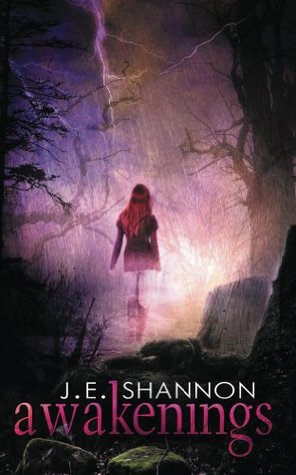
Evie Shepard’s nightmare begins when she finds herself buried alive, with no idea how she got that way. As she struggles to remember what happened to her, she begins to notice changes about herself. Her senses are heightened, her movements are quicker, she is incredibly strong….her heartbeat has stopped. It’s then she makes a disturbing discovery. She wasn’t buried alive. She was murdered.
Somehow she has come back…
And she wants revenge.
I was going through my Kindle last month and discovered this ebook, which I acquired back in 2013 and had never quite gotten around to reading. (For the record, this isn’t the longest a book has languished on my TBR pile. There are books there that have moved house with me. More than once.) It was published by a small press that subsequently tanked under dubious circumstances, though it has since been self-published. The version I’m reviewing is the small press version, so please note that there may be some differences between the currently available version and the one that I have.
Awakenings is an urban fantasy whose subtype isn’t vampires or werewolves but an undead creature called a vengador (which is Spanish for “avenger”). These are creatures that get supernatural speed and strength, as well as electricity powers, but who are driven to kill their murderers, even knowing that doing so will end their own existence. I enjoyed reading about a different type of supernatural beastie.
There were a lot of things I really loved about Awakenings; the writing is generally very good (with a few copy edits that may be gone in the current version), and the story is action-packed, full of explosions, car chases and fight scenes. All good stuff. And I enjoyed both Evie (as she struggles with her loss of humanity) and one of the other female characters, Amie, who is a Russian super-soldier and hacker with a penchant for explosives. I’d totally read a book about Amie; she stole every scene she was in. I adored her.
The villains of the piece were murderous Russian slave traders, which stretched credibility a bit, at least for me. I think that Awakenings is meant to be set in a darker version of the USA (rather than in a parallel world that is roughly the same), but I never really got the real sense of that difference, and the villains seemed Bond-like and almost cartoonish in their evil ways.
But the main thing that made this a 3.5 star read for me rather than a four star read was the unnecessary romance. I just didn’t feel any chemistry between Evie and Ethan. Also, she was seventeen and he was … older. I don’t know how old, exactly, but he’d been married and widowed, and had a PI business. I’m assuming at least late 20s. I don’t mind an age gap between characters who are romantically involved, but when one of them isn’t even a legal adult yet (even if they are an undead with superpowers), it just feels a little off to me. It’s one of the reasons I couldn’t get onboard with the Bella/Edward relationship in Twilight.
Still, I like that the book doesn’t have a sugar-coated, happily ever after ending, and the action scenes were compelling. I’d recommend Awakenings for anyone after a fun summer (or winter) holiday read.
Review: ‘The Slow Regard of Silent Things’ by Patrick Rothfuss
Posted: December 9, 2017 Filed under: Reviews | Tags: fantasy, reviews Leave a comment
Deep below the University, there is a dark place. Few people know of it: a broken web of ancient passageways and abandoned rooms. A young woman lives there, tucked among the sprawling tunnels of the Underthing, snug in the heart of this forgotten place.
Her name is Auri, and she is full of mysteries.
This novella is the most beautiful thing I’ve ever read. Or listened to on audiobook, at any rate. It’s set in the world of The Name of the Wind, and focuses on Auri, an enchanting side character from the main story. In fact, it focuses on her to the point where she’s almost the sole character.
After a fashion.
Auri has a peculiar character trait in that she personifies the objects around her. She sees them as having names and moods and desires of their own, and believes her role is to make all the objects happy, to make the world “proper true”. As a result, there are objects in this novella, such as the light she carries around or a brass gear that she finds, that I was downright fond of by the end. And Auri, who cuts a very lonely figure, is never really alone.
As for the plot, well … there isn’t one. Not in the traditional sense. This novella is seven days in Auri’s life, as she prepares for a visit by Kvothe (though he is never named directly). She goes exploring, she searches for a gift to give him, she makes soap.
That’s it, in terms of the plot.
What the novella does do, and in a breathtakingly beautiful way, is explore the reality of someone who is entirely, utterly broken. Auri used to be a student at the University, and occasionally her educated vocabulary breaks through and gives a tantalising glimpse of the person she used to be. It’s never completely clear how many of her beliefs about the world around her are objectively true in Rothfuss’s world and how many are manifestations of her mental illness — and, at the end of the day, I’m not sure it matters. This story is from Auri’s point of view, and Auri believes these things with all of her being (while acknowledging in her darker moments that she herself isn’t “proper true”), so, as a reader, they were real for me too.
The Slow Regard of Silent Things isn’t a story in the traditional sense. It’s a set piece, a piece of art. The writing is gorgeous, like poetry. As a writer myself, I was humbled.
Rothfuss says in his foreword that, “If you haven’t read my other books, you don’t want to start here.” I can see why he said that, because this story isn’t typical of his style, and I guess he doesn’t want people reading this, being baffled, and not going back to the rest of his books. But, by the same token, you don’t need to have read his other books to appreciate the beauty of The Slow Regard of Silent Things. I recommend it for anyone who enjoys beautiful writing and the exploration of the mind of a strange, wonderful character. (Or for those who want to learn how to make soap!)
Review: ‘Leviathan’ by Scott Westerfeld
Posted: November 27, 2017 Filed under: Reviews | Tags: reviews, steampunk, young adult Leave a comment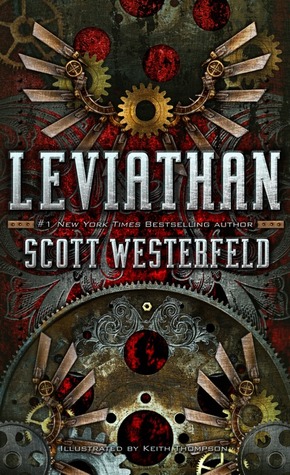
Prince Aleksander, would-be heir to the Austro-Hungarian throne, is on the run. His own people have turned on him. His title is worthless. All he has is a battletorn war machine and a loyal crew of men.
Deryn Sharp is a commoner, disguised as a boy in the British Air Service. She’s a brilliant airman. But her secret is in constant danger of being discovered.
With World War I brewing, Alek and Deryn’s paths cross in the most unexpected way…taking them on a fantastical, around-the-world adventure that will change both their lives forever.
I can’t remember how Leviathan crossed my path. I think it might have been a sale on Audible? Regardless, I read some of the reviews and decided — despite my usual distaste for war fiction — to give Scott Westerfeld’s steampunk YA alternative history a go. The audiobook is narrated by Scottish actor Alan Cumming, whose accent gives the perfect voice to Deryn, an awesomely competent young adult heroine who shines as a new recruit in the British Air Service. But he also does an excellent Austrian accent for Alek, and his various British accents are also great.
Before I more talk about the characters, I have to mention Westerfield’s alternative world. Germany and Austria are “clankers”, countries that have embraced steampunk-type technology: oil-guzzling, smoke-blowing machines of various fantastical designs. Great Britain, Russia and a few other countries that are mentioned in passing are “Darwinists” who, instead of using technology, use genetically modified “fabricated” creatures in the same sorts of roles. (PETA would not approve of any of the Darwinist creations, and perhaps especially the Leviathan air ship, which is a huge whale modified to host bacteria that produce hydrogen so it can float, carrying humans underneath and within it. I shared Alek’s grossed out reaction to that last part.)
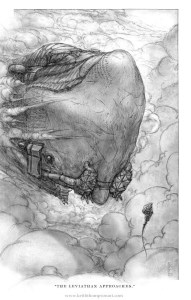
The Leviathan
Anyway, moving on: when Deryn gets whisked away on a rogue Huxley (a hydrogen-breathing floating squid — I’ll let that sink in) and is rescued by the Leviathan, she is drawn into a government diplomatic mission to Istanbul (not Constantinople *snigger*), to try and stop the Ottoman Empire from taking sides in the war.
The fact that Deryn is secretly a girl isn’t the focus of the story, by any means, which was a relief. For the most part, she is a member of the crew, invested in her ship’s wellbeing and surviving one disaster after the next. Because this is young adult and it’d be a rare book indeed that didn’t have some romance, she also slowly develops a crush on Alek that she doesn’t know what to do with.
I also enjoyed Alek’s point of view chapters. He spends the first little while being incredibly naive and somewhat foolish, but under the circumstances that was entirely believable and relatable. Over the course of the story, with the guidance of his cunning fencing master, Count Volger, and patient master mechanic, Master Clopp, Alek comes out of his over-protected shell and starts to make his own decisions — often ones that Volger doesn’t like.
There is a lot of action in this book, but the large-scale action sequences that I find boring in most war books aren’t present here. The chapters stay very tightly focused on either Deryn or Alek, so while there might be other things going on in a battle, we only see what they see. This approach — and the novelty of conducting a war using modified hawks and bats instead of small planes — kept me engrossed where other war fiction loses me.
My only real gripe with the story is that the ending seemed rather abrupt. But luckily, I bought the first two books in the trilogy at the same time, so as I write this I’m already halfway through the sequel. Yay!

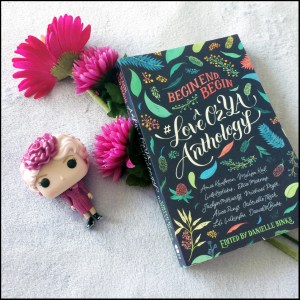
Review: ‘Begin, End, Begin: A #LoveOzYA Anthology’
Posted: November 2, 2017 Filed under: Reviews | Tags: AWW, lgbt, reviews Leave a comment
The YA event of the year. Bestsellers. Award-winners. Superstars. This anthology has them all. With brilliantly entertaining short stories from beloved young adult authors Amie Kaufman, Melissa Keil, Will Kostakis, Ellie Marney, Jaclyn Moriarty, Michael Pryor, Alice Pung, Gabrielle Tozer, Lili Wilkinson and Danielle Binks, this all-new collection will show the world exactly how much there is to love about Aussie YA.
I love the #LoveOzYa movement, as — like the Australian Women Writers Challenge — it’s a great way to raise awareness of Aussie homegrown fiction. The fact that they turned it into an anthology that involved some of my favourite Aussie writers is even better.
If you love YA, get this anthology, whether you’re Australian or not. You won’t regret it.
One Small Step by Amie Kaufman
This is a gorgeous (and rather tense) romance between female best friends on Mars. I’d love to read more about these characters. Make it so, Amie!
I Can See the Ending by Will Kostakis
This one’s an urban fantasy about a teen psychic who can see the future but can’t change it (and struggling with the sense of futility that generates). It was quite clever, and as sweet as it was poignant.
In a Heartbeat by Alice Pung
This is a contemporary about teen pregnancy. It was really well done, though probably not my favourite of the contemporaries.
First Casualty by Michael Pryor
This sci-fi was my least favourite in the anthology. It was well-written and had a ragtag Firefly vibe about it that I was digging till the main story got started and it turned into a transparent dig at one of Australia’s previous conservative government. I don’t have a problem with that, per se (I’m hardly conservative!), but the lack of subtlety detracted from the story for me.
Sundays by Melissa Keil
Melissa Keil is my favourite contemporary YA author because of the way she handles misfits and nerds, and this story really delivers. It’s set over one evening at a wild, drunken party.
Missing Persons by Ellie Marney
This story is a prelude to the Every trilogy (which is a mystery/thriller inspired by Sherlock Holmes), and describes how Rachel Watts meets James Mycroft and Mai Ng. The squee factor will be higher if you have read the trilogy … which I have, so squeee!
Oona Underground by Lili Wilkinson
This is another gorgeous romance about a teen girl in love with her female best friend, but is quite different to One Small Step. It’s magic realism with a bit of a Neverwhere vibe. I’d definitely read more about this world (though I didn’t love Oona as much as I probably should have).
The Feeling from Over Here by Gabrielle Tozer
This is a contemporary set on a coach ride between Canberra and Melbourne, with some use of flashbacks and a lot of desperate texting. It primarily explores school bullying, and the voice is wonderful. One of my favourites!
Last Night at the Mount Solemn Observatory by Danielle Binks
This is another poignant story about a teen girl coming to grips with her older brother’s decision to travel the world after graduation. The two kids are called Bowie and King, which is rather unfortunate, but King is deaf, and the description of the sign language is really fascinating.
Competition Entry #349 by Jaclyn Moriarty
This story was a lot of fun, and competes with The Feeling From Over Here for the most voice. It’s modern day(ish), but with time travel and an amazingly scatterbrained main character. It’s great!
Review: ‘The Lovely Dark’ by K. A. Last
Posted: October 18, 2017 Filed under: Reviews | Tags: aussie-owned, AWW, reviews 1 Comment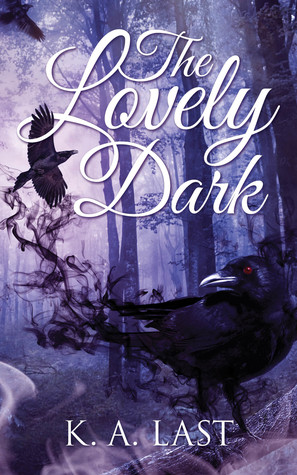
Three teenagers.
One witch.
Twelve souls.Harvey Anderson always knew the universe was against him, but there’s a lot of stuff he never expected to happen, like having a crush on the most popular girl at school, and then falling into a giant hole in the middle of nowhere with her. And if that wasn’t enough, somehow they managed to release a soul-sucking, ancient witch as well. So yeah, there’s that. You’d think it’d be pretty hard to beat, but knowing Harvey’s luck, it’s about to get a whole lot worse.
I was lucky enough to nab an ARC (advanced reader copy) of The Lovely Dark, which is scheduled for release later this month — just in time for Halloween. The release date is particularly appropriate, because this story is atmospheric and occasionally creepy as all get out. I was reading it in an empty house when the sun was going down, and brr!
The story starts with Harvey, his best friend Toni, and popular girl Lian as they get lost orienteering in the Aussie bush on school camp (who hasn’t done that — amirite?) and fall into an underground cavern that opens up during an earthquake. Toni is injured, so Harvey and Lian explore the cave system, trying to find a way out. Of course, given Harvey’s luck, they manage to release a soul-sucking, murderous witch instead. Whee!
Harvey is the point of view character. He’s afraid of the dark, which makes the scary night-time and underground scenes in this book twice as confronting as we see them through the filter of his terror. He is also very conscious of what the other teens think of him, and would prefer to escape into Netflix rather than deal with what is going on.
All of this made him seem realer to me than your average young adult protagonist … at the same time that I occasionally wanted to shake him a little, not gonna lie. But those moments where Harvey took action were glorious, just because I’d been cheering for him to step up for so long.
Toni is far and away my favourite character. She has a little bit of Hermione about her — she is the one who figures out what is going on and tends to be the voice of reason and competence throughout the story. I loved her. Lian was nice enough, and I could see why Harvey had a crush on her, but she was no Toni! 😉
K. A. Last hasn’t just gone for the wicked witch stereotype here, which is a relief (I’ve dabbled in paganism in my past, so I hate a bad stereotype). While there’s no doubt that the witch they release is evil, she has a tragic backstory and her nastiness is more than offset by the awesomeness of the other witchy characters that pop up throughout the story. (I won’t provide details, because spoilers.)
Other than how atmospheric this book is, my favourite thing about The Lovely Dark is the dialogue. There were actual, for real laugh out loud moments for me (something that doesn’t normally happen when I’m reading). Plus there’s a nod to Evil Willow from Buffy, which basically earned the book a star on its own. ❤
If you love your books spooky as all get out, with creepy birds and a high body count, then this is the story for you!
Review: ‘The Rithmatist’ by Brandon Sanderson
Posted: October 14, 2017 Filed under: Reviews | Tags: reviews, steampunk Leave a comment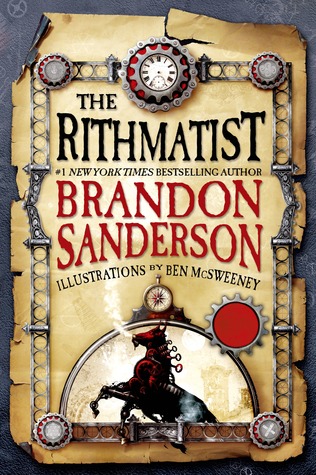
More than anything, Joel wants to be a Rithmatist. Chosen by the Master in a mysterious inception ceremony, Rithmatists have the power to infuse life into two-dimensional figures known as Chalklings. Rithmatists are humanity’s only defense against the Wild Chalklings—merciless creatures that leave mangled corpses in their wake. Having nearly overrun the territory of Nebrask, the Wild Chalklings now threaten all of the American Isles.
As the son of a lowly chalkmaker at Armedius Academy, Joel can only watch as Rithmatist students study the magical art that he would do anything to practice. Then students start disappearing—kidnapped from their rooms at night, leaving trails of blood. Assigned to help the professor who is investigating the crimes, Joel and his friend Melody find themselves on the trail of an unexpected discovery, one that will change Rithmatics—and their world—forever.
“Brandon Sanderson writes yet another novel full of amazing worldbuilding and story misdirection.” I fear I’m starting to sound like a bit of a broken record when it comes to his work, honestly. But it’s truuuuue.
Things that make The Rithmatist stand out from Sanderson’s usual fare are the target market (young adult) and the consequent reduction in the plot’s complexity from the typical Sanderson thousand-page monster. There are fight scenes, a little blood, and descriptions of some scary events, but otherwise this book would be suitable for younger teenagers.
The thing I loved most about The Rithmatist was the magical system, and … okay, yes, that is another pretty standard response from me when it comes to his work. In this case, the magic is derived from empowered geometry and art, drawn with chalk. Different shapes (circles, lines, sine waves) have different effects and can be combined in various ways depending on the strategy of the rithmatist. And simple creatures can be drawn that come to two-dimensional life and follow simple instructions. From such a straightforward premise emerge a quite complex series of strategies used in duelling and combat against the wild chalklings.
I have never been so excited about geometry in my life!
Joel is a glorified maths nerd. He has no particular interest in or aptitude for drawing chalklings (just as well, given he is also not a rithmatist) but is excellent at understanding and drawing the different patterns. He tends towards laziness and emotional insensitivity at the start of the story, but does improve as the tale progresses. Melody, a rithmatic student who is prone to overblown dramatics and is a master of chalklings but awful with rithmatic lines, is shunned by the other rithmatic students due to her incompetence (and, let’s be honest, her trying personality). I liked both of them, but was more fond of their introverted, kindly and conflict averse professor, Fitch.
Despite what you might assume, there is no romance in this book. Sanderson usually has a romantic plotline (although he tends towards awkwardness and the hottest anything might get is a chaste kissing scene), but not in this case. I suspect that Melody and Joel may get together down the track, especially given how regularly he notices that she’s pretty, but they at least become friends first, which I heartily endorse.
The mystery is of the whodunnit variety (I fell for the red herring; I’ll guess right next time, Sanderson, I swear). The Rithmatist isn’t as dark as his other young adult series, The Reckoners, but I preferred its mystery feel to the latter’s car chases and gun fights.
I definitely recommend this one!
Review: ‘The Undercurrent’ by Paula Weston
Posted: October 10, 2017 Filed under: Reviews | Tags: AWW, reviews Leave a comment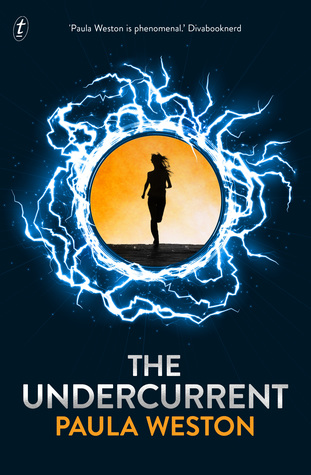
Eighteen-year-old Julianne De Marchi is different. As in: she has an electrical undercurrent beneath her skin that stings and surges like a live wire. She can use it—to spark a fire, maybe even end a life—but she doesn’t understand what it is. And she can barely control it, especially when she’s anxious.
Ryan Walsh was on track for a stellar football career when his knee blew out. Now he’s a soldier—part of an experimental privatised military unit that has identified Jules De Marchi as a threat. Is it because of the weird undercurrent she’s tried so hard to hide? Or because of her mother Angie’s history as an activist against bio-engineering and big business?
It’s no coincidence that Ryan and Jules are in the same place at the same time—he’s under orders to follow her, after all. But then an explosive attack on a city building by an unknown enemy throws them together in the most violent and unexpected way.
I finished The Undercurrent more than a week ago, but I’ve been caught up with other things and haven’t been able to sit down and review it before now. It’s a shame, because this book is amazing and you all need to hear about it so you can run out and buy yourselves a copy. (Or you could just skip the rest of the review, trust me, and head to the shops now. Go on, I won’t mind.)
Paula Weston is one of my most favourite discoveries from the last few years. I’ve raved about her Rephaim series plenty of times here on the blog, and I was very excited (and also a little embarrassed) when I discovered she’d released this gem a few months ago and I hadn’t heard about it. Needless to say, it went to the top of my TBR pile.
The Undercurrent is a futuristic thriller, set a few decades from now in a dystopian Australia where corporations’ influence has grown to the point that they are the driving force behind government policy. Australia has a developed a nuclear power plant and takes the world’s nuclear waste to store nearby (currently Australia has/does neither of those things). The army is available for hire by big corporations. GMO crops and genetically modified sheep are so pervasive that banks won’t provide hardship loans to farmers who refuse to grow them, and the most powerful GMO-pushing corporation, Paxton Federation, is on the brink of getting legislation through parliament that would effectively make it illegal not to grow their crops.
Enter Jules, daughter of former investigative journalist and resistance activist Angie De Marchi, whose body generates vast amounts of electricity she can’t control. She is notorious for having burned down a school building when she was 16, something that was an accident but that people assume was done at her mother’s behest. Since then, her mother has been blackmailed by an unknown individual to cut off her contact with the country’s leading resistance group, the Agitators — which Angie founded years before after her soldier husband was killed defending a PaxFed facility overseas.
When someone starts trying to kill Jules, things get complicated really fast.
I loved Jules, who has spent her entire life trying to bottle things up and maintain control of herself in a way that reminds me a little of Elsa from Frozen, but with more, erm, explosive consequences. Her mother, Angie, is fierce, stubborn, pig-headed, and in the centre of the action — not at all your stereotypical maternal mother figure or absent YA parent. Ryan, the studly soldier and love interest, struggles with his father’s disapproval of his decision to enlist. And Voss, Ryan’s commanding officer, is stoic, determined to complete his given task and more clued in to what’s really going on than anyone else. All these characters have chapters from their points of view, and we get to know them all quite well.
Paula Weston writes a fast-paced story, and this one is no exception. There’s a corporate conspiracy, layers and layers of scheming, a formerly peaceful protest group that has strayed into acts of terrorism, and farmers against the wall because they refuse to grow GMO crops. There is also a realistic romance, which is my favourite kind!
The other thing I liked was that PaxFed wasn’t purely an evil mega-corporation and, in some (fairly limited) ways, this dystopian world is a better place than ours. While PaxFed is no doubt motivated by profits, the reason for their GMO push (at least ostensibly) is the realistically achievable goal of ending world hunger. Electric cars are a reality and petrol-guzzling engines have been banned. Desalination plants have addressed some of Australia’s water-shortage problems, at least for those that can afford to take advantage of them. It’s these glimpses of the good coming out of the bad that make this world feel more realistic.
The Undercurrent has been marketed as young adult (because Australian publishers don’t seem to do the new adult category), but I wouldn’t recommend it for readers under 15 or 16. This is partly because of the content being a little more mature (for example, there is some swearing, a sweet sex scene, some drug references, and discussion of suicide), but also because the world and story are quite complex and take some following.
The Undercurrent a stand-alone novel, which makes me sad as I would have loved more of these characters. But if you want to try Paula Weston’s work and aren’t prepared to commit to a four-book series just yet, this is definitely the book for you.
Review: ‘The Awkward Path to Getting Lucky’ by Summer Heacock
Posted: September 15, 2017 Filed under: Reviews | Tags: geekery, reviews 1 Comment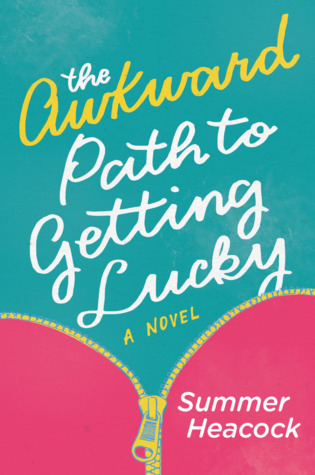
A humorous novel about a cupcake shop owner with a physical ailment that’s kept her from having sex for two years, and the desperate antics that ensue as she tries to overcome it.
Having sex wasn’t a big priority while Kat Carmichael’s successful cupcake shop was taking off. But when she realizes that it’s been nearly two years since she and her boyfriend, Ryan, have been intimate, she makes a pact to break her dry spell-and cure her vaginismus, a muscular condition that can make sex physically impossible.
Out of guilt, Kat calls for a break in her relationship with Ryan, so that he can see other people while she attempts to fix the issue on her own. She throws herself into physical therapy, but soon discovers her solo mission is more complicated than she anticipated. Fortunately, Ben Cleary, the shop’s best (looking) customer, is also a physical therapist, and volunteers to help out.
As time goes on, however, the boundaries Ben and Kat have set between friendship and love quickly become blurred, leaving her more confused than ever about what to hang on to and what to let go.
I haven’t read a lot of chick lit before, so this book was a brilliant way to expose myself (har har) to the genre. It is hilariously funny, with a “what can go wrong probably will” vibe and a self-described Type A main character who doesn’t like to ask for help and regularly blurts out what she’s thinking and then regrets it later.
I love Kat. But I especially love her in the context of her friends/co-workers at the cupcake shop: feisty best friend Shannon, edible-glitter-obsessed bisexual Butter and shy bride-to-be Liz. The four of them are frequently bawdy and always frank with one another, and after Kat reveals her condition to the others in a truly giggle-worthy conversation, they band around to provide moral support and sex toys to help with her therapy.
The burgeoning relationship with Ben is adorable. He’s earnest and more than a little awkward, though he generally takes things with good humour. However, he’s not a doormat and when Kat crosses the line he isn’t afraid to tell her so. Despite everything, their romance is actually touching and sweeter than one of Butter’s cupcake recipes. I ship them so hard!
As for Ryan, I was prepared to hate him, as I assumed was traditional, but — although he’s not my type (or Kat’s, really) — he is good best friend material. It just takes both of them a while to figure that out.
Summer is great at setting up awkward situations and then letting the humour roll, but where she truly shines is in writing dialogue. Kat, Ben and Ryan are also all nerds, which warms my heart. This book is a great read for anyone who likes to laugh, isn’t too prudish, and wants to read about cupcakes all day.
It even comes with some of Butter’s recipes at the back, you guys. It’s basically perfect.


 Cassandra Page