Review: ‘Nevernight’ by Jay Kristoff
Posted: September 17, 2016 Filed under: Reviews | Tags: fantasy, jay kristoff, reviews 1 Comment
Destined to destroy empires, Mia Covere is only ten years old when she is given her first lesson in death.
Six years later, the child raised in shadows takes her first steps towards keeping the promise she made on the day that she lost everything.
But the chance to strike against such powerful enemies will be fleeting, so if she is to have her revenge, Mia must become a weapon without equal. She must prove herself against the deadliest of friends and enemies, and survive the tutelage of murderers, liars and demons at the heart of a murder cult.
The Red Church is no Hogwarts, but Mia is no ordinary student.
The shadows love her. And they drink her fear.
Given the whole girl-goes-to-assassin-school vibe of the blurb, I had originally thought this book might be YA. You’d think the “assassin” part of “assassin school” would have tipped me off. Still, by the end of the first chapter I knew very well that Nevernight wouldn’t be for younger readers. Jay Kristoff doesn’t pull his punches.
The book is violent, and doesn’t make any excuses for that. There are sex scenes that are just shy of erotica in their level of detail, though I never found them gratuitous. And in the opening chapter we actually get both, the scene flipping back and forward in time between a sex scene and a stabbing, highlighting the, erm, rather obvious parallels.
There are a lot of flashbacks in Nevernight, especially early in the book. The main storyline picks up when Mia is 16 and seeking to be accepted into the Red Church (said assassin school), but we get glimpses into the formative events of her past. I found the flashbacks interesting, but they were presented in italics to differentiate them from the main story, and I found them harder to read as a result (physically harder; large blocks of italics are painful. Maybe I’m just getting old!).
The other stylistic quirks of Nevernight are the use of footnotes, where the narrator provides extra detail about the world — generally amusing anecdotes and trivia that don’t really have a place in the main story but give a glimpse into the narrator’s personality. The other quirk is that we don’t actually know who the narrator is, just that it’s not Mia herself. (My money is on her shadow companion, Mister Kindly.)
There is magic in the world of Nevernight, which is a lush combination of Ancient Rome and slightly less ancient Venice, but it’s the sort of magic that imposes a cost on the user. I really liked that as a mechanic; it stopped the various magic-users from being completely overpowered and silly.
As far as the characters go, Mia is — unsurprisingly — hard as nails. But there’s an empathetic side to her that is rather out of place in a school of murderers, and as a result she makes herself some good friends and snags a sort-of boyfriend among the other novices. Of course, there’s the obligatory mean girl (who has a very good reason for hating Mia, so she’s not your typical shallow archetype) and the Snape-like teacher (though he makes Snape look soft and cuddly). And the classroom politics and scheming tends to wind up with people dead.
Story-wise I won’t say too much, except to say that there’s a plot twist I didn’t see coming and all sorts of other awesomeness in there. I did have one head-scratching moment over Mia’s apparent inability to remember one particular event in her past — I wasn’t clear on the reasons for that, though maybe I missed something.
I’d recommend this book for people who like their fantasy gritty, their prose rich with metaphor and their heroines stabby.


Review: ‘Harry Potter and the Cursed Child’ by Jack Thorne
Posted: August 27, 2016 Filed under: Reviews | Tags: harry potter, play, reviews Leave a comment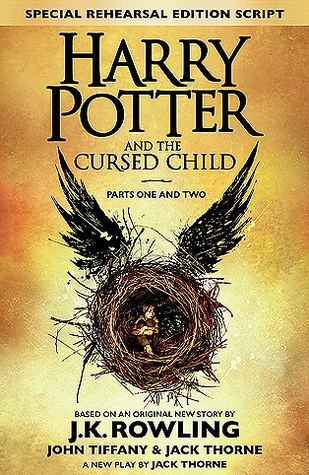
Based on an original new story by J.K. Rowling, Jack Thorne and John Tiffany, a new play by Jack Thorne, Harry Potter and the Cursed Child is the eighth story in the Harry Potter series and the first official Harry Potter story to be presented on stage. The play will receive its world premiere in London’s West End on July 30, 2016.
It was always difficult being Harry Potter and it isn’t much easier now that he is an overworked employee of the Ministry of Magic, a husband and father of three school-age children.
While Harry grapples with a past that refuses to stay where it belongs, his youngest son Albus must struggle with the weight of a family legacy he never wanted. As past and present fuse ominously, both father and son learn the uncomfortable truth: sometimes, darkness comes from unexpected places.
Gosh, so many mixed feelings, you guys. I don’t normally review books this close to their release date, so I’ll be super-careful to avoid spoilers.
I think ultimately how much fans of the series will love or loathe The Cursed Child will depend on the extend to which the nostalgia of catching up with beloved characters outweighs the flaws in the story. Because we do get to see pretty much all the major characters from the series at one point or another — particularly Harry, Ginny, Hermione and Draco. (I was never a massive fan of Ron, but I still didn’t really like the way he was portrayed in the script — even though he did get some amusing lines.)
The absolute best thing about The Cursed Child is the delightful Scorpio Malfoy, who at Hogwarts becomes friends with Albus, Harry’s second son. Scorpio is optimistic, friendly and funny, and this book is worth reading just for him. I wanted to cuddle him and bake him pie.
I … wasn’t as enthusiastic about Albus, who is the sullenest teenager that ever sullened. To be fair to him, he is bullied horrifically by his Hogwarts peers after failing to live up to their expectations. But he still isn’t much fun to be around, and I wanted to see more of the relationship between him and his parents, because, honestly, I didn’t get it. (Also, his older brother, James, is mentioned in passing and then never seen again. Like, if he were also at Hogwarts, surely he’d stick up for his brother? I don’t know, maybe I missed something.)
Albus’s familial relationships weren’t the only case where I wanted more than I got from The Cursed Child. Despite the size of the book, it is a light read. In case it wasn’t clear from the blurb, it’s a script for a play. That means the action is thinly described and not very satisfying (the big fight scene was basically a one-liner). The dialogue, by necessity, needs to tell a lot of the action, which means that the “show, don’t tell” rule of good novel writing is often ignored.
The dialogue itself is closer to real speech than a novel’s typical dialogue, which omits a lot of the “ums” and verbal meandering that people do. The end result is that the play can be quite trying to read at times; I quite often had to re-read larger blocks of speech to get a sense for what the character was saying, because their dialogue was so choppy. (As an aside, the number of misused commas I saw was rather depressing. Given how much the publisher must have made from this release, surely they could have afforded a copy editor?)
Finally, the plot was — for me, at least — entirely predictable and had a few plot holes that left me confused, and one ridiculous moment that made me shake my head. On the upside, it also had a few touching moments.
If I saw The Cursed Child as a play rather than reading it, the stylistic flaws would have been less obvious. The fight scenes would be acted out, the dialogue would seem more natural to the ear, and the commas wouldn’t offend. Maybe Albus would have been more sympathetic too, though I’m not so sure about that. If it’s ever produced in Australia I’ll definitely check it out, but I can’t see myself re-reading the script the same way I would the original novels.
I wavered between three and four stars for The Cursed Child, because I did enjoy it despite its flaws. Maybe I’m more sappy and sentimental than I thought.

Review: ‘Stardust’ by Neil Gaiman
Posted: August 25, 2016 Filed under: Reviews | Tags: fairy tales, reviews Leave a comment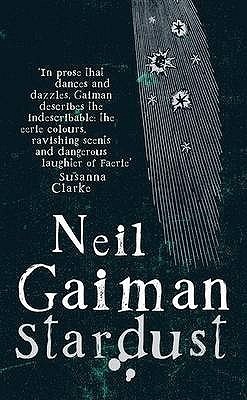
Young Tristran Thorn will do anything to win the cold heart of beautiful Victoria—even fetch her the star they watch fall from the night sky. But to do so, he must enter the unexplored lands on the other side of the ancient wall that gives their tiny village its name. Beyond that old stone wall, Tristran learns, lies Faerie—where nothing, not even a fallen star, is what he imagined.
From #1 New York Times bestselling author Neil Gaiman comes a remarkable quest into the dark and miraculous—in pursuit of love and the utterly impossible.
Given how old Stardust* is, I debated whether or not to write a review for it, especially as I don’t think Mr Gaiman really needs my validation one way or the other. Still, maybe someone will read this—someone like me, who has been under a rock this whole time and hasn’t seen the movie either—and decide the book is right up their alley.
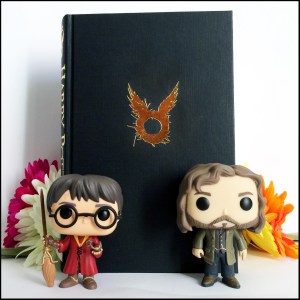
Also, any excuse to share my various Instagram pictures! 😉
Stardust is a quick read, so thin that you might be forgiven for mistaking it for middle grade fiction. But there are a few scenes in there that are for an older audience; the book is based on the old-school, original Grimm fairy tales (from before they sanitised them for children), and Gaiman deliberately includes bloodthirsty, selfish witches, a trio of murdering princes, and many other fairy tale trappings.
The writing is beautiful, as always, with some long, lovely sentences that evoked an old-world feel without being difficult to absorb. The story was largely quite predictable (also like fairy tales) and the main character, Tristran, was a little dense at first. Okay, a lot dense—though maybe I’m being unkind. Maybe his head was just full of romantic notions and a teenage crush, and he got swept away by both. Still, given that he largely seems to be a kind lad, the way he treats the star at first is unfathomable. And if it weren’t for the aid he receives (largely as a result of his good manners) he’d have been killed or lost in the first few minutes of entering Faerie.
The relationship between him and the star is never really fully developed. Because there’s a lot of hand-waving around events as they travel, she seems to go from “I hate you” to quietly loving him without the transition being obvious. Again, this does suit the fairy tale style—I can’t think of a single fairy tale that has a genuine romance storyline—but it wasn’t as satisfying to read as it could have been.
The setting, though, is delightful: quixotic, unforgiving, beautiful Faerie. The characters weren’t what immersed me in the story; it was the world itself. Gaiman is no doubt a master of his craft, with a vivid imagination and a tremendous ability to execute his story. For me, that’s what brought this book up to a four-star read. I’d highly recommend it for fans of fairy tales and fairy tale retellings.
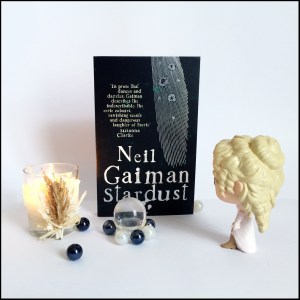

*Note: Not the kind in Pokemon GO.

In case you missed it, last week I was over at Aussie Owned and Read talking about pitching contests — why I used to enter them, and why I don’t anymore.
Review: ‘Eye of the Storm’ by Emmie Mears
Posted: August 10, 2016 Filed under: Reviews | Tags: reviews, urban fantasy Leave a comment
Earth teeters on the edge of a razor sharp blade.
With the Summit on barely-unified tenterhooks and hellkin bubbling into Earth with no sun to stop them, Ayala Storme has her hard-won family, an uncertain new love, and a team of allies — half of whom have betrayed her in the past.
When the cities of North America begin to fall to demon hordes, Ayala has to fight her way back into Nashville in a desperate hope to save her city. With the witches trying to find the original source of the imbalance that allows hellkin a tie to Earth and the Mediators ready to draw their swords every time they see a shade, time is ticking away.
The witches are working as fast as they can, but what they find may shake the foundations of everything Ayala has ever known — and the answers needed to salvage what’s left of Earth may only lie beyond Earth itself, in the sixth hell.
The battles are over. It’s time for the war.
Eye of the Storm is the fourth and last book in the Ayala Storme series, which is now one of my favourite urban fantasy/alternate Earth series out there. You can find my reviews of the first three books here, but if you need further convincing, I’ll give you some reasons why you should read the series. (Note: You really do need to read the series — don’t jump in at book four and expect to be able to keep track of all the characters!)
Some minor spoilers for earlier books follow.
Eye of the Storm is, as the blurb makes clear, about the arrival of the demon-induced apocalypse. The beginning felt a little awkward to me, in that I didn’t quite follow the reasons for Ayala and her crew leaving Nashville to go back to their cabin in the woods. (That might have just been because I stayed up past my bedtime several nights in a row and missed some crucial piece of detail.) However, once the action gets going, it really gets going.
I enjoy apocalypse fiction, and Eye of the Storm definitely delivered. There is a lot of emphasis on getting back into the city, on bunkering down and surviving, on attempts to work together even though the Summit is divided on how to deal with Ayala’s allies, the shades.
The witches, led by Gryfflet Ashberry, are trying to work out a spell to help them figure out what it is that allows the demons to create portals to Earth. Ayala isn’t big on the research — like I said in a previous review, she’s more like Buffy than Willow (except that both Ayala and Willow are bisexual, of course). Still, she’s involved enough that we get a sense for how his research is progressing — and once it gets to a certain point, she has to take finding answers into her own hands. By that point I’d already guessed what the big reveal/information would be, but I found what she got up to interesting reading nonetheless!
One big point of difference between this and most end-of-the-world stories is that, although we get a lot of monster-splatting action along the way, the book doesn’t end in a big smack-down fight but with more of a “witches’ ritual and epic speech” vibe. I was actually glad of the difference; it wasn’t that the big fight didn’t happen, just that we only got to see parts of it. And since there wasn’t some giant uber-bad to fight — a dragon to slay or whatever — if we’d seen more of it, it would’ve felt a little … samey?
This entire series is fast paced and full of action, sass, tender romance (though barely any sex), strong friendships and splattery fights. There are some swears if that sort of thing bothers you. If it doesn’t, read Ayala Storme. You won’t regret it.
Reviews: ‘Every Word’ and ‘Every Move’ by Ellie Marney
Posted: July 26, 2016 Filed under: Reviews | Tags: AWW, reviews, thriller 1 Comment
James Mycroft has just left for London to investigate a car accident similar to the one that killed his parents seven years ago…without saying goodbye to Rachel Watts, his ‘partner in crime’.
Rachel is furious and worried about his strange behaviour — not that Mycroft’s ever exactly normal, but London is the scene of so many of his nightmares. So Rachel jumps on a plane to follow him…and lands straight in a whole storm of trouble.
The theft of a copy of Shakespeare’s First Folio, the possible murder of a rare books conservator, and the deaths of Mycroft’s parents…Can Watts help Mycroft make sense of the three events – or will she lose him forever?
Sparks fly when Watts and Mycroft reunite in this second sophisticated thriller about the teen sleuthing duo.

Rachel Watts is suffering from recurring nightmares about her near-death experience in London. She just wants to forget the whole ordeal, but her boyfriend, James Mycroft, is obsessed with piecing the puzzle together and anticipating the next move of the mysterious Mr Wild — his own personal Moriarty.
So when Rachel’s brother, Mike, suggests a trip back to their old home in Five Mile, Rachel can’t wait to get away. Unfortunately it’s not the quiet weekend she was hoping for with the unexpected company of Mike’s old school buddy, the wildly unreliable Harris Derwent.
Things get worse for Rachel when Harris returns to Melbourne with them – but could Harris be the only person who can help her move forward? Then a series of murders suggests that Mr Wild is still hot on their tails and that Mycroft has something Wild wants — something Wild is prepared to kill for.
Can Watts and Mycroft stay one step ahead of the smartest of all criminal masterminds? The stage is set for a showdown of legendary proportions…
I read the first book in the Every trilogy last year — although I didn’t actually realise it was a trilogy till partway through the second book, Every Word. That was a little bit devastating, knowing that the amount of Rachel and Mycroft I had left to go was finite … I was hoping it’d go on forever. 😦
I devoured Every Word and Every Move in the space of a week, which is really fast for me given I also had work and general adulting to do as well. As a result, this is a combined review, which works here but I have no idea how I’ll get it into Goodreads. (Eh, that’s future Cass’s problem!)
All three books in the series are fast-paced, with a murder mystery, some forensic science (Mycroft’s hobby and, later, part-time job), some heated kissing and some moments that left me reeling. As far as the mysteries go, I guessed where the Folio was hidden in the second book (yay) but not who Moriarty actually was (boo). Despite the second book being slightly more transparent, the climax of that was so much more nail-biting to me. For some stupid, naive reason, I expected Ellie Marney to pull her punches a little. She definitely disabused me of that notion in Every Word. (At least by Every Move I was expecting it…)
The second and third books have the same overarching plot, events arising from the death of Mycroft’s parents seven years before, which is why it was great to read them back-to-back. There is closure of the smaller mystery at the end of the second book, but the Moriarty-like villain lingers on.
I should say, for those that haven’t read any of these books or the review that I linked, that these books are inspired by Sherlock Holmes. The characters are aware of the similarities in their names to the famous crime-solving duo, making little in-jokes about it, and the villain actually refers to himself as Moriarty at one point as a nod to that as well.
Of course, as far as I can recall, there isn’t a budding romance between Holmes and Watson. The same can’t be said of Mycroft and Watts, who are one of my new favourite young adult couples. I love how realistic and awkward they are with one another. I love that the obstacles they face in their relationship as time goes on include Rachel’s overprotective parents, something I expect a lot of teenage girls (and many boys) can relate to.
What there isn’t in these two books is a lot of school time. In fact, other than a school dance at one point, there’s not a single scene in either of these books set at school. I can’t think of the last time I read a young adult series that did that!
Every Word is set in London, while Every Move is back in Australia, and the sense of setting in each book is real enough to touch. You can tell that Ellie Marney went to London as part of her research (or maybe on a holiday) — there are details in there that you can’t get from Google street view. Likewise, her descriptions of Australia, of Melbourne and the bush around Five Mile, Rachel’s childhood home, are so real I could close my eyes and not only see but smell and feel the setting. It was wonderful!
The other thing I adored was how Aussie the characters are. Rachel is a farm girl at heart, and her and Mike, her older brother, have the best dialogue, so rich with slang and familiar to me. It warmed my heart. (Though I did raise an eyebrow when Rachel said crikey once — does anyone actually say that?)
Other good things about this book include a realistic depiction of PTSD that doesn’t leave the character hiding in cupboards (I’m looking at you, Katniss Everdeen!); a heart-rending depiction of dealing with grief; an awesome, complex family relationship (Mike! Rachel’s mum!); and a girl being friends with another guy than the one she loves without it turning into a love triangle (it can happen!). Oh, and Mai. I adored Mai.
Have I convinced you yet? Seriously, go read this series.


Review: ‘Under Rose-Tainted Skies’ by Louise Gornall
Posted: July 20, 2016 Filed under: Reviews | Tags: contemporary, reviews, WeNeedDiverseBooks, young adult 1 Comment
I’m Norah, and my life happens within the walls of my house, where I live with my mom and this evil overlord called agoraphobia.
Everything’s under control. It’s not rosy — I’m not going to win any prizes for Most Exciting Life or anything, but at least I’m safe from the outside world, right?
Wrong. This new boy, Luke, just moved in next door, and suddenly staying safe isn’t enough. If I don’t take risks, how will I ever get out — or let anyone in?
This book, you guys. It’s the sort of Own Voices diverse book that I often hear about but don’t often seem to read, probably because of my obsession with urban fantasy novels. It is unflinching and in-your-face, told in the first person present tense — the style that gets the reader closest to the thoughts and actions of the protagonist.
Our protagonist is Norah. She has agoraphobia and OCD, suffering debilitating anxiety attacks when she has to leave the house or when things in her environment are out of order. She’s terrified of germs and overthinks things. Like, really overthinks them — and not just the things that most people worry about, but things that might seem tiny in the grand scheme of things but to Norah’s brain are critical. For example, there’s almost an entire page of dialogue where all of Norah’s increasingly anxious thoughts are about how the other person has a piece of hair stuck to their lip.
Norah’s conditions mean pretty much this entire book is set inside her house, and for a lot of that she is alone — but her mind is so busy all the time, and Gornall’s style is so engaging, that I didn’t really notice the lack of variety in the scenery. Occasionally we get glimpses of Norah’s sass, which made me laugh, but my favourite thing was Gornall’s cleverly descriptive use of comparisons, and the way she interweaves Norah’s symptoms (such as picking at scabs or chewing her nails) into the action seamlessly.
Take this example:
A vocal tic rolls up my chest, pushed by pressure, until it flops out of my mouth and I moan like Frankenstein’s monster.
Or this:
His smile sets my kitchen on fire.
I could go on for days with examples (I chose those two by opening the book random), but I want to talk about the “he” in question. Luke is Norah’s new neighbour, and he’s basically the sweetest thing. He decides Norah’s cute when he glimpses her through her bedroom window and soon realises she’s not what he expected — but curiosity, a good heart and an understanding of mental illness due to a family member having it mean that he persists in trying to get to know Norah when she’d probably prefer he didn’t.
Although Luke is possibly slightly too good to be true, I was pleased to see that he wasn’t your typical magic bullet trope. I won’t go into details of what I mean here, because I don’t want to get too spoiler-y, but Hollywood definitely has certain stereotypes about women being “saved”, shown the error of their ways by a man, and let’s just say that’s not what happens here. Yes, Luke does broaden Norah’s horizons (before she met him she really only had in-depth conversations with her mother and doctor). But she isn’t magically cured by virtue of his presence.
I can’t recommend this book highly enough, you guys — and also, before I finish up, take a moment to admire the pretty cover. There are three different-coloured versions of this cover, all in different shades of pink; I got the palest pink one and I love it!

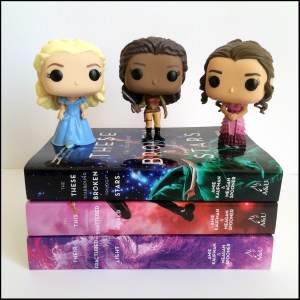
Review: ‘Their Fractured Light’ by Amie Kaufman and Meagan Spooner
Posted: July 16, 2016 Filed under: Reviews | Tags: AWW, reviews, sci-fi 2 Comments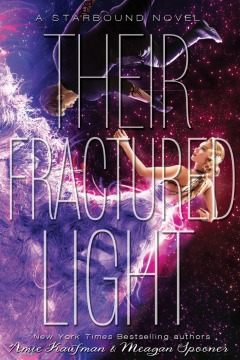
A year ago, Flynn Cormac and Jubilee Chase made the now infamous Avon Broadcast, calling on the galaxy to witness for their planet, and protect them from destruction. Some say Flynn’s a madman, others whisper about conspiracies. Nobody knows the truth. A year before that, Tarver Merendsen and Lilac LaRoux were rescued from a terrible shipwreck—now, they live a public life in front of the cameras, and a secret life away from the world’s gaze.
Now, in the center of the universe on the planet of Corinth, all four are about to collide with two new players, who will bring the fight against LaRoux Industries to a head. Gideon Marchant is an eighteen-year-old computer hacker—a whiz kid and an urban warrior. He’ll climb, abseil and worm his way past the best security measures to pull off onsite hacks that others don’t dare touch.
Sofia Quinn has a killer smile, and by the time you’re done noticing it, she’s got you offering up your wallet, your car, and anything else she desires. She holds LaRoux Industries responsible for the mysterious death of her father and is out for revenge at any cost.
When a LaRoux Industries security breach interrupts Gideon and Sofia’s separate attempts to infiltrate their headquarters, they’re forced to work together to escape. Each of them has their own reason for wanting to take down LaRoux Industries, and neither trusts the other. But working together might be the best chance they have to expose the secrets LRI is so desperate to hide.
I only recently reviewed book two in this series, This Shattered World, so I feel like I’m repeating myself a bit here. However, unlike This Shattered World, which more-or-less stood alone, I think Their Fractured Light is one that would strongly benefit from the backstory in the first two books. That’s because it continues with the meta-plot that was introduced in These Broken Stars and continued in This Shattered World, and brings it to a (imo) satisfying conclusion. Also, the pre-chapter snippets that are a hallmark of this series relate in this book’s case to events in all three.
So, do yourself a favour and read the first two books. I’ll wait. 🙂
Not convinced yet? Ok, I’ll try and keep the rest of this spoiler-light!
In this story we get to see more of two minor characters from the second book, Sofia (Flynn’s friend) and the hacker known as the Knave of Hearts. Again, they are bizarrely young for their skill sets, though I found them both more believable than Tarver and Jubilee, the super-soldiers. I’m not sure why that is, except that I guess social manipulation and hacking are things more easily picked up from a younger age than military combat. (Maybe I’m just being naive?)
I really liked how the two of them complemented one another, despite their huge (and somewhat warranted) mutual distrust. Both are driven by their hatred of Monsieur LaRoux, Lilac’s father and the series villain, and both are very good at manipulating the world around them: people in Sofia’s case and data/computers in Gideon’s. As a couple, I thought they had more chemistry than Flynn and Jubilee did (but possibly not as much as Lilac and Tarver, though it’s been a while since I read the first book now).
Once the other four characters are introduced, the story takes quite a different turn. I found the scenes where all six of them were together a little chaotic — I’d often have to pause and consider which character was doing the talking. That wasn’t a fault of the writing, mind you, just the fact that huge ensemble casts of characters are trickier — especially when they are all so homogeneous in many ways. (Because this is a young adult series, all of the characters are young; I think the oldest, Tarver, would be 20 by this point. Both Tarver and Jubilee are soldiers, and Lilac, Sofia and Flynn are all socially adept — though they apply their skills differently, as a socialite, con artist and diplomat respectively.)
On the subject of con artists, I liked that side of Sofia, and Gideon’s illegal hacking. The fact they weren’t squeaky clean but are still on the side of good (in the sense that they are fighting the greater evil) gave them more depth.
Finally, without going into spoilery details, I can say that I mentioned on my review of the previous book that it didn’t have the same sort of epic, soul-shattering plot twist that These Broken Stars did. Let’s just say that Their Fractured Light makes up for it. In spades.
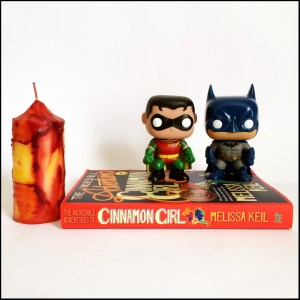
Review: ‘The Incredible Adventures of Cinnamon Girl’ by Melissa Keil
Posted: July 10, 2016 Filed under: Reviews | Tags: AWW, geekery, reviews 1 Comment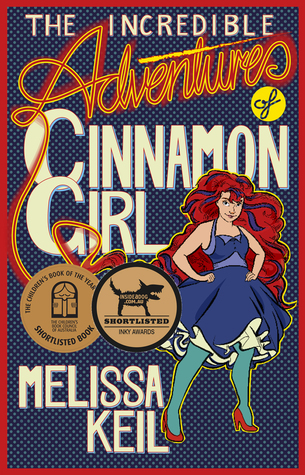
Alba loves her life just as it is. She loves living behind the bakery, and waking up in a cloud of sugar and cinnamon. She loves drawing comics and watching bad TV with her friends.
The only problem is she’s overlooked a few teeny details:
Like, the guy she thought long gone has unexpectedly reappeared.
And the boy who has been her best friend since forever has suddenly gone off the rails.
And even her latest comic-book creation is misbehaving.Also, the world might be ending — which is proving to be awkward.
As Doomsday enthusiasts flock to idyllic Eden Valley, Alba’s life is thrown into chaos. Whatever happens next, it’s the end of the world as she knows it. But when it comes to figuring out her heart, Armageddon might turn out to be the least of her problems.
When I grow up, I want to be Melissa Keil.
Cinnamon Girl is her second young adult novel, and I’ve adored both of them. She has this knack for capturing the issues that your typical teenager goes through (what will I do when I grow up, how do I handle this new relationship) while adding a touch of geekery that appeals to my nerdy heart. ❤
I gobbled this book up while I was on holidays, and I adored it. At just shy of 300 pages, it’s a shorter book, making it the perfect holiday read — and it left me with a goofy smile on my face afterwards.
As is obvious from the blurb, Alba’s primary form of geekery is comic books. She’s a talented artist and wants to go to university to do a fine arts degree, but is in that end-of-year limbo where she’s finished high school but doesn’t yet know whether she made it into the course she’s after. This, combined with her friends’ different plans for what they want to do, leaves her with a panicked “live in the now” mindset that is echoed in the world around her, with its whole pending apocalypse vibe. That last part aside, the rest is something I could really relate to.
The relationship she has with her best friend, Grady, is basically the cutest. It’s pretty obvious from the start that he has a crush on her, but although she is attracted to him she also has a massive blind spot as far as he is concerned — probably because they have been friends since they were toddlers. Although I was cheering for them to get together, I didn’t find the delay as frustrating as I have in other books, I suspect because there were a lot of other interesting things going on.
As far as the apocalypse itself goes, Cinnamon Girl is a young adult contemporary, not a dystopian — it’s clear from the start of the book that the person forecasting the end of the world is a TV hack. But it’s really interesting to see the kaleidoscope that is the doomsday enthusiasts through Alba’s eyes.
Also, a special mention needs to go to all the food in this book. Alba lives and works in a bakery, and I spent the entire time I was reading this hankering for an apple danish or chocolate croissant. Mmm.
Cinnamon Girl is suitable for any age group from maybe mid-teens. There isn’t actual swearing or anything beyond kissing, though there is mention of sex and drug use. It’s the end of the world; of course stoners show up for a party! 😉
Seriously, you guys, read this book.
Review: ‘This Shattered World’ by Amie Kaufman and Meagan Spooner
Posted: June 28, 2016 Filed under: Reviews | Tags: AWW, reviews, sci-fi 1 Comment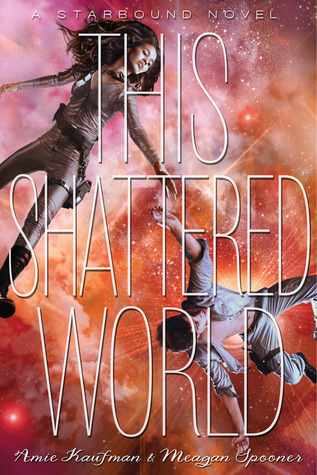
Jubilee Chase and Flynn Cormac should never have met.
Lee is captain of the forces sent to Avon to crush the terraformed planet’s rebellious colonists, but she has her own reasons for hating the insurgents.
Rebellion is in Flynn’s blood. Terraforming corporations make their fortune by recruiting colonists to make the inhospitable planets livable, with the promise of a better life for their children. But they never fulfilled their promise on Avon, and decades later, Flynn is leading the rebellion.
Desperate for any advantage in a bloody and unrelentingly war, Flynn does the only thing that makes sense when he and Lee cross paths: he returns to base with her as prisoner. But as his fellow rebels prepare to execute this tough-talking girl with nerves of steel, Flynn makes another choice that will change him forever. He and Lee escape the rebel base together, caught between two sides of a senseless war.
This Shattered World is the second book in the Starbound trilogy (I reviewed the first book, These Broken Stars, here.) You don’t strictly need to read the first book to understand this one, though it provides useful backstory and introduces you to the delightful Tarver and Lilac. That pair make a brief appearance here, and if you don’t know who they are then that won’t be as squee-worthy as it otherwise would be. Which obviously would be a shame.
Although the meta-plot from the first book continues, This Shattered World is quite a different story. It’s set maybe a year later and is a lot more action packed, with a bigger cast of characters, but a lot less of a survival story. (I adored the survival aspects of the first book, but YMMV.) For some reason I found it a little slow to get into, though I suspect that was me and not the book — and once I got engrossed, it zipped along despite the length.
Romance-wise, I didn’t ship Jubilee and Flynn to the same extent I did Lilac and Tarver, but there are some extremely sweet lines and naww moments that gave me many feels. They are a bit of a Romeo and Juliet couple, in terms of their warring “families” — Jubilee even calls him Romeo to start with, until she learns his name. And I liked that they weren’t professing undying love right from the get-go. (Unlike Romeo and Juliet, now that I think about it.)
As far as the story goes, I personally didn’t find any of the plot-twists earth-shattering or anything, and there certainly wasn’t the OMGWTF moment I had with These Broken Stars, but it was enjoyable enough. Likewise, I liked the little disjointed fragments of Jubilee’s missing dreams at the start of each chapter, though they weren’t as tantilising as Tarver’s post-rescue interview.
I feel like I’m being unfair to This Shattered World, in a way, by constantly comparing it to the first book, which was — to me — very slightly better across the board.
Actually, make that almost across the board. The one place where This Shattered World shines is in having a much wider array of character backgrounds — Jubilee’s mother was Chinese and her father “had dark skin” (though I don’t think his ethnicity is ever revealed … or maybe I missed it?). One of her good friends on the base, Molly, is a Chinese-heritage man who is trying to reconnect with his roots. Avon, the planet the story takes place on, has been colonised by Irish-heritage settlers, so there are elements of their culture too. It’s a shame that the multicultural, especially Chinese, elements aren’t hugely strong, maybe because both Molly and Jubilee weren’t steeped in that culture as children, but it’s still good to see a book with a kick-butt biracial model on the cover.
Finally, the comment I made on These Broken Stars about the characters’ ages stands here too. They are weirdly young for their level of experience. Jubilee is only 18 and is some sort of super-soldier (exactly like Tarver was in the first book). I’m not clear on how old Flynn is, but I expect he’s about the same age. I know that this universe ages characters young, with military enlistment at 16, but I constantly imagined Jubilee and Flynn as being in their mid-twenties, and by now Tarver and Lilac are surely in their late twenties (not 19 and 17)!
Still, I’ve already bought the third book in the series and I can’t wait to see how the meta-plot resolves itself.
Review: ‘The Alloy of Law’ by Brandon Sanderson
Posted: June 15, 2016 Filed under: Reviews | Tags: fantasy, reviews, steampunk Leave a comment
Centuries after the Mistborn trilogy, Scadrial is on the verge of modernity — railroads, electric street lights, and skyscrapers. Waxillium Ladrian can Push on metals with his Allomancy and use Feruchemy to become lighter or heavier at will. After 20 years in the dusty Roughs, in the city of Elendel, the new head of a noble house may need to keep his guns.
The Alloy of Law is the fourth book (of six) in the Mistborn series, but — because the series is divided into two trilogies — it’s actually the first book in the second trilogy. As a result, you don’t have to have read the preceding three books in order to make sense of this one (though the religious references won’t be as interesting if you don’t).
I’m in more than a little awe of Sanderson. The first three books were a somewhat traditional (though not really) epic fantasy series. The Alloy of Law is set 300 years later in the same world — a world where technology has advanced to something resembling the 19th century. There’s still magic, in the form of Allomancy and Feruchemy, the metal-based Mistborn magic system. But there are also guns, trains and electricity. As a result, in some ways this book defies characterisation. Is it steampunk? Fantasy? An alternate world Western set in the big city? I don’t know … and that’s always an exciting thing to find!
Wax is your traditional Western action hero (with superpowers): highly competent and with a tragedy in his past that means he shies away from love. Wayne is a hilarious and crass master of disguise who “trades” for things rather than stealing them (although the trades generally occur without the other party’s consent). Both of them are fun characters, though I didn’t enjoy them as much as Sazed, Breeze or Elend from the first three books.
Lady Marasi, the noblewoman who is studying to be a legal attorney, is a lot more interesting, to my mind. She’s easily embarrassed but also a crack shot with a rifle, and she has a crush on Wax from before she meets him. She and he are well-matched in terms of both their interests and their intelligence, so Wax’s denial of the fact she’s clearly perfect for him is a little frustrating.
Overall, this was a fun book, though a little bit more predictable and less compelling than the first trilogy was. There was only one plot twist I didn’t see coming, and I wasn’t as invested in it as maybe I should have been. (That could be a result of the fact I listened to this book on either side of my son breaking his arm and spending a night in hospital, though — I had other things on my mind!)
Still, I enjoyed The Alloy of Law and have already started on the next book, Shadows of Self.


 Cassandra Page