‘Where do you get your ideas?’
Posted: September 15, 2013 Filed under: On the Isla's Inheritance trilogy, On writing | Tags: fanfic, inspiration, Isla's Inheritance, muses, writing 6 CommentsI think the single most common question authors—especially very successful authors—get asked is about their sources of inspiration. The question is almost a stereotype now. And a lot of them reply along the line of, “The real trick is making them stop!”
I used to not understand this answer. I spent a lot of time toying with ideas, usually for high fantasy novels, but never getting far because the well would run dry: the ideas I had felt derivative, or paper thin.
It wasn’t till I said “hell with it” and started writing anyway that I discovered the truth. Like writing skill, the ability to come up with story ideas—for me at least—is like a muscle. The more I write, the more I come up with ideas, the easier it is. I suspect a lot of other writers are the same.
Getting to the point where I had an idea with enough weight for an entire novel was a long process, though. I started out, like a lot of people, writing fanfiction. I wrote some short stories in another writer’s fantasy world; it felt easy to me, because the worldbuilding had been done. This was in the days before the internet was huge (don’t laugh!) so the stories were published in the author’s “official” fanzine and distributed via the post. Old school, yo. *poses*
Then I wrote two or three novella-length stories that were another type of fanfiction: the type with famous people as characters (no, I won’t say who). But the stories were my own. These novellas were about 25k words each; when a friend pointed out to me that if I’d put that amount of effort into real fiction I’d have a novel, it was a sobering realisation. And a motivating one, too. It showed me I could do it, whereas before I’d thought I couldn’t.
So I revisited one of the novellas, and took an extra element of an old (non-fanfic) short story, threw them in a pot, and stirred. Then I started from scratch with the ideas born from this mix. The result was Isla’s Inheritance. The only element from the original novella fanfic that has carried across is one of my original (non-famous) characters: Isla’s cousin Sarah.
And once I finished Isla’s Inheritance, that seemed to open the floodgates on my subconscious. Ideas for a sequel, and another beyond that. Another urban fantasy idea (now finished). A solid fantasy/Steampunk concept (outlined). And other, half-formed ideas.

The muses from Hercules (copyright Disney; source).
These days it seems like whenever I hear a story on the news, or am talking to a friend, part of my brain is turning what I’m hearing over and looking at it from all sides to see whether there’s a kernel of a story idea there. I can see why writers call that their muse. I think of it more as part of myself—but a part I have very little control over. As my friend Stacey Nash describes in her latest blog post, it seems to have a mind of its own.
I’m curious though—do you find it easy to come up with story ideas? Has that always been the case, or have you had to train yourself/awaken the muse, like I have?
The Zombie Project: Firebreak
Posted: September 10, 2013 Filed under: Short stories | Tags: short story 1 CommentI’ve mentioned The Zombie Project before. It’s a project masterminded by the gorgeous Chynna-Blue: she herded a bunch of writers together and got them to agree to a series of short stories all set in the same world. The only rule was that each story had to contain an element of the one before. And this Sunday just past, it was my turn.
My story is #11 in the sequence. If you haven’t already, I recommend reading the entire series. But if you are too time poor for that (I get it, believe me!), I’d recommend you at least read two, as my short below continues on from them. The two are “Thinking Big” by Julie Hutchings and “The Light” by Jolene Haley.
Then you can read mine, “Firebreak”, here or by scrolling down.
Warning: contains zombies, swearing and gross stuff. Also American spelling, since it’s set in small town America.
FIREBREAK
Someone had killed her zombie.
Ruth Ann realized something was wrong as soon as she entered the back of Blue’s diner. The stench of rotting vegetable matter and tattered flesh hung in the air like offcuts on a compost heap. The zombie stink had been barely noticeable when she’d gone out; now it was so heavy in the air she could taste it.
The broom closet door hung ajar. Someone had tried to shove the dismembered limbs back in and slam the door—but several decaying fingers were jammed in the gap, ragged fingernails blackened and broken.
She opened the door, braced for an attack, and saw the zombie’s corpse. The stink hit her with a noisome fist. She swallowed bile.
The zombie had been decapitated, dismembered.
Trembling, Ruth Ann nudged the hand inside with the toe of her shoe. One of the fingernails fell off, plopping to the linoleum: a jagged accusation.
Someone knew her secret. She was poisoning the townsfolk with zombie toxins: a death that left their corpses inanimate, as a corpse rightly should be, not shambling around as this one had. Mr. Carter, the government agent who’d contracted her in exchange for her own survival, had given her another week to “take care” of the small town of Haley. No survivors.
But someone knew.
I don’t want to die.
She’d have to move more quickly.
*
There were so few of them left, Ruth Ann thought as she welcomed her dinner guests. Only a dozen—plus Ruth Ann—out of a population of over three hundred. Some had fled when the virus came. The rest, the stubborn ones who hadn’t wanted to leave their homes…well, they’d died.
Earlier that day Ruth Ann had crisscrossed Haley on foot, spreading the word that she was cooking up a batch of chili and wanted everyone to come along. The walk was harrowing, not because Haley was big but because Ruth Ann kept jumping at shadows. Every time she spoke to someone, she expected they’d thrust an accusatory finger at her and thunder, “WHAT HAVE YOU GOT IN YOUR CLOSET, RUTH ANN?” Her guilt was an invisible shroud that covered her, head to toe.
But no one could see it except her. With each cheerful acceptance of her invitation, her smile felt more brittle.
When she was sure everyone knew about dinner, and that they’d come—desperate for one last chance at community before the Lord took them all, she supposed—she’d returned to Blue’s to prepare the feast.
Ruth Ann’s sister, Penny, had disappeared—she hadn’t been seen since the day before. Ruth Ann was pretty sure she’d run away with her friend Mason, fleeing north toward rumors of sanctuary. She’d seen them whispering together yesterday, had thought about asking them—but had then decided it was for the best if they left.
She hadn’t served the contaminated food to Penny. She’d hoped Mr. Carter would take both of them in at the end, but had been too afraid to ask until her work was done. Until she’d earned the ticket into the uncontaminated compound that he’d promised her.
But Penny running away made things easier.
“It’s not exactly a Sunday roast, is it?” Father David said, smiling to take the sting from his words as Ruth Ann brought a steaming pot of chili to the table. She’d shoved the smaller tables together and covered them with checkered cloths to give the illusion of a big dining table. A wilting sprig of rosemary served as a centerpiece, its scent overwhelmed by the chili; Ruth Ann had gone heavy on the garlic and chili powder to compensate for the lack of fresh onions and jalapenos. And for other things.
“No sir,” Ruth Ann said. “All we’ve got left is mince. And packet food.”
“What I’d give for a plate of fresh roast beef,” Father David sighed, taking the pot from her. Bobby retrieved the ladle and slopped the chili into the Father’s bowl and then his own. “Not meat you need to curry or spice so you can’t taste how old it is.”
Ruth Ann clenched her jaw, nodded.
“On the bright side,” Bobby said, sniffing appreciatively, “Ruth Ann makes a mean chili.” JC, Bobby’s drinking buddy, wasn’t there. He’d succumbed to the fever days earlier. Bobby’s face still showed the traces of the heavy drinking he’d done after the funeral.
“Thanks,” Ruth Ann said, swallowing nerves that tasted like acid. “Would anyone like a drink?”
“What kind?” Wade rasped. The town alcoholic, he’d never pass up free liquor.
“Well, I sure ain’t serving you water. I got some whiskey. On the house.”
Laughter. Money hadn’t been worth spit for almost a month. And Blue’s owners were dead, the bank manager too probably—who would care if she gave away the last of the stock? Ruth Ann went behind the counter and sloshed brown liquid into glass tumblers, hoping no one would notice how her hands shook. Then she carried the trays back to the table. “It’s bottom-shelf whiskey,” she apologised as she handed out the drinks.
“That’ll be just fine,” Wade said, cupping his glass in his hands like it was precious. Ruth Ann used to feel that way about coffee, until the waters were contaminated with corpses. Would they have fresh coffee in the compound?
“May I say Grace?” Father David asked as Ruth Ann sat. She nodded and he bowed his head. “Oh Lord, we thank You for the bounty we are about to receive, here at the end of days. Please have mercy on those of Your flock who are left on this Earth, and let our final passage into Your arms be one of grace. Amen.”
“Amen,” everyone murmured.
“A toast.” Father David held his glass high. “To Haley’s Last Supper. And to Ruth Ann, for providing it.”
Ruth Ann’s fingers tightened on the greasy tumbler. Did he know? But, although their eyes were afraid, the others were laughing. And so was Father David, expression untroubled as he patted Ruth Ann on the hand.
Her guests downed their drinks, some of them coughing as the liquor burned down their throats like napalm. Rick, a sheep farmer who clung to his land despite the lack of livestock, gasped. “You weren’t kiddin’, Ruth Ann. That’s rough as guts.”
She dimpled a smile at him, leaned forward so her cleavage caught his eye, distracting him from the alcohol’s sour aftertaste. “When the supply trucks come through, I promise I’ll get you the sweetest whiskey. And a roast for the Father.”
“Get a doctor out here too,” grumbled Betty, a woman in her eighties who was as weathered—and tough—as old rocks. She slurped at the chili. “If we had a doctor, maybe that damn fever wouldn’t have taken the whole damn town.” Her husband nodded emphatically but didn’t speak, too busy eating.
Father David looked crestfallen at the profanity, but Betty ignored him.
“Sure thing.” Ruth Ann sat back in her chair as the others ate, talking about what other luxuries they’d order from the imaginary supply truck. Fresh bread. Cheese. Peanuts. Chocolate. She nibbled at a dry tortilla chip, pretending to sip her whiskey. None of them noticed she didn’t touch the meat, or the way she carefully wiped her lips after each touch of the glass. None of them noticed the level of whiskey in her glass didn’t change.
The zombie had already been crudely dismembered, and its flesh hung loose on the bone. Still, grinding the meat and drawing enough of the juices to spike the whiskey bottle had taken her all afternoon.
The sickness struck suddenly. Before, when she’d shown restraint in how much of the zombie’s flesh she’d served a customer, it had taken days for the fever to hit. She’d never had to see the consequences of her actions. But now, the cramps were swift and brutal. First one, then another of her guests—her neighbors—clutched their stomachs, eyes widening. Father David stared at Ruth Ann, clutching his belly with clawed hands, a dawning awareness in his eyes.
“Poison?” he gasped. The veins on his throat stood out like snakes.
Of a sort. “Heartburn from the chili, most like.” Ruth Ann jumped up, knocking her chair over. It clattered to the floor. “I have some antacid out back. Be right back.”
She ran to the kitchen and, taking a deep breath, locked the door behind her.
They took a long time to die, screaming and cursing her name. Ruth Ann hid in the kitchen until the agonized sounds ceased, covering her ears to block out their cries. Rocking in a corner of the kitchen where she’d prepared their last meal. The decaying stench of zombie flesh was noticeable despite the air freshener she’d used to try and hide it; it sent rotten tendrils up her nose and made her gag. Tears stained her cheeks, but she ignored them.
I don’t want to die.
Silence finally settled like gravedust. It took her another half hour to muster the courage to walk back out to the diner.
The air stank—not the putrid vegetable smell of her zombie, but of human waste. Shit and piss stained pants and skirts already dirty from lack of washing.
When the diner’s door slammed open, Ruth Ann very nearly voided herself too.
Mason stood in the doorway, framed by the setting sun. His hair was disheveled, his eyes wide. A filthy axe hung from his hand, forgotten as he stared at the corpses. And at Ruth Ann, standing behind the counter.
“You killed them,” Mason said. The light in his wrist glowed orange, like hers. Like the ones in the corpses’ wrists. How long would it be before they went out?
“The sickness—”
“Yeah.” His voice was flat. “Where’d you get the zombie? There ain’t been any around Haley. We were safe.”
“Not for long.” She inched toward the shotgun under the counter. “They were comin’. Where’s Penny?”
“Dead.” His words were a punch to the gut. Ruth Ann gasped. “She got bit.”
Her eyes were drawn to the axe like metal filings to a lodestone. The gore crusted across the blade was fresh. The world swam around her; she clutched the counter with both hands to steady herself. “You killed her?”
“Your zombie killed her,” Mason growled. And he lunged across the room, leaping over Betty’s still twitching corpse. She grabbed for the shotgun as Mason’s haymaker struck her jaw, hard; she flew back into the empty cake rack, knocking her head against it.
When her vision cleared, Mason was standing over her, axe raised, knuckles of the other hand ragged and bleeding. His eyes were mad—not angry, crazed. Small rust-colored specks covered his cheek like blackheads. The shotgun was behind him, out of reach.
“Why?” He narrowed his eyes at her.
“They offered me a way out.” Ruth Ann’s mouth tasted of copper. She ran her tongue across her teeth. Loose. The inside of her lip bled where her teeth had bit into it.
“The government?”
She nodded. The axe that filled her vision trembled, about to fall, to behead her the way it had her zombie. She glanced around, frantic, for some weapon. All she could see were rat droppings.
“For the love of God, Ruth Ann, why?” Mason’s voice broke on the last word.
“They’re buildin’ a firebreak.” Tears stung her eyes. “The zombies don’t travel far, and if there are no people to infect it stops them spreadin’. He said it would save America. What’s left of it, anyway.”
“So you poisoned them with fuckin’ zombie bits?”
“He said they ran out of everything else,” she whispered. “Used it up. All the chemical weapons and poisons. Gone.”
A moan on the other side of the bar, like a ghost rising from the grave. The sound of folks stirring, fingers scrabbling against dirty tiles.
Ruth Ann, behind the counter, couldn’t see what was happening on the other side, but the sight of Mason’s face, bleached pale, told her.
The rotting vegetable stink oozing across the room confirmed it.
“Oh, Christ.”
“I think you fucked up, Ruthey,” Mason said. He snatched up the shotgun in his free hand and darted toward the kitchen. She leapt to her feet, tried to follow—and he slammed the door in her face, locking it.
“Let me in!” she screeched, pounding on the solid timber. “I don’t want to die!”
“Neither did they!” Mason screamed back.
Ruth Ann turned. The people she’d slain were shuffling to their feet, bodies contorting as foaming green liquid spewed from their mouths. Father David was closest to her. He growled, a low, crazed sound, like a rabid dog. His eyes were glassy, and a red LED glittered in his wrist.
She’d given them too much. A quick transformation instead of a slow death.
“I don’t want to die,” Ruth Ann whispered as they closed in around her.
FAQ: Search Term Bingo
Posted: August 28, 2013 Filed under: On the Isla's Inheritance trilogy | Tags: adverbs, Isla's Inheritance, poetry, search terms, words to be wary of 6 CommentsI was just browsing the various search terms people have used to find my blog. I suspect many of them went away without knowing the answers they were seeking, so here is a post that attempts to remedy that for at least some of them.
isla vs cassandra
In a battle between myself and the main character of Isla’s Inheritance, she would win. As well as having Powerz (TM), she’s also seventeen and spry. I am not seventeen. Nor am I spry.
will kiya hope of the phraoh be available on amazon uk
I checked with the author and it already is. Here ya go!
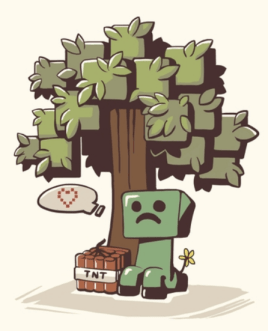
“Love Bomb”
cassandra’s lazy style
How kind of you to notice. My hair is brought to you by bobby pins and a pony tail. My clothes are courtesy of “whatever jeans I can find that fit my epic shortness”, and “the internet for cool geek t-shirts”. Currently I’m wearing a Minecraf t-shirt courtesy of Threadless (see right).
girl smoking sexy
I’m unclear due to the lack of grammar, but if you’re asking me if I think girls smoking is sexy, the answer is no. Eau de ashtray is not for me.
If you’re looking for a picture of a girl smoking something sexy, or the abstract notion of “sexy” itself, I can’t help you … but I doubt it’s hygenic. Just saying.
summer heacock twitter
grammar joke
“The past, the present and the future walked into a bar. It was tense.”
That’s my favourite. What’s yours?
when writing dialogue is there a comma after said when an adverb is used?
No. But may I urge you to reconsider using the adverb?
poem about a me and my dog with adverbs
Here you go:
I quickly walk my dog
He swiftly jumps a log
Hurriedly fetching a stick
I carelessly gave the flick
It’s covered in his spit
He doesn’t give a–
Ok, and that’s my daily allocation of adverbs consumed. I’ll have to finish it another time.
i follow the rules
Me too. Mostly.
words to edit out of a novel heard
That’s a pretty good suggestion to add to my list of words to be wary of, actually. Why say,
“I heard an eagle shriek.”
when you can say:
“The eagle shrieked.”
Good job, you!
play your cards right hashtag
May I suggest #PlayYourCardsRight?
grow out your hair
I tried but it didn’t work. Really, I tried for about ten years! I just had it cut back to shoulder length and it’s much healthier and more managable. Thanks for the advice, though.
fantasy book with isla as a character
Mine comes out in the (northern) fall of 2014. 😉
Achievement unlocked: novel complete
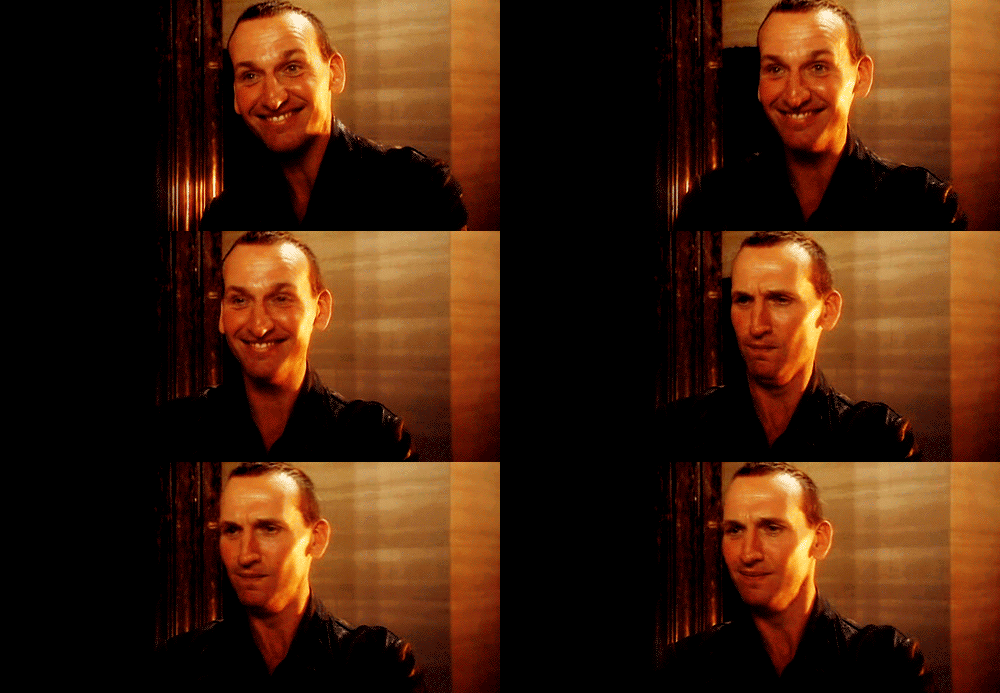
Posted: August 18, 2013 Filed under: On the Lucid Dreaming duology | Tags: drafting, Lucid Dreaming, writing 14 CommentsI finished my work in progress last night. Which makes me feel like this.
This book (working title: Melaina, which is the main character’s name because I suck at naming things) is 73k words and took me seven months to write.
By comparison, Isla’s Inheritance was about 80k words when I first finished it, and it took twice as long. I cut about 10k words from it in the editing process.
The difference in my writing speed is not that I have more time — I’m still a single parent with a little boy, and I can still only write after he’s gone to bed — but because I’ve learned that FIRST DRAFTS SUCK.
Seriously.
When I was writing Isla’s Inheritance, I obsesssed over the beginning. I knew you really had to land the beginning or your potential writer/agent/editor wouldn’t get any further to discover what your writing was like once you’d found your sea legs. And I knew there was something wrong with the beginning of my book, but I couldn’t fix it.
It wasn’t until I’d done several rounds of edits, received a bunch of agent rejections and had feedback from a pitching contest that I finally amputated the first couple thousand words from the start, and deleted an entire chapter in the first 10k words. It took me that long to gain perspective on it and see what the problem was.
And that’s why it’s not worth wasting a lot of time analysing your book in the drafting stage. You don’t have the perspective.
Also, drafting (despite what anyone tells you) is HARD. It requires dedication, finding the time to sit down when you’ve got washing to do or would rather be reading or sleeping. (Sleeping figures pretty highly for me.) I personally find dialogue easy and a lot of fun to write, but transition scenes? I have to make myself write them, and reward myself with cookies.
I’ve learned to cut myself some slack. Sure, what I come up with (especially during transition scenes) may be clunky and not flow properly. But I don’t let myself get too tied up in trying to fix it as I’m drafting. I will do one read over of what I wrote the previous session, and edit as I go. Then I move on. So far the only additional editing the bulk of Melaina has seen is when I’ve had an idea later on that’s involved a bit of foreshadowing; when I’ve edited that in I’ve often tinkered with the section I added it to.
That’s it.
There are hokey cliches in there (“my heart thundered”, “my pulse raced”). There are ridiculous phrases (for some reason I seem very fond of writing things like “my eyes roamed the room”, despite the anatomical impossibility of such an act). But that’s what editing is for.
It’s clunky but it’s done. The bones are there. You can’t edit nothing, and now I have something to polish.
Booyah!
On themes and dinosaur bones
Posted: August 6, 2013 Filed under: On the Isla's Inheritance trilogy, On writing | Tags: Chuck Wendig, Isla's Inheritance, theme, urban fantasy, writing 2 CommentsI’ve written almost three novels now, but I’ve never consciously developed a story’s theme as I was writing it. I always felt a little guilty about that, because everyone tells me that theme is one of those things that binds a story together. Like grammar, or pacing, or dialogue tags.
My current work in progress is at 69k words (dude) and I’m at the start of the final confrontation scene. I’m having a moment of what I could call writer’s block, except I don’t feel blocked—I feel more like an archaeologist who’s revealed a small part of the skeleton and is dusting away at it with a little brush to reveal HOLY CRAP IT’S A FREAKING DINOSAUR!
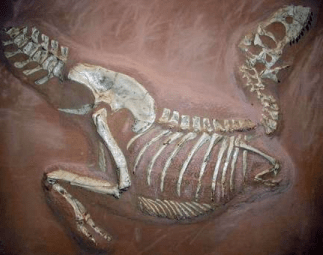
The final scene of my book: an artist’s impression (image from Wiki commons)
The reason I wouldn’t call it writer’s block has a couple of elements:
1. I know which characters are involved in the scene, and what the inter-personal dynamics are.
2. I know who is going to win and what the final outcome will be.
What I don’t have yet is the how. How are they going to win? I’ve been pondering this for a couple of days, and it dawned on me that the other thing I know about the scene is that I want them to win not by dint of awesome superpowers (I write urban fantasy, so there are a few of those kicking around) but by virtue of accessing the part of them that is human.
And then I realised tonight, HOLY CRAPBISCUITS! THAT’S MY BOOK’S THEME!
In fact, it’s been a theme of all three of my books—both of Isla’s stories and this latest one (which is about a different character).
My books are about people struggling with what it is to be human and other, and to become an adult, all at the same time. And that’s kind of cool.
Although maybe not for my characters.
As is often the case, Chuck Wendig says it best. (Check out point three: apparently I don’t have to feel bad about not writing it in consciously after all. Phew!)
Now excuse me—I have to go back to dusting these dinosaur bones.
Like a Virgin blog hop: all about firsts
Posted: July 14, 2013 Filed under: On the Isla's Inheritance trilogy | Tags: blog hop, fanfic, Isla's Inheritance 21 Comments I don’t have a manuscript eligible for entry into the Like a Virgin contest—and, even if I did, that ship has sailed. But I thought I’d participate in their “Getting to Know You” blog hop anyway, because: BLOG HOP. 🙂
1. How do you remember your first kiss?
Vaguely. I was at a party and had been partaking of something bubbly and intoxicating. Sambuca may have been involved. The fellow in question had amazing eyes (although maybe that was the bubbles talking).
If it weren’t for the alcohol making me relax, it would probably have never happened. That being said, don’t do what I did, kids. It could have all gone horribly wrong.
2. What was your first favorite love song?
Speaking of horribly wrong… Back in the 1980s, Kylie Minogue and Jason Donovan (at the height of their Neighbours fame) released a schlocky duet called Especially For You. Yeah, that.
Hey, I was twelve!
3. What’s the first thing you do when you begin writing for the day?
Re-read what I wrote the previous day. I give it a once-over edit and then hunker down. If I could actually write every day I might not but, because I can usually only write once or twice a week, I need to re-read to remind myself of exactly what was going on, to anchor myself in events, emotional context, etc.
4. Who’s the first writer who truly inspired you to become a writer?
Mercedes Lackey is the first one I can recall doing it. I was writing before that, but for a while there I joined a fanclub called Queen’s Own, and discovered fanfic. This was before the internet was widespread; stories got distributed via newsletter.
Old school, my friend.
5. Did the final revision of your first book have the same first chapter it started with?
It’s the same chapter, but it’s significantly shorter than it was. I amputated somewhere between 500 and 1000 words off the front.
6. For your first book, which came first: major characters, plot or setting?
It was a combination of characters and plot. I had the idea for Isla, and for her, uh, “condition”—and I knew roughly what that meant for her.
Interestingly, her name wasn’t Isla to start with. But I had to rename her after an ex started dating a girl with the name that I’d chosen. Awkward.
7. What’s the first word you want to roll off the tip of someone’s tongue when they think of your writing?
“Easy to read” is three words, gorramit! How about “accessible”? I’ve got very little patience for writing that is dense, rambling and self-indulgent, so those are things I try and avoid in my own writing.
Click here to check out the other “getting to know you” blog posts.
I signed with Turquoise Morning Press. Again!
Posted: July 3, 2013 Filed under: On the Isla's Inheritance trilogy | Tags: Isla's Inheritance, Isla's Oath, small presses, Turquoise Morning Press, writing 17 CommentsLoyal readers of my blog (ha!) will know that I always intended Isla’s Inheritance be the first book in a trilogy. There’s a three book arc, a meta-plot … and how cool is the phrase “meta-plot” anyway? I feel like I need to say it in this big, booming voice: “I have this plot, and it is meta.”
I’ve drafted the sequel to Isla’s Inheritance; it is in the beta-reading stages. Until last week I was calling the manuscript Book Two, because I am the queen of naming things and all shall bow before me. But when my amazing editor over at Turquoise Morning Press, Shelby, asked me for a synopsis for Book Two, I had to come up with a proper name. And a synopsis. Aaah! I wrote the latter, and then ran it past my Aussie Owned girls. Sharon suggested Isla’s Oath. For she is the true queen of naming things, and all shall bow before her.
Bow! *shakes fist*
Seriously, I’m pretty stoked with that. Isla’s Oath. It rolls off the tongue. (If you’re wondering, Isla is pronounced eye-la.)
I sent the synopsis to Shelby and then—be still my heart—she asked for a one-page pitch for the third book as well.

Now, book three is currently just a series of thought bubbles in my head. I have been working on a different project these last six months, because at the start of the year I’d had no joy in placing Isla’s Inheritance and, since I write so slowly, I didn’t want to spend almost a year working on the third book in a series that might never go anywhere.
Also, the plot bunnies were biting on this new idea. And you can never tell those plot bunnies anything.
But I wrote the pitch (with a working title that I’ll keep to myself for now). And THEY SAID YES!
That’s right, I now have a three-book deal with Turquoise Morning Press. I just, I can’t even … there are no words. (That’s not a problem for a writer, is it?)
The current plan is to release Isla’s Inheritance around the middle of next year, and then the subsequent two in gaps of up to six months after that. As that firms up I’ll let you guys know.
Thanks to everyone who’s supported me in this, especially my boyfriend, the evil genius, Peter; Chynna-Blue; and all of the Aussie Owned ladies. Also, to all of my friends on Twitter and Facebook, and everyone I’ve ever met. Also to people I haven’t met yet. Glomps to you all!
Four reasons I chose not to self-publish
Posted: May 28, 2013 Filed under: On the Isla's Inheritance trilogy, On writing | Tags: Isla's Inheritance, self-publishing, small presses 15 CommentsA week ago I got asked the inevitable question. I imagine all debut authors get asked it these days: why not self-publish? Why subject yourself to the delays of traditional (even small press) publication? After all, my book isn’t scheduled for release for more than a year. Why wait, when I could have it out tomorrow if I wanted to, and start raking in all that cashey money?
So here are my reasons.
Please understand this is in no way meant to deride those who choose the self-publication path. If I had been as unsuccessful with the small presses as I’d been with the agents (I’m still too embarrassed to tell you guys how many rejections or ‘no response’s I got), I would have self-published Isla’s Inheritance. There are two reasons. I have faith in the story … and I wrote a sequel, which I also have faith in. No way was I going to let my first two books sit in a drawer!
But here are the reasons I didn’t decide to go directly there (do not pass Go, do not collect $200).
#1. To have someone else edit my work
I’m a professional editor. And I’ve edited the bejeezus out of Isla, in particular, because it’s my first book. I think I’m up to version eight, and that’s before Turquoise Morning Press have started on it. I’ll easily crack double digits on the number of versions before it finally hits the shelves. BUT! I’m not an editor of fiction, and I’m so close to these words right now I wouldn’t spot a hilarious typo or a misplaced modifier if it hit me in the face in a 16 point font.
I could have paid someone, or begged a colleague to do a proofread (although they aren’t editors of fiction either). By going with a small press I didn’t have to.
#2. To have someone else do all the other things you need to do yourself if you self-publish
I have a pretty awesome fake cover for my book, thanks to my friends. (Well, I think so.) But even if we assume TMP’s cover won’t be better—which it probably will be because I’m not a graphic designer—there’s still typesetting, publication, and promo work that needs doing.
I’m under no delusions. The bulk of promotion is going to be up to me, whether I’d self-published or traditionally published. Even the big publishing houses don’t do much for their authors these days. But every little bit of help helps; know what I’m saying?
I could have learned to do these things. If I’d had to, I would have. But I’d rather be writing.
#3. Amazon lives in the dark ages if you’re an international author
Amazon pays authors who use its publishing services (including its print-on-demand hard copy service) by direct deposit … unless you live in a country where they don’t have Amazon. So, for example, say I lived in Australia (oh wait, I do!) and wanted to self-publish using Amazon. They will pay me via international cheque (or ‘check’, for the Americans), in US dollars. If I’m not making much in royalties, the bank fees to convert the cheque and cash it could actually absorb the royalties! Sure, Amazon may pay royalties of up to 70% of eBook prices, but I wouldn’t see 70%.
By going with a small press, I have someone who will take the payments from Amazon (in instances where they are the vendor of my book) and turn them into something my bank won’t eat like the Cookie Monster.
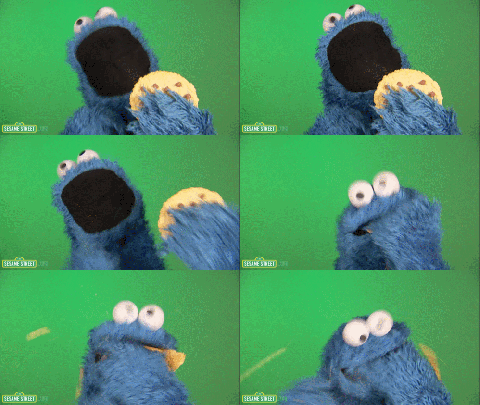
My bank fees: an artist’s impression.
(Cookie Monster belongs to Sesame Street; I’m not trying to steal their copyright. Their cookies, maybe…)
#4. To pass through the gate
Agents and publishers are the traditional gatekeepers of fiction, which is a good thing and a bad thing.
A great thing about self-publishing is that there’s a way for people who’ve written something too challenging for a regular press to get their work out there. Unfortunately there is now also a way for people who are too impatient to bother even proofreading after the first draft to get their work out there too. And it’s difficult for your average shopper to be able to tell the difference (although avoiding dodgy covers and taking advantage of the “Look Inside” feature are great ways to start).
Having a press logo on your front cover or an imprint as part of your blurb tells the reader that someone other than the author has taken the time to make the book presentable. I wanted that—because readers have a lot of demands on their time and for their money, and anything I can do to help people decide they should give my work a go is a thing I personally feel is worth doing. Your mileage may vary, of course.
Anyway, those are my thoughts. I’m interested to hear what you think—have you chosen one path or the other? Why?
My book deal: it’s starting to feel real…
Posted: May 18, 2013 Filed under: On the Isla's Inheritance trilogy | Tags: Isla's Inheritance, small presses 2 CommentsHave you entered my double Amazon giveaway yet, which I’m running to celebrate my good news? The details are here.
It’s been a week since my contract for the release of ISLA’S INHERITANCE was signed, and it’s starting to actually sink in that next year I’ll be able to hold my book in my hands. And fondle its pages. You know, if I wanted to.
If you’re wondering what happens immediately after you sign with a small press—other than the dance of joy, which I covered previously—the answer is that you fill in some forms. There’s financial information and contact details to provide (easy enough), an author bio to write (a little harder) and a form to fill in for your cover design preferences (hard!). The last one includes a box where I need to write a blurb (OMG, even harder!).
I still haven’t finished that last one. Writing the blurb is just as hard as writing that original query letter was. How do you summarise something you’ve agonised over for years in two paragraphs?
I was also sent the Turquoise Morning Press style sheet, and I’ve converted my manuscript to their style. That wasn’t too traumatic because the style isn’t that dissimilar to what I was using, but I did discover I use an alarming! number! of exclamation points!!
And I’ve signed up to their mailing list and received a very warm welcome. It made me go all dizzy with excitement, but I’m trying to play it cool rather than overwhelming them with slobber and glee.

But I do have some exciting news for you, which is actually the point of this post. I have a rough timeframe for when ISLA’S INHERITANCE will be coming out: the northern hemisphere fall of 2014. (Or autumn, as we’d call it here. Except here, of course, it will be spring. Confused yet?)
Giveaway to celebrate my good news
Posted: May 13, 2013 Filed under: On the Isla's Inheritance trilogy | Tags: contests, Isla's Inheritance 22 CommentsA week or so ago I passed 1000 followers on Twitter. (I know, I’m as baffled as anyone!) And to celebrate I’d promised to give away an Amazon voucher here on my blog. But by then I was in the middle of contract negotiations with Turquoise Morning Press for my new book deal for ISLA’S INHERITANCE, and I figured, why not have a double giveaway to celebrate both things at once?
I truly do feel exceptionally fortunate this past week.
So I’m giving away two Amazon gift vouchers. To enter, click HERE!
The draw ends at 12am on 26 May. You can get entries by following me on Twitter, Facebook or here at my blog, or by commenting here or tweeting about the competition. Note that last one, the tweeting, can be done every day for an extra entry.
Numfar, do the Dance of Joy!
EDIT: Thanks to everyone that entered, and congratulations to my two winners, Anabel and Lexi! 😀


 Cassandra Page