Interview: Amira K. Makansi, author
Posted: November 10, 2013 Filed under: On Books | Tags: collaboration, Interview, small presses 1 CommentToday I’m interviewing Amira K. Makansi, who is one third of the team that wrote The Sowing, the first book in the Seeds trilogy, by “K. Makansi”. Welcome to the blog, Amira.
Thank you!
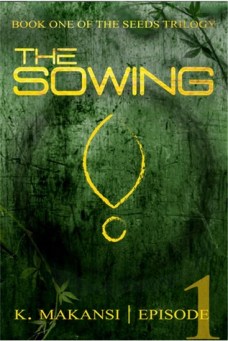 Did I read correctly that you and your two co-authors, Kristina and Elena, are all related – that they are your mother and sister? How did the three of you come to write a book together?
It happened so naturally! About four years ago now, my mother Kristina had a dream that proved to be the genesis of The Sowing. She told my sister Elena about it, and they mapped out a basic story outline, and then forgot about it. Later, still haunted by the memory of that dream, Kristy revived the story and told me about it. Together we decided it had merit and that we’d sit down and try to really write the thing. She wrote a chapter; I wrote a chapter. Then Elena wrote a chapter, then I wrote another. It just kept going that way until eight months later, we had a completed manuscript! We were bound and determined to tell the story of Remy and Vale, and we all believed in it.
Do you think writing with people so close to you has made it easier or harder to co-write a novel? How do you handle creative differences? Do you glare daggers over the breakfast table?
For me personally, I definitely think it made it easier to have co-writers. I don’t know if I could have written a book without their help. When I got stuck, one of my co-writers was always there to help me past writer’s block, or a boring character, or a dumb plot idea. When we argued over different directions, we were always able to come to a consensus, even if it was a hard-fought battle. Some of the best ideas in the story were a result of the three of us just brainstorming casually: one person would say, “Hey, what about this?” and the other two would respond, “Yeah, that sounds awesome! And what if we did this other thing, too?” That’s actually how we came up with the idea of the seed bank database that ended up being a key component of our story.
The Sowing is set in a post-apocalyptic world where genetically modified crops and environmental destruction are major themes. Are these issues you feel strongly about in the world outside your novel?
Yes. All of us feel very strongly about the need for environmental preservation and awareness, especially when it comes to food, water, and land maintenance. We are also passionate about learning more about genetic modification and its potential beneficial or harmful effects on the human body and on the environment. It’s such a developing field, and food companies are jumping into it too quickly for us to anticipate all the possible effects. It has incredible potential, both good and bad, and we are firmly of the opinion that Monsanto et al. are moving too quickly for us to avoid the bad side and fully realize the good side. The Seeds Trilogy is a story about the dark side of GMO – a cautionary tale of the way that GMO crops, combined with mind-altering pharmaceuticals, could be used to control an entire population.
On your blog that you talk about plans for expanding the Seeds trilogy into other media forms, such as apps. Can you tell us a little about that?
We love the idea of serializing our story—that is, releasing it in pieces so that the reader can follow it much as you would a TV show. We’ve definitely toyed with the idea of working with a developer to create an app that would allow you to download the latest instalments of the books, while at the same time interacting with the world we’ve created. I’d love to get to a point where you can click on, say, “The Okarian Sector” in the text, and that would link you to a few paragraphs of history and background on the state we’ve created. Likewise, you could click on “Elijah Tawfiq”, one of the characters in the book, and pull up an illustration, a short bio, and a description of his role in the book. Maps, illustrations, history, technology, and links to information about why this is relevant in today’s world would all feature in as a part of this app. It’s a dream, but I think it’ll be realizable sometime in the future.
As well as writing, you’re also an acquisitions editor at Blank Slate Press. What really grabs you in a pitch? What puts you off?
Good writing is the first thing I look for. I’m a pretty avid reader of science fiction, fantasy, and historical fiction, but I’ll read absolutely anything if the writing is good enough, and at Blank Slate Press, we’re passionate about finding and nurturing talented writers, no matter what the genre.
What puts me off? Arrogance. Don’t tell me you’ve written the next bestseller or that you’re the best writer to come along since Hemingway. (I’ve seen some pitches like that!) I love seeing that a writer really believes in his or her work, but I don’t need to hear about why you think your book is going to be the next Hunger Games.
Thanks, Amira, for dropping by!
About The Sowing:
Remy Alexander was born into the elite meritocracy of the Okarian Sector. From an early age, she and her friends were programmed for intellectual and physical superiority through specialized dietary regimes administered by the Okarian Agricultural Consortium. But when her older sister Tai was murdered in a brutal classroom massacre, her parents began to suspect foul play. They fled the Sector, taking their surviving daughter underground to join the nascent Resistance movement. But now, three years later, Remy’s former schoolgirl crush, Valerian Orleán, is put in charge of hunting and destroying the Resistance. As Remy and her friends race to unravel the mystery behind her sister’s murder, Vale is haunted by the memory of his friendship with Remy and is determined to find out why she disappeared. As the Resistance begins to fight back against the Sector, and Vale and Remy search for the answers to their own questions, the two are set on a collision course that could bring everyone together—or tear everything apart.
You can buy The Sowing on Amazon or Barnes & Noble, or learn more about it at the website.
Amira is a twenty-four year old writer and editor with a passion for food justice and sustainability. When not writing, working with Blank Slate Press, or promoting and marketing The Sowing, she also works in the wine industry, selling, drinking, or making wine. You can find her mushroom hunting in Oregon, writing in cafes while severely over-caffeinated, or eating buffalo wings just about anywhere.
This short film gave me ALL OF THE FEELS!
Posted: November 8, 2013 Filed under: On writing | Tags: muses, writing Leave a commentI while ago I reviewed the children’s picture book The Fantastic Flying Books of Mr Morris Lessmore. My son got it for his fourth birthday, and I loved it — it’s such a sweet metaphor for books as a source of healing after disasters.
Then my boy wanted to see the short film on which the book was based, so we watched it together. In the video version, the other subplot, about Morris rediscovering his muse and getting his own book to “fly” (a metaphor for not sucking) is more prominent and just as beautiful.
It’s fifteen minutes long, but well worth your time.
ALL OF THE FEELS, YOU GUYS!
Cover reveal: ‘Branded’ by Katie Hamstead
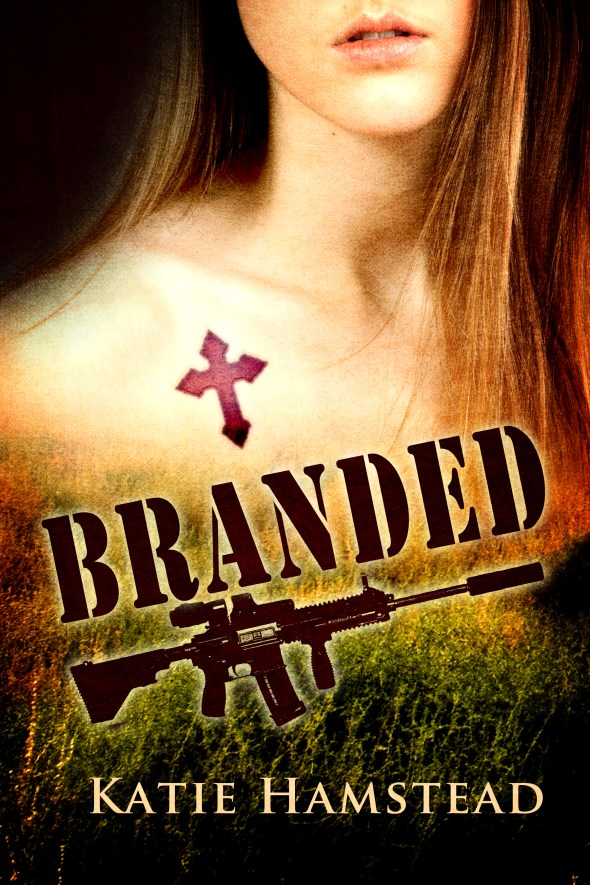
Posted: November 7, 2013 Filed under: On Books | Tags: book covers, small presses 1 CommentYou guys have probably figured out that I’m a bit of a Katie Hamstead fangirl, with all of my posts about her Kiya trilogy. So I don’t need to tell you how excited I am to be part of the cover reveal for her newest (non-Egyptian) release, Branded, which is being released by Soul Mate Publishing in the Australian summer (and American winter, but whatever 😉 ).
Terrorists have invaded Sydney, and Allison King barely escapes her brother’s wedding reception alive. She and her siblings flee, but their parents are killed by firing squad.
Now Ali’s on the run and terrified. While searching for other survivors, she is captured by the General who leads the invasion. He’s smitten by Ali, and when she refuses to submit to his whims, he brands her for death. In a wild act of defiance, she snatches the branding rod and sears the mark onto his face. Marking not only him but also sealing her fate. Ali manages to escape and flees into the bush once more where she finds a group in hiding. Even with the scars left by the General, Ali learns to love and falls in love with the young man who found her—Damien Rogers.
But the General is hunting her. When he discovers their location, and finds her with another man—Damien—his wrath is kindled and his obsession is inflamed. Ali must put herself on the line or the General could kill her family, those who help her, and most significantly, the man she loves.
And here is the cover. I LUFF IT! ❤
Born and raised in Australia, Katie’s early years of day dreaming in the “bush”, and having her father tell her wild bedtime stories, inspired her passion for writing. After graduating High School, she became a foreign exchange student where she met a young man who several years later she married. Now she lives in Arizona with her husband, daughter and their dog.She has a diploma in travel and tourism which helps inspire her writing. She is currently at school studying English and Creative Writing.
Katie loves to out sing her friends and family, play sports and be a good wife and mother. She now works as a Clerk with a lien company in Arizona to help support her family and her schooling. She loves to write, and takes the few spare moments in her day to work on her novels.
You can find Katie on her blog, Goodreads, Facebook or Twitter.

Scary stories, and a giveaway
Posted: October 31, 2013 Filed under: Short stories | Tags: Halloween, short story Leave a comment
As you may be aware, over at Aussie Owned and Read (AOR) we’re hosting a bloghop called A Nightmare in Aus. Despite the name it’s open internationally, and you can win a bucketload of prices, both at AOR and at many of the participating blogs. There are books, Amazon vouchers, books, writing critiques, and more books!
To enter the AOR giveaway, click here. And to see which blogs are in the blog hop, or to enter your own, click here!
Also at AOR you’ll find a short story — well, more of a snapshot in the unlife of a vampire — that I wrote. Go. Read it. Say nice things. :p
And here is another of my stories, which is less vignette-y and more … well, read it and see.
Happy Halloween!
The Self-Fulfilling Prophesy
Word spread faster than dawn light in the little village of Dewdale.
“The ewe had a two-headed lamb! And the old oak by the river was struck by lightening and burned to the ground last night. It’s an omen.”
“Nothing good’ll come of it.”
“What’s it an omen of?”
“Ask old Mer. He’ll know.”
“Yes. Talk to Mer.”
“He’ll know.”
Before the sun was halfway up the sky, most of the village had gathered before the porch of old Mer’s run-down hut. Mothers clutched babes tight to their breasts, and several of the men held scythes and pitchforks in white-fingered grips. Old Mer, perched on his carved chair, scratched his bristled chin with dirty fingernails and squinted at the group. He hunched forward so that his failing sight could see the farthest of his supplicants. He didn’t let his satisfaction show on his face, which was grim.
“It’s a dark omen,” he murmured. The group strained to listen. “An omen,” he paused, “of death.”
The crowd gasped, the sound sibilant. There was a murmur, but old Mer stilled it with a glance.
“What can we do?” one member of the crowd asked, made bold by the fact that he knew this was what the old man wanted to hear.
“The Gods are angry. There must be a sacrifice, or there will be bloody death before the moon is full.”
The mothers held their babies tighter; the men scowled. Old Mer leaned back and stretched his spindly legs out to catch the sun. “Someone appropriate will pass through the village before then.” He knew this to be true; the traders came back from the capital at this time of year, and Dewdale wasn’t far from the trade road.
The crowd was satisfied with this, and dispersed rapidly enough to home and field.
A child was posted near the road to keep watch.
*
The man and woman didn’t suspect a thing. Coming into the village to seek shelter from an oncoming storm, they found the people of Dewdale were eager to accommodate them. The couple were grateful, for the woman would soon bear a child and found it hard to walk far; walking in the rain would be worse.
“Shall it be the man or the woman?”
“The man.”
“No, the woman. She and the child will be a double sacrifice. The Gods will be happy then.”
“The man will cause trouble.”
“You’re right. Maybe it should be both.”
*
Warm broth was brought from the kitchen of the village midwife. The rich meaty taste disguised the herbs she had added. Both husband and wife were sound asleep within moments of finishing their meal, the man’s head hitting the table with a thud, the woman’s slipped more gently to rest on her arms.
They didn’t wake when the villagers carried them to the green and tied them like rag dolls, to the hastily erected pyres.
They did wake, briefly, when the flames began to eat their bodies.
*
“Three of the goats were found, necks broken, near the creek.”
“It’s an omen!”
“What’s it an omen of?”
“Old Mer will know.”
Old Mer did know. Again the child was sent to the road to watch. Traders were plentiful at this time of year.
*
The woman who was welcomed that night was dressed in rags, and the village was grateful that it was a hag rather than a respectable couple who would go to the Gods this night, to prevent the bloodshed. The midwife watched eagerly as the woman sniffed at the broth, took a sip – and frowned as she placed the cup back down on the table.
“Sorry, lass. I can’t drink this.”
“Why not?”
“Because I’m allergic to some of the spices in it.” She squinted at the midwife. “But then, I’ve never met a soul who didn’t have a reaction to carronroot.”
The midwife, fearing for herself under the hard stare, cried out. The villagers who’d been waiting for her to call them came charging through the door. They hardly blinked when they saw the hag still conscious, grabbing her by the arms as she struggled to be free.
The screaming would be irritating, but better than the bloodshed old Mer predicted.
The hag’s cries rang out across the village as she was carried to the pyre. Old Mer frowned. He gestured with the burning torch, signalling another villager forward to help.
“Come forward, angry spirits of the murdered,” the hag shrieked. “Come forward, and have your revenge on the one who condemned you to death!”
The third man covered the hag’s mouth with his hand and glared at her. She tried to bite him and, although she had lost her teeth decades before, the slick feeling of her gums on his palm made him pull back his hand with a grimace.
“They will come,” she hissed, her voice penetrating. “The ghosts are angry. There must be a sacrifice, or there will be bloody death before the night is out.”
The villager frowned. The words were familiar. “What manner of sacrifice?”
“The ghosts demand a life. The life of the man who condemned them. They say, should the sacrifice be made, there will be no more omens of death.”
The men who held the hag from the ground carefully put her on her feet and turned to Mer.
The rest of the crowd also turned.
The old man tried to fend them off with the torch, but there were more of them than he could stop.
As the old man burned, the villagers thought they could se a crowd of ghostly figures standing close to the fire, smiling. Or maybe it was just smoke.
When they turned to the old woman for confirmation, she was gone.
Update: words to be wary of
Posted: October 31, 2013 Filed under: On writing | Tags: editing, words to be wary of, writing Leave a comment I’ve been doing a lot of editing in the last two months. A lot. I’ve done a first read on Lucid Dreaming, and separately incorporated feedback from a CP on it. I’ve CPed something in return. And, the biggest one of all, I got my first-round edits back from Turquoise Morning Press on Isla’s Inheritance.
So I guess it’s no surprise that I’ve added words to my list of things to keep an eye out for. So here’s an updated version. Maybe it will help others out too.
Adverbs (words usually ending in ly) – Do a search for words ending in “ly” and see whether you need them. Sometimes you can delete them outright; other times you can write around them. Rarely will you need them.
Dialogue tags such as gasped, shouted, yelled, cried, squealed, exclaimed, pronounced, whispered… I could go on all day. Check out this post if you want more information.
began to, started to, suddenly – “She began to run” is a long-winded way of saying “she ran”. Sometimes “began to” can be useful—say, when a girl begins crying halfway through an argument with her boyfriend—but not usually. And the house “suddenly” exploding isn’t any more shocking than the house exploding.
had – I’ve seen some people suggest you never need the word “had”. I don’t agree; in a past-tense novel it can be useful to flag that you’re talking about something that happened prior to the current scene. For example, “I had been to the shops”. If you say “I went to the shops” the way you would in a present-tense document (or life) then people will get confused about when the event happened. That being said, it’s not always necessary so use with caution.
of the – This is a typical indicator of a passive sentence, which is often unnecessary and always more wordy than an active sentence. For example: “The hair of the dog” vs “The dog’s hair”. Times you might want to keep a passive sentence include when the actor in the sentence is irrelevant or unknown; for example, “He was killed” versus “Bob killed him”. The latter is spoileriffic!
around, possibly, probably, likely, usually, almost, mostly – Do you need the qualification? If not, it should go.
seemed to – Because both my books are in the first person I overuse this phrase to describe my character’s interpretation of others’ feelings, thoughts or opinions. But nine times out of ten it doesn’t need to be there.
realised, knew, thought, saw, heard, felt (or their present-tense equivalents) – These phrases all flag a place where you’re telling rather than showing. “I felt angry” is the author telling the reader how the character felt, rather than showing it: “My fists clenched as fury raced through my veins”. (It’s terrifying how often I misuse these words!)
of – Sometimes this is unnecessary. Consider ‘The rage beat inside of my heart’. What is the ‘of’ contributing?
that – Sometimes you need “that” in a sentence. There are quite a few of them throughout this blog post. But you can often delete it with no impact on the meaning. Also, make sure you shouldn’t really be using ‘which’.
very, really, pretty (when it’s being used to mean “very”), just, simply, totally, finally, apparently, allegedly, supposedly, usually, awesome, fabulous, fantastic, incredible, wonderful – I keep these in dialogue and thoughts (because that’s how people talk), but at almost no other time. Note a lot of them are also adverbs?
Writing process blog tour
Posted: October 28, 2013 Filed under: On the Isla's Inheritance trilogy | Tags: blog hop, Isla's Inheritance 1 CommentI was tagged by Melissa A. Petreshock to participate in a blog hop about my writing process. It’s a simple one – answer four questions, and then tag three more authors, until it spreads, virus-like, across the WHOLE INTERWEBS!
Mwahahahahahah!
Ahem.
So, here are the questions, and my answers:
What are you working on right now?
I’m currently doing the first-round edits on my debut novel, Isla’s Inheritance, which comes out with Turquoise Morning Press in the second half of 2014. When that’s done, I’ll be doing a quick brush-up edit on the sequel, Isla’s Oath, so it’s ready to send to TMP when they ask for it. And then I’ll have to get to work on the third book in the trilogy. I’ve got an outline ready to go, although there are still a few blank spots that need sorting out. I’m looking forward to it. I haven’t drafted anything new in more than a month and I’m getting twitchy!
How does it differ from other works in its genre?

A fairy. Not like my fairies. (Source)
The series is a young adult urban fantasy—with fae. There are a few ways it differs, but my favourite one is the setting. I’ve always been interested in the mythological creatures of Europe, but at the same time I always wanted to write a novel set in Australia. I struggled with this for a long time, until I came up with the notion that maybe some of these mythological creatures fled to Australia over the years, came here to escape tyrannical leaders.
So I have fae, but they aren’t pretty, girly fairies—they are from a very cruel world. And they are hiding. When Isla, with her curious heritage, starts making some “noise”, that attracts all sorts of unwanted attention, with consequences not only for her but for her family and fae she’s never even met.
Why do you write what you do?
My muse doesn’t give me a choice.
It’s true. I started on the first chapter of a historically inspired Steampunk/fantasy, and my muse came along with her steel cap boots and said NO, you will write another urban fantasy. (That one is Lucid Dreaming, which I’m getting ready to pitch between other projects.)
I think one reason is that I am mostly reading urban fantasy these days. And part of it is that the idea of the sort of heavy-duty worldbuilding you need to do for a fantasy novel intimidates me, and I’m pretty much a giant chicken. (I will try it one day, if my muse permits.)
I’ve considered writing contemporary fiction with no supernatural element whatsoever, but every time I do, I start thinking about a magical element to the story. My imagination just doesn’t seem to work that way.
How does your writing process work?
Because I’m a single, working mother with a young son, I don’t get time to write every day. I wish I could, but I don’t. I usually manage once or twice a week—my goal when I’m drafting is to produce at least 2000 words a week. That means I write slowly. My most recent manuscript, which was Lucid Dreaming, took me seven months to draft. But it also means I have a lot of plotting time. My commute to and from work, moments of peace in the shower, even standing in a queue for a sandwich—those are all times when I can think about the story and what’s going to happen next.
It means I have yet to get “writer’s block”, because when I sit down to write I almost always know exactly what I need to happen in that scene. It’s the one upside of having so little time to actually write, so I’ll take advantage of it while I can!
Look for these authors next week…
Katie Hamstead, whose second book, Kiya: Mother of a King, came out this month with Curiosity Quills Press.
S. M. Johnston, whose debut novel, Sleeper, comes out in December 2013 with Entranced Publishing.
Stacey Nash, whose debut novel, Forget Me Not, comes out in February 2014, also with Entranced Publishing.
Book launch: ‘Kiya: Mother of a King’
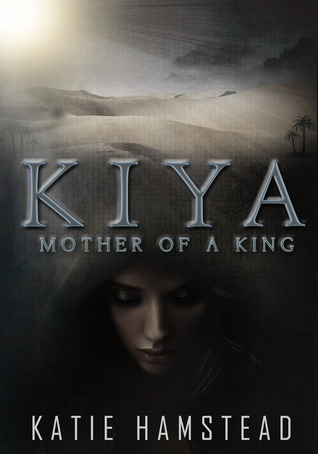
Posted: October 25, 2013 Filed under: On Books | Tags: book launch, small presses 1 CommentToday the second book in the Kiya Trilogy — Kiya: Mother of a King — releases.
You can find book one, Kiya: Hope of a Pharaoh, HERE. Check out my review if you’re wondering if it’s worth it (hint: IT TOTALLY IS!).
To celebrate, Katie has opened up the comments on her blog for you to ask what you want to know about the series. And yes, book 3 is written and contracted so you will be seeing the final installment before you know it.
So, here is the details for Kiya book 2:

With three children in tow, one of which isn’t her own, she is labeled the harlot outcast wife of the pharaoh and is shunned. She isn’t safe among her own people, and flees from being stoned to death. Although her family protects her, she must find a way to survive.While Naomi struggles to keep herself and Tut alive, old adversaries return as Smenkhkare takes advantage of Akhenaten’s ailing health. Naomi must rely on Horemheb’s promise to protect Tut’s birthright, but her feelings for Malachi could cause more problems with Horemheb than she expects.
CQ is also hosting a giveaway for Kiya: Mother of a King on Goodreads! So jump in!
Goodreads Book Giveaway
Writing space
Posted: October 24, 2013 Filed under: On writing | Tags: real-estate, writing 7 Comments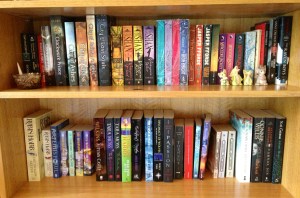
My to-be-read shelf has conducted a hostile takeover of adjacent territory
My writing space is almost set up. I was adamant when I bought my new house that as well as a bedroom for me and one for my son, there’d be a third room I could use as a study.
My old house was big. It was four bedrooms, and had an L-shaped lounge. There, one of the bedrooms was a library, and the computer lived in one part of the lounge. It was good then, because if my toddler was playing in the lounge or watching TV I could watch him while attempting to write (or, more likely, playing on social media). I wrote both of my Isla books there, and most of Lucid Dreaming.
This place is smaller. But I have my study. I had to put one bookshelf in the lounge because they wouldn’t all fit (and a smaller one in the dining room — yes, I have a lot of bookshelves). But the other five, and my computer desk, all tuck away quite nicely into my study.
There’s a view of our courtyard, and beyond that of the local park. And the study is far enough away from the lounge room that as my son grows older I won’t have to listen to him watch TV or play Final Fantasy XXIII on the Playstation 7.
As you can tell, I love it. It’s no isolated cottage at the end of a winding path, surrounded by flower gardens, but I did alright. ❤
What’s your ideal writing environment?
Meanwhile, over at Aussie Owned and Read…
Posted: October 18, 2013 Filed under: On Books, On writing | Tags: aussie-owned, contests, Halloween, reviews 1 Comment
It’s competition time! Share your favourite scary story (or write an original one) on your blog post and then register via the link list to be in the running to win a candy bag full of prizes! For more details go HERE!
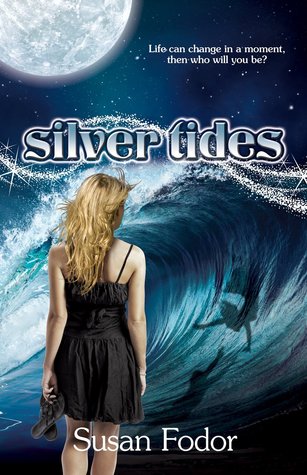
I also reviewed “Silver Tides” by Susan Fodor, which — among other things — has a simply gorgeous cover. See? The review is HERE if want to know more.


 Cassandra Page