The Aussie Women Writers challenge
Posted: January 6, 2015 Filed under: On Books | Tags: aussie-owned, AWW Leave a commentToday over at Aussie Owned and Read, I’m talking about the awesomeness that is the Australian Women Writers Challenge. Get you some!

The Australian Women Writers’ Challenge is part of the growing world-wide movement to raise awareness of excellent writing by women. It helps readers to challenge the subconscious stereotypes that govern our choice of books to read. We are excited to be entering our third year and hope that we can help you do something about this issue.
I’ve always read a more-than-average number of books by female writers — I’m guessing maybe a third of my reads were by women, although I don’t have any data to back that up — but almost all of them were by Americans or Brits. When I realised this, it left me scratching my head. I love reading book set in my own backyard, and I want to see a healthy Australian publishing industry (partly for selfish reasons, I admit), so why didn’t I read more Aussie books?! Eventually I realised that a lot…
View original post 433 more words
Australian Women Writers Challenge wrap up
Posted: December 19, 2014 Filed under: On Books | Tags: aussie-owned, AWW, reviews 3 Comments
The 2014 Australian Women Writers Challenge was set up to help overcome gender bias in the reviewing of books by Australian women. The challenge encourages avid readers and book bloggers, male and female, Australian and non-Australian, to read and review books by Australian women throughout the year. You don’t have to be a writer to sign up. You can choose to read and review, or read only. – AWW
As I blogged earlier in the year, I was originally aiming to read and review six books by Australian Women Writers this year. But by August I’d already done seven…so I upped my goal to ten, and as I write this I’m at eleven. Yippee! (There is one more AWW book close to the top of my to be read pile, but I doubt I’ll get there this year. It can get me started on next year’s challenge!)
There’s actually a twelfth book I read this year, but I’m not posting the review till next January, closer to the book’s release date, so I’m not counting it here.
Here is the full list, with links. These are some very talented ladies, and if my reviews have helped spread the word at all, I’m pretty happy with that. I’m especially happy as, out of these eleven books, six of them are by my co-bloggers at Aussie Owned and Read. ❤
- Sleeper by S. M. Johnston (sadly this book is currently unavailable)
- Forget Me Not and Remember Me by Stacey Nash
- The Problem with Crazy by Lauren McKellar
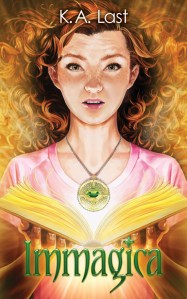
- Immagica by K. A. Last
- Kiya: Mother of a King by Katie Hamstead
- Haze and Shimmer by Paula Weston
- Dancing on Knives by Kate Forsyth
- These Broken Stars by Aime Kaufman and Meagan Spooner
- Cassandra by Kerry Greenwood






Review: ‘Cassandra’ by Kerry Greenwood
Posted: October 22, 2014 Filed under: Reviews | Tags: AWW, glbt, reviews 3 Comments
On Mount Olympus, Aphrodite, the goddess of love, yawned. Even perfection can become tedious. “My lord,” she called to Apollo, “Sun God and brother. Let us play a game with mortals — my power against yours.”
And so Cassandra, the golden-haired princess cursed with the gift of prophecy, and Diomenes, the Achean with the healing hands, become puppets of the gods. Their passions are thwarted, their loves betrayed, their gifts rendered useless for the sake of a wager between the immortals. Doomed, magnificent Troy is the stage, Cassandra and Diomenes the leading players in this compelling story of the city’s fall. Both have found love before, and lost it. Will they find each other in the light of the burning city?
And, if they do, can their love survive the machinations of malicious gods and men?
I originally bought this book — because of the name, obviously — about 15 years ago. Because I’ve been on an Ancient Greek kick lately, I decided to re-read it.
Both Cassandra and Diomenes are healers who’ve had close encounters with gods early on in their lives. Cassandra and her twin, Eleni, are given the gift of prophecy as small children, while Diomenes becomes a healer after his life is saved by Glaucus, healing priest of Asclepius. During his illness, Thanatos, god of death, blesses him.
Maybe these blessings are what made the two the target of Aphrodite and Apollo’s wager. The gist of the bet is that Aphrodite believes she can get the two together, while Apollo is determined to keep them apart. Posiedon and Athena weigh in, wanting to see Troy destroyed in the process (although Posiedon later changes his mind). The whole thing gets very messy, as you can imagine.
We don’t see much of the gods in the book, just in the occasional page of dialogue at the end of a chapter. Mostly, what we see is the poor mortals, struggling with the twists and turns their lives take. Both Cassandra and Diomenes find love elsewhere and lose it, but to me the greater tragedy was the fall of Troy itself. Compared to the culture of the Acheans (Greeks), Troy as Greenwood writes it was a beacon of progress and good behaviour, where women were given equal rights and the gods were offered sacrifices of herbs or precious goods rather than blood. Greenwood takes some liberties with the original myth, so the ending isn’t quite as horrific as it could have been — there is at least a little bit of hope there.
One thing I’d forgotten between readings is just how much sex there is in this book, both hetero and homosexual. For the most part that’s fine with me, although fair warning: if you want a “clean” read this isn’t it. 😉 Also, during some of the war scenes the inevitable rape and treatment of captured women as slaves is quite confronting. A lot of it happens “off camera” but still, Greenwood doesn’t pull any punches.
The other thing that’s quite chilling about this retelling of Troy is Greenwood’s portrayal of Achilles: he is an insane psychopath, far and away the worst of the Greeks. It particularly struck me given I just read The Song of Achilles by Madeline Miller not long ago, which is a much kinder portrayal. It’s interesting to see such different takes on the same character.
Cassandra is the second book in a trilogy, but stands alone; I’ve never read the other two. If you like gritty, “realistic” historical fantasy, this may be the book for you.

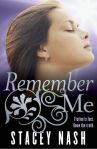
Review: ‘Remember Me’ by Stacey Nash (Collective #2)
Posted: October 11, 2014 Filed under: Reviews | Tags: aussie-owned, AWW, reviews, sci-fi 3 Comments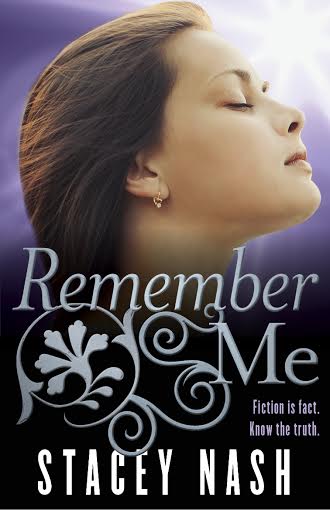
When all is lost, she must remember…
Anamae Gilbert managed to thwart The Collective and rescue her father, even though his mind is now a shell. Determined to stop Councilor Manvyke hurting her family again, she’s training to become an active resistance member and enjoying a growing romance. But things never sail along smoothly – Manvyke wants retribution. And Anamae’s name is high on his list.
After a blow to the head, she awakes in an unfamiliar location. Anamae can’t remember the last few weeks and she can’t believe the fascinating new technology she’s seeing. She’s the new kid at school and weapons training comes with ease, but something feels off. Why does the other new kid’s smile make her heart ache?
And why does she get the feeling these people are deadly?
I have been waiting for this book to come out for the past eight months, since I finished the first book in the series, Forget Me Not. And when it did come out I read it in just over 24 hours — it would’ve been sooner except that I had to work. Pesky work! (Why can’t someone just pay me to read all day?)
Now, I need to start with a disclaimer: Stacey Nash is a very good friend of mine. I adore her and her writing. So in the interests of fairness and an unbiased review, I’ll follow up with this: I did see a handful of typoes throughout Remember Me. THERE, I SAID IT.
Now let me move onto all the things I loved about this book!
In a way I’m regretting giving Forget Me Not a five-star rating, because I feel like Remember Me deserves at least an extra half star. It’s because the first book is the discovery story, whereas in this second book we get to peel back additional layers of this interesting world and see what’s underneath.
You’ll see from reading the blurb that Anamae loses her memory and wakes up somewhere strange. I initially assumed she’d just forgotten all of her resistence friends (with amnesia they would be strange to her), so I was intrigued to discover she’d been taken by the Collective. This meant we got to see their world through a stranger’s eyes — in Forget Me Not they were a faceless, well, collective, but in Remember Me we see that it’s not all black and white after all. There are factions and an interesting, Illuminati-style creation myth.
The other thing we get in the sequel is a dual point of view, split between Anamae and her best friend, Will — who is still with the resistence fighters. He goes a little crazy at the start of Remember Me after Anamae is taken. In the same way that she rushed into danger to try and save her dad in the first book, he doesn’t exactly think through his actions in trying to save Mae. To give him credit, though, he does realise after a while that he’s behaving rashly, and since he loves Mae I forgave him.
My other favourite character in this book is Lilly, daughter of the resistance leader. I love how determined she was not to be over-protected by her father. I think when Mae breaks Will’s heart (which I’m just assuming is going to happen because she’s still all googly-eyed for Jax), Lilly would look after it and nurse it back to health.
Yes, I’m planning the futures of these characters. I told you I love this book!

Review: ‘These Broken Stars’ by Amie Kaufman and Meagan Spooner
Posted: September 22, 2014 Filed under: Reviews | Tags: AWW, reviews, sci-fi 4 Comments
It’s a night like any other on board the Icarus. Then catastrophe strikes: the massive luxury spaceliner is yanked out of hyperspace and plummets into the nearest planet. Lilac LaRoux and Tarver Merendsen survive. And they seem to be alone.
Lilac is the daughter of the richest man in the universe. Tarver comes from nothing, a young war hero who learned long ago that girls like Lilac are more trouble than they’re worth. But with only each other to rely on, Lilac and Tarver must work together, making a tortuous journey across the eerie, deserted terrain to seek help.
Then, against all odds, Lilac and Tarver find a strange blessing in the tragedy that has thrown them into each other’s arms. Without the hope of a future together in their own world, they begin to wonder—would they be better off staying here forever?
Everything changes when they uncover the truth behind the chilling whispers that haunt their every step. Lilac and Tarver may find a way off this planet. But they won’t be the same people who landed on it.
These Broken Stars is my kind of science fiction story; that is, I didn’t need to have a degree in astrophysics or robotic engineering to follow the intricacies of the plot. I’m sure there’s a name for that kind of sci-fi, but I call it “soft”, as opposed to the hard, science-y sort. Another name for it would be “science-magic” — don’t ask how the science works; IT JUST DOES. Wibbly wobbly, timey wimey stuff.
In fact, most of this story actually takes place on the surface of a planet and is relatively low-tech. It’s more of a survival stories. And I love survival stories. LOVE THEM. It’s one of the reasons the first two books in The Hunger Games trilogy were five-star reads for me. I’ve seen some reviewers comment that the slogging-across-the-countryside stuff bored them a little, but not me. There was just enough juicy plot being revealed as the journey took place, and enough obstacles thrown in Lilac and Tarver’s path, to make it interesting.
Lilac and Tarver are great. The alternating point of view in (almost) each chapter gives us some great insights into their personalities, without which I probably would’ve written Lilac off as a spoiled society girl in the first ten seconds. As it is, being able to see how she’s feeling and thinking about things, and those glimpses of technical competence, made her a much more interesting personality. She still grows tremendously during the story, though; the journey gives her a new strength. Tarver is already a more well-rounded person, so his story is less about personal growth and more about the challenges of the situation he’s been thrust into.
The only qualm I had about Lilac and Tarver was their ages. Tarver is a war hero at 18, while Lilac is a 16-year-old princess (figuratively speaking) with a knack for electronics. I get that in this world people are being forced into adulthood younger — Tarver enlisted at 16 — but it still weirded me out every time I was reminded of their age.
On another note, I mentioned that the plot was juicy. There’s a twist in here that made me GOL (that’s “gasp out loud”). Loved it. I also really enjoyed the little interview excerpts with Tarver between each chapter, where he’s being interrogated post-rescue. They do make it clear from the first chapter that he, at least, survives the crash, but the questions they raise in turn piqued my curiosity.
The only thing that makes me sad is that I see the sequel follows another couple. I hope we get to see more of Lilac and Tarver down the track.
Oh, and since Amie Kaufman is from Melbourne (even though Meagan Spooner is an American), this TOTALLY counts for my Australian Women Writers challenge. 😉
Review: ‘Dancing on Knives’ by Kate Forsyth
Posted: September 4, 2014 Filed under: Reviews | Tags: AWW, reviews 1 Comment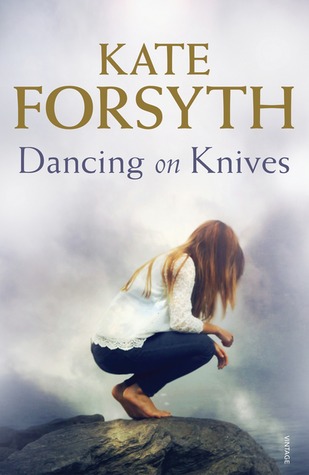
At twenty, Sara is tormented by an inexplicable terror so profound she hasn’t left her home in five years. Like the mermaid in the fairytale her Spanish grandmother once told her, Sara imagines she is Dancing on Knives, unable to speak. She feels suffocated by her family, especially her father – the famous artist Augusto Sanchez – whose volcanic passions dominate their lives.
Then one stormy night, her father does not come home. His body is found dangling from a cliff face. Astonishingly, he is still alive, but the mystery of his fall can only be solved by the revelation of long-held family secrets.
At once a suspenseful murder mystery and a lyrical love story, Dancing on Knives is about how family can constrict and liberate us, how art can be both joyous and destructive, and how strength can be found in the unlikeliest places.
This book was a really hard read, you guys. Really hard.
I went into it not knowing exactly what to expect. I was hoping it might be urban fantasy, given the Little Mermaid reference in the title. Kate Forsyth has written a lot of fantasy and magic realism, and Dancing on Knives could be loosely described as the latter, but it really is closer to straight adult contemporary.
I would’ve picked it up anyway, because I love Kate Forsyth, but I thought you should know, just in case that’s not your thing.
The story, told from Sara’s point of view, covers both a single Easter weekend and her entire lifetime, alternating between the two. I want to say it jumped around between times, but that might make you think it felt disjointed. It didn’t. I never had a problem following with the story, so masterfully did Kate handle the transitions. And her prose is beautiful. Heart-wrenchingly beautiful. (Also, it often made me hungry. Her descriptions of food are to die for.)
So why do I say it was a hard read? Because Sara’s life is awful. This is a girl who has hit rock-bottom, crushed by the huge, passionate and abusive personality of her father, a famous Australian-Italian painter named Augusto Sanchez. I suspect if Augusto hadn’t fallen over that cliff in the first chapter (no spoiler: it’s in the blurb), I might not have been able to finish this, as much as I adored Kate’s writing. Knowing how he ended up gave me the strength to read about how he lived until that point.
Augusto is truly awful — verbally abusive, degrading those he should uplift, womanising, drinking, wasting money while his kids struggle to make ends meet. But at the same time, during some of Sara’s flashbacks, you caught glimpses of why she stuck around, hoping for the good times to come back — in the same way an abused spouse craves the happy moments when they aren’t being thrown against a wall. She blames herself for his behaviour, because she should have known better than to do things that made him angry.
I hated him. A lot. I just wish I’d pushed him off the cliff.
Happily, in the course of figuring out what happened to her father that day, Sara also starts to find the strength to stand up for herself, and to escape her prison for good. The ending is uplifting. But I can still only give the book four stars, because reading it made me melancholy. I was sad about other things in my life, and reading Dancing on Knives to distract myself was maybe the dumbest thing I could have done at the time.
If I’d read this another time, maybe it would’ve been a five-star read. I don’t know. But if you like contemporary novels that look at hard issues with beautiful writing, this may be the one for you.

Achievement unlocked: Australian Women Writers Challenge 2014
Posted: August 11, 2014 Filed under: On Books | Tags: AWW 1 Comment
This year I decided to do the Australian Women Writers Challenge, aiming for the Miles level of achievement: to read six books by Australian women and review at least four. I’ve actually read and reviewed six seven (I just discovered I hadn’t registered one), because YAY!
The next level up is the Franklin: read 10, review six. Obviously I’ve got the reviews covered, and there are at least three more by Australian women on my to-be-read pile, so I might get there. We’ll see.
Here are the seven books I’ve read and reviewed:
- Sleeper by S. M. Johnston (sadly this book is currently unavailable)
- Forget Me Not by Stacey Nash
- The Problem with Crazy by Lauren McKellar
- Immagica by K. A. Last
- Kiya: Mother of a King by Katie Hamstead
- Haze and Shimmer by Paula Weston
If you’re wondering, why do we need an Australian Women Writers Challenge in the first place, I’d suggest checking out the background to the challenge here.




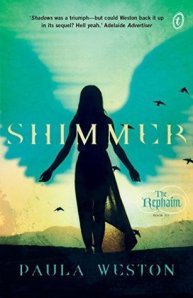
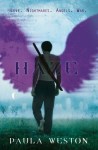
Review: ‘Shimmer’ (The Rephaim #3) by Paula Weston
Posted: August 9, 2014 Filed under: Reviews | Tags: AWW, reviews, urban fantasy 3 Comments
Gaby thought her life couldn’t get more complicated.
She’s almost used to the idea that she’s not the nineteen-year-old backpacker she thought she was. She can just about cope with being one of the Rephaim—a 140-year-old half-angel—whose memories have been stolen. She’s even coming to grips with the fact that Jude, the brother she’s mourned for a year, didn’t die at all.
But now Rafa—sexy, infuriating Rafa—is being held, and hurt, by Gatekeeper demons. And Gaby has to get the bitterly divided Rephaim to work together, or Rafa has no chance at all.
It’s a race against time—and history. And it may already be too late.
(Two reviews in a row from me? I know, right?! It’s because I’m between writing one novel and the next, and it’s been so busy and stressful at work I’ve been comfort reading at night time. Anyway, enough about that. On with the review!)
Shimmer is book three of four in The Rephaim series, and I usually don’t see much point in reviewing books this far into a series. You’re presumably either reading it because you loved the first two books—and really don’t want to read spoilers—or you haven’t encountered it yet and would probably be better served by a review of the first book.
But the blurb itself contains all the spoilers I’m going to reveal: that Gaby is a Rephaim, Jude is alive and Rafa has been taken by demons. I pinkie swear.
I commented in my review of the previous book, Haze, that the first two books are set over the space of about two weeks, and how the fast pace is one of the breathtaking things about the series. Shimmer continues and accelerates that action-packed trend; the events in it are set over a total of about 24 hours. But that doesn’t mean the story is hollow. In fact, it’s packed with tension and combat, and starts to reveal more of the hidden truth about the Rephaim and others around them. The next and final book, Burn, comes out in 2015 and—if the cliff-hangery, super-exciting end of Haze is anything to go by—promises to be even more jammed full of awesome.
Also, I love these characters like you would not believe. With the exception of the demons themselves, there are very few people to hate in this—even the enigmatic politician of a fallen angel, Nathaniel, is a character I can sympathise with, despite the fact he’s frustrating as anything and blinded by his own goals. One of the interesting thing about the story is how some of the characters I really didn’t like in the first book have grown, and grown on me: Mya, Malachi, Taya and even Daniel are all good examples.
My favourite character, though, is Jude. If I could choose anyone in the world to be my long-lost twin brother, it’d be him. Although since the post of twin is taken by Gaby, I can think of other ways I could use Jude in my life. Phwoar! Just sayin’.
The romantic tension between Gaby and Rafa is, naturally, missing for a large slice of the book, since he’s, well, not in it. But we really get to see how much Gaby cares about him; all her ambivalence over the secrets he’s keeping about their past evaporates, and in turn his ambivalence about her possible reaction when she finds out those secrets falls away. I guess being tortured—or seeing your loved one tortured—by demons gives you a sense of perspective.
This is a great book and a great series. The only bad thing is that now I have to wait, like, a year to see how the story concludes. My plan is to stare at Paula Weston until she’s finished.
That’s not creepy, is it?
Double cover reveal: ‘Forget Me Not’ and ‘Remember Me’ by Stacey Nash
Posted: July 1, 2014 Filed under: On Books | Tags: aussie-owned, AWW, sci-fi, urban fantasy, young adult 4 CommentsThose of you who have followed me for more than, like, five minutes will know that I’m a big fan of Stacey Nash. She’s one of the co-founders of Aussie Owned and Read — it was her that invited me to take part — and she beta read Lucid Dreaming for me. She received her contract offer for Forget Me Not at the same time as I received one for Isla’s Inheritance. I was lucky enough to sign with Turquoise Morning Press rather than the doomed Press Which Shall Not Be Named.
Stacey wasn’t so lucky. Not long after FMN released, her press folded.
But then this absolutely crazy thing happened. At around this time, Stacey was contacted by someone at Harper Collins. She’d subbed FMN there over a year earlier, and they wanted it for their new digital imprint. Eeeeeeeeeeeeeee! It’s pretty much the perfect fairy tale ending, and it couldn’t have happened to a nicer human. That’s why I’m over the moon to be part of the cover reveal for the new (and much prettier!) Forget Me Not, as well as for Remember Me.
Both of which are available for preorder (something I’ve totally done already). Go go go!
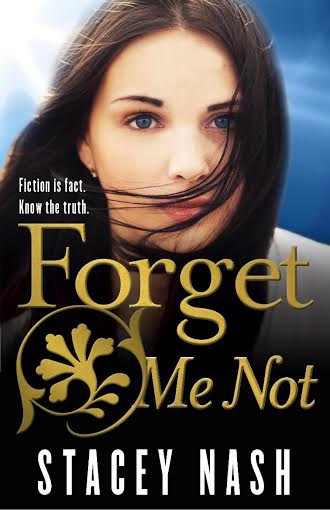
Amazon | iBooks | Google Play | Goodreads
Anamae is drawn into a world which shatters everything she knew to be true.
Since her mother vanished nine years ago, Anamae and her father have shared a quiet life. But when Anamae discovers a brooch identical to her mother’s favorite pendant, she unknowingly invites a slew of trouble into their world. They’re not just jewellery, they’re part of a highly developed technology capable of cloaking the human form. Triggering the jewellery’s power attracts the attention of a secret society determined to confiscate the device – and silence everyone who is aware of its existence. Anamae knows too much, and now she’s Enemy Number One.
She’s forced to leave her father behind when she’s taken in by a group determined to keep her safe. Here Anamae searches for answers about this hidden world. With her father kidnapped and her own life on the line, Anamae must decide if saving her dad is worth risking her new friends’ lives. No matter what she does, somebody is going to get hurt.
Amazon | iBooks | Google Play | Goodreads
When all is lost, she must remember…
Anamae Gilbert managed to thwart The Collective and rescue her father, even though his mind is now a shell. Determined to stop Councilor Manvyke hurting her family again, she’s training to become an active resistance member and enjoying a growing romance. But things never sail along smoothly – Manvyke wants retribution. And Anamae’s name is high on his list.
After a blow to the head, she awakes in an unfamiliar location. Anamae can’t remember the last few weeks and she can’t believe the fascinating new technology she’s seeing. She’s the new kid at school and weapons training comes with ease, but something feels off. Why does the other new kid’s smile make her heart ache?
And why does she get the feeling these people are deadly?
About Stacey
 Stacey Nash writes adventure filled stories for Young Adults in the Science Fiction and Fantasy genres. When her head isn’t stuck in a fictional world, she calls the Hunter Valley of New South Wales home. It is an area nestled between mountains and vineyards, full of history and culture that all comes together to create an abundance of writing inspiration. Stacey loves nothing more than writing when inspiration strikes.
Review: ‘Kiya: Mother of a King’ by Katie Hamstead
Posted: June 26, 2014 Filed under: Reviews | Tags: aussie-owned, AWW, reviews 1 Comment
Nefertiti has forced Naomi to flee Amarna with Malachi and the three children. But even under the protection of Naomi’s family in Thebes, Nefertiti still hunts her and Tut. Nefertiti sends assassins to kill them, and while Naomi fights to protect the children, Malachi fights to keep her safe.
With three children in tow, one of which isn’t her own, she is labeled the harlot outcast wife of the pharaoh and is shunned. She isn’t safe among her own people, and flees from being stoned to death. Although her family protects her, she must find a way to survive.
While Naomi struggles to keep herself and Tut alive, old adversaries return as Smenkhkare takes advantage of Akhenaten’s ailing health. Naomi must rely on Horemheb’s promise to protect Tut’s birthright, but her feelings for Malachi could cause more problems with Horemheb than she expects.
By Aussie Author Katie Hamstead, this is the second book in the Kiya series, which follows the life of Naomi—known to the Egyptians as Kiya—after she flees the palace with her children following Queen Nefertiti’s latest assassination attempt.
I’ve quite enjoyed this series so far, although I found this book a little slower in places than the first one—Kiya: Hope of the Pharaoh. I suspect that’s an inevitable result of the relative lack of palace intrigue. Book two spends a lot more time focusing on Naomi’s new life (or return to her old one) as a Hebrew woman. Some of that, such as detailing various pregnancies and births, isn’t as gripping, but it’s also nice to see Naomi get some time living a life that makes her happy.
Then the fabulously sexy Horemheb comes back into her life, Tut gets dragged off to be a boy king, and Naomi’s life gets complicated again. Hooray!
Normally—almost 100% of the time—when I’m reading I find I’m attracted to the good guy in any love triangle. In this series, the good guy is Malachi, and Horemheb is the bad boy. But for some reason, in this I thought Horemheb was way more interesting than Malachi. The latter is strong and caring, but Horemheb is both of those things (to Kiya at least; to others he is cruel) and also very intelligent. I like a hot, smart man.
Or maybe I just go for the underdog. Usually the bad boy gets the girl, after all. 😉
I confess that one thing I really struggled with in Kiya: Mother of a King was a side-effect of the fact it’s historical fiction. Because 3000 years ago, women didn’t have rights. All the Hebrew men buying wives they’ve in some cases never even seen from those girls’ fathers made me cranky. (Of course, the Egyptian alternative of just taking them and raping them was worse.) In each instance in this book, the Hebrew men in question were all good husbands to their wives, but ugh!
At one point Naomi takes Malachi to task when he refers to her as his property, but for the most part even she—the strong-headed one, who used to be queen—is perfectly happy to see herself and other women bought and sold. I realise she simply doesn’t know any better, and maybe I’d be more used to the casual sexism if I read more historical fiction, but I wanted to shake some of the blokes till their teeth rattled.
Still, this is an interesting continuation of Naomi’s story. And if she doesn’t want Horemheb, can I have him?


 Cassandra Page