Review: ‘An Abundance of Katherines’ by John Green
Posted: December 1, 2014 Filed under: Reviews | Tags: reviews, young adult 4 Comments
Katherine V thought boys were gross
Katherine X just wanted to be friends
Katherine XVIII dumped him in an e-mail
K-19 broke his heartWhen it comes to relationships, Colin Singleton’s type happens to be girls named Katherine. And when it comes to girls named Katherine, Colin is always getting dumped. Nineteen times, to be exact.
On a road trip miles from home, this anagram-happy, washed-up child prodigy has ten thousand dollars in his pocket, a bloodthirsty feral hog on his trail, and an overweight, Judge Judy-loving best friend riding shotgun — but no Katherines. Colin is on a mission to prove The Theorem of Underlying Katherine Predictability, which he hopes will predict the future of any relationship, avenge Dumpees everywhere, and finally win him the girl. Love, friendship, and a dead Austro-Hungarian archduke add up to surprising and heart-changing conclusions in this ingeniously layered comic novel about reinventing oneself.
Like The Jewel, An Abundance of Katherines was another impulse purchase in a bookstore, and I decided to read it this month because I’m doing a Goodreads challenge where we have to read a mixed bag of genres. (All my choices have been young adult, but this one is contemporary, so that totally counts as different. Right? Right?)
Having only read two John Green books now, I may not be qualified to say Katherines is “typical John Green”. But it kind of is. The three main characters are flawed but very, very bright. In this case, we have Colin, his best friend Hassan, and a girl they meet on their road trip, Lindsey.
Colin is obsessed with making something of his life and, as the book begins when Katherine XIX dumps him, is struggling with heartbreak. Hassan is funny but a lazy slob — he’s also somewhat contemptuous of Colin at times, but it’s clear that Colin largely appreciates his honesty, so that softens the attitude a little. Lindsey is a bit of a chameleon. The thing I liked about Katherines, though, is that all three characters grow over the course of the story, which is just as well, because otherwise Colin’s whining about girls would have worn me down to the point where I wanted to punch him in the nose. 😉
The main thing I was wondering when I went into Katherines was how a very nerdy boy like Colin managed to get no less than 19 girls to date him. It makes more sense when you realise Colin defines even a five-minute relationship in the playground as “dating”! And then overthinks it. No wonder he’s so miserable!
Green makes abundant (seewhatIdidthere) use of footnotes throughout the book, to expand on facts Colin was prevented from relating, outline the basics of his theorum, or to provide translations and explanations, mostly for the Muslim terminology Hassan uses. I sometimes found the footnotes a little irritating, but that was largely in cases where I already knew the thing the footnotes were telling me. If I was reading this at 17, though, I doubt that would’ve been a problem.
The dialogue is clever, and the humour is a bit boyish for me at times but at other times is very funny. There aren’t any real surprises in the plot, and I can see echoes of The Fault in Our Stars in some of the dialogue (mostly the “Okay?” “Okay.” thing) and the road trip device. But since Katherines came first, it’s more like foreshadowing, I guess!
This was a fun read, despite the flashback-inducing maths!

Review: ‘The Iron King’ by Julie Kawaga
Posted: November 20, 2014 Filed under: Reviews | Tags: reviews, urban fantasy, young adult 2 Comments
Meghan Chase has a secret destiny; one she could never have imagined.
Something has always felt slightly off in Meghan’s life, ever since her father disappeared before her eyes when she was six. She has never quite fit in at school or at home.
When a dark stranger begins watching her from afar, and her prankster best friend becomes strangely protective of her, Meghan senses that everything she’s known is about to change.
But she could never have guessed the truth — that she is the daughter of a mythical faery king and is a pawn in a deadly war. Now Meghan will learn just how far she’ll go to save someone she cares about, to stop a mysterious evil, no faery creature dare face; and to find love with a young prince who might rather see her dead than let her touch his icy heart.
Given my book is written in the same category as Kawaga’s (young adult -> urban fantasy -> fae), part of me is a little nervous about reviewing this. I don’t want my minor gripes with the book to be viewed as sour grapes! I promise they’re not. And overall I did like the book. I just found the first third of The Iron King to be a bit slow, and a little predictable. But once Meghan got to Oberon’s Summer Court and the Winter Court arrived for their biannual party, things got interesting.
One thing I loved about this book was that Kawaga added an extra element to the original mythology and the Midsummer Night’s Dream characters: the concept of a new breed of fae that has arisen from mortal dreams of technology. Instead of being mortally wounded by it, they are often made of it or control it, making them deadly to the traditional fae. The descriptions of some of these new fae, like Virus and Ironhorse, were delightful. (In fact, Kawaga’s writing in general was very good.)
Meghan is a bit of a traditional young adult heroine: she winds up being gorgeous, and all the boys like her. It’s unclear whether the best friend is going to turn into a love interest or if his determination to protect Meghan arises from their friendship and the fact Oberon will disembowel him if he fails. But the pretty Winter Court prince, Ash, is definitely struck by a case of love at first sight (as is Meghan for him), and the nature of the Iron King’s interest is also a little predictable.
That being said, I didn’t mind Meghan too much. She reminded me of Sarah from the Labyrinth, rushing off to rescue her kid brother from the evil king. Some of the evil king’s minions were clearly inspired by the packrats in the Labyrinth’s junkyard, although I viewed this as more of a homage than outright imitation. And honestly, Labyrinth deserves more of that!
Normally I hate insta-love but the relationship between Ash and Meghan (such as it was) didn’t bother me as much as they usually do, possibly because this was urban fantasy rather than paranormal romance; it wasn’t the main focus of the plot by any means. Maybe it was just adolescent hormones, at least on Meghan’s part. (As for Ash, who knows what his excuse is? He might be a thousand years old!)
Once it got going, this was a fun read. I own the rest of the series — I have poor impulse control and bought the boxed set without having read it — and I’m happy to keep reading. The way The Iron King ended definitely made me want to know what happens next.

Review: ‘Storm Front’ by Jim Butcher
Posted: November 2, 2014 Filed under: Reviews | Tags: reviews, urban fantasy 4 Comments
Lost items found. Paranormal Investigations.
Consulting. Advice. Reasonable Rates.
No Love Potions, Endless Purses, or Other Entertainment.Harry Dresden is the best at what he does. Well, technically, he’s the only at what he does. So when the Chicago P.D. has a case that transcends mortal creativity or capability, they come to him for answers. For the “everyday” world is actually full of strange and magical things — and most of them don’t play well with humans. That’s where Harry comes in. Takes a wizard to catch a — well, whatever.
There’s just one problem. Business, to put it mildly, stinks. So when the police bring him in to consult on a grisly double murder committed with black magic, Harry’s seeing dollar signs. But where there’s black magic, there’s a black mage behind it. And now that mage knows Harry’s name. And that’s when things start to get… interesting.
Magic. It can get a guy killed.
Harry Dresden is an interesting character. Unlike Atticus in Kevin Hearne’s Hounded, Harry has flaws that make him complex and interesting, even if he’s frustrating at times. As an example, Harry has a terminal case of chivalry (other characters accuse him of being chauvanistic and I think they may be right). This lets the females around him play him, or gets him in trouble even when said females aren’t actually asking him to defend them at all. Sometimes I found that annoying — for example, when he refused to tell the female detective what he knew about the murders because it would “put her in danger”, I wanted to bang his head against a concrete wall. But to Harry’s credit, he does seem to realise by the end of the book what an epic mistake this was.
The thing I did like about Harry was that he wasn’t a musclebound action hero-type. In fact, in Storm Front he’s at the losing end of several fights that make it clear that he’s the tall, weedy variety of nerd that spends a lot of time studying. Which makes sense, if you’re a wizard. He’s very self-aware, to the point where he’s self-depreciating at times. But there’s no false modesty or rampant ego here; he knows what he’s capable of and is confident in his skills, but also admits his flaws.
I have a vague feeling I’ve read Storm Front before, but it was long enough ago (and I’m getting old and forgetful enough) that I couldn’t remember most of the plot. Instead, I had a feeling for two thirds of the book that I knew where the whodunnit plotline was going, and alternated between suspecting I’d read it before and wondering whether the plot was just very predictable. I’m coming down on the “I’ve read it before” side of the fence, though. Regardless, the story carries you along to the point where I resented when real life intruded. So there’s that.
The side characters are — with the exception of the Big Bad at the end — all painted in shades of grey. Some of them lean toward quite dark grey, like the mob boss and the brothel-owning vampire — but there is still something sympathetic about them.
Storm Front — and I assume the rest of the series — can be summed up as a magical noir detective novel. Four stars.
Review: ‘Cassandra’ by Kerry Greenwood
Posted: October 22, 2014 Filed under: Reviews | Tags: AWW, glbt, reviews 3 Comments
On Mount Olympus, Aphrodite, the goddess of love, yawned. Even perfection can become tedious. “My lord,” she called to Apollo, “Sun God and brother. Let us play a game with mortals — my power against yours.”
And so Cassandra, the golden-haired princess cursed with the gift of prophecy, and Diomenes, the Achean with the healing hands, become puppets of the gods. Their passions are thwarted, their loves betrayed, their gifts rendered useless for the sake of a wager between the immortals. Doomed, magnificent Troy is the stage, Cassandra and Diomenes the leading players in this compelling story of the city’s fall. Both have found love before, and lost it. Will they find each other in the light of the burning city?
And, if they do, can their love survive the machinations of malicious gods and men?
I originally bought this book — because of the name, obviously — about 15 years ago. Because I’ve been on an Ancient Greek kick lately, I decided to re-read it.
Both Cassandra and Diomenes are healers who’ve had close encounters with gods early on in their lives. Cassandra and her twin, Eleni, are given the gift of prophecy as small children, while Diomenes becomes a healer after his life is saved by Glaucus, healing priest of Asclepius. During his illness, Thanatos, god of death, blesses him.
Maybe these blessings are what made the two the target of Aphrodite and Apollo’s wager. The gist of the bet is that Aphrodite believes she can get the two together, while Apollo is determined to keep them apart. Posiedon and Athena weigh in, wanting to see Troy destroyed in the process (although Posiedon later changes his mind). The whole thing gets very messy, as you can imagine.
We don’t see much of the gods in the book, just in the occasional page of dialogue at the end of a chapter. Mostly, what we see is the poor mortals, struggling with the twists and turns their lives take. Both Cassandra and Diomenes find love elsewhere and lose it, but to me the greater tragedy was the fall of Troy itself. Compared to the culture of the Acheans (Greeks), Troy as Greenwood writes it was a beacon of progress and good behaviour, where women were given equal rights and the gods were offered sacrifices of herbs or precious goods rather than blood. Greenwood takes some liberties with the original myth, so the ending isn’t quite as horrific as it could have been — there is at least a little bit of hope there.
One thing I’d forgotten between readings is just how much sex there is in this book, both hetero and homosexual. For the most part that’s fine with me, although fair warning: if you want a “clean” read this isn’t it. 😉 Also, during some of the war scenes the inevitable rape and treatment of captured women as slaves is quite confronting. A lot of it happens “off camera” but still, Greenwood doesn’t pull any punches.
The other thing that’s quite chilling about this retelling of Troy is Greenwood’s portrayal of Achilles: he is an insane psychopath, far and away the worst of the Greeks. It particularly struck me given I just read The Song of Achilles by Madeline Miller not long ago, which is a much kinder portrayal. It’s interesting to see such different takes on the same character.
Cassandra is the second book in a trilogy, but stands alone; I’ve never read the other two. If you like gritty, “realistic” historical fantasy, this may be the book for you.
Review: ‘Hounded’ by Kevin Hearne
Posted: October 16, 2014 Filed under: Reviews | Tags: kevin hearne, reviews, urban fantasy 2 Comments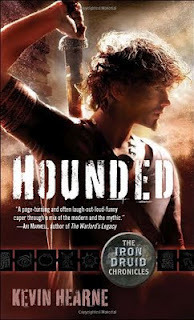
Atticus O’Sullivan, last of the Druids, lives peacefully in Arizona, running an occult bookshop and shape-shifting in his spare time to hunt with his Irish wolfhound. His neighbors and customers think that this handsome, tattooed Irish dude is about twenty-one years old — when in actuality, he’s twenty-one “centuries” old. Not to mention: He draws his power from the earth, possesses a sharp wit, and wields an even sharper magical sword known as Fragarach, the Answerer.
Unfortunately, a very angry Celtic god wants that sword, and he’s hounded Atticus for centuries. Now the determined deity has tracked him down, and Atticus will need all his power — plus the help of a seductive goddess of death, his vampire and werewolf team of attorneys, a bartender possessed by a Hindu witch, and some good old-fashioned luck of the Irish — to kick some Celtic arse and deliver himself from evil.
I finished this last month, but hadn’t quite gotten around to writing a review (I guess I’ve had other things going on lately — dunno!). I’d heard Kevin Hearne’s name on Twitter, and since I love urban fantasy I thought I’d use my monthly Audible credit to download the audiobook of Hounded.
I found it a little hard to get into at first. Some of that was the voice actor; the guy is good but all the previous audiobooks I’ve listened to had smexy British voice actors, so it took me a little while to adjust. Maybe because of that, I was really aware of just how much exposition there is early on in this story. The book is told from Atticus’s point of view, and he likes to interrupt a conversation to provide us a little backstory, or an explanation of druidic magic. It felt a little heavy on the tell rather than the show.
The characters are fun, although Atticus is a little bit of a male Mary Sue (a Mary Stu?) — he’s pretty much perfect. Handsome, powerful, unique, and all the hot goddesses want to sleep with him. He’s also meant to be 2100 years old but, even in his thoughts, sounds like his claimed age of 21.
However, for me he was redeemed by his sense of humour and loyalty to his best friend, Oberon. Oberon is a wolfhound who communicates with Atticus via telepathy. He is very literal, and absolutely hilarious. Far and away my favourite character … although the Morrigan was also pretty awesome. I liked Granuaile too. Actually, I liked most of the characters, despite Atticus’s immaturity at times. (The wedgie scene made me cringe. Dude, you were born BCE — act your age!)
The story follows events in Atticus’s life as Angus Og, the Celtic god of love and Atticus’s lifelong enemy, finds out where he is and starts to send minions after him. It doesn’t help that people who are ostensibly on Atticus’s side tend to complicate his life too. The story was fast-paced and kept me interested, and like I said, it was very funny. Just don’t expect anything deep from this book; it definitely fits into the “read for entertainment” category.
Review: ‘Remember Me’ by Stacey Nash (Collective #2)
Posted: October 11, 2014 Filed under: Reviews | Tags: aussie-owned, AWW, reviews, sci-fi 3 Comments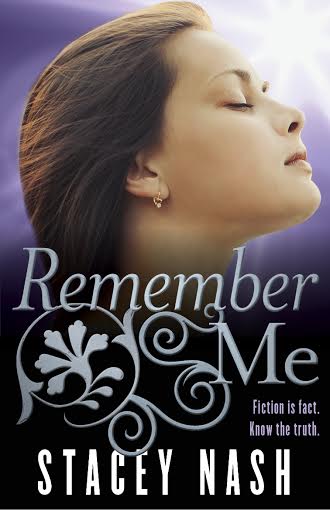
When all is lost, she must remember…
Anamae Gilbert managed to thwart The Collective and rescue her father, even though his mind is now a shell. Determined to stop Councilor Manvyke hurting her family again, she’s training to become an active resistance member and enjoying a growing romance. But things never sail along smoothly – Manvyke wants retribution. And Anamae’s name is high on his list.
After a blow to the head, she awakes in an unfamiliar location. Anamae can’t remember the last few weeks and she can’t believe the fascinating new technology she’s seeing. She’s the new kid at school and weapons training comes with ease, but something feels off. Why does the other new kid’s smile make her heart ache?
And why does she get the feeling these people are deadly?
I have been waiting for this book to come out for the past eight months, since I finished the first book in the series, Forget Me Not. And when it did come out I read it in just over 24 hours — it would’ve been sooner except that I had to work. Pesky work! (Why can’t someone just pay me to read all day?)
Now, I need to start with a disclaimer: Stacey Nash is a very good friend of mine. I adore her and her writing. So in the interests of fairness and an unbiased review, I’ll follow up with this: I did see a handful of typoes throughout Remember Me. THERE, I SAID IT.
Now let me move onto all the things I loved about this book!
In a way I’m regretting giving Forget Me Not a five-star rating, because I feel like Remember Me deserves at least an extra half star. It’s because the first book is the discovery story, whereas in this second book we get to peel back additional layers of this interesting world and see what’s underneath.
You’ll see from reading the blurb that Anamae loses her memory and wakes up somewhere strange. I initially assumed she’d just forgotten all of her resistence friends (with amnesia they would be strange to her), so I was intrigued to discover she’d been taken by the Collective. This meant we got to see their world through a stranger’s eyes — in Forget Me Not they were a faceless, well, collective, but in Remember Me we see that it’s not all black and white after all. There are factions and an interesting, Illuminati-style creation myth.
The other thing we get in the sequel is a dual point of view, split between Anamae and her best friend, Will — who is still with the resistence fighters. He goes a little crazy at the start of Remember Me after Anamae is taken. In the same way that she rushed into danger to try and save her dad in the first book, he doesn’t exactly think through his actions in trying to save Mae. To give him credit, though, he does realise after a while that he’s behaving rashly, and since he loves Mae I forgave him.
My other favourite character in this book is Lilly, daughter of the resistance leader. I love how determined she was not to be over-protected by her father. I think when Mae breaks Will’s heart (which I’m just assuming is going to happen because she’s still all googly-eyed for Jax), Lilly would look after it and nurse it back to health.
Yes, I’m planning the futures of these characters. I told you I love this book!

Review: ‘These Broken Stars’ by Amie Kaufman and Meagan Spooner
Posted: September 22, 2014 Filed under: Reviews | Tags: AWW, reviews, sci-fi 4 Comments
It’s a night like any other on board the Icarus. Then catastrophe strikes: the massive luxury spaceliner is yanked out of hyperspace and plummets into the nearest planet. Lilac LaRoux and Tarver Merendsen survive. And they seem to be alone.
Lilac is the daughter of the richest man in the universe. Tarver comes from nothing, a young war hero who learned long ago that girls like Lilac are more trouble than they’re worth. But with only each other to rely on, Lilac and Tarver must work together, making a tortuous journey across the eerie, deserted terrain to seek help.
Then, against all odds, Lilac and Tarver find a strange blessing in the tragedy that has thrown them into each other’s arms. Without the hope of a future together in their own world, they begin to wonder—would they be better off staying here forever?
Everything changes when they uncover the truth behind the chilling whispers that haunt their every step. Lilac and Tarver may find a way off this planet. But they won’t be the same people who landed on it.
These Broken Stars is my kind of science fiction story; that is, I didn’t need to have a degree in astrophysics or robotic engineering to follow the intricacies of the plot. I’m sure there’s a name for that kind of sci-fi, but I call it “soft”, as opposed to the hard, science-y sort. Another name for it would be “science-magic” — don’t ask how the science works; IT JUST DOES. Wibbly wobbly, timey wimey stuff.
In fact, most of this story actually takes place on the surface of a planet and is relatively low-tech. It’s more of a survival stories. And I love survival stories. LOVE THEM. It’s one of the reasons the first two books in The Hunger Games trilogy were five-star reads for me. I’ve seen some reviewers comment that the slogging-across-the-countryside stuff bored them a little, but not me. There was just enough juicy plot being revealed as the journey took place, and enough obstacles thrown in Lilac and Tarver’s path, to make it interesting.
Lilac and Tarver are great. The alternating point of view in (almost) each chapter gives us some great insights into their personalities, without which I probably would’ve written Lilac off as a spoiled society girl in the first ten seconds. As it is, being able to see how she’s feeling and thinking about things, and those glimpses of technical competence, made her a much more interesting personality. She still grows tremendously during the story, though; the journey gives her a new strength. Tarver is already a more well-rounded person, so his story is less about personal growth and more about the challenges of the situation he’s been thrust into.
The only qualm I had about Lilac and Tarver was their ages. Tarver is a war hero at 18, while Lilac is a 16-year-old princess (figuratively speaking) with a knack for electronics. I get that in this world people are being forced into adulthood younger — Tarver enlisted at 16 — but it still weirded me out every time I was reminded of their age.
On another note, I mentioned that the plot was juicy. There’s a twist in here that made me GOL (that’s “gasp out loud”). Loved it. I also really enjoyed the little interview excerpts with Tarver between each chapter, where he’s being interrogated post-rescue. They do make it clear from the first chapter that he, at least, survives the crash, but the questions they raise in turn piqued my curiosity.
The only thing that makes me sad is that I see the sequel follows another couple. I hope we get to see more of Lilac and Tarver down the track.
Oh, and since Amie Kaufman is from Melbourne (even though Meagan Spooner is an American), this TOTALLY counts for my Australian Women Writers challenge. 😉
Review: ‘Stormcaller’ by R.K. MacPherson
Posted: September 20, 2014 Filed under: Reviews | Tags: GLTB, reviews, urban fantasy 1 Comment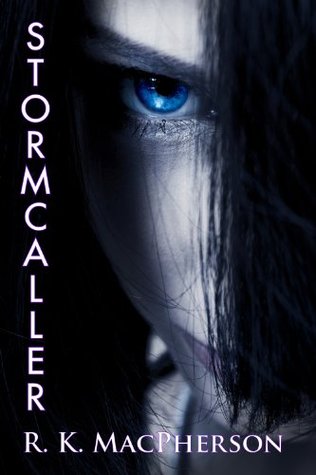
Power always carries a price…
For Isaura Durand, homeless life on the streets of Seattle posed plenty of challenges. She didn’t ask to become a witch. She didn’t understand how it would change her, but when she awakens to her power, Isaura finds herself plunged into a brutal struggle with dark forces.
Thrust into the heart of Seattle’s eldritch world, Isaura uncovers a series of ritual sacrifices designed to unleash magic’s true power upon the world.
Allied with a grumpy Norwegian mage, a Native American shaman on a Harley, and a beautiful medic, Isaura must overcome her own demons and her growing list of enemies. Victory is anything but certain, and to survive, Isaura must embrace her potential and become the…
STORMCALLER
Before I start this review, I should point out that I’m an editor in my day job, which means that I am among the world’s worst grammar nazis. I say this because Stormcaller is a book with so much potential, and you may not be as sensitive to its flaws as I am.
The story is fast-paced; we’re thrown into the action from the start, with Isaura waking up to her new magical powers and immediately nearly having her face eaten off by a demon. The fight scenes, especially the way Marius does his magic, remind me of Final Fantasy, one of my favourite computer game franchises. There’s also a sweet romance between Isaura and Chloe (yay, diversity!), which I loved.
The banter between Isaura, her mentor Coyote (aka Jack), and Marius — the mage who takes her in after her powers awaken — is golden, and often had me in stitches. Isaura causes a lot of her own problems, with her extremely poor lack of self control; at one point Marius describes her as having “the impulse control of a hyperactive chaos demon”. #nailedit
So Stormcaller is a good book. It could have been a mindblowing book with a professional edit. Part of it was a number of copy-editing issues, which is why I mention the grammar nazi thing upfront. The other niggles I had were with things that I’d like to imagine a good editor would’ve pointed out.
One is that the story takes a while to really get flowing, in that there are some kinks in the first few chapters. (Marius takes her in after her initiation, letting her sleep in his shop, but the circumstances were a little confusing to me. Once he gets the flat, it sorts itself out.)
Another issue was the unexpected heat level of the sex scene between Isaura and Chloe. Although both girls are around 18, the book reads like a young adult until you get to this scene, which is, ahem, quite explicit. Not to the point of being outright erotica, but it’s pretty close.
Finally, and I admit this is quite minor, Marius’s brother is named Darius. I regularly got confused about who we were discussing. (I’m easily confused.) :p
This is a regretful 3.5 stars for me — regretful as it’s exactly the sort of story I love: urban fantasy with a strong female lead and a well-developed magic system. The lesbian relationship was something I haven’t read much of, but I loved that too.

Review: ‘The Song of Achilles’ by Madeline Miller
Posted: September 18, 2014 Filed under: Reviews | Tags: GLTB, reviews 1 Comment
Greece in the age of Heroes. Patroclus, an awkward young prince, has been exiled to the kingdom of Phthia. Here he is nobody, just another unwanted boy living in the shadow of King Peleus and his golden son, Achilles.
Achilles, ‘best of all the Greeks’, is everything Patroclus is not — strong, beautiful, the child of a goddess — and by all rights their paths should never cross. Yet one day, Achilles takes the shamed prince under his wing and soon their tentative companionship gives way to a steadfast friendship. As they grow into young men skilled in the arts of war and medicine, their bond blossoms into something far deeper — despite the displeasure of Achilles’s mother Thetis, a cruel and deathly pale sea goddess with a hatred of mortals.
Fate is never far from the heels of Achilles. When word comes that Helen of Sparta has been kidnapped, the men of Greece are called upon to lay siege to Troy in her name. Seduced by the promise of a glorious destiny, Achilles joins their cause. Torn between love and fear for his friend, Patroclus follows Achilles into war, little knowing that the years that follow will test everything they have learned, everything they hold dear. And that, before he is ready, he will be forced to surrender his friend to the hands of Fate.
Profoundly moving and breathtakingly original, this rendering of the epic Trojan War is a dazzling feat of the imagination, a devastating love story, and an almighty battle between gods and kings, peace and glory, immortal fame and the human heart.
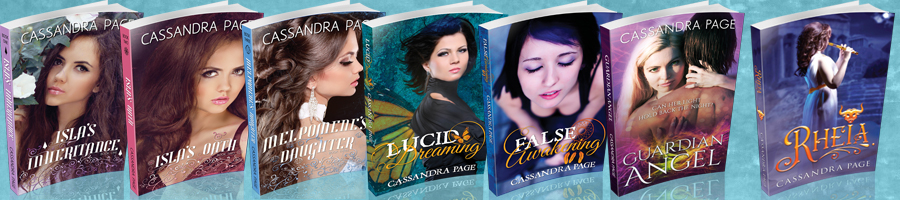
Anyone who’s followed my reviews for a while will know this isn’t my normal sort of read. However, since I finished drafting the last book in the Isla’s Inheritance trilogy, I’ve turned my mind — between edits — to my next project, which I want to set in a fantasy version of Ancient Greece. So recently I’ve been reading a bit of historical non-fiction, and some hist fic.
I haven’t reviewed any of that here on the blog, but I loved The Song of Achilles so much I thought it was worth a mention. I actually listened to this as an audiobook that I downloaded as part of an Audible trial, and I’m not sure if the fabulous voice acting of influenced how much I love it. It may have done — I did wonder a couple of times whether I would’ve lost patience with the way the narrator, Patroclus, lingers lovingly over descriptions of Achilles if I was reading it. Listening to it was sometimes like listening to a poetry recital, it was so beautiful.
And beautiful is really the only way to describe this book, even though parts of it are “ugly” in the traditional sense. Miller doesn’t spare us any details of the bloody violence of war, just as she doesn’t spare any details of Achilles’ nimble feet or his golden hair.
If you’ve read the Illiad or studied Ancient Greek legends, you’ll know that the Trojan War didn’t end well for Achilles; the entire story of this novel arises from his best friend and lover Patroclus’s determination that he be remembered not just as a brutal killer but as a talented lyre player, as quick to laugh as he was haughty. (And he was haughty; Patroclus doesn’t have entirely rose-coloured glasses and definitely lets us see Achilles’ arrogance.) Nevertheless, by a third of the way through the story I was in love with Achilles, and by halfway through I loved Patroclus too.
There are sex scenes, but they are more romantic than explicit — it’s entangled limbs and hot kisses rather than…well, you know. (You do know, right?) Also, at the risk of stating the obvious, Patroclus and Achilles are both male, so if that sort of thing bothers you, this may not be your book.
On the other hand, if you want to read a beautiful and tragic story with an eternal romance and an uplifting ending, this may be the book for you. Song of Achilles earned every star!
Review: ‘Unhinged’ by A. G. Howard
Posted: September 13, 2014 Filed under: Reviews | Tags: reviews, urban fantasy, young adult Leave a comment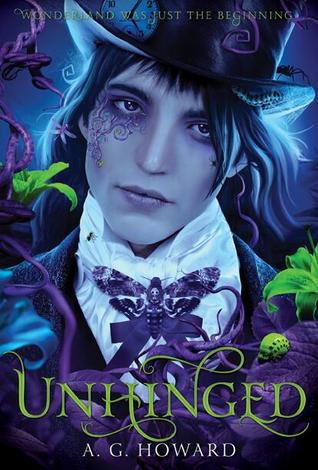
Alyssa Gardner has been down the rabbit hole and faced the bandersnatch. She saved the life of Jeb, the guy she loves, and escaped the machinations of the disturbingly seductive Morpheus and the vindictive Queen Red. Now all she has to do is graduate high school and make it through prom so she can attend the prestigious art school in London she’s always dreamed of.
That would be easier without her mother, freshly released from an asylum, acting overly protective and suspicious. And it would be much simpler if the mysterious Morpheus didn’t show up for school one day to tempt her with another dangerous quest in the dark, challenging Wonderland — where she (partly) belongs.
As prom and graduation creep closer, Alyssa juggles Morpheus’s unsettling presence in her real world with trying to tell Jeb the truth about a past he’s forgotten. Glimpses of Wonderland start to bleed through her art and into her world in very disturbing ways, and Morpheus warns that Queen Red won’t be far behind.
If Alyssa stays in the human realm, she could endanger Jeb, her parents, and everyone she loves. But if she steps through the rabbit hole again, she’ll face a deadly battle that could cost more than just her head.
I commented on a friend’s blog the other day about how it’s so true that when in your life you read a book has a huge impact on how you (well, I) feel about a book. Unhinged may be a good example of that … or maybe it is simply a better book than the first in the series, Splintered. (My review of Splintered is here if you want to compare.)
I read Unhinged in less than 24 hours; I read the first third while I was waiting to have surgery, and the rest of it after I’d had surgery, that night and the next morning. There were a lot of drugs in my system at the time. Maybe that enhanced the experience. I was a little worried that the book would have a lot of trippy Wonderland scenes in it, but it didn’t — which maybe is a good thing, because I didn’t really need a general anaesthetic Wonderland dream scaring the hell out of me!
This preamble is by way of telling you that while I loved the book, I couldn’t give you a blow-by-blow account of the plot if I tried. But that’s ok, because I never summarise the plot when I write a review anyway. (Why do people do that?) 😉
Unhinged is mostly set in the human world. Alyssa is determined to live her normal life and not give in to Morpheus’s demands that she abandon everything and live in Wonderland. I really respected her determination to do so, for a few reasons. One is that she has a family and friends, and a boyfriend, and it would’ve been more than a little crazy if she’d just run off. I also liked that as a lead she had the spine to stand up to the demanding bad boy, Morpheus, and say no. Not that many YA heroines achieve that.
It was a little unfortunate that she didn’t try and integrate both sides of her nature a little better in between the first and second books, but that’s one of the major plot arcs of Unhinged. There was character growth there, and it was very satisfying to see.
I still wasn’t wild about Alyssa’s boyfriend, Jeb. He’s not as physically domineering in book two, but I can’t help but feel that’s because he was off camera (so to speak) for a large part of it, so he never really got the opportunity. He does become a bit of a damsel in distress at one point, and she has to rescue him; I enjoyed the role reversal.
On the other hand, Morpheus, the other player in this love triangle, was very much front and centre, and just as charming, manipulative and obnoxious as he was in the first book. In a love triangle I usually prefer the nicer guy, the boy next door. In this book the choice is between a boy who does happen to live next door (Jeb) but whose attitude I don’t much like, and the bad boy who — while he no doubt has his appeal — is way too deceptive for me to cheer for him wholeheartedly. Instead, I find I’m on Team Alyssa; I want her to choose the guy who mends his ways and ultimately earns her respect and trust.
I am kinda hoping that’s Morpheus, though… 😉
One thing I didn’t notice in Unhinged that bothered me in Splintered was the over-the-top descriptions of clothing and settings. The setting descriptions weren’t as necessary, I guess, because it was mostly set in the human world. I’m not sure if the clothing descriptions weren’t as intense or if I was just less sensitive to it. (See previous comment about lots of drugs in my system.) Either way, it didn’t bother me this time around.
I’m really looking forward to the last book in this trilogy, whose cover is just as gorgeous as the first two. Did Howard hit the cover artist jackpot or what?!


 Cassandra Page